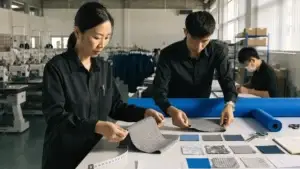
You have a vision for your clothing line, but the production estimates are coming in higher than expected. The dream of launching your collection starts feeling financially out of reach. What strategies can actually reduce your custom clothing production costs without compromising on quality?
Reducing custom clothing production costs requires strategic decisions about fabric selection, design complexity, order quantities, and production timing. The most effective approach combines smart design optimization with strategic ordering patterns and leveraging manufacturer expertise. By understanding what truly drives costs in apparel manufacturing, you can make informed decisions that maintain your design vision while achieving sustainable pricing.
Let's explore practical, actionable strategies that have helped our clients reduce their production costs by 15-40% while maintaining their quality standards.
How Can Smart Fabric Selection Lower Your Costs?
Fabric typically represents 50-70% of your garment's cost, making it the most significant area for potential savings without compromising quality.
Strategic fabric choices can dramatically reduce your material costs while maintaining the look, feel, and performance your customers expect.

What fabric alternatives offer better value?
Consider fabric substitutions that maintain quality at lower price points. We recently helped a contemporary brand switch from Italian cotton jersey to a comparable Korean fabric with similar hand feel and durability, reducing their material costs by 28%. Another client achieved 22% savings by opting for a blended performance fabric instead of 100% polyester while maintaining moisture-wicking properties. The key is working with manufacturers who have diverse fabric sourcing options and transparent pricing.
How can fabric utilization reduce waste?
Optimizing your pattern layout and design can significantly reduce fabric waste. We use specialized software to maximize fabric utilization before cutting. A streetwear brand saved 15% on fabric costs simply by adjusting their hoodie pocket design to fit more efficiently on the fabric width. Another client reduced waste by 12% by slightly modifying their sleeve pattern, saving nearly $2,800 on a 5,000-unit order of woven shirts.
How Does Design Simplification Impact Production Costs?
Complex designs require more labor, specialized equipment, and often generate more waste - all of which increase your production costs.
Simplifying your designs strategically can yield significant savings while maintaining your brand's aesthetic appeal.

Which design elements drive costs highest?
Complex seam constructions, small cut-and-sew pieces, and intricate details typically increase labor costs substantially. We analyzed a client's jacket that had 47 separate pattern pieces and reduced it to 32 pieces through design consolidation, cutting their assembly time by 25%. Another brand simplified their embroidery design from 12,000 stitches to 8,500 stitches while maintaining the visual impact, reducing embroidery costs by 30%.
How can color and print strategies reduce costs?
Consolidating color ways and optimizing print methods can yield substantial savings. A sportswear client reduced their color options from eight to five core colors across their collection, achieving better fabric sourcing rates through larger volume per color. Another brand switched from complex all-over printing to strategic placement prints, cutting their printing costs by 40% while creating a more focused design statement.
What Ordering Strategies Maximize Cost Efficiency?
Your ordering patterns and quantities significantly impact your per-unit costs through economies of scale and production efficiency.
Strategic ordering can help you access volume pricing even with moderate order quantities.

How can you optimize your order quantities?
Consider consolidating styles or extending production across seasons to reach more favorable quantity tiers. We helped a children's wear brand combine their spring and summer basic styles into one larger order, achieving 18% better pricing through volume discounts. Another client implemented a core collection strategy, producing their best-selling styles in larger quantities twice yearly rather than smaller batches quarterly, reducing their per-unit costs by 22%.
What timing strategies reduce costs?
Off-season production and strategic scheduling can access lower pricing. Manufacturers often offer 5-10% discounts during traditionally slower periods. A swimwear brand we work with shifted their production from January-March to October-December, saving 8% on labor costs while ensuring better factory attention to their order. Another client plans their production around Chinese holidays, avoiding premium rush charges that can add 5-15% to costs.
How Can Manufacturer Collaboration Reduce Expenses?
The right manufacturing partner can identify cost-saving opportunities you might overlook and provide valuable guidance throughout the development process.
Experienced manufacturers have solved similar cost challenges for other clients and can apply those solutions to your project.

What cost-saving insights can manufacturers provide?
Manufacturers understand exactly which design elements drive costs and can suggest alternatives that maintain your vision at lower price points. We recently helped a luxury brand reduce their sampling costs by 35% by creating a detailed tech pack upfront, minimizing revisions. Another client saved 18% on trims by using our established supplier relationships rather than sourcing custom components independently.
How does production expertise translate to savings?
Experienced manufacturers optimize production flow, reduce waste, and maintain quality consistency - all of which lower your effective costs. Our quality control processes have helped clients reduce their return rates by up to 40%, significantly impacting their bottom line. We also implement lean manufacturing principles that minimize wasted movement and materials throughout production.
What Logistics and Shipping Strategies Cut Costs?
Shipping and logistics represent a significant portion of your total costs, and strategic decisions in this area can yield substantial savings.
Consolidated shipping and smart logistics planning can reduce your per-unit delivery costs dramatically.

How can shipping consolidation reduce expenses?
Combining shipments or using consolidated shipping services can dramatically reduce your freight costs. We helped three complementary brands share container space to North America, reducing their individual shipping costs by 35% compared to separate LCL shipments. Another client switched from air freight to sea freight for their non-urgent styles, cutting their logistics costs by 65% while still meeting their retail deadlines.
What import strategy minimizes duty costs?
Understanding duty classifications and trade agreements can significantly reduce your import costs. We've helped clients leverage specific HS codes that carried lower duty rates for their garment types, saving 5-12% on import costs. Another brand restructured their fabric sourcing to qualify for preferential duty treatment under trade agreements, reducing their landed costs by nearly 15%.
How Does Strategic Sourcing Impact Overall Costs?
Your sourcing decisions for materials and components significantly influence your final production costs without necessarily affecting quality.
Leveraging your manufacturer's sourcing networks and expertise often yields better pricing than independent sourcing.

Should you source materials independently?
While sometimes necessary for specialized materials, independent fabric sourcing often costs 15-30% more than using your manufacturer's established supply chain. We recently helped a denim brand who was sourcing Japanese denim independently switch to our mill relationships, achieving 22% better pricing for the identical fabric. Another client discovered that our trim suppliers offered their custom buttons at 40% less than their direct sources due to our volume purchasing.
How can component standardization reduce costs?
Using standard rather than custom components wherever possible can yield significant savings. A activewear brand standardized their zippers and drawcords across multiple styles, reducing their trim costs by 28% through volume pricing. Another client switched from custom-molded plastic hardware to stock options that worked equally well, saving nearly $4,500 on their initial production run.
Conclusion
Reducing your custom clothing production costs requires a holistic approach that balances design integrity with manufacturing efficiency. By making strategic choices about materials, design complexity, order quantities, and leveraging your manufacturer's expertise, you can achieve significant savings without compromising quality. The most successful brands view their manufacturer as a strategic partner in cost optimization, working collaboratively to identify savings opportunities throughout the development and production process.
If you're looking for a manufacturing partner who will actively help optimize your production costs while maintaining your quality standards, we should discuss your specific needs. At Fumao Clothing, we've helped hundreds of brands reduce their production costs through strategic guidance and transparent pricing. Contact our Business Director, Elaine, at elaine@fumaoclothing.com to explore how we can help make your clothing production more cost-effective without sacrificing quality.