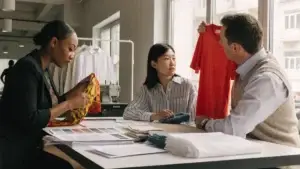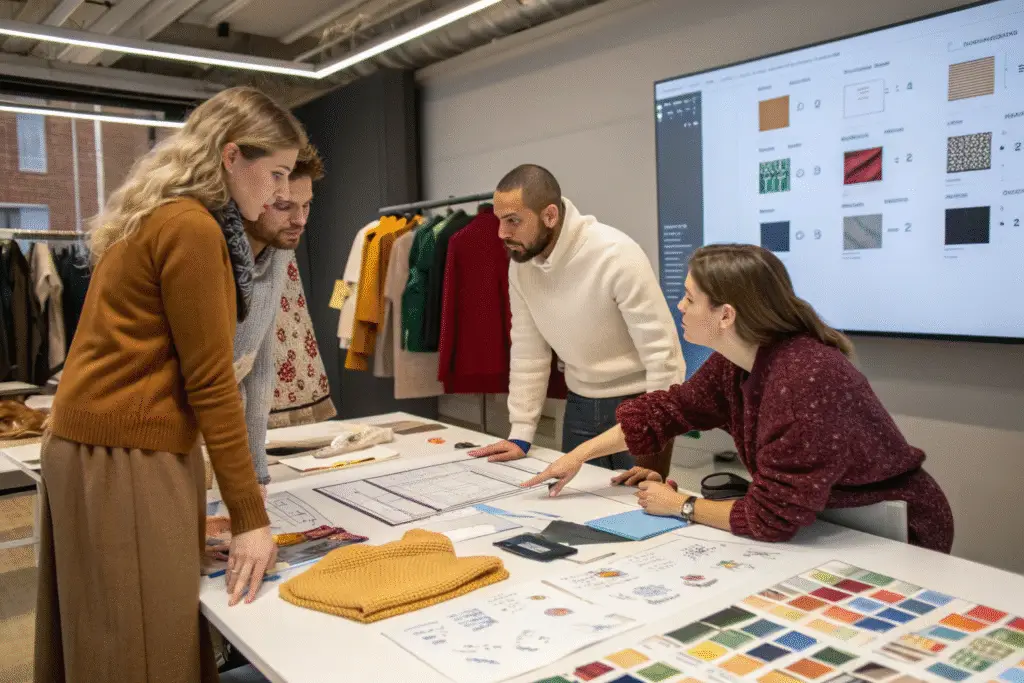
Are you struggling to align your team and suppliers for a successful seasonal clothing launch? The fashion calendar moves fast, and a single delay can mean missing the entire selling season, leading to lost sales and unhappy customers. Many brand owners recognize that planning is essential yet frequently overlook one critical step: the strategic kick-off meeting. This foundational process ensures your collection transitions smoothly from concept to delivery.
A well-structured kick-off meeting serves as the most powerful tool to synchronize your internal team with your manufacturing partner. It transforms a seasonal clothing collection from a vague idea into a concrete, actionable plan with clear timelines, responsibilities, and quality benchmarks. Adopting this proactive approach defends against the miscommunication, delayed shipments, and quality issues common in the apparel industry. By the end of this article, you will understand how to leverage these meetings to de-risk your production and ensure your collections reach the market on time, every season.
Let’s explore the framework that will make your next collection the smoothest one yet.
Why are kick-off meetings crucial for seasonal apparel production?
You might have a brilliant idea for your next collection, but simply emailing designs to a factory is rarely enough. The complexity of apparel manufacturing demands alignment from the very beginning. A kick-off meeting establishes this foundation, ensuring everyone—from your designers to your overseas manufacturer—starts on the same page. Without it, you risk building your production plan on unstable ground.
This initial meeting moves abstract concepts into a shared, actionable reality. It represents your best opportunity to prevent the common pain points that derail production timelines. From our experience, projects with a structured kick-off consistently proceed more smoothly, while those without one often face avoidable delays and misunderstandings. The goal is to create a single source of truth that guides the entire production cycle.

What key objectives should a seasonal collection kick-off meeting achieve?
Clear objectives distinguish a productive kick-off meeting from a mere conversation. The primary aim is to establish alignment across three core pillars: the creative vision, the commercial targets, and the operational timeline. It is essential that your manufacturer understands not only what to produce but also why certain specifications matter to your brand.
Begin by aligning on the design vision and technical details. This goes beyond reviewing sketches—it involves discussing your target audience, desired fabric quality, and the overall brand narrative. Next, confirm commercial feasibility by reviewing costing targets and order volumes to ensure the designs fit within your budget. Most critically, establish a master timeline that outlines all key milestones from sampling to final delivery.
How do you structure an effective agenda for this meeting?
A structured agenda acts as your roadmap to a productive meeting. Random discussions often miss critical details, so we recommend a focused approach that drives decisions. Start by reviewing the collection’s mood board and design concept to set the creative direction. Then, transition into a detailed review of each prototype or tech pack.
Dedicate significant time to the production timeline, using a visual Gantt chart to mark dates from fabric sourcing to final shipment. Explicitly discuss quality control protocols and inspection points to set clear expectations. Conclude with a summary of action items, assigning owners for each task. This method ensures no detail is overlooked and everyone leaves with a clear understanding of their responsibilities.
How to define your collection's strategy with your manufacturer?
Defining your strategy alongside your manufacturer early in the process transforms them from a passive order-taker into an active strategic partner. A proficient manufacturer, like Fumao Clothing, offers invaluable input that helps shape a collection which is both creative and cost-effective to produce. Our expertise in materials and construction methods can help you avoid expensive mistakes.
This collaborative stage allows you to leverage our experience from countless past collections. We can advise on which designs align well with readily available fabrics and which may require complex, time-intensive techniques. This guidance is not meant to limit your creativity but to channel it into designs that are both beautiful and manufacturable at scale.
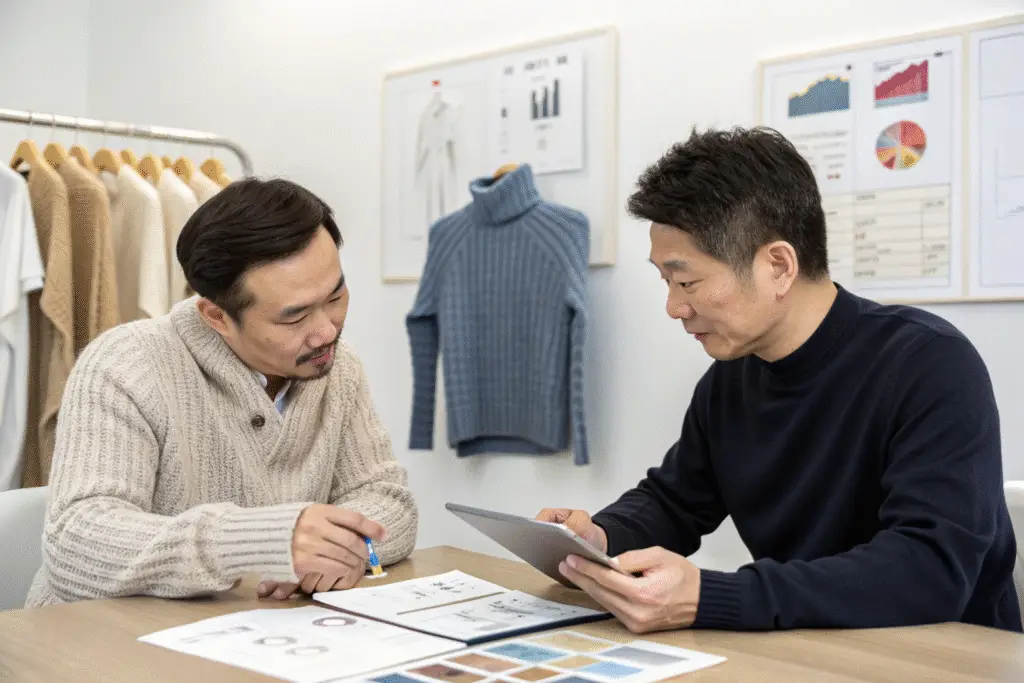
What critical design and market factors must be aligned?
Alignment on design and market factors is fundamental to your collection’s success. Start by confirming the target market and season—whether it’s a holiday collection for the U.S. or a spring line for Europe. The season directly influences fabric weight, color palettes, and, most importantly, delivery deadlines. Next, discuss the price point for each garment, as this will guide material and construction choices.
You must also achieve consensus on the aesthetic style and fit. Providing clear examples and reference garments helps your manufacturer grasp your brand’s unique requirements. Finally, clarify the logistical scope, including order quantities per style and size run. This information is vital for your manufacturer to plan fabric procurement and allocate production capacity efficiently.
How can your manufacturer help in material sourcing and cost planning?
Your manufacturer’s involvement in material sourcing represents a significant value-add. We manage the entire process of procuring fabrics and trims, saving you considerable time and resources. Based on your design brief and budget, we present a curated selection of suitable materials, from standard stocks to exclusive developments.
For cost planning, we provide a transparent cost breakdown covering fabric, trims, labor, and overhead. We identify areas for potential savings without compromising quality—for instance, by suggesting a different fabric yield or a minor design adjustment. This collaborative and transparent approach prevents unexpected costs later and ensures the final price supports your margin goals.
What should be included in the production timeline and critical path?
A detailed production timeline acts as the central nervous system for your collection’s development. Relying solely on a final delivery date is insufficient; you need a week-by-week, and sometimes day-by-day, plan that monitors every component. This timeline serves as an early warning system—if a milestone slips, you can immediately assess the impact on the final delivery and take corrective measures.
The critical path outlines the sequence of stages that dictates the project’s minimum duration. Any delay on this path directly postpones your final delivery. Understanding the critical path allows you to focus resources and attention where they are most needed. For example, if fabric sourcing is on the critical path, you would prioritize and expedite fabric approval to maintain the schedule.
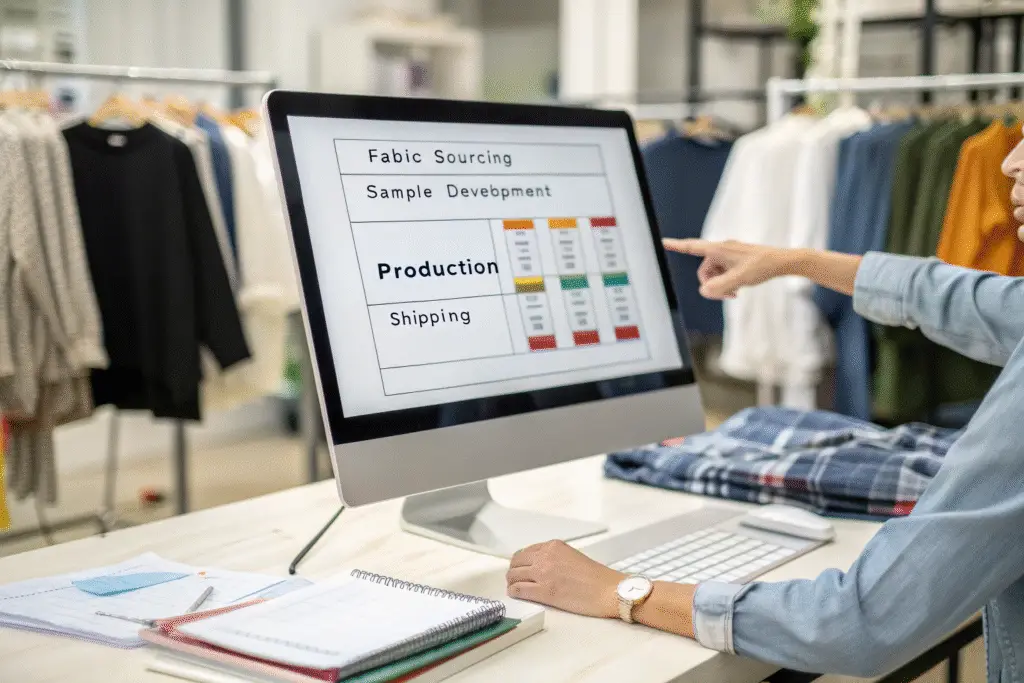
How do you establish key milestones from sampling to delivery?
Breaking down the timeline into defined key milestones makes the entire process manageable and trackable. The first major milestone is the approval of prototype samples, which includes both initial fit samples and pre-production samples. The next milestone is the confirmation and arrival of all raw materials; once fabrics and trims are in the factory, the main production phase can officially begin.
The third critical milestone is the completion of the production run and the subsequent quality inspection of the first finished goods. The final milestone encompasses the completion of all final inspections, packaging, and the handover to the shipping company. By agreeing on these specific dates during the kick-off meeting, you create a shared set of deadlines that all parties are committed to honoring.
What are the common timeline pitfalls and how to avoid them?
Unrealistic timing is the most frequent pitfall in production planning. Brands often underestimate the time required for each stage. To counter this, incorporate buffer time between major milestones, particularly after sample reviews and before final shipping. Another common issue is delayed decision-making from the brand’s side; any holdup in approving a sample or fabric creates a domino effect that jeopardizes the entire timeline.
A third pitfall involves neglecting logistics lead times. The transit time for sea freight from China to the U.S. is substantial and must be accounted for. We strongly recommend using a DDP (Delivered Duty Paid) service, where the manufacturer manages all logistics. This streamlined approach provides a single point of control and accountability, preventing delays often caused by coordinating multiple third-party vendors.
How to ensure quality control and manage logistics upfront?
Waiting until after production is complete to discuss quality and logistics is a recipe for disappointment. Instead, these elements must be integrated into your plan from the outset. A proactive stance on quality control guarantees the final product meets your standards, while a clear logistics strategy ensures it arrives at your warehouse precisely when needed.
During the kick-off meeting, you must define the specific quality standards for the collection. Move beyond generic phrases like "high quality" and agree on measurable tolerances for flaws, stitching standards, and color matching precision. Similarly, for logistics, decide on the shipping method, incoterms, and destination port well before the goods are ready to ship.
What quality benchmarks and inspection points need agreement?
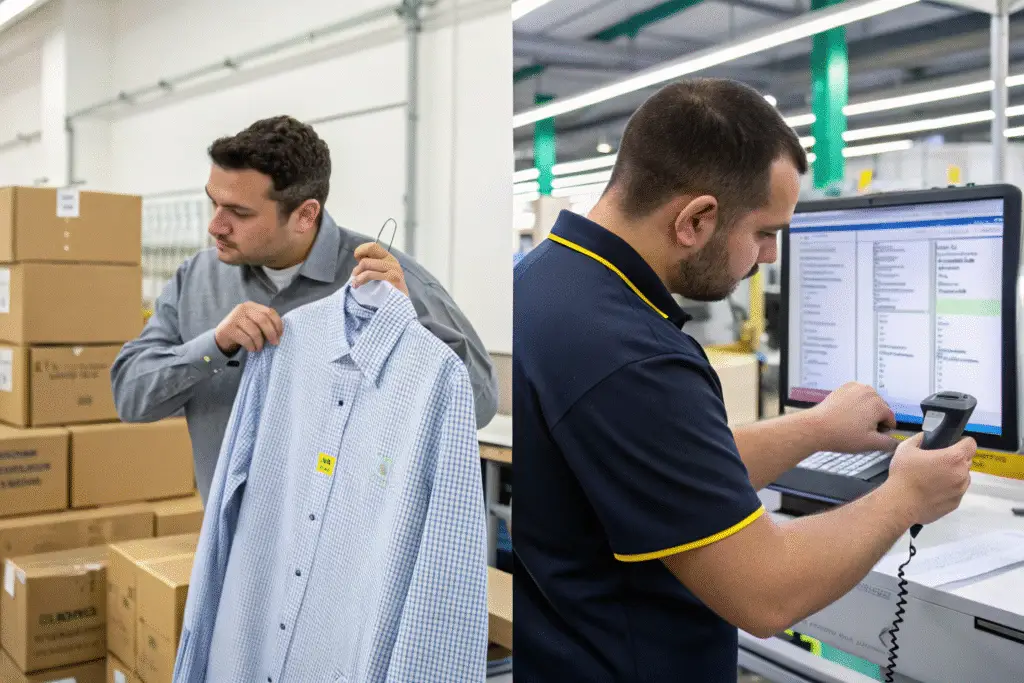
A multi-stage inspection process, agreed upon in advance, is crucial for maintaining quality. The first benchmark is fabric quality, which involves testing for shrinkage, colorfastness, and composition. The second occurs during production, known as During Production Inspection (DPI), which identifies and rectifies issues on the assembly line before they become widespread.
The most critical benchmark is the Final Random Inspection (FRI). You and your manufacturer must agree on the AQL (Acceptable Quality Level) standard for this inspection. For apparel, AQL 2.5 for major defects is commonly used. This statistical sampling method provides a consistent and objective measure of quality, preventing disputes and ensuring both parties evaluate the final output against the same criteria.
How can you secure logistics for on-time seasonal delivery?
Securing on-time delivery requires booking logistics capacity early, particularly during peak shipping seasons. During the kick-off meeting, discuss and decide on the preferred shipping method—whether air or sea freight—based on your timeline and budget. As your manufacturer, we coordinate the entire process through our comprehensive DDP service.
This service means we manage everything from the factory floor to your designated warehouse in the U.S. We secure shipping space, handle all customs documentation, and pay relevant duties on your behalf. This integrated approach ensures a seamless chain of custody and provides you with a single point of contact and accountability, effectively eliminating the delays and confusion that arise when multiple vendors are involved.
Conclusion
A strategic kick-off meeting is far more than a formality; it is the essential foundation for a successful seasonal clothing collection. It aligns your creative vision with manufacturing practicalities, establishes a realistic and clear timeline, and embeds robust quality control and logistics planning into the project from day one. Investing time in this initial collaboration transforms your manufacturer into a genuine partner, mitigating risks and paving the way for a smooth, on-time, and on-budget production run. This proactive methodology distinguishes brands that consistently capture selling seasons from those perpetually struggling to catch up.
Ready to streamline your next seasonal collection and ensure it reaches your customers at the perfect moment? Let's begin with a kick-off meeting that establishes a new benchmark for your production process. Contact our Business Director, Elaine, today at elaine@fumaoclothing.com to schedule a consultation. Let Fumao Clothing become the reliable, high-value manufacturing extension your brand deserves.