Pilling on clothes consistently frustrates consumers and apparel brands alike. These unsightly fiber balls make garments appear worn-out prematurely, which directly leads to customer complaints and product returns. Consequently, this deterioration damages brand reputation and reduces profitability.
Pilling occurs when loose fibers on the fabric’s surface tangle together, forming small balls. The best fabrics for reducing pilling are those with long, strong fibers and tight weaves or knits, such as long-staple cotton, merino wool, and synthetic fabrics like polyester and nylon. Understanding this fundamental principle enables brands to source higher-quality apparel that maintains customer satisfaction over time.
This comprehensive guide will systematically explore the science behind pilling while identifying optimal fabric choices that ensure the clothing you source withstands the test of time and wear.
What Is Fabric Pilling And Why Does It Happen?
When customers report small balls forming on their sweaters and other garments, they’re describing fabric pilling. This visible sign of wear transforms new-looking clothes into shabby apparel almost immediately. For business owners, this phenomenon translates directly to dissatisfied customers and potential revenue loss.
Fabric pilling is the formation of small, tangled balls of fiber on the surface of a fabric. This process happens due to friction, which gradually loosens fibers from the yarn structure. These liberated fibers subsequently curl and knot together, ultimately forming the pills we see. The pill’s adhesive strength depends primarily on the fiber type, with stronger fibers creating tenacious pills that cling stubbornly to fabric surfaces.
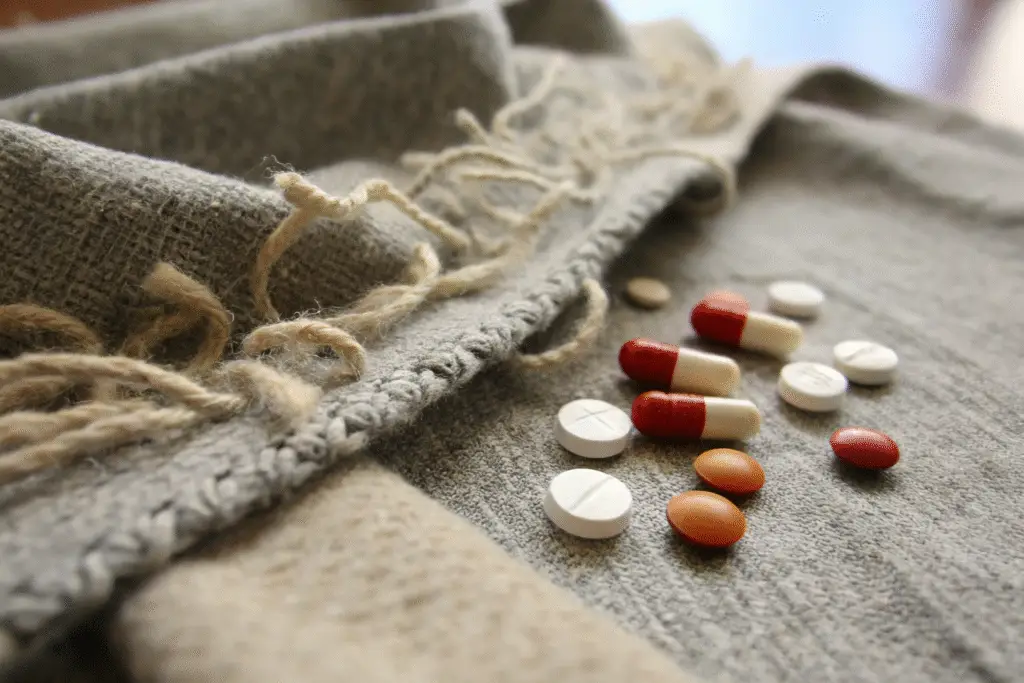
How does friction initiate the pilling process?
Friction serves as the primary catalyst for pilling formation. It occurs inevitably during normal wear when garments rub against themselves, accessories, or furniture. This abrasive action progressively damages the fabric surface. Specifically, short or weak fibers easily dislodge from the yarn structure due to this friction. Once liberated, these fibers migrate toward the fabric surface. Continuous friction then causes these stray fibers to twist around each other, forming the characteristic pills. Areas experiencing concentrated friction—including underarms, cuffs, and sides—consequently develop the most severe pilling problems.
What fiber characteristics determine pilling severity?
Fiber strength and length fundamentally determine a fabric’s pilling resistance. Long-staple fibers, like those in premium Egyptian cotton, create smoother surfaces with fewer exposed fiber ends. This reduced loose fiber availability directly translates to less pilling material. Similarly, strong fibers, including many synthetic fibers, resist breaking under friction. However, when these durable fibers eventually form pills, they create particularly persistent pills that resist removal. Conversely, weak fibers like short-staple cotton break easily and generate pills quickly, though these pills may detach faster due to their weak anchor points.
Which Natural Fabrics Are Most Resistant To Pilling?
Selecting appropriate natural fabrics provides a powerful strategy for pilling prevention. While consumers appreciate natural materials for their comfort and breathability, significant performance variations exist between different natural fibers. Some natural fabrics inherently offer superior durability and pilling resistance.
Long-staple cotton and high-quality wool represent the most pill-resistant natural fabrics. Their extended, continuous fibers spin into exceptionally strong yarns that minimize loose fiber ends on fabric surfaces. This inherent advantage makes these fabrics ideal choices for durable sweaters, t-shirts, and trousers that maintain their smooth appearance through extended wear.
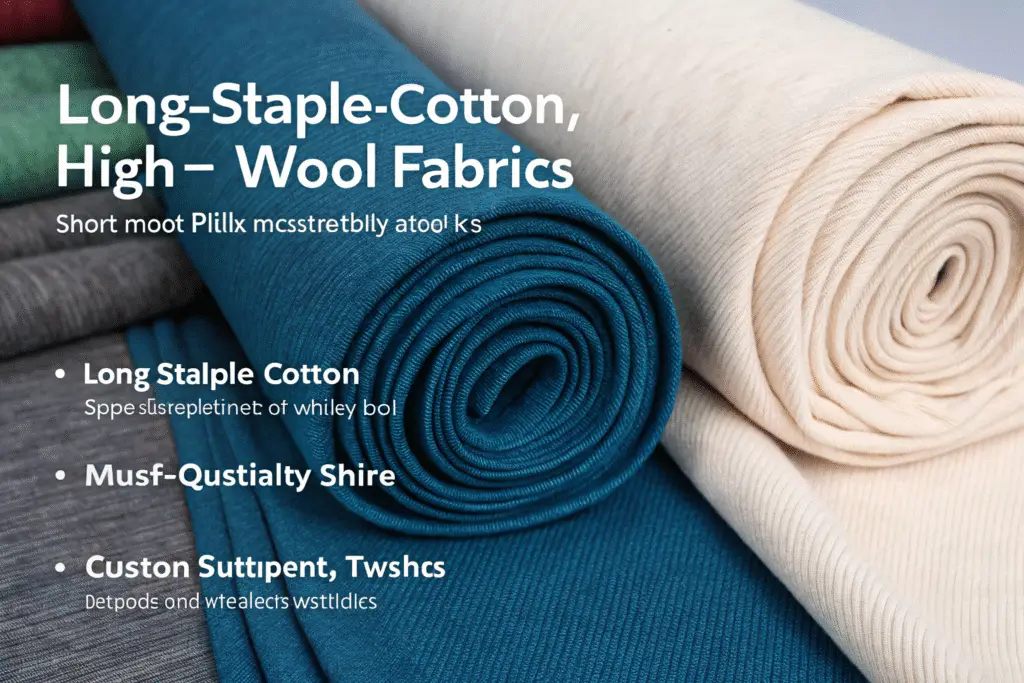
Why does long-staple cotton outperform regular cotton?
Long-staple cotton varieties, including Supima and Egyptian cotton, possess fibers substantially longer than conventional cotton. These elongated fibers transform into finer, stronger, and smoother yarns during spinning. The resulting smooth yarn surfaces exhibit minimal protruding fiber ends. With fewer loose fibers available, entanglement potential decreases significantly. Consequently, garments crafted from long-staple cotton deliver not only superior softness and luxury but also enhanced durability and appearance retention—crucial selling points for quality-conscious brands.
How does wool quality influence pilling behavior?
Wool’s pilling resistance depends heavily on fiber diameter and length. Fine, short wool fibers—typically used in soft, cashmere-like sweaters—demonstrate high pilling susceptibility because friction easily pulls them to the surface. In contrast, wool from breeds like Merino features longer, more resilient fibers that spin into sturdy yarns with excellent cohesion. Although some initial pilling might occur with high-quality wool garments, they typically shed these early pills and then stabilize, maintaining their appearance for years rather than months.
Which Synthetic Fabrics Prevent Pilling Best?
Despite common misconceptions, synthetic fabrics frequently excel in durability and pilling resistance. For activewear and performance garments specifically, synthetics often deliver the longevity that modern consumers expect from their technical apparel.
Polyester and nylon lead the synthetic category for pilling prevention. These fibers combine exceptional strength with the manufacturing advantage of continuous filament production, which essentially eliminates the loose ends that initiate pilling. Their superior abrasion resistance makes them perfect for clothing undergoing frequent stress and washing cycles.
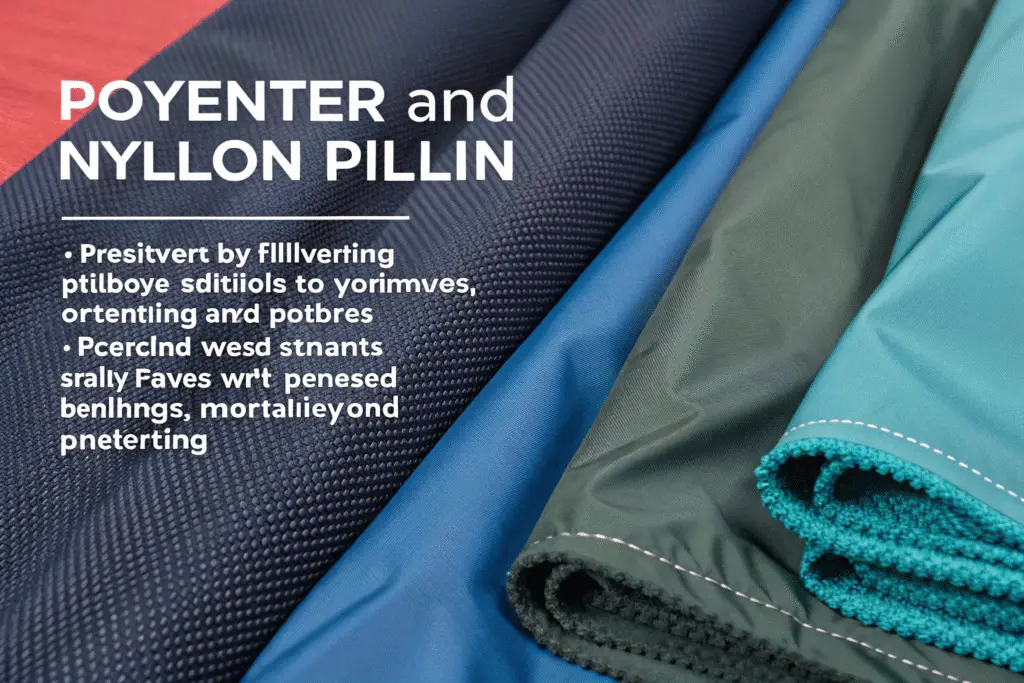
What structural advantages make polyester pill-resistant?
Polyester fibers inherently possess remarkable strength and flexibility. Manufacturers typically produce them as filament yarns—single, continuous strands that create fabrics with exceptionally smooth surfaces. Without fiber ends protruding, pilling initiation becomes unlikely. Even when textured for specific hand feels, polyester’s innate strength enables it to withstand substantial friction before fiber breakdown occurs. Therefore, for budget-friendly yet durable apparel solutions, polyester reliably maintains product appearance over time.
How does nylon complement polyester in durability applications?
Nylon represents another synthetic fiber celebrated for outstanding strength and elasticity. In fact, it ranks among the strongest common textile fibers. Similar to polyester, nylon typically appears in filament form. Its exceptional tensile strength enables resistance to breaking under tension and abrasion. This explains why nylon fabric remains fundamental to activewear, hosiery, and outerwear categories. It consistently withstands wear and tear while maintaining smooth surfaces that resist pilling throughout the garment’s lifespan.
How Can Fabric Construction Minimize Pilling?
Fabric construction methodology proves equally important as fiber selection for pilling prevention. Even premium long-staple cotton will pill if woven or knitted improperly. Understanding construction principles provides brands with additional quality assurance tools.
Tightly woven or knitted fabrics—characterized by high thread counts or compact structures—demonstrate significantly enhanced pilling resistance. Dense constructions physically imprison fibers, dramatically reducing their migration potential toward the surface. Manufacturers strategically control this crucial factor during production to optimize fabric performance.
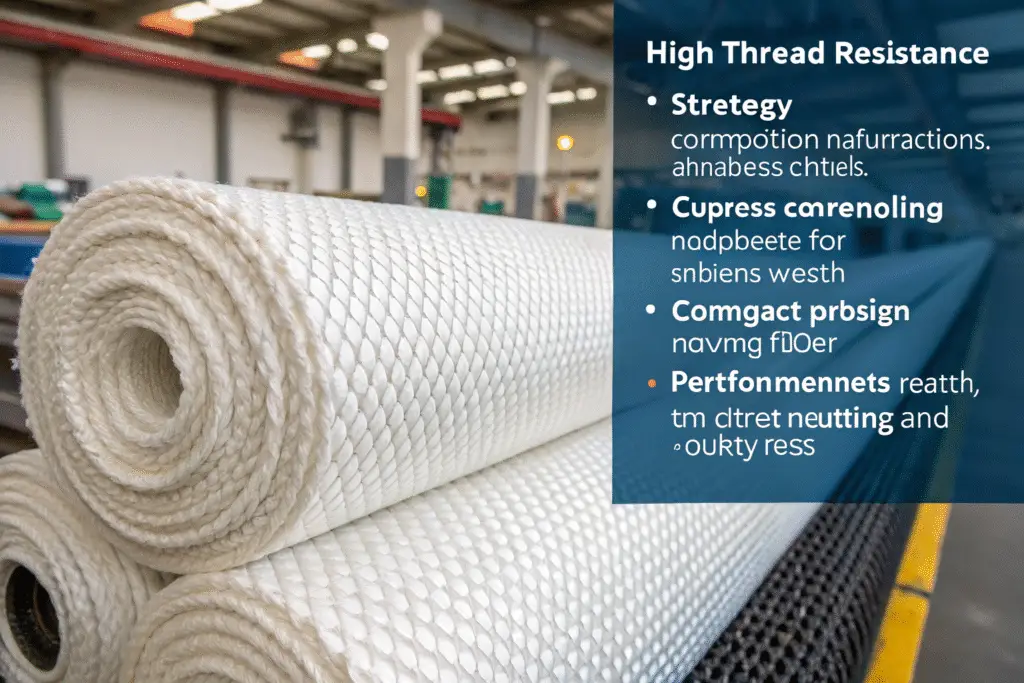
Why does construction density impact pilling?
Tight fabric construction mechanically restricts fiber movement. In dense weaves, yarns pack closely together, while tight knits feature small, firmly interlocked loops. Both scenarios minimize space for fibers to work loose. Conversely, loose, soft knits or low-thread-count weaves contain abundant space between yarns, allowing fibers to escape easily through friction. Therefore, achieving pill-resistant garments necessitates strategically dense construction regardless of fiber content.
How does yarn twist configuration affect pilling outcomes?
Yarn twist intensity fundamentally influences pilling behavior. Tightly twisted yarns securely imprison individual fibers—similar to how tightly wound ropes resist fraying. High-twist yarns consequently produce harder, sometimes crisper fabrics that offer excellent durability and pilling resistance. Alternatively, low-twist yarns—often employed for ultra-soft hand feels—permit easy fiber escape. This desirable softness therefore comes with the trade-off of increased pilling propensity, requiring careful consideration during product development.
| Construction Feature | Mechanism for Pilling Reduction | Typical Garment Applications |
|---|---|---|
| Tight Weave (e.g., Poplin) | Mechanically locks yarns in place, minimizing fiber movement potential | Dress Shirts, Blouses |
| High Thread Count | Creates denser, smoother surfaces with minimal fiber escape gaps | Luxury Bed Linens, Premium Shirts |
| Tight Knit Structure | Secures looped yarns firmly, preventing fiber liberation | Durable Sweaters, Polo Shirts |
| High-Twist Yarn | Maximizes individual fiber binding within the yarn core | Travel Clothing, Performance Apparel |
Conclusion
Strategic fabric selection remains essential for creating apparel that combines aesthetic appeal with long-term performance. Pilling isn’t an unavoidable garment destiny—it’s a predictable outcome determined by fiber selection, yarn quality, and construction methods. By prioritizing long-staple natural fibers like Supima cotton and Merino wool, leveraging durable synthetics like polyester and nylon, and insisting on tight fabric construction, brands can dramatically reduce pilling incidents. This comprehensive approach subsequently generates higher customer satisfaction, fewer returns, and strengthened brand reputation for quality.
We fully recognize the critical importance of delivering garments that meet the highest durability and quality standards. If you’re seeking a manufacturing partner to produce premium, pill-resistant clothing for your brand, we should connect. Our expertise enables us to guide optimal material and construction selection for your next collection. For direct consultation, please contact our Business Director, Elaine, at elaine@fumaoclothing.com.