The fashion industry faces intense pressure today. Brands demand faster turnaround. Consumers expect lower prices. Quality must remain high. Many clothing manufacturers struggle with these competing demands. They face rising material costs and tight deadlines. They deal with inventory problems and production delays. How can manufacturers meet these challenges effectively? The answer lies in lean manufacturing principles.
Lean manufacturing transforms clothing production completely. It eliminates waste from every process. It focuses on value creation for customers. It streamlines operations from fabric cutting to final packaging. Manufacturers adopting lean methods see dramatic improvements. They reduce production costs significantly. They shorten lead times remarkably. They improve product quality consistently. They increase overall efficiency substantially.
This article explores lean manufacturing's crucial role in clothing production. We examine its core principles and practical applications. We demonstrate its benefits through real examples. We show how our company implements lean successfully.
What Are the Core Principles of Lean Manufacturing?
Lean manufacturing originated in the automotive industry. Toyota developed this revolutionary approach. The system applies perfectly to clothing production today. Lean focuses on eliminating waste systematically. Waste means any activity that consumes resources without adding value. Customers will not pay for these activities.
The core principles are straightforward. They include defining value from the customer's perspective. They involve mapping the value stream thoroughly. They create continuous flow wherever possible. They establish pull-based production systems. They pursue perfection relentlessly. These principles transform traditional batch production methods.
How does value stream mapping improve clothing production?
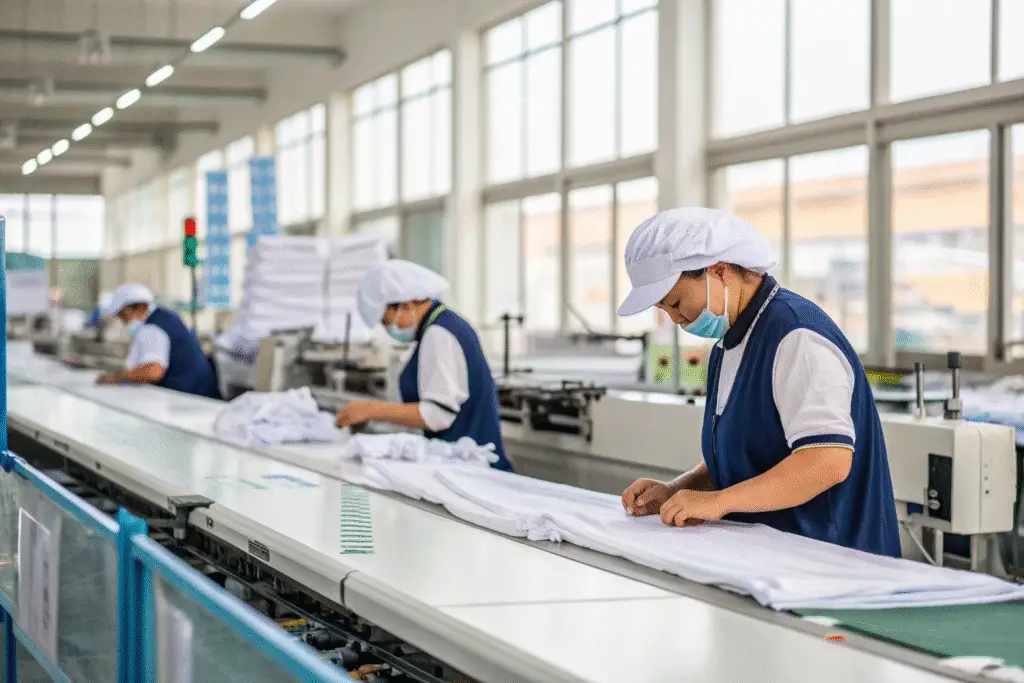
Value stream mapping identifies all process steps. It shows material and information flows clearly. We map everything from fabric receiving to shipment. This reveals hidden wastes effectively. We see waiting times between operations. We notice unnecessary material movements. We identify quality issues causing rework. We discover overproduction problems.
Our company uses value stream mapping regularly. We recently analyzed our denim jeans line. The mapping showed fabric waiting seven days before cutting. We found finished goods stored for two weeks before shipment. We identified multiple quality checks causing delays. By addressing these issues, we reduced lead time by forty percent. We improved on-time delivery to ninety-eight percent.
What are the eight wastes in garment manufacturing?
The eight wastes form lean's foundation. They include defects, overproduction, waiting, and non-utilized talent. They also cover transportation, inventory, motion, and extra-processing. Clothing production exhibits all these wastes clearly.
Defects mean quality problems requiring rework. Overproduction makes more units than needed immediately. Waiting occurs when work stops between processes. Non-utilized talent wastes worker skills and suggestions. Transportation means unnecessary material movement. Inventory excess ties up capital unnecessarily. Motion refers to inefficient worker movements. Extra-processing adds features customers don't value. We target these wastes systematically in our factories.
How Does Lean Manufacturing Reduce Production Costs?
Clothing manufacturers operate on thin margins. Cost reduction becomes essential for survival. Lean manufacturing addresses this need directly. It eliminates non-value-added activities completely. This lowers production costs significantly without compromising quality.
Lean reduces costs through multiple approaches. It minimizes material waste during cutting. It decreases labor costs through better workflows. It reduces inventory carrying costs substantially. It lowers space requirements through better layout. It decreases energy consumption through efficient planning. These savings directly improve profitability.
How does lean minimize fabric waste?
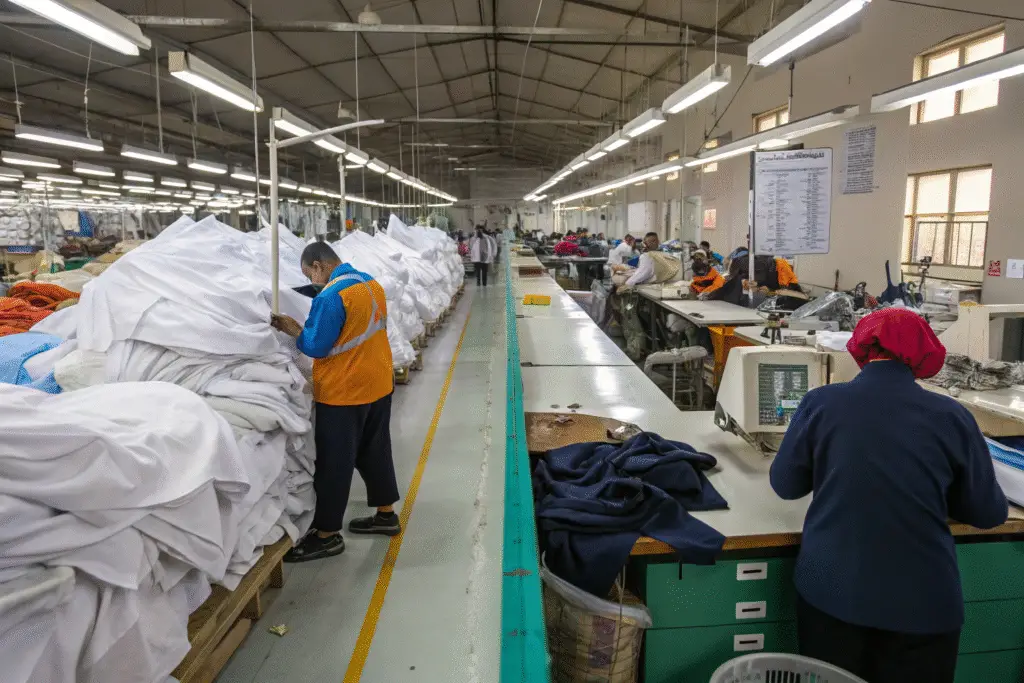
Fabric represents sixty to seventy percent of garment cost. Lean addresses fabric waste systematically. We use digital pattern making and marker optimization. These technologies maximize fabric utilization dramatically. We implement fabric saving techniques during cutting. We train workers to handle materials carefully.
Our company achieved fifteen percent fabric cost reduction. We use automated cutting machines with nesting software. We optimize pattern placement automatically. We recycle fabric scraps responsibly. We monitor fabric waste daily using visual controls. These practices save significant costs annually. They also support our sustainability commitment.
How does lean improve labor efficiency?
Labor costs remain substantial in clothing manufacturing. Lean improves labor efficiency through several methods. We balance production lines carefully. We standardize work procedures completely. We implement cellular manufacturing effectively. We cross-train workers thoroughly.
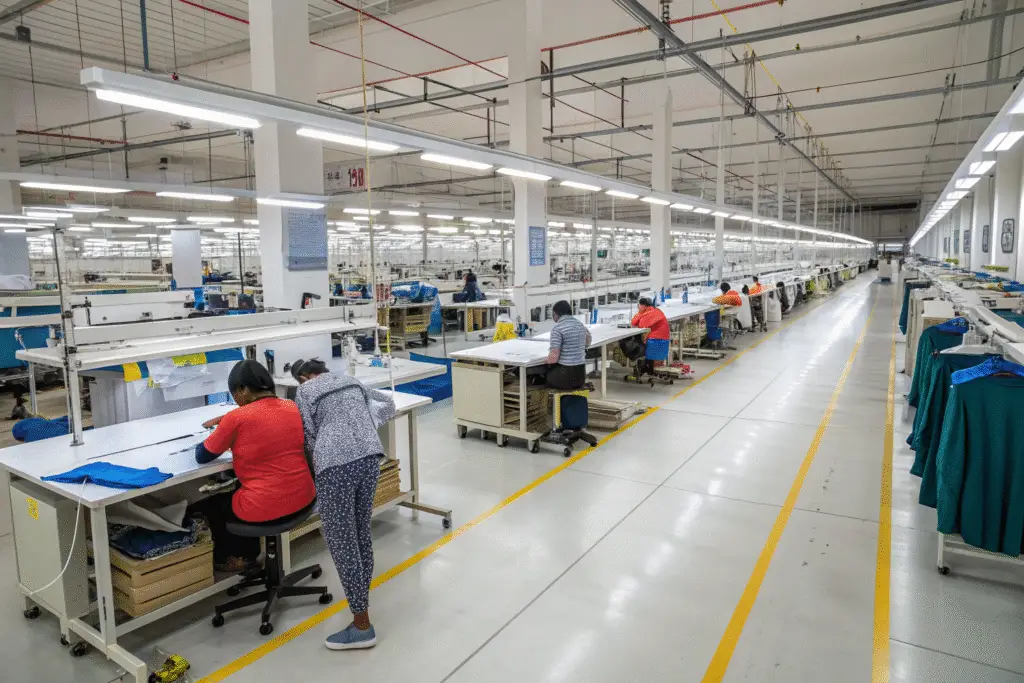
Our sewing lines now use U-shaped cells. Workers handle multiple operations seamlessly. This reduces movement waste significantly. Production flow becomes smooth and continuous. We measure efficiency using real-time data. Our overall equipment effectiveness increased by thirty-five percent. Workers earn more through higher productivity. Morale improves with better working conditions.
What Lean Tools Apply Best to Clothing Production?
Many lean tools translate perfectly to clothing manufacturing. These tools provide practical implementation methods. They help visualize problems and solutions clearly. They engage workers in continuous improvement actively.
The most effective tools include 5S workplace organization, Kanban systems, and standardized work. Poka-yoke (error-proofing) and visual management also prove invaluable. Kaizen events drive rapid improvements. Takt time balancing matches production to customer demand. Each tool addresses specific challenges in garment production.
How does 5S improve clothing factory organization?
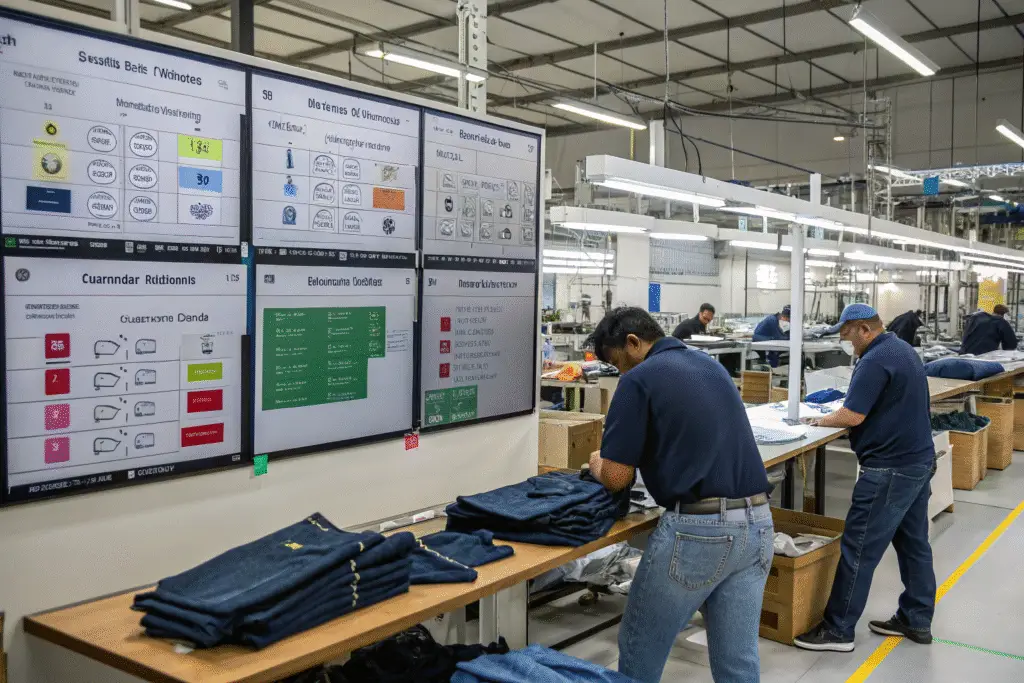
5S creates clean, organized, and safe workplaces. The five S's are sort, set in order, shine, standardize, and sustain. We apply 5S throughout our manufacturing facilities. This foundation supports other lean methods effectively.
Our cutting department implemented 5S thoroughly. We removed unnecessary items from work areas. We organized tools and materials for easy access. We established cleaning standards and schedules. We created visual indicators for proper organization. We trained all workers in 5S principles. Results included twenty percent productivity increase. Quality errors decreased by thirty percent. Safety incidents dropped significantly.
How does Kanban control material flow?
Kanban regulates material movement using visual signals. It creates pull-based production systems. This prevents overproduction and excess inventory. We use Kanban cards in our sewing lines. Each card authorizes production of specific quantities.
Our assembly lines now work with Kanban systems. Operators receive components only when needed. This reduces work-in-process inventory dramatically. Space requirements decrease substantially. Problems become visible immediately. We respond to issues faster. Our inventory turnover improved by fifty percent. Cash flow increased significantly.
How Does Lean Manufacturing Enhance Quality?
Quality remains paramount in clothing production. Customers reject defective garments consistently. Lean manufacturing builds quality into processes directly. It prevents defects rather than detecting them later. This approach proves far more effective and cost-efficient.
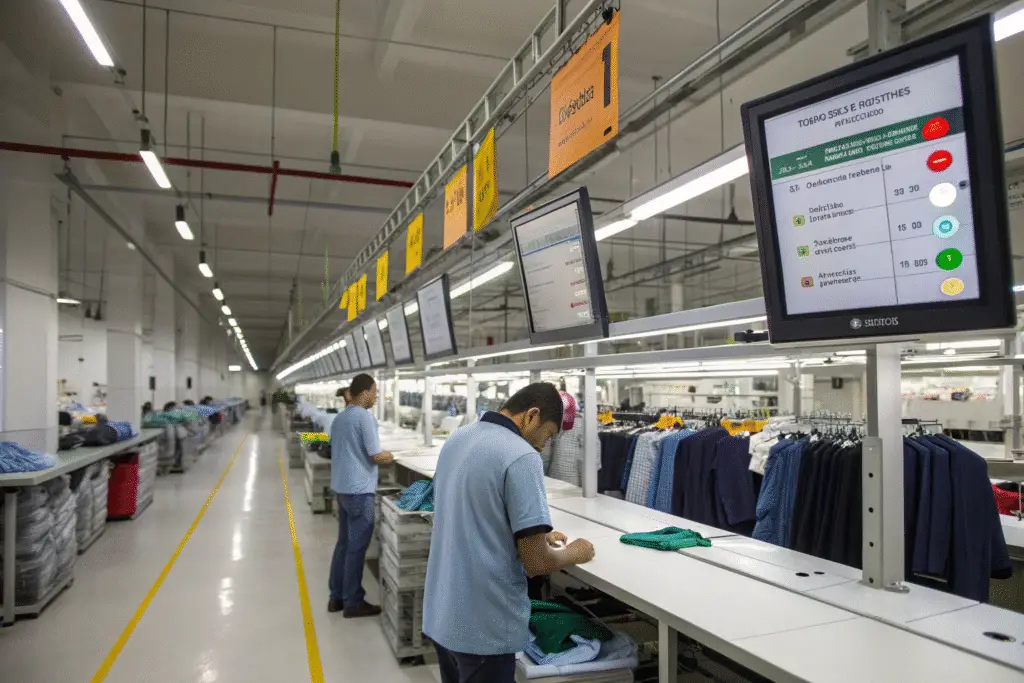
Lean quality methods include jidoka (automation with human touch). Andon systems alert problems instantly. Poka-yoke devices prevent errors systematically. Standardized work ensures consistent quality. Root cause analysis solves problems permanently. These methods create sustainable quality improvement.
How does lean reduce defects in garment production?
Lean attacks defect sources systematically. We identify where and why defects occur. We implement error-proofing devices at key processes. We establish quality checkpoints within production flow. We empower workers to stop lines when detecting problems.
Our sweater production had seam quality issues. We analyzed the sewing process thoroughly. We discovered machine maintenance was inconsistent. We implemented standardized maintenance procedures. We added guides to ensure proper seam alignment. We trained operators in quality standards. Defect rates dropped from eight percent to two percent. Customer returns decreased substantially.
How does standardized work improve consistency?
Standardized work documents best practices clearly. It specifies work sequence, timing, and quality requirements. Every operator follows the same method. This ensures consistent output quality. It also facilitates training and problem-solving.
We developed standardized work for all operations. We involved experienced workers in creating standards. We display standards visually at each workstation. We update standards regularly with improvements. Quality variation reduced significantly. New operators reach proficiency faster. Production becomes predictable and reliable.
Conclusion
Lean manufacturing is not merely beneficial for clothing production. It has become absolutely vital for competitive survival. The fashion industry demands speed, quality, and cost efficiency simultaneously. Lean principles deliver these advantages systematically. They transform traditional manufacturing approaches completely.
Our company embraces lean manufacturing thoroughly. We implement these principles across all operations. The results speak for themselves. We reduce costs while maintaining quality. We respond faster to customer demands. We create better working environments. We build sustainable competitive advantages.
The journey requires commitment and persistence. The rewards justify the investment completely. We invite clothing brands to partner with lean manufacturers. Experience the difference in quality, speed, and cost effectiveness. Contact our production team today. Let's discuss how lean manufacturing can benefit your specific needs. Reach our Production Director at production@fumaofabric.com. We will show you real examples and measurable results.