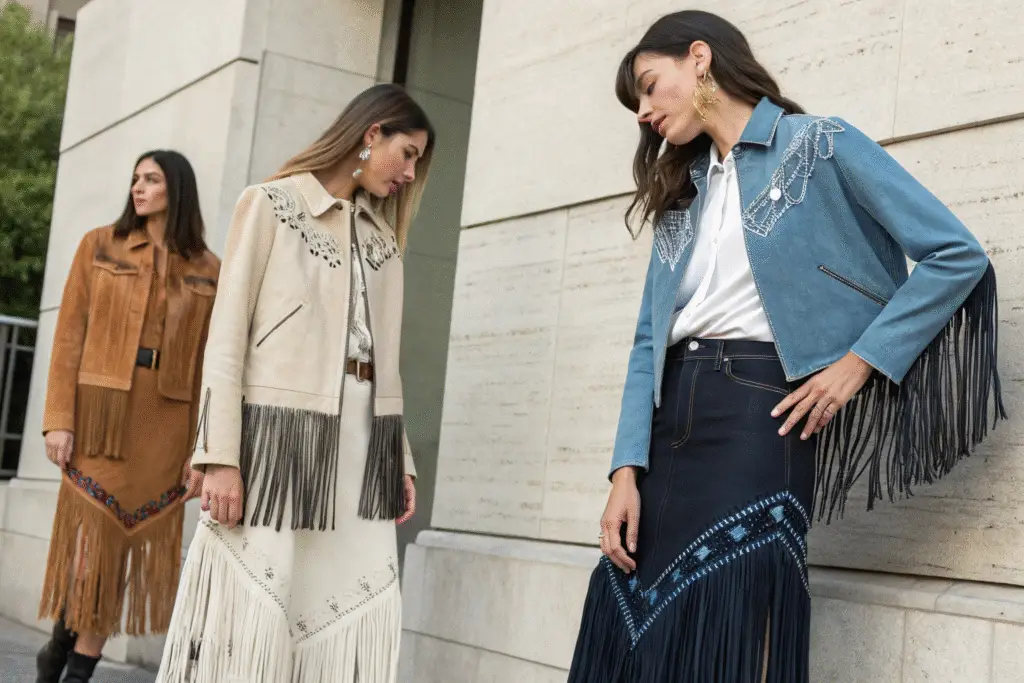
Western wear is making a major comeback. But how can you, as a brand owner, stand out in a crowded marketplace? The answer lies in the details. Fringe is a powerful design element that can transform your collection. It adds movement, texture, and an authentic Western feel that today's consumers crave. This guide will show you how to expertly incorporate fringe into your designs for maximum appeal and profitability.
Fringe details are incorporated into a Western wear line by strategically selecting the right garments, choosing appropriate materials and application techniques, and balancing aesthetics with commercial viability. Successful integration considers garment type, fringe length and density, and production methods to ensure the designs are both fashionable and functional for the target market. Partnering with an experienced manufacturer like Fumao Clothing ensures quality execution from design to delivery.
As a factory owner who has worked with numerous American brands, I've seen firsthand how the right details can make or break a collection. Let's explore how you can use fringe to create best-selling pieces that resonate with your customers and boost your bottom line.
What Are the Key Considerations for Fringe Placement on Garments?
Getting fringe placement right is the first step to a successful design. It's not just about adding fringe; it's about adding it in a way that enhances the garment's silhouette and function. Poor placement can make a piece look cheap or feel uncomfortable to wear.
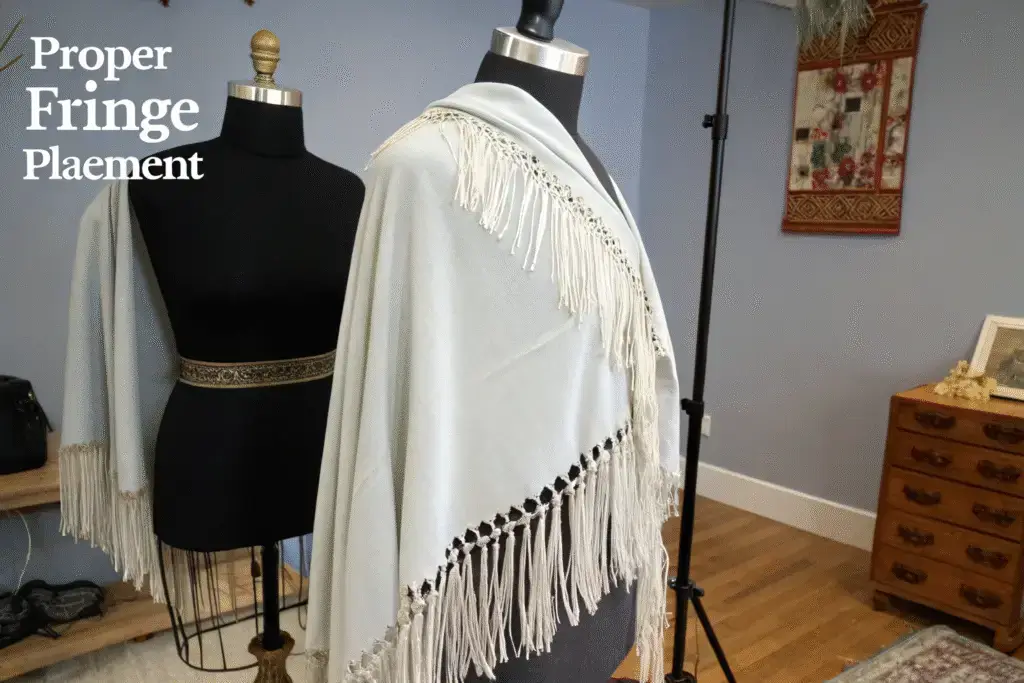
The key considerations for fringe placement are garment type, movement, and visual balance. Fringe should complement the garment's natural lines without hindering movement. For example, sleeve fringe should not interfere with arm mobility, while back fringe on a jacket should flow seamlessly from the shoulders.
How does garment type influence fringe placement?
Different garments demand different fringe strategies. For outerwear like jackets and vests, fringe works well along the sleeves, back yokes, and hemline. This placement creates dramatic movement when the wearer walks. For tops and dresses, consider more subtle placements like shoulder caps or along side seams. On bottoms like skirts or pants, fringe is most effective along the outer seams or hem. The goal is to highlight the body's motion. A common mistake is overloading a single area, which can make the garment look unbalanced and feel heavy. We always advise our clients to start with a focal point and build outwards.
What are the functional aspects of fringe placement?
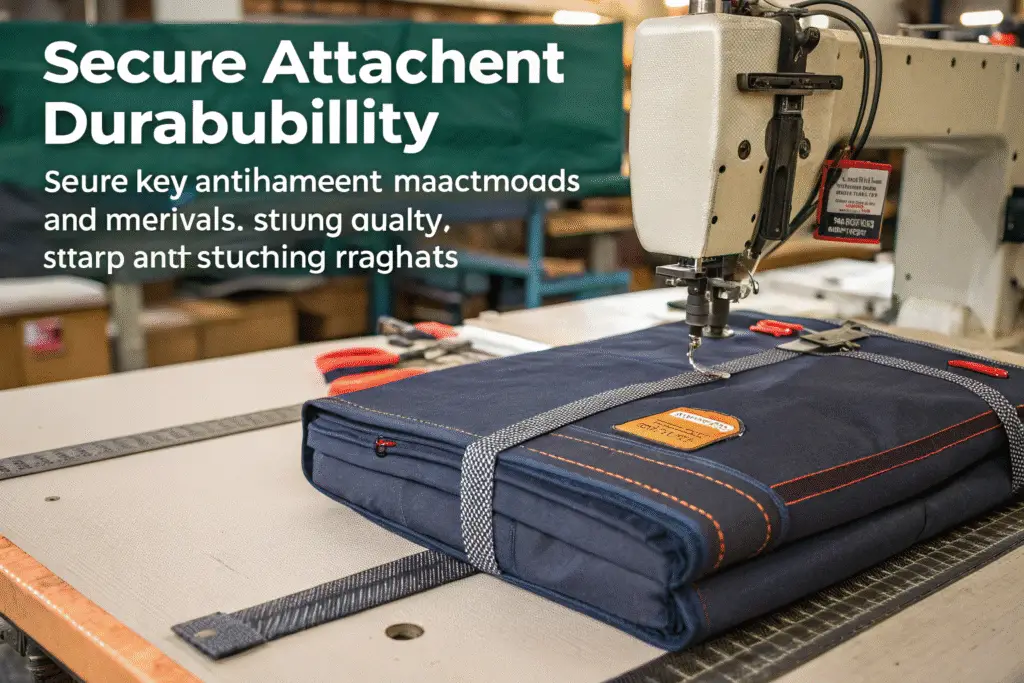
Functionality is as important as aesthetics. Long fringe on sleeves can get caught in everyday activities, so we recommend testing the durability and practicality of every design. For children's wear, shorter, sturdier fringe is safer. The weight of the fringe can also affect how the garment hangs. At our factory, we conduct rigorous quality control checks to ensure that fringe attachments are secure and will not unravel after multiple wears or washes. We use reinforced stitching and high-quality threads to prevent shedding, a common issue with poorly made fringed garments. This attention to detail ensures your designs look great and last longer, protecting your brand's reputation.
Which Materials Work Best for Fringe in Western Wear?
The material you choose for your fringe defines its look, feel, and quality. The wrong choice can lead to a stiff, unattractive drape or a product that doesn't hold up over time. Selecting the right material is crucial for achieving the desired aesthetic and performance.
The best materials for fringe are suede, leather, and specific types of yarn for knitwear. These materials offer the right combination of drape, durability, and authentic Western appeal. The choice depends on the base garment and the target price point.
| Material Type | Best For | Key Characteristics |
|---|---|---|
| Suede | Jackets, vests, bags | Soft drape, authentic look, mid-range price |
| Leather | High-end jackets, accessories | Durable, structured movement, premium feel |
| Knit Yarn | Sweaters, cardigans | Lightweight, cozy, cost-effective |
Why is suede a popular choice for fringe?
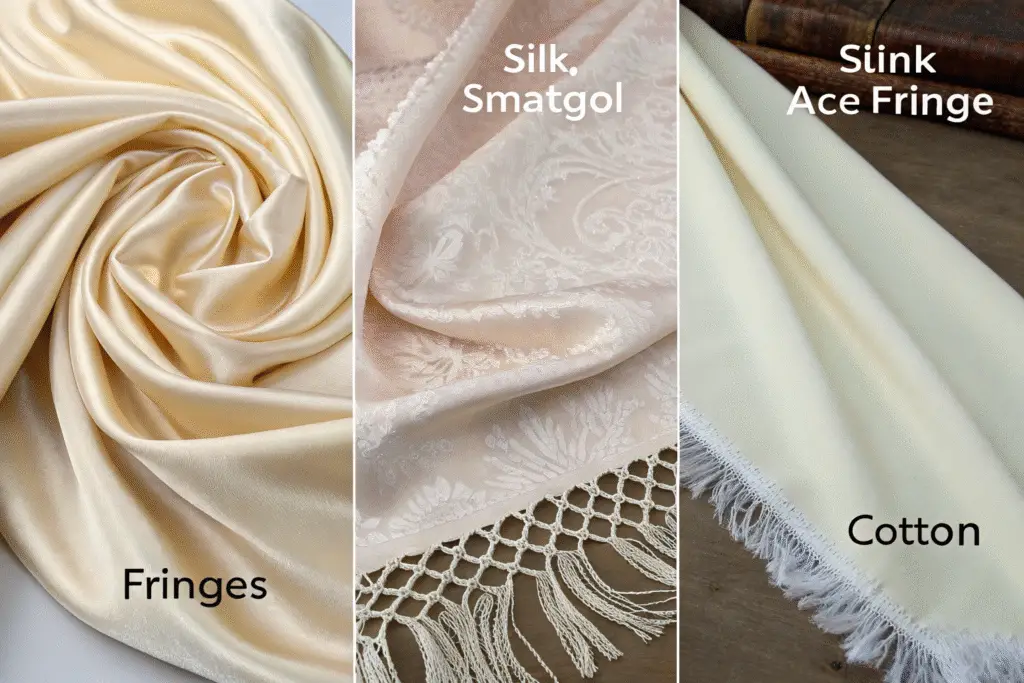
Suede is a top choice because it provides a soft, fluid drape that moves beautifully. It is less rigid than full-grain leather, giving it that classic, flowing Western look. Suede fringe can be cut into thin strips for delicate movement or thicker strips for a bolder statement. From a manufacturing standpoint, suede is also easier to work with during the cutting and sewing processes. We source high-quality suede that is pre-treated for colorfastness to prevent dye from bleeding onto the garment or the customer's skin. This is a critical step in our quality assurance process that some suppliers overlook, but it is essential for customer satisfaction.
How do you select fringe materials for knitwear?
For knitwear like sweaters and cardigans, fringe is typically created from the same yarn as the garment itself. This ensures a perfect match in color and texture. The key is to select a yarn that is strong enough to be cut into tassels without fraying excessively. Plied yarns or those with a tight twist are ideal. We often recommend a customization approach where clients can choose from a library of yarns to create a unique look. The application method is also different; knit fringe is often tied or looped into the finished garment rather than sewn on. This requires specialized equipment and skilled technicians, which is a core part of our full-package manufacturing service for knitwear.
How to Ensure Quality and Durability of Fringe Details?
Fringe that falls off or looks worn after a few uses will lead to customer returns and damage your brand's reputation. Quality and durability are non-negotiable, especially for brands that prioritize customer satisfaction and long-term value.
Ensuring quality and durability involves two key areas: secure attachment methods and selecting high-quality base materials. It's a combination of robust manufacturing techniques and smart material sourcing that prevents common issues like shedding and tearing.
What are the best methods for attaching fringe?
The attachment method depends on the garment and fringe material. For suede and leather on woven garments, we use a bar tack at the top of each fringe strip. This is a reinforced stitch that locks the fringe in place. For heavier fringe, we sometimes use a combination of stitching and a strong fabric adhesive for extra security. In our factory, we follow a strict protocol for quality control where a sample from each production run is tested on a machine that simulates wear and movement. This helps us identify any potential weakness in the attachment before mass production begins. This proactive approach saves our clients from the headaches of delayed shipments and faulty products.
How does material quality impact fringe longevity?
The quality of the fringe material itself is paramount. Low-grade leather or suede will crack and become brittle over time. Similarly, low-quality yarn will fray and shed. We insist on using materials that pass our internal quality tests for tensile strength and colorfastness. We also ensure that all our materials come with the necessary certifications, such as OEKO-TEX, which guarantees they are free from harmful substances. This is a major concern for buyers like Ron, who cannot afford to risk their brand's integrity. By controlling our sourcing and production, we provide the reliability that allows our partners to sell with confidence.
What Are the Commercial Advantages of Offering Fringed Western Wear?
Beyond aesthetics, adding fringed pieces to your line is a smart business decision. It allows you to command higher prices, differentiate your brand, and tap into a timeless trend. Understanding the commercial upside helps justify the design and production investment.
The commercial advantages include higher perceived value, strong market differentiation, and the ability to create signature pieces. Fringe details make your products stand out on the shelf and online, attracting more customer attention and justifying a premium price point.
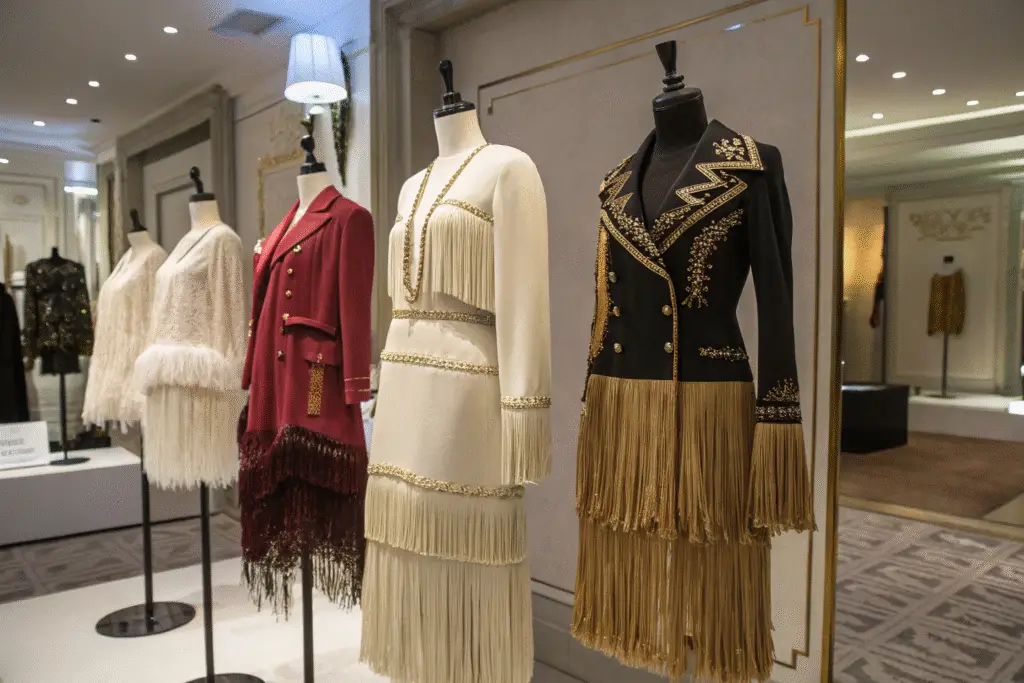
How does fringe increase a product's perceived value?
Fringe is a detail that customers associate with craftsmanship and a bohemian, artisanal feel. This perception allows you to set a higher profit margin compared to a similar plain garment. The added material and labor cost is often outweighed by the increased price the market is willing to pay. For our clients who operate on a DDP (Delivered Duty Paid) model, understanding this cost-value equation is crucial. We help them calculate the exact cost of adding fringe, including materials and extra production time, so they can price their products for maximum profitability without sacrificing competitiveness.
Can fringe details help in building a brand identity?
Absolutely. A consistent and well-executed use of fringe can become a signature element of your brand. Think of it as part of your brand's visual language. When customers see that distinctive fringe, they immediately think of your label. This builds loyalty and repeat business. We work with brands to develop proprietary fringe techniques or use custom-dyed materials that are unique to their line. This level of customization prevents competitors from easily copying your designs. For a business owner like Ron, whose profit model relies on rebranding, having exclusive designs is a powerful advantage in the marketplace.
Conclusion
Incorporating fringe into your Western wear line is a powerful strategy to capture market attention and drive sales. We've explored the critical aspects of placement, material selection, quality assurance, and commercial benefits. Mastering these elements allows you to create compelling, high-quality fringed apparel that resonates with consumers and stands the test of time. Remember, the devil is in the details, and getting those details right is what separates a good collection from a great one.
As you plan your next collection, consider a partner who understands both the art and the science behind these details. At Fumao Clothing, we have the expertise and infrastructure to bring your fringed Western wear visions to life with precision and reliability. Let's create something remarkable together. For a consultation on your apparel manufacturing needs, please contact our Business Director, Elaine, at elaine@fumaoclothing.com.