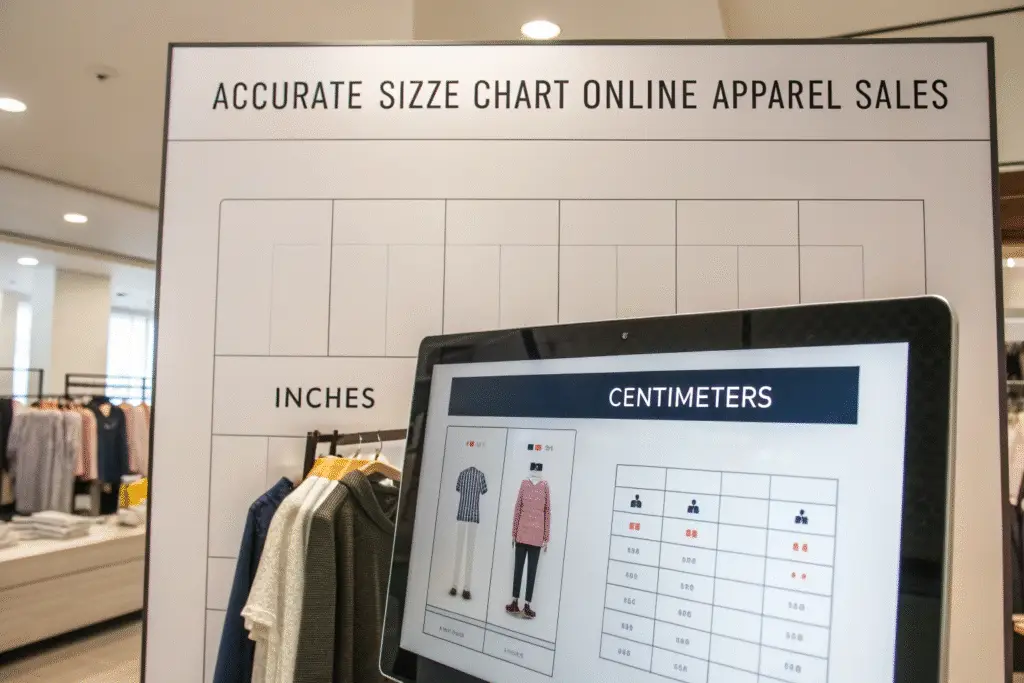
Imagine this: a customer eagerly unboxes their new shirt, only to find it fits like a sack or, worse, is too tight. Their excitement turns to disappointment. This is a common nightmare in online apparel sales, and it all boils down to one thing: inaccurate size charts. For US brands sourcing from overseas, getting sizing right is not just about customer satisfaction; it's the bedrock of profitability and brand reputation.
Accurate size charting is crucial for online apparel sales because it directly bridges the fit uncertainty gap, which is the primary driver of high return rates, customer dissatisfaction, and lost revenue. By providing precise, standardized measurements, brands can build trust, reduce costly returns, and significantly boost conversion rates. In an era where customers can't try before they buy, your size chart is your most critical sales and trust-building tool.
For American apparel brands and distributors like yours, partnering with a manufacturer who understands the nuances of US sizing expectations is a strategic advantage. Let's delve into why precise size charting should be a non-negotiable part of your sourcing strategy.
How Can a Precise Size Chart Reduce Return Rates?
The direct correlation between a vague size chart and a high return rate is undeniable. When customers guess their size, they often guess wrong. This leads to an influx of returned items, which eats into your profits through reverse logistics, restocking, and potential item devaluation.
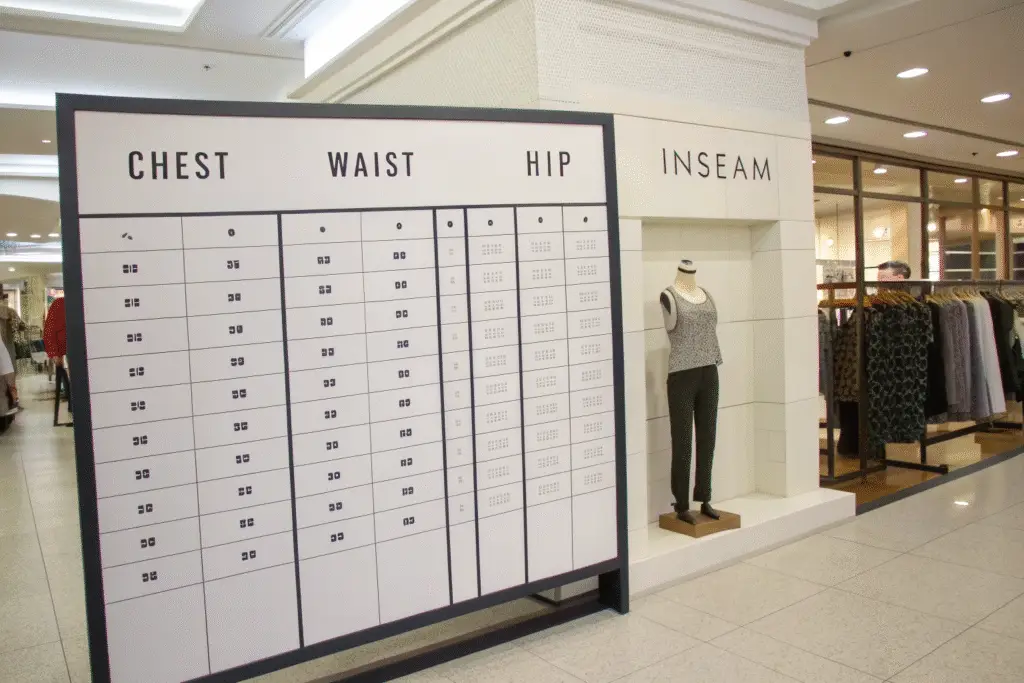
A detailed size chart acts as a powerful tool for size and fit guidance, drastically reducing this guesswork. By providing specific body measurements (chest, waist, hip, inseam) for each size, you empower the customer to make an informed decision. This significantly lowers the probability of ordering an ill-fitting garment in the first place.
What is the true cost of a returned item?
Many businesses only consider the shipping label cost. The true cost is far greater. It includes the outbound shipping, processing the return, inspecting the item, restocking if possible, and the lost opportunity of a sale during that item's absence from inventory. For clothing that cannot be resold as new, the loss is total. Furthermore, high return rates can negatively impact your brand's performance metrics on major e-commerce platforms, potentially affecting your visibility. Implementing a robust apparel quality control process from the manufacturing stage ensures the garments match the size chart promises, preventing a primary cause of returns.
How does standardized sizing build customer trust?
Trust is the currency of online sales. When a customer consistently finds that a size Medium from your brand fits them perfectly every time, they transition from a one-time buyer to a loyal advocate. This reliability is built on standardized and accurate sizing. It shows professionalism and respect for the customer's time and money. They no longer need to order multiple sizes "to be safe," a practice that increases their initial cost and your potential return rate. This trust directly encourages repeat business and positive reviews, which are invaluable for B2B apparel wholesale companies selling to other businesses or end consumers.
What Makes a Size Chart Effective for US Customers?
An effective size chart is more than just a table of numbers; it's a communication tool tailored to its audience. For the US market, this means aligning with local expectations and measurement systems to ensure clarity and ease of use.
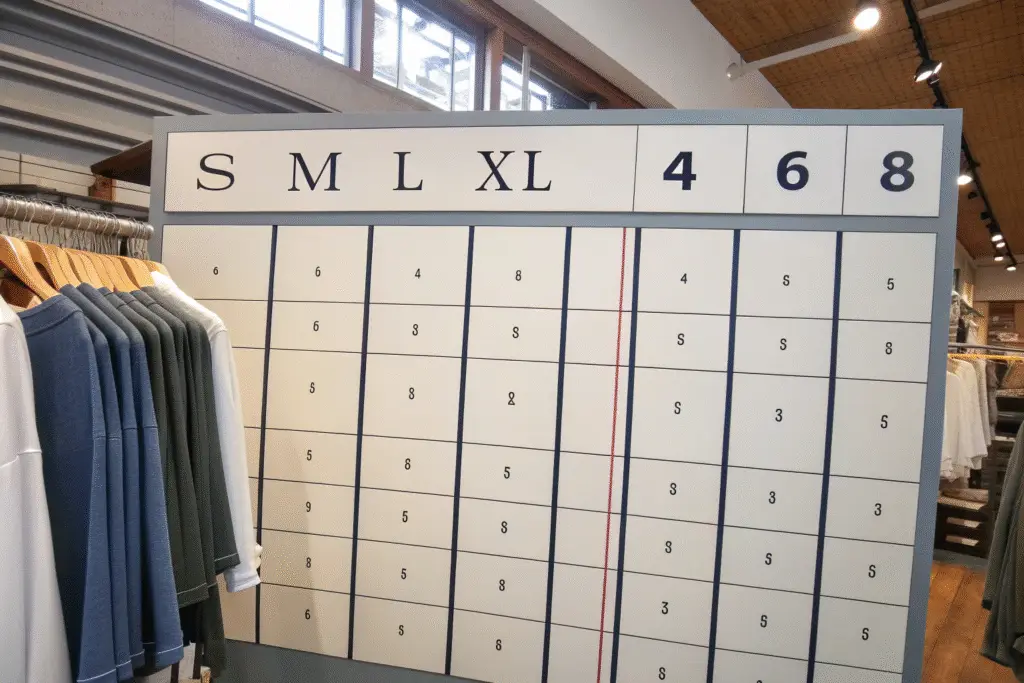
The most fundamental requirement is the use of US standard sizing. While your manufacturing may be overseas, your customers think in terms of S, M, L, XL, and numerical sizes like 4, 6, 8. An effective chart clearly maps your product's specific measurements to these familiar US size labels. This eliminates confusion and makes the chart instantly understandable.
Why should you provide garment measurements?
Body measurements are helpful, but garment measurements are definitive. A customer might know their chest is 40 inches, but they need to know what the actual garment measures at the chest to understand how it will fit on their body. Providing key garment specifications like chest width (pit-to-pit), body length, and sleeve length gives a concrete understanding of the product's dimensions. This is especially crucial for different fits (slim, regular, relaxed) and is a standard practice for professional custom clothing manufacturers.
| Measurement Point | How to Measure | Size S (Inches) | Size M (Inches) |
|---|---|---|---|
| Chest (Width) | Measure across the garment, from underarm to underarm. | 20" | 22" |
| Body Length | Measure from the highest shoulder point to the bottom hem. | 28" | 29" |
| Sleeve Length | Measure from the shoulder seam to the cuff end. | 24" | 25" |
How can visuals improve size chart clarity?
A picture is worth a thousand words, and this is especially true for size charts. Including simple, clear diagrams that show exactly where and how to take each measurement removes all ambiguity. This visual guide helps customers measure themselves correctly or understand how the garment dimensions relate to their body. It also demonstrates a high level of detail-orientation, reassuring customers of your brand's commitment to a perfect fit. This attention to detail is a hallmark of a reliable clothing manufacturer.
How Does Accurate Sizing Impact Brand Reputation?
In the digital age, your brand's reputation is built and broken online. Customer reviews and social media comments are the new word-of-mouth, and few things generate negative feedback faster than inconsistent sizing.
When customers receive items that fit as expected, they are satisfied. When they are consistently surprised by perfect fits, they become vocal advocates. This positive word-of-mouth is free marketing and builds a reputation for reliability. A brand known for its accurate sizing is seen as trustworthy and customer-centric, which are powerful differentiators in the competitive US fashion market.

Can sizing consistency drive customer loyalty?
Absolutely. Consistency is key. If a customer buys a size Medium polo shirt from you and it fits perfectly, they will trust that a size Medium woven shirt will also fit. This consistency removes the perceived risk from future purchases. It encourages customers to come back directly to your brand instead of shopping around, knowing they won't have to deal with the hassle of returns. This loyalty is the foundation for long-term business growth and is a core goal of any full-package manufacturing partnership.
What is the link between sizing and online reviews?
Online reviews are often a direct reflection of a customer's fulfillment of expectations. Sizing is a primary expectation. A scroll through any apparel site will show that a significant portion of negative reviews is related to fit: "Runs small," "Size is inaccurate," "Much larger than expected." These reviews actively deter potential buyers. Conversely, positive reviews like "True to size" and "Perfect fit" serve as powerful social proof, directly influencing purchasing decisions and improving your conversion rates. Managing this aspect of your product offering is as crucial as apparel quality control.
What Role Does the Manufacturer Play in Size Chart Accuracy?
The responsibility for accurate sizing doesn't start with the brand's web developer; it starts at the factory. Your manufacturing partner is the source of the product's dimensions, and their commitment to precision and consistency is the first and most critical link in the chain.
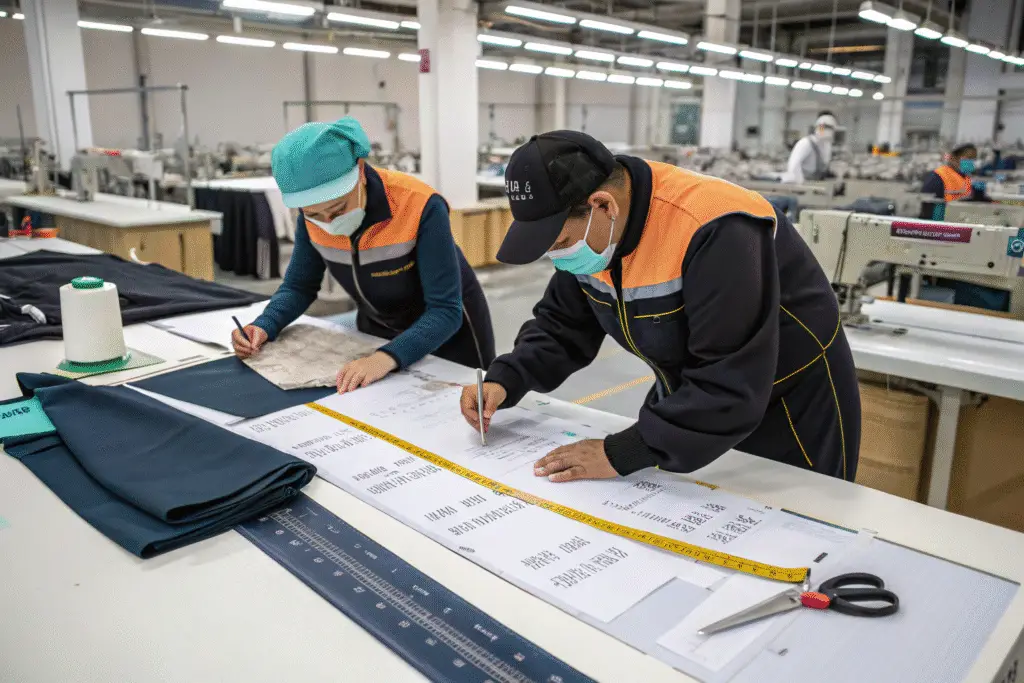
A professional manufacturer doesn't just sew clothes; they engineer them to precise specifications. They understand that a size chart is a promise to the end customer, and they have the technical expertise to ensure that promise is kept across every single production run. This involves rigorous quality assurance protocols specifically for checking garment measurements against approved specs.
Why is pre-production sample approval vital?
The pre-production sample is your first tangible look at the product. This is the moment to physically measure the sample against the proposed size chart. A reliable partner will provide this sample for your approval and will make adjustments based on your feedback. This collaborative step ensures that the measurements you plan to publish online are a 100% accurate reflection of the final product you will receive. Skipping this step is a gamble no serious B2B apparel business should take.
How does DDP shipping support a seamless process?
While not directly related to the size chart itself, a DDP (Delivered Duty Paid) shipping model complements a reliable sizing strategy by simplifying the overall supply chain. When you are confident in your product's fit and quality, you want a logistics partner that ensures those products arrive predictably. A DDP agreement means the manufacturer handles all logistics and customs, leading to more reliable, on-time delivery. This prevents missed selling seasons and ensures that the high-quality, well-sized garments you ordered are available for your customers when they want them.
Conclusion
In the competitive landscape of online apparel sales, an accurate size chart is far from a minor detail—it is a fundamental pillar of your business strategy. It directly defends your profitability by slashing return rates, builds an unshakable brand reputation rooted in trust, and fosters the customer loyalty that drives long-term growth. For US brands and distributors, this precision must be baked into the product from the very beginning, at the manufacturing source. It's not just about providing measurements; it's about delivering on a promise.
Partnering with a manufacturer who possesses the technical expertise, rigorous quality control, and deep understanding of the US market is the most effective way to guarantee this accuracy. If you are ready to eliminate sizing issues and build a stronger, more trusted apparel brand, let's discuss how we can ensure your next order is your most successful one yet. For a partnership focused on precision and reliability, please contact our Business Director Elaine at: elaine@fumaoclothing.com.