
High return rates are a major problem for online clothing businesses. They cut into your profits and create operational headaches. Many brands struggle with this issue, but there are proven ways to fix it.
The key to reducing clothing returns lies in managing customer expectations with superior product information, precise sizing, and robust quality control. By focusing on these areas, you can build trust, increase customer satisfaction, and significantly lower your return rates. This guide will walk you through practical strategies that work.
Let's explore the specific steps you can take to protect your profits and keep your customers happy.
Why Are Accurate Product Descriptions Crucial for Reducing Returns?
Online shoppers cannot touch or try on clothes. They rely entirely on what you show and tell them. Vague or incorrect product descriptions are a primary reason for returns. Customers feel misled when the received item does not match the online presentation.
Providing accurate product descriptions sets the right expectations. It is your first line of defense against returns. Detailed information helps customers make confident purchasing decisions, leading to higher satisfaction and fewer surprises upon delivery.

What specific product details should you include?
You must go beyond basic fabric composition. Include the garment's weight, for example, if it's a light summer shirt or a heavy winter sweater. Describe the texture—is it soft, crisp, or brushed? Detail the opacity; is the white T-shirt see-through? Mention the type of dye used and its colorfastness properties. These specifics prevent misunderstandings about how the product looks and feels in real life. Using high-quality, consistent fabric sourcing partners ensures the materials in your descriptions are the ones you deliver.
How can you improve your product imagery?
Basic mannequin shots are not enough. Use high-resolution photos from multiple angles. Include zoom-in features to show texture and weave. Most importantly, use videos to demonstrate the drape and movement of the garment. Lifestyle photos on diverse models help customers visualize how the clothes fit on different body types. This level of visual detail bridges the gap between the digital and physical product. Investing in good product photography is not an expense; it's an investment in reducing your return rate.
How Can a Better Sizing Strategy Minimize Returns?
Sizing confusion is the biggest driver of clothing returns. A "Large" from one brand can be a "Medium" in another. Customers often guess their size, leading to ill-fitting garments and inevitable returns.
Implementing a clear and consistent sizing strategy builds customer confidence. When shoppers are sure of their size, they are more likely to keep the items they buy. This directly translates to a lower return rate and higher customer loyalty.
What makes a size chart effective?
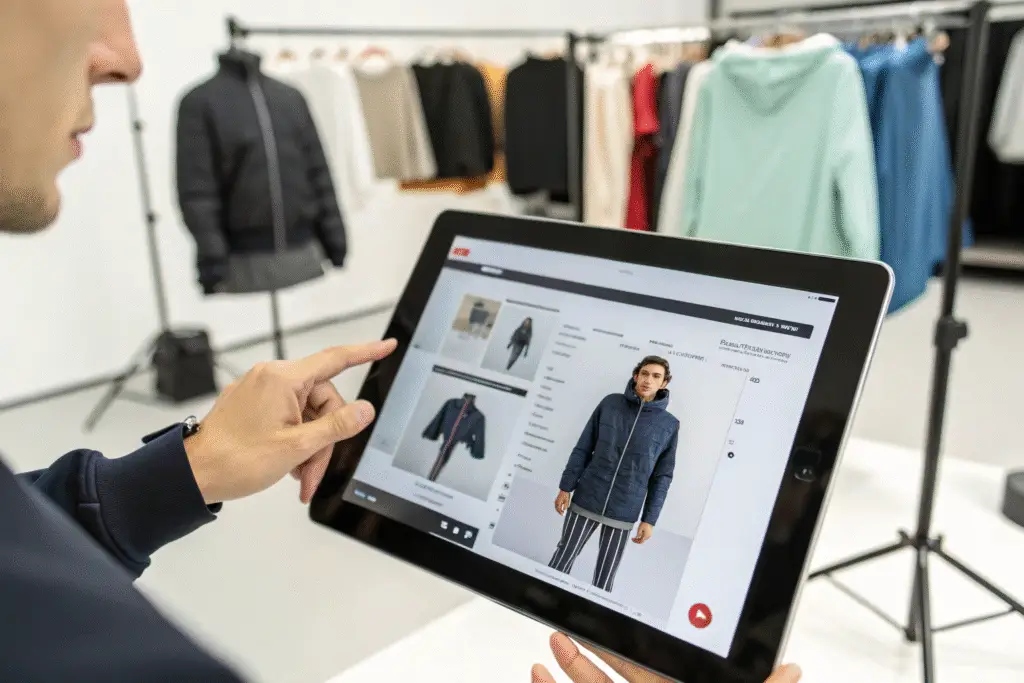
An effective size chart is detailed and brand-specific. Do not use generic templates. It must provide precise garment measurements in inches (for the U.S. market) for chest, waist, hip, and length. Include a clear guide on how to measure. It is also helpful to show the model's height and the size they are wearing in the photos. This gives a real-world reference point. For international brands, adhering to standard US clothing sizes in your charts prevents confusion for American buyers.
What are the benefits of fit guides and tools?
Beyond static charts, interactive fit guides are powerful. You can ask customers about their height, weight, and preferred fit (slim, regular, relaxed) to recommend a size. Some tools even integrate user-generated feedback, showing "90% of people who are 5'10" bought size Medium." This social proof is incredibly persuasive. These technologies act as a virtual fitting room, drastically reducing sizing uncertainty. Exploring advanced 3D body scanning technology can be the next step for even greater accuracy.
Why is Rigorous Quality Control Non-Negotiable?
A product can have perfect descriptions and sizing, but if it falls apart after one wash, it will be returned. Quality issues destroy trust and damage your brand's reputation. Customers expect durability and flawless construction.
Stringent quality control is your final safeguard. It ensures that every garment leaving the factory meets the promised standards. This consistency means customers receive exactly what they paid for, which is fundamental to reducing returns and building a reputable brand.

What should a factory's QC process cover?
A comprehensive QC process checks for many potential defects. This includes inspecting stitching for consistency and strength, verifying that colors match the approved standards, checking for fabric flaws like holes or stains, ensuring patterns are aligned correctly, and confirming that buttons, zippers, and other trims are securely attached and function properly. A reliable manufacturer will have a documented quality control checklist for every production run.
How does pre-shipment testing prevent problems?
Proactive testing is crucial. This involves performing tests on fabric samples before mass production and on finished goods before shipment. Common tests include checking for colorfastness to washing and rubbing, assessing dimensional stability (shrinkage), and testing pilling resistance. Providing these test reports, often from certified labs, gives you and your customers confidence in the product's longevity. Insisting on AATCC test methods, which are industry standards, is a best practice for the U.S. market.
Can Transparent Logistics and Policies Build Trust?
Unexpected delays or hidden costs can lead to frustration and returns, even if the product itself is perfect. Customers value honesty and clarity about when their order will arrive and what it will cost them.
Transparency in logistics and your return policy builds long-term trust. When customers know what to expect, they are more patient and understanding. A clear, fair policy can even discourage unnecessary returns.

What are the advantages of DDP shipping terms?
DDP (Delivered Duty Paid) is a major advantage for U.S. importers. With DDP, the seller (the manufacturer) handles all costs and logistics, including freight, insurance, and most importantly, import duties and taxes. The buyer receives a single, all-inclusive price and does not face surprise fees at customs. This smooth, predictable experience greatly enhances customer satisfaction and reduces friction that can lead to order cancellations or returns. Choosing a manufacturer experienced in DDP shipping for USA is critical.
How to create a return policy that protects your business?
A good return policy is clear, fair, and easy to find. State the return time window clearly (e.g., 30 days). Define the condition items must be in for a return (e.g., unworn, with tags). Be transparent about who pays for return shipping. Consider offering exchanges or store credit instead of full refunds to retain revenue. A well-structured policy manages customer expectations and protects your bottom line. It's a key part of a solid e-commerce returns management strategy.
Conclusion
Reducing returns is not about luck; it's about strategy. By focusing on accurate product descriptions, a clear sizing guide, rigorous quality control, and transparent logistics, you can directly address the root causes of returns. This proactive approach saves you money, streamlines your operations, and, most importantly, builds a stronger, more trusted brand that customers want to buy from again.
Implementing these strategies requires a reliable manufacturing partner who understands these challenges. If you are looking for a factory that prioritizes quality, accurate communication, and seamless DDP logistics to the U.S., we can help. Let's work together to create clothing that your customers will love and keep. For a direct conversation, please contact our Business Director Elaine at: elaine@fumaoclothing.com.