Have you ever finished a workout feeling drenched and uncomfortable? You push your limits, but your sportswear seems to hold you back, trapping sweat and heat. This common frustration highlights a critical element in athletic apparel: the fabric. The right material can make the difference between a productive session and a miserable one. For athletes and fitness enthusiasts, the quest for clothing that keeps up with their intensity is never-ending. So, what is the key to staying cool and dry? The answer lies in understanding the technology behind the textiles.
Breathable mesh fabric is essential for sportswear because it actively manages the body's microclimate during physical activity. It facilitates superior air circulation, allowing heat to escape and cool air to enter. Simultaneously, it wicks moisture away from the skin to the fabric's outer surface, where it can evaporate quickly. This process of enhanced ventilation and rapid drying is crucial for maintaining a stable body temperature, preventing overheating, and ensuring comfort, which directly impacts athletic performance and endurance. Without this functionality, clothing becomes a barrier, leading to discomfort, chafing, and even heat-related issues.
Let's explore the specific reasons why this innovative textile has become a non-negotiable standard in performance apparel and how it can benefit your activewear line.
What are the benefits of breathable mesh fabric?
When you choose sportswear made with breathable mesh, you're selecting a tool designed for performance. This fabric does more than just cover the body; it works with it. The primary benefits address the core challenges faced by anyone who is active, from professional athletes to weekend warriors. By solving these problems, mesh fabric enhances the entire exercise experience, making it more effective and enjoyable.
The main benefits are superior moisture management and enhanced airflow. These two functions work together to regulate body temperature. Mesh fabric pulls sweat away from your skin. This keeps you dry and reduces the sticky, heavy feeling of wet cloth. At the same time, the open structure of the mesh allows for constant air exchange. This ventilation cools the body naturally and prevents the buildup of heat and humidity inside the clothing.

How does moisture management work?
Moisture management is the fabric's ability to transport sweat. It is a key feature of high-performance textiles. The process relies on capillary action, where moisture is drawn along the tiny fibers of the fabric. Hydrophilic (water-attracting) materials pull the sweat from your skin into the fabric. Then, the moisture is spread over a larger area so it can evaporate faster. This is the principle behind moisture-wicking. Without this, sweat would pool on your skin, leading to discomfort, chafing, and a higher risk of skin irritation. Effective moisture management keeps the athlete dry and comfortable from start to finish.
Why is temperature regulation important?
Maintaining a stable body temperature is critical for both safety and performance. During exercise, your body generates significant heat. If this heat is not dissipated, your core temperature can rise to dangerous levels, leading to heat exhaustion or heat stroke. Breathable mesh fabric acts as a cooling system. The open knit structure creates a pathway for heat to escape from your body. This constant release of heat helps prevent overheating. Furthermore, by keeping the skin dry, the body's own natural cooling mechanism—the evaporation of sweat—works more efficiently. Proper temperature regulation allows you to exercise longer and harder with less perceived effort.
How to identify high-quality breathable fabric?
Not all mesh fabrics are created equal. As a buyer, knowing how to distinguish premium quality from inferior options is crucial for your brand's reputation. Low-quality mesh may look the part but can fail in performance, leading to customer complaints and returns. The key lies in understanding the specifications and certifications that truly matter. It's not just about the holes in the fabric; it's about the engineering behind them.
You can identify high-quality breathable fabric through its material composition, construction density, and official certifications. Look for technical synthetic fibers like polyester or nylon that are specifically engineered for wicking. Check the fabric's weight and thickness; a good balance is needed for both breathability and durability. Most importantly, trust independent verification. Certifications from organizations like Oeko-Tex ensure the fabric is free from harmful substances, while others may test specific performance claims like moisture management.

What material composition is best?
The best material composition for breathable sportswear is a blend of synthetic fibers, often with a small percentage of elastane. Polyester is the most common due to its excellent durability, moisture-wicking properties, and quick-drying nature. Nylon is also a great choice as it is soft, strong, and resilient. Many high-performance fabrics use a blend of both. A small amount of spandex (usually 5-10%) is added for necessary stretch and freedom of movement. While natural fibers like cotton are breathable, they absorb and retain moisture, making them a poor choice for intense activity. The right composition ensures the fabric performs under stress.
Which certifications should you look for?
Certifications provide an unbiased guarantee of a fabric's quality and safety. For international buyers, the Oeko-Tex Standard 100 is one of the most important. It certifies that the fabric has been tested for a wide range of regulated and harmful chemicals, making it safe for human skin. For performance, look for certifications related to specific functions. While there isn't one universal "breathability" certification, many testing institutes provide reports on moisture vapor transmission rate (MVTR) and water vapor permeability (WVP). Your manufacturer should be able to provide these test reports to validate their claims.
What is the manufacturing process of mesh fabric?
Understanding how mesh fabric is made gives you insight into its performance and helps in communicating value to your end customers. The process is a combination of advanced fiber science and precise textile engineering. It's not simply about punching holes into cloth; it's about creating a structured, functional textile designed for a specific purpose. This knowledge is power when evaluating potential manufacturing partners.
The manufacturing process involves extrusion of synthetic polymers, knitting in a specific mesh pattern, and finishing with specialized treatments. First, pellets of polyester or nylon are melted and forced through a spinneret to create continuous filaments. These filaments are then texturized to enhance wicking and softness. Next, the yarn is knitted using a special loom that creates the characteristic open, net-like structure of mesh. Finally, the fabric undergoes dyeing and finishing, where it receives performance-enhancing treatments like anti-odor or UV protection coatings.

How is the knit structure different?
The knit structure is what gives mesh its unique properties. Unlike a standard woven fabric with a tight, uniform crisscross, or a simple weft knit like a T-shirt, mesh is typically a warp knit. This means the loops are made vertically along the length of the fabric. A common type is the tricot knit, which is stable and run-resistant. Another is the raschel knit, which can create more open, net-like patterns. This engineered structure creates tiny pores or channels that are consistent and durable, allowing for maximum airflow without sacrificing the fabric's integrity. The specific pattern and density of these pores are calculated for optimal performance.
What functional finishes are applied?
After knitting and dyeing, functional finishes are applied to elevate the fabric's performance. These are chemical or mechanical treatments that add properties the base fiber may not have. Common finishes for sportswear mesh include:
- Moisture-Wicking Finish: A hydrophilic treatment that enhances the fabric's ability to pull sweat away from the skin.
- Anti-Microbial Finish: Inhibits the growth of odor-causing bacteria on the fabric.
- UV Protection Finish: Blocks harmful ultraviolet rays from reaching the skin.
These finishes are a critical part of the full-package manufacturing process, transforming a basic mesh into a high-tech performance material.
How to style mesh panels in sportswear design?
The integration of mesh is not just a technical decision; it's a design one. Today's consumers demand apparel that is both functional and fashionable. Strategically placed mesh panels can create visually appealing styles that also serve a physiological purpose. This fusion of form and function is key to creating sportswear that stands out in a crowded market and resonates with style-conscious athletes.
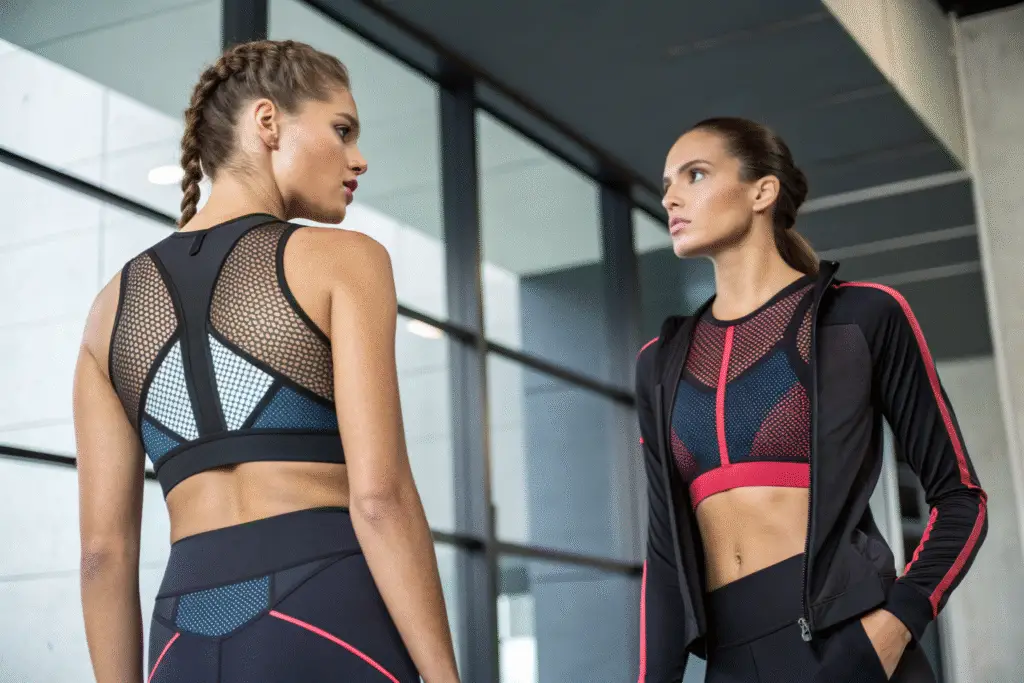
You can style mesh panels by strategically placing them in high-heat and high-mobility zones for both function and aesthetics. Common placement areas include the underarms, sides of the torso, upper back, and behind the knees. From a design perspective, mesh panels can be used to create color blocks, contrast, and dynamic visual lines. For example, a dark top with bright neon mesh under the arms adds a "tech" look while providing crucial ventilation. This approach allows designers to enhance the garment's performance without compromising on style.
Where are the key placement zones?
The key placement zones for mesh panels are areas of the body that generate the most heat and sweat or require maximum flexibility. Strategic placement ensures the technology works where it's needed most:
- Underarms and Sides (Lats): Allows heat to escape from the core.
- Center and Upper Back: A large area for heat dissipation.
- Knee Backs and Inner Elbows: High-flexibility joints that benefit from ventilation.
Designing with these ergonomic principles in mind ensures the apparel provides targeted comfort and performance, which is a major selling point for informed consumers.
How to combine fashion and function?
Combining fashion and function is about making the technical elements a visible part of the design language. Use mesh as an accent material in contrasting colors to create a bold, athletic silhouette. Consider laser-cut or seamless bonding techniques to attach mesh panels for a cleaner, more high-end look compared to traditional stitching. The rise of "athleisure" means that details like subtle mesh insets on the sides of a track pant or the back of a hoodie can make the garment appealing for both the gym and casual wear. This dual-purpose design expands your market reach and increases the perceived value of your products.
Conclusion
Breathable mesh fabric is far more than a trend; it is a fundamental component of modern sportswear. Its ability to manage moisture, regulate temperature, and provide unmatched comfort through strategic design makes it indispensable. From the science of its knit structure to the application of smart finishes, every aspect of this fabric is engineered to enhance athletic performance. For brand owners and buyers, understanding these details is crucial for making informed sourcing decisions and creating products that truly meet the needs of the market.
Choosing the right manufacturing partner is the final, critical step in bringing high-performance, mesh-integrated sportswear to life. A partner with proven expertise can guide you on material selection, efficient production techniques, and innovative design integration. If you are looking to develop a new line of sportswear that leverages the power of breathable mesh fabric, we should talk. Let us help you create apparel that your customers will love. For a direct conversation about your production needs, please contact our Business Director, Elaine, at elaine@fumaoclothing.com.