Hold on. If you're an apparel buyer or brand owner, you just read that title and thought, "Meteorite blends? That can't be right." You're correct. This is a deliberate mistake to make a critical point. In the fast-paced world of fashion sourcing, encountering suppliers who make grand, unrealistic promises is a common and costly pain point. They might promise "space-age" fabrics or "AI-powered" production with no substance, leading to delayed shipments and compromised quality. This article will instead focus on the real, tangible innovations that are actually transforming apparel manufacturing for U.S. brands today.
The true innovation in apparel manufacturing isn't about gimmicks; it's about leveraging smart technology and refined processes to solve core business challenges. For American brands sourcing from overseas, the real breakthroughs are in predictive production planning, 3D virtual prototyping, automated quality control, and data-driven fabric sourcing. These technologies directly address the critical pain points of communication delays, missed deadlines, and quality inconsistencies that plague the traditional sourcing model.
Let's move beyond the hype and examine the four key areas where practical, AI-enhanced innovation is delivering measurable value and a competitive edge for our partners. These are the tools we use every day to ensure reliability, quality, and efficiency.
How Can AI Improve Garment Production Planning and Efficiency?
The old way of production planning relied on spreadsheets and best guesses, often leading to bottlenecks and delays. Modern AI-driven planning tools analyze vast amounts of data to create optimized schedules.
AI algorithms can predict potential delays by analyzing factors like material lead times, production line capacity, and even historical weather data affecting shipping routes. This proactive approach allows us to build realistic timelines from the start, significantly reducing the risk of you missing your crucial selling season. For a brand owner, this predictability is as valuable as a lower price point.

What is Predictive Production Planning?
Predictive production planning uses historical data and machine learning to forecast manufacturing timelines with high accuracy. Instead of relying on static deadlines, the system continuously learns from each production run. It can anticipate issues like a delay in receiving a specific fabric dye or a slowdown on a particular sewing line. This allows our production managers to make adjustments before a small problem becomes a major delay. This directly tackles the pain point of unreliable suppliers. We integrate these systems with platforms like Oracle NetSuite for seamless supply chain visibility, ensuring you are updated in real-time.
How Does Real-Time Data Prevent Shipping Delays?
Real-time data is the key to preventing logistical nightmares. By using Internet of Things (IoT) sensors on shipments and integrating with logistics software, we gain live visibility into the location and condition of your order. If a shipment is held up at a port, we know immediately and can work on alternatives. This level of transparency means no more surprises. You can plan your marketing and sales activities with confidence, knowing exactly when your goods will arrive. This approach to supply chain management is a core part of our DDP (Delivered Duty Paid) service, ensuring a smooth journey to your U.S. warehouse.
What Role Does 3D Prototyping Play in Faster Product Development?
The traditional sample-making process is slow and expensive, often involving multiple international mailings. 3D prototyping technology revolutionizes this first critical stage.
Using software like Browzwear or CLO 3D, we can create hyper-realistic digital samples of your designs. You can see how a fabric drapes, how a color looks under different lights, and even how a garment fits on a digital avatar. This means we can achieve sample approval in days, not weeks, and at a fraction of the cost. This speed is a massive advantage in the fast-moving fashion market.

How Does 3D Design Reduce Time-to-Market?
3D design slashes the time-to-market by eliminating the need for physical samples in the initial stages. You can request changes to a stitch, color, or fit with a click, and we can update the digital sample instantly. This streamlined communication prevents the misunderstandings that often occur with email descriptions or photos of physical samples. It empowers you, the brand owner, to make confident decisions faster. This process is a cornerstone of efficient apparel product development, ensuring that when we move to physical sampling, the design is 90% finalized.
Can Virtual Samples Improve Communication with Suppliers?
Absolutely. Virtual samples create a universal visual language that bridges the gap between your vision and our execution. Instead of lengthy emails trying to describe a "looser fit," we can adjust the digital model and show you immediately. This solves the critical pain point of inefficient communication with sales reps. It makes you an active participant in the development process, reducing errors and ensuring the final product matches your exact expectations. This collaborative approach is a key benefit of working with a manufacturer skilled in digital fashion technology.
How is Automated QC Ensuring Superior Garment Quality?
Quality sensitivity is a top priority for brands protecting their reputation. Automated Quality Control (QC) systems provide a level of consistency and detail that is humanly impossible to maintain 24/7.
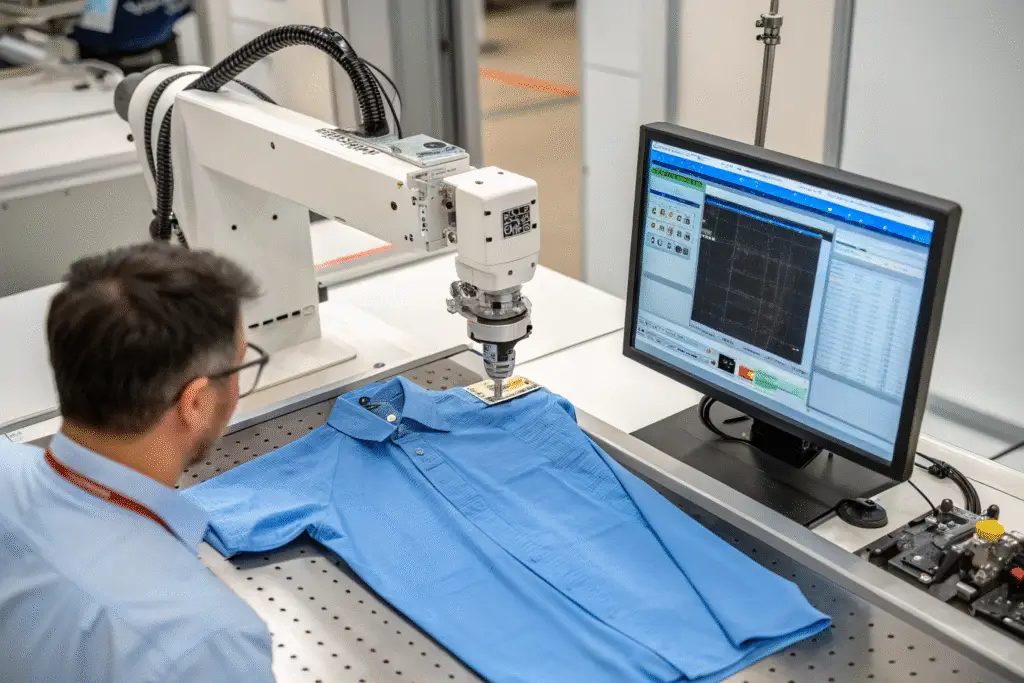
Using high-resolution cameras and computer vision AI, our production lines can inspect every garment for defects like stitching errors, color inconsistencies, or fabric flaws at high speed. This 100% inspection rate guarantees that the quality of the first piece is the same as the ten-thousandth piece, giving you complete peace of mind.

What is Computer Vision in Garment Inspection?
Computer vision systems are trained to recognize perfect stitching, correct patterns, and acceptable fabric textures. They scan each garment against a digital "golden sample." If a sleeve is misaligned by even a few millimeters, the system flags it instantly. This technology is far more reliable than human spot-checking and is not subject to fatigue. It ensures that every item you receive meets your stringent quality control standards, protecting your brand's value.
Why are Digital Quality Certifications More Trustworthy?
To address the concern of falsified certificates, we provide digital, blockchain-secured quality certifications. Each inspection report is logged on an immutable digital record that you can access online. This provides transparent and verifiable proof that your order has passed our rigorous checks. This builds trust and eliminates the risk of dealing with dishonest suppliers. You can confidently verify our compliance with standards like OEKO-TEX® or other relevant certifications, knowing the data is authentic.
Can AI-Optimized Fabric Sourcing Cut Costs and Lead Times?
Fabric sourcing is a complex puzzle of cost, quality, availability, and sustainability. AI-powered platforms now analyze global fabric markets to find the optimal solution for each order.
These systems can cross-reference your design specifications with supplier databases, predict price fluctuations, and identify materials with the best performance for the intended use. This means we can source the perfect fabric faster and at a better price, passing the savings and efficiency on to you.
How Does Data-Driven Sourcing Find Better Materials?
Data-driven sourcing goes beyond calling familiar suppliers. It continuously scans the market for new mills and material innovations. For instance, if you need a sustainable polyester for activewear, the AI can identify suppliers with the right certifications, the best prices for your volume, and the shortest lead times. This optimization is crucial for maintaining competitive pricing without compromising on your values or quality requirements.
How Does Smart Sourcing Enhance Sustainability?
Smart sourcing directly supports sustainability goals. By optimizing material choices and reducing waste through precise ordering, we minimize the environmental impact of your collection. AI can help identify fabrics with a lower water footprint or recycled content that meets your performance needs. This allows you to build a more sustainable fashion line, which is increasingly important to today's consumers. It's a clear example of how innovation aligns good business with good practices.
Conclusion
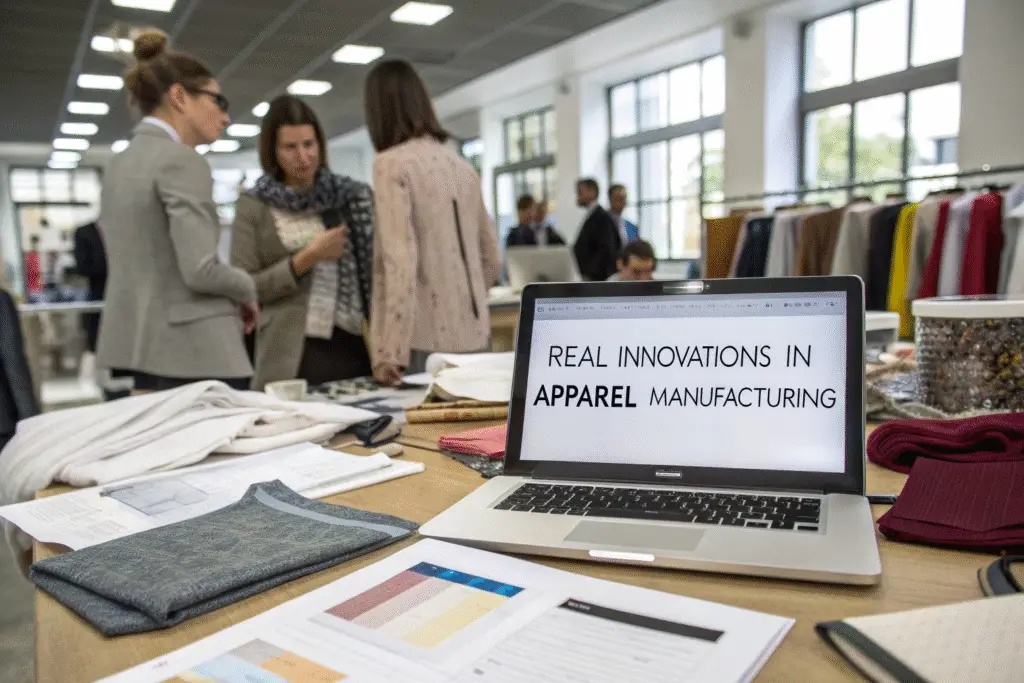
The real innovations in apparel manufacturing are not found in fictional meteorite blends but in the practical application of AI and advanced technologies to solve age-old industry problems. From 3D prototyping that accelerates design to automated QC that guarantees quality, these tools are transforming what it means to source clothing from overseas. They directly address the core pain points of delay, communication, and quality that can make or break a brand's season.
Partnering with a manufacturer who invests in these technologies is no longer a luxury; it's a necessity for brands that want to compete and win in the U.S. market. These innovations provide the predictability, quality, and efficiency you need to grow your business with confidence.
If you are ready to experience a modern, transparent, and reliable manufacturing partnership, we should talk. Let us help you bring your next collection to life with precision and speed. For a consultation on your specific needs, please contact our Business Director, Elaine, at elaine@fumaoclothing.com. We look forward to becoming your trusted partner in apparel manufacturing.