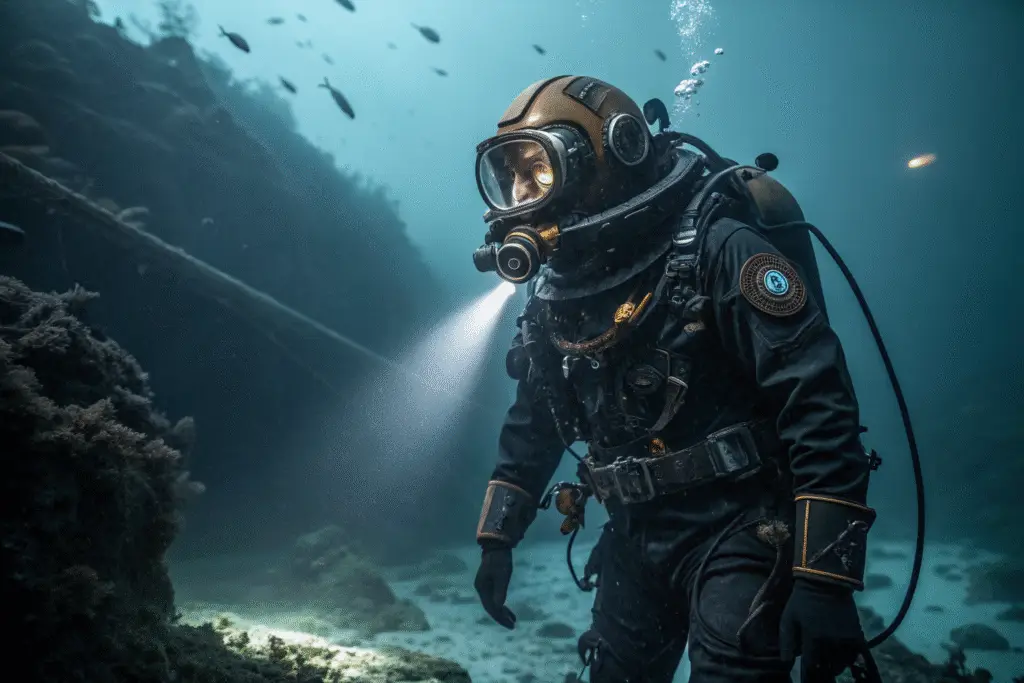
Deep-sea diving pushes both people and equipment to their limits. A diving suit is not just clothing—it’s essential gear that protects against extreme pressure, icy water, and underwater hazards. As underwater exploration and marine industries expand, customizable diving suits are becoming more important than ever.
Smart sourcing starts with checking fabric durability, reviewing modular options, confirming certifications, and working with manufacturers who specialize in protective wear.
From my experience in apparel and safety gear, I’ve seen how tailored features can help divers stay safe and comfortable even during the toughest missions. Here’s what matters most when sourcing these suits.
Which fabrics make a suit durable underwater?
Material choice comes first. Diving suits must hold up under pressure, resist corrosion, and provide insulation.
The leading options are reinforced neoprene, Kevlar layers, and waterproof membranes.
Why use neoprene?
Neoprene insulates while staying flexible. Scuba Diving Magazine shows how thickness levels adapt suits for different depths.
How do Kevlar and membranes add value?
Kevlar protects against scrapes, while membranes add water resistance and durability. Textile World highlights these in modern protective wear.
What customization features are possible?
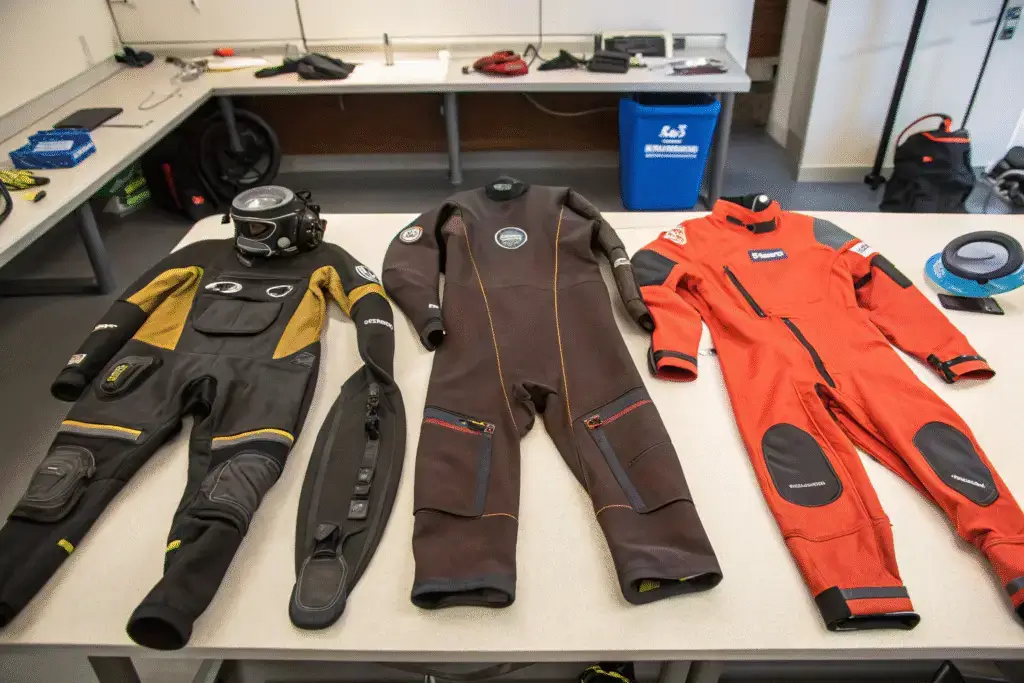
Modern diving suits now include modular parts that can be adjusted depending on the mission.
Custom features may include interchangeable helmets, adjustable buoyancy controls, and detachable gloves or boots.
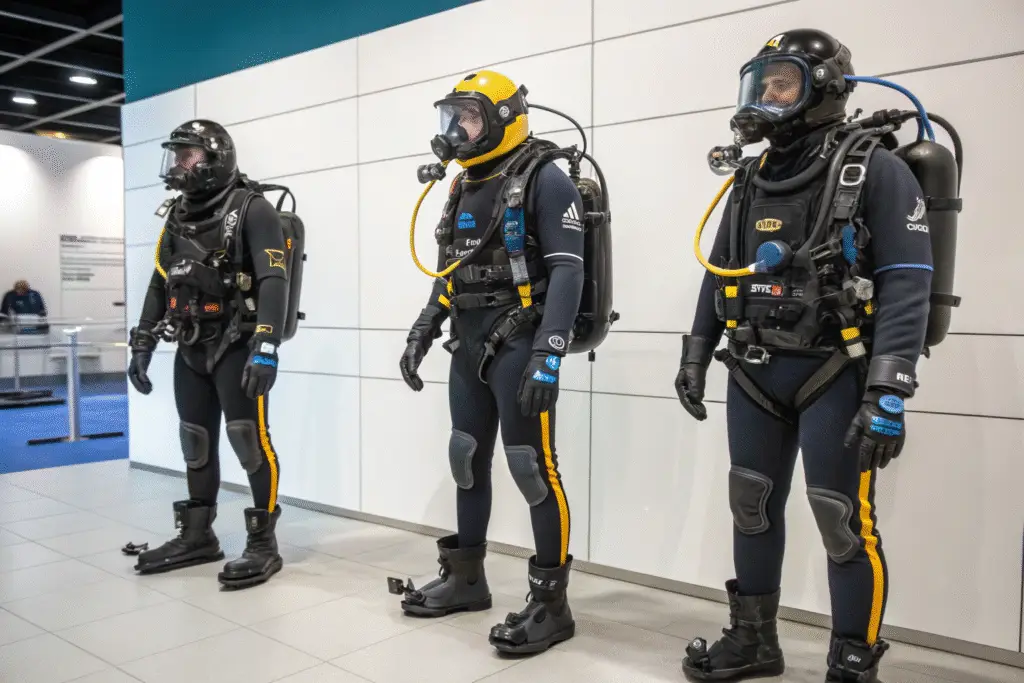
Can a suit adapt to different tasks?
Yes. Suits can carry tools for construction, research, or underwater photography. Ocean News notes how modular gear helps divers switch quickly between jobs.
What about comfort?
Custom seals and inner linings reduce fatigue and improve comfort. DIVEIN Magazine points out that long dives require suits designed for extended wear.
Which certifications prove safety standards?
Safety approvals show whether a diving suit can handle extreme conditions.
Key certifications include CE Marking, ISO 15027 for immersion suits, and navy or defense-specific approvals.
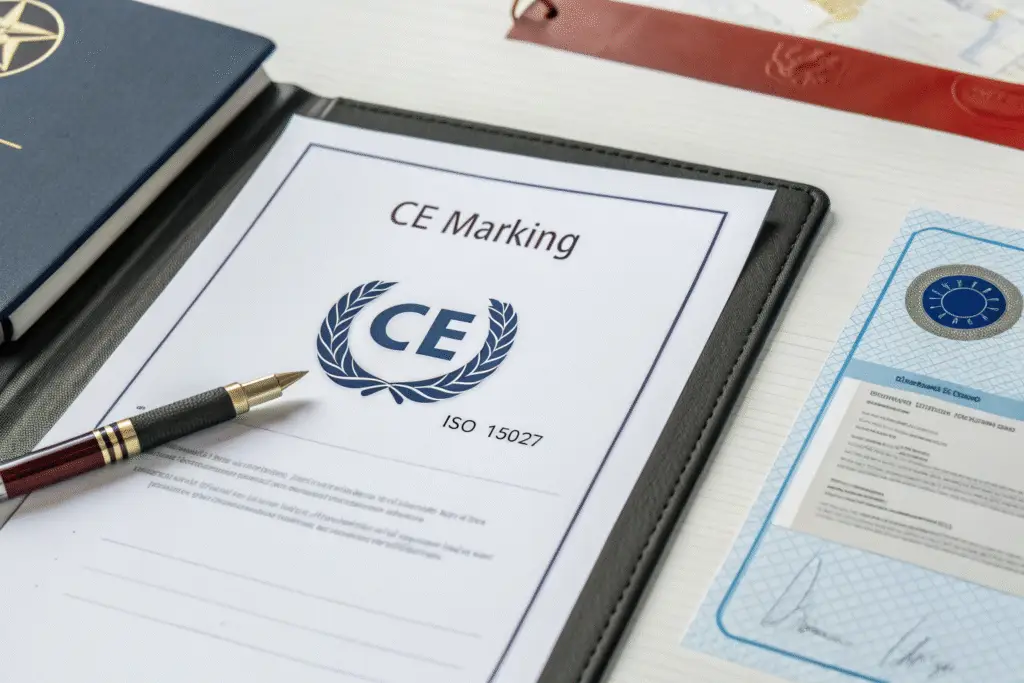
Why is CE Marking important?
It confirms compliance with European health and safety rules. The European Commission explains CE testing for protective clothing.
What does ISO 15027 cover?
It ensures immersion suits protect against cold shock in water. ISO outlines requirements for professional diving apparel.
Where can buyers find trustworthy suppliers?
To source deep-sea suits, buyers need partners who understand both textiles and underwater engineering.
The best places to connect include marine expos, defense contractors, and global B2B sourcing networks.

Are trade fairs a good choice?
Yes. Events like Oceanology International feature marine equipment specialists and diving gear manufacturers.
Can online platforms help?
Sites like Alibaba and Global Sources list suppliers, but it’s vital to check certifications and request test reports before ordering.
Conclusion
Deep-sea diving suits need to combine safety, comfort, and adaptability. By focusing on strong fabrics, modular systems, certified safety standards, and experienced suppliers, buyers can source suits that perform well under pressure.
At Shanghai Fumao, we design and manufacture protective apparel that balances durability with function. If your brand or company is interested in custom diving gear or other technical clothing, contact our Business Director Elaine at elaine@fumaoclothing.com. Together, we can create gear built for the most extreme environments.