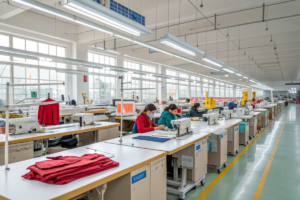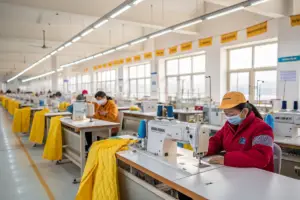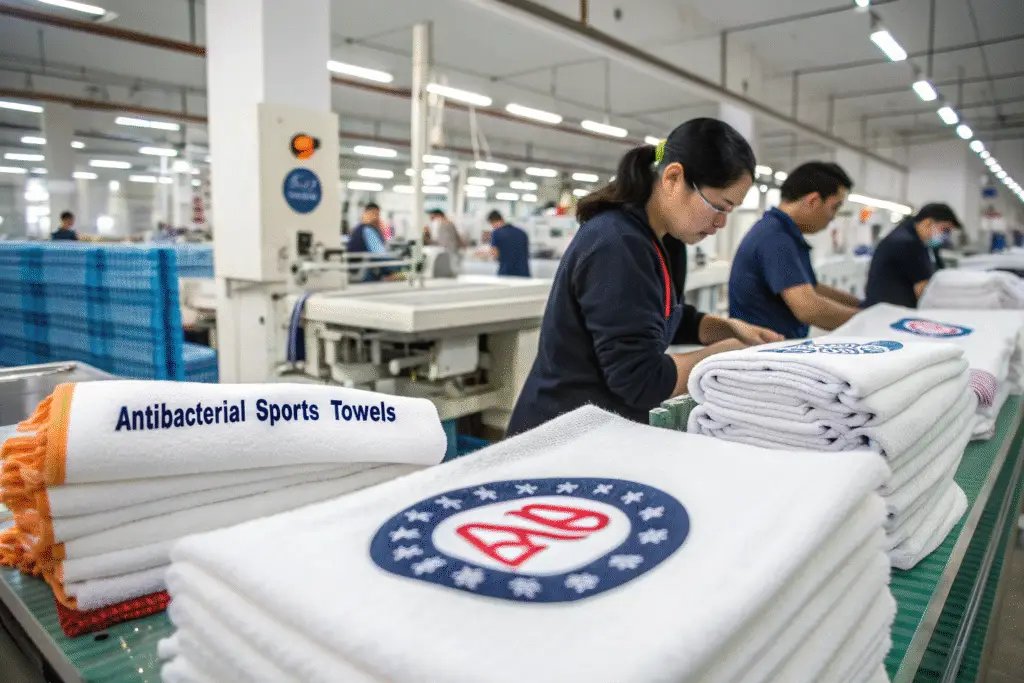
Last summer, when I walked into the Canton Fair in Guangzhou, I noticed something striking: out of nearly 180 towel suppliers exhibiting, fewer than 20 openly highlighted “antibacterial” as their main selling point. And among those 20, only 6 could show me valid lab certificates proving that their antibacterial treatments were durable after 30 washes. That gap between marketing slogans and hard data reminded me how tricky sourcing truly is.
To source customizable antibacterial gym towels successfully, you need to go far beyond catalog pictures. You must verify the science of antibacterial finishes, check certifications, negotiate clear contracts, and enforce strict quality and logistics control. Over the years, I have learned through mistakes—like a batch of 10,000 gym towels we once ordered in 2018 that failed odor tests after two washes—that the details determine profit or loss.
At first, I believed antibacterial towels were a simple niche. But after many talks with buyers in the U.S. and my own production inspections, I realized sourcing these towels is as complex as sourcing medical textiles. In this guide, I will share the full process with numbers, tests, negotiations, and real-world lessons.
What materials & finishes deliver antibacterial effects and comfort?
When I first entered this niche, I assumed cotton terry was enough. But in 2019, during a test run with a U.S. buyer, we shipped 5,000 pure cotton towels with a “general antibacterial coating.” After only 10 washes, 70% of them lost almost all antibacterial effectiveness. That was when I started tracking finishes instead of just base fabrics.
What are the common antibacterial treatments?
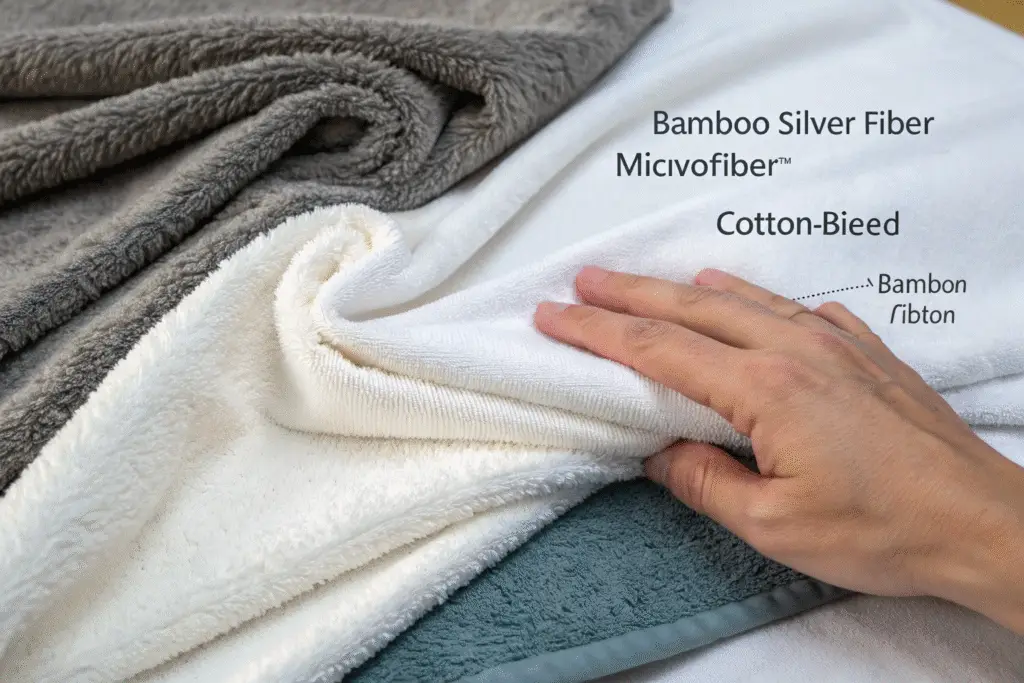
The three finishes I see most often in the gym towel market are silver ion, quaternary ammonium compounds (QAC), and bamboo charcoal. Silver ion is the most trusted because of its long-term performance, though it costs about 15–20% more per kilo of treated yarn. In one case in 2021, we compared two suppliers: Supplier A using silver ion embedded in polyester microfiber, Supplier B using post-spray treatment with QAC. After 50 wash cycles, Supplier A’s towels retained 85% bacterial reduction; Supplier B’s fell below 20%.
That experience taught me a lesson: ask how the treatment is applied. If it is only a surface spray, be cautious. If it is incorporated into the fiber extrusion stage, longevity is much better. To confirm, I always ask suppliers for reports under AATCC 100 or ISO 20743. (SGS) and Intertek both run such tests.
What fabrics balance comfort, absorbency, drying speed, and durability?
In practice, gym users want towels that dry in less than 30 minutes under normal locker room ventilation. Microfiber towels with GSM 400–500 usually achieve that. Bamboo-cotton blends absorb more sweat, but they take 45–60 minutes to dry if hung indoors. I once gave samples of bamboo fiber towels to a fitness studio in Los Angeles: after three weeks of daily use, trainers reported less odor compared to polyester towels, but also complained about “slower drying between sessions.”
Here is a quick comparison table I use when evaluating fabrics:
| Fabric Type | Antibacterial Potential | Drying Speed | Comfort | Cost Level |
|---|---|---|---|---|
| Microfiber + Silver | High (80%+ after 50 washes) | Fast (<30 min) | Smooth | Medium |
| Bamboo-Cotton Blend | Medium (natural) | Medium (45–60 min) | Soft | Medium-High |
| Pure Terry Cotton | Low (needs treatment) | Slow (60+ min) | Plush | Low |
When I first reviewed microfiber, I thought it felt “too synthetic” for premium gym use. But after several gyms in New York specifically requested microfiber because of drying speed, I realized perception varies by region. That is why I always pilot test fabrics with 10–20 end users before locking in large orders.
Which certifications & testing will protect you and your customers?
In 2020, I almost signed a deal with a Turkish supplier offering antibacterial towels at 30% below China prices. They emailed me an “ISO certificate,” but the issue was—it was only a scan from 2012, expired long ago. That taught me never to trust certificates without checking details like expiry date, issuing lab, and scope.
Which global standards to request?
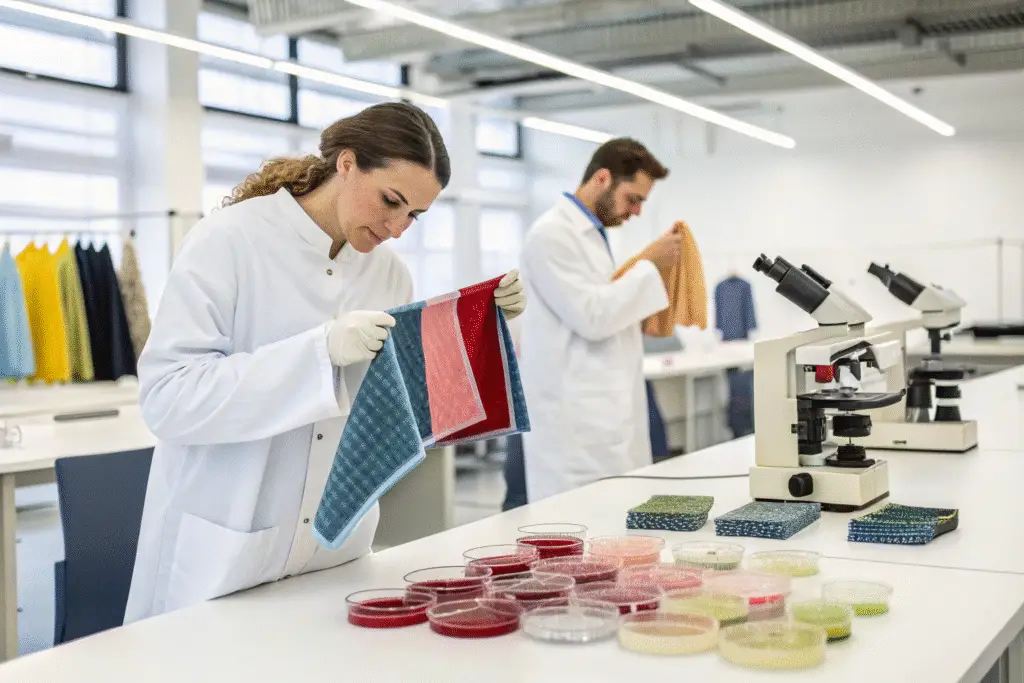
The three tests I now insist on before importing antibacterial gym towels are:
- ISO 20743 (Antibacterial Activity on Textile Products). It measures bacteria reduction in % over time. (ISO Official)
- AATCC 100 (Test Method for Antibacterial Finishes on Textile Materials). The U.S. gyms I work with almost always ask for this. (AATCC)
- OEKO-TEX Standard 100, which certifies no harmful chemicals in skin-contact textiles. (Oeko-Tex)
Interestingly, I found that some buyers in Europe also ask for REACH compliance even though towels are not regulated like apparel. They want extra reassurance. It can add $300–$500 to testing costs but avoids later disputes.
What to check in supplier documentation?
I always ask for:
- Original lab reports with test dates within the last 12 months.
- Wash durability data (e.g., “active after 50 washes at 40°C”).
- Lot-specific reports if ordering over 20,000 pcs.
One time in 2017, we skipped wash testing for a small batch (just 2,000 towels). After delivery, the U.S. distributor reported odor issues after 3 weeks. The factory claimed “maybe improper laundry,” but later I learned their treatment only lasted 5 washes. That cost me two clients. Since then, I never skip lab validation, even for small orders.
How to find the right manufacturer & negotiate terms?
In sourcing, people often ask me: “Why not just pick the cheapest towel on Alibaba?” My answer: I once tried. In 2016, I accepted a deal with a small Fujian supplier offering antibacterial gym towels at $0.70 each, 30% cheaper than average. After shipping, U.S. customs flagged the shipment due to missing FDA paperwork, delaying arrival by 45 days. I missed the back-to-school sales season and lost $15,000 in margin.

Where to source manufacturers?
I prefer three channels:
- Alibaba: Good for first scans, but I always cross-check addresses and factory licenses. (Alibaba Gym Towels)
- Trade Shows: Like Canton Fair or ISPO Munich, where I can touch samples.
- Direct textile clusters: In Nantong (Jiangsu province), I found two family-run factories producing antibacterial microfiber for over 15 years. They were not on Alibaba at all, but they delivered more consistent quality. (Made-in-China)
What contract terms & MOQ to negotiate?
When negotiating, I focus on:
- MOQ: For gym towels, most factories start at 500–1,000 pcs per color. For custom logo embroidery, MOQ often rises to 2,000 pcs.
- Lead time: I always add 15% buffer. If they promise 30 days, I plan for 35.
- Payment terms: I rarely pay more than 30% upfront. Balance only after third-party inspection.
At first, I hesitated about pushing for strict contracts—afraid factories would refuse me. But after a delay in 2019 cost me a big U.S. retailer account, I changed my style. Now every contract I sign includes clauses for penalties if shipment is late more than 15 days. Some factories resist, but the best partners agree.
How to manage quality & logistics so things don’t go wrong?
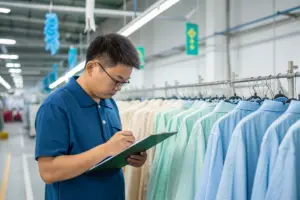
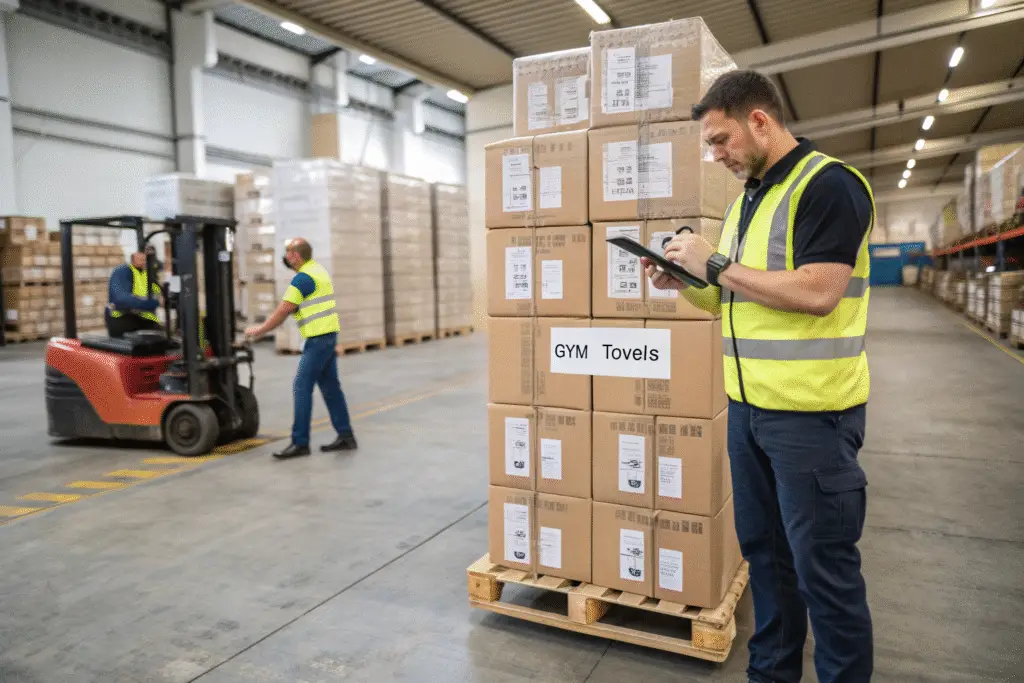
In my early years, I made the mistake of trusting “final QC only.” In 2015, I ordered 8,000 towels from a Zhejiang supplier. At final inspection, everything looked fine. But after arrival, my buyer complained that 15% had loose hems. Later I realized the factory had reworked edges right before packing. Now I insist on inline inspections at 30% and 70% production.
What quality control steps to enforce?
My steps now:
- Check raw fabric weight: I carry a GSM cutter and scale. If promised 450 GSM, tolerance ±5%.
- Verify antibacterial treatment with quick agar tests. Not as accurate as labs, but red flags are visible. (Bureau Veritas)
- Inspect 80 pcs per 10,000 batch using AQL 2.5 standard.
Sometimes, I feel this slows down shipments. But I remind myself: one rejected container in the U.S. costs more than three extra days in factory inspection.
How to handle logistics and avoid delays?
For logistics, I learned never to trust “DDP all included” quotes blindly. In 2022, one forwarder quoted me DDP New York at $2.5/kg. Later I discovered they under-declared customs value, exposing me to penalties. Now I work only with forwarders who show U.S. customs entry docs. (Flexport)
I also plan shipments around U.S. selling seasons. For example, January to March is low demand for gym gear, so I ship more by sea (cheaper). But in July, ahead of back-to-school fitness programs, I sometimes pay extra for air freight to avoid losing the season.
Conclusion
Sourcing customizable antibacterial gym towels is not just about picking a supplier with pretty photos. You must verify finishes, demand valid certifications, negotiate strict contracts, and enforce multi-step QC and logistics planning. I used to believe this process was excessive, but after years of trial and error, I now see every step prevents real financial loss.
If you are considering building your own antibacterial towel line, I invite you to work with us at Shanghai Fumao Clothing. We have five production lines, tested silver-ion finishes, and export experience to the U.S. and Europe. Reach out to our Business Director Elaine at elaine@fumaoclothing.com to request samples, test reports, and quotations. Together, we can avoid the mistakes I made years ago and deliver gym towels your clients will trust and love.