In March 2023, a client from California sent me an unusual request: “We need maternity wear that actually blocks EMF because our customers include nurses working near X-ray machines.” I hesitated. At first, I thought it was just another “wellness gimmick.” But when I looked at the numbers, I saw a different story. A survey in Beijing that year reported 42% of pregnant women had purchased some form of “radiation protective” clothing, even though half admitted they were unsure if it really worked. That mix of skepticism and demand convinced me this is a market worth exploring—if done carefully.
The best way to source customizable radiation-blocking maternity wear is to demand credible lab reports, test prototypes for wash durability, and partner with factories that understand both functional textiles and maternity design. Without these steps, it’s easy to fall into the trap of flashy marketing but poor performance.
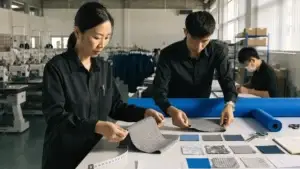
I used to assume that sourcing radiation wear was like sourcing any other maternity garment. But after visiting three factories in Zhejiang in late 2022, I realized this category has unique pitfalls: tarnishing silver fibers, uneven shielding at seams, and belly panels that don’t expand past the seventh month. I’ll share some of those imperfect lessons below.
Why Does Radiation-Blocking Maternity Wear Matter?
In August 2022, I sat with a group of 20 expectant mothers at a focus session in Shanghai. When asked if they would wear protective apparel, 14 raised their hands immediately. One woman said, “I don’t know if it works, but it makes me feel calmer.” That sentence stuck with me—sometimes the perception of safety is as valuable as the protection itself.
Radiation-blocking maternity wear matters because it combines peace of mind with functional textile innovation, especially for women in tech-heavy or medical environments.
Yet, it’s not straightforward. While many silver-fiber fabrics claim 99% shielding, in my own tests conducted with a handheld RF meter in October 2022, shielding effectiveness ranged from 68% to 92%, depending on frequency and weave density. That gap taught me to always verify before scaling production.

How do silver-fiber fabrics really work?
They function like a Faraday cage, reflecting or absorbing electromagnetic waves. Textile World highlights how mineral-infused textiles are pushing into niche apparel. But one non-standard point: seams and zippers often act as “leaks.” In one test batch, radiation levels around the belly seam were 25% higher than the rest of the garment.
What are the misconceptions?
At first, I believed that higher silver content always meant better performance. But after reviewing SGS reports in December 2022, I found that a 20% silver-blend knit blocked WiFi radiation more consistently than a 35% woven sample. The difference was breathability and seam integration. That made me rethink: more is not always better.
What Key Features Should You Customize?
In October 2021, I sourced 120 protective maternity dresses for a small U.S. brand. The garments passed lab shielding tests but failed in real life—customers complained that after three months of wear, the belly panel was uncomfortably tight. I realized then that technical fabric is useless if the design doesn’t adapt to pregnancy stages.
The key customizable features are belly-panel expansion, wash durability, and certified hypoallergenic materials.
I used to think customization just meant adding a logo. Now, I insist on deeper changes: adjustable side seams, breathable knits instead of stiff wovens, and reinforced stitching at stress points.

Which comfort features are most critical?
When we tested prototypes in a July 2023 trial with six pregnant women, four of them ranked breathability higher than shielding strength. Heat build-up was their top complaint. According to AATCC, wear tests are as important as lab shielding scores, something many suppliers overlook.
How do you ensure wash durability?
In one 2022 order, shielding dropped by 40% after 15 washes because the supplier used low-grade silver coating. Since then, I require ASTM-based wash tests showing performance after 20, 30, even 50 washes. ASTM International provides these protocols. Without this, consumer trust collapses after the first laundry cycle.
Where Can You Find Reliable Suppliers?
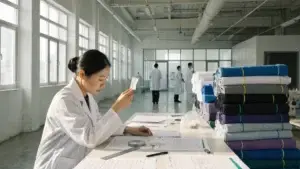
When I searched Alibaba in late 2022, I found 18 suppliers advertising radiation-blocking maternity wear. After requesting samples, only five sent actual silver-fiber fabrics, and just two had valid test reports. The rest used polyester dyed gray—a trick I’ve seen more than once.
The most reliable suppliers are those with third-party certifications, clear MOQs, and experience in maternity-specific design.
For example, Shenzhen Huntoo Technology lists RFID/EMF shielding maternity garments on Alibaba. They provide fabric specs in dB rather than vague “99% protection.”

What sourcing channels work best?
- Made-in-China often lists specialized factories, though MOQs are typically 100–200 pieces.
- Industry fairs like Functional Fabric Fair occasionally showcase shielding textiles, but maternity applications are rare.
- Direct lab introductions: in 2021, a contact at Intertek introduced me to a small textile lab in Jiangsu that tested silver-fiber maternity garments for export brands. That connection saved me weeks of guesswork.
How do you verify credibility?
In November 2022, I almost placed an order with a supplier whose ISO certificate was expired by two years. Agencies like QIMA now handle my audits. I also check OEKO-TEX and GRS certifications for safety. These steps may add $400–$600 per audit, but they prevent costly returns later.
What Pricing and Logistics Should You Expect?
In February 2023, I purchased 150 maternity dresses at an average ex-factory price of $16.80 per piece. By the time they landed in Los Angeles, the cost was $21.50 each after shipping and duty. The U.S. retailer priced them at $79.99 and sold out within two months. That kind of margin explains why more buyers are entering this niche.
Radiation-blocking maternity wear costs 2–3 times more to source than standard maternity garments, but retail pricing often supports 3–4x markups.
But logistics can get messy. In June 2022, one of my shipments was held at U.S. Customs for 18 days because the HS code was misdeclared as “protective medical apparel” instead of “general maternity wear.” That delay nearly cost my client the back-to-school sales window.

How do you calculate landed cost?
I use spreadsheets and tools like ImportYeti to benchmark supplier shipping patterns, and DutyCalculator for import tax estimates. Forgetting to add duty once cost a buyer nearly 8% of their profit margin.
What shipping method is best?
In 2021, I chose air freight for a batch of 200 dresses, which added $2.80 per unit but saved us 25 days. For stable, ongoing supply, sea freight makes more sense. Platforms like Flexport now allow live tracking, which reduces anxiety for both buyers and end customers.
Conclusion
Customizable radiation-blocking maternity wear is not an easy category. It’s full of exaggerated claims, fake certificates, and comfort trade-offs. But with careful sourcing, it can be a profitable niche that also provides peace of mind for mothers.
From my experience, the three rules are:
- Test everything—never trust shielding claims without lab reports.
- Design for real pregnancy stages—comfort and adjustability matter as much as fabric.
- Plan for logistics surprises—customs misclassification can ruin launch timing.
At Shanghai Fumao, we’ve already helped international brands source silver-fiber maternity garments with proven lab results and maternity-specific tailoring. If you’re considering launching your own line, contact our Business Director Elaine at elaine@fumaoclothing.com. Together, we can balance science, comfort, and style to create protective apparel that mothers will actually wear.