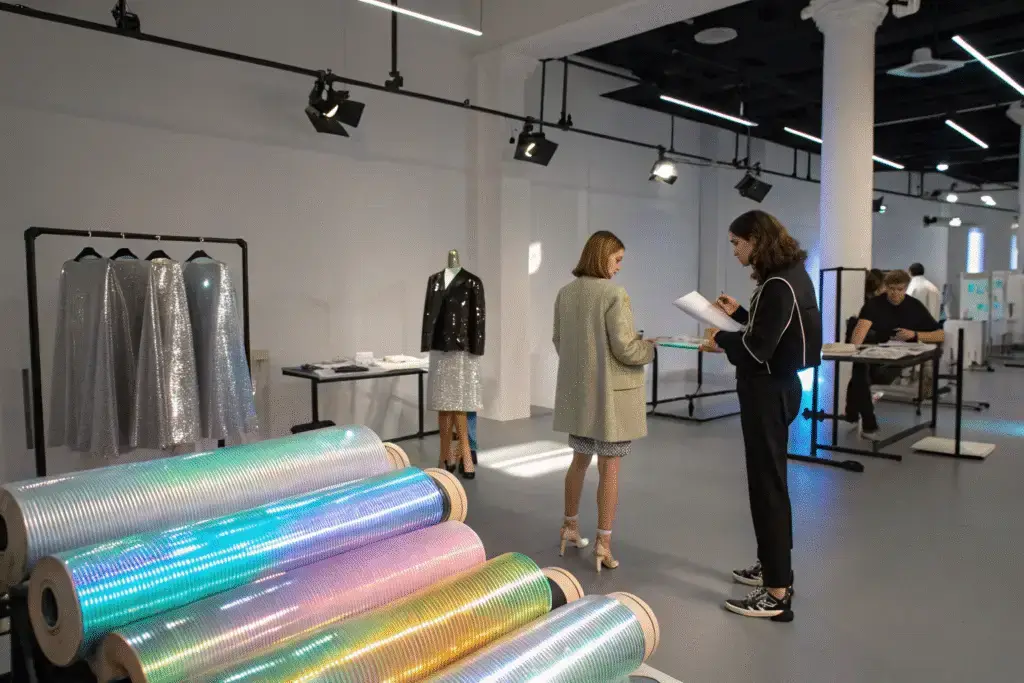
When you work in fashion long enough, you notice how quickly people get tired of what felt new just a season ago. Right now, holographic fabrics are riding that wave of hype. They pop up in tradeshows, on TikTok, and even in kids’ sneakers at the mall. And the funny thing is, not every buyer really understands what’s going to last or what’s just a flashy experiment. I’ve sat with American buyers who say, “Well, I love this look, but can my customers actually wear it every day?” That tension explains why this finish is so interesting.
The big picture? We see holographic trends spreading into subtle sheens, bold mirror looks, pearly soft finishes, textured surfaces, and even functional versions that claim safety or smart textile features. That’s a lot to digest, but it also shows just how versatile this technology has become.
From my experience dealing with U.S. clients, I can say buyers are excited, but they also worry about cracking, peeling, or shipping delays that ruin a season. So let’s take a walk through the trends and see which ones really matter, not just for Instagram but for production floors and retail shelves.
Subtle Iridescent Sheens in Fashion
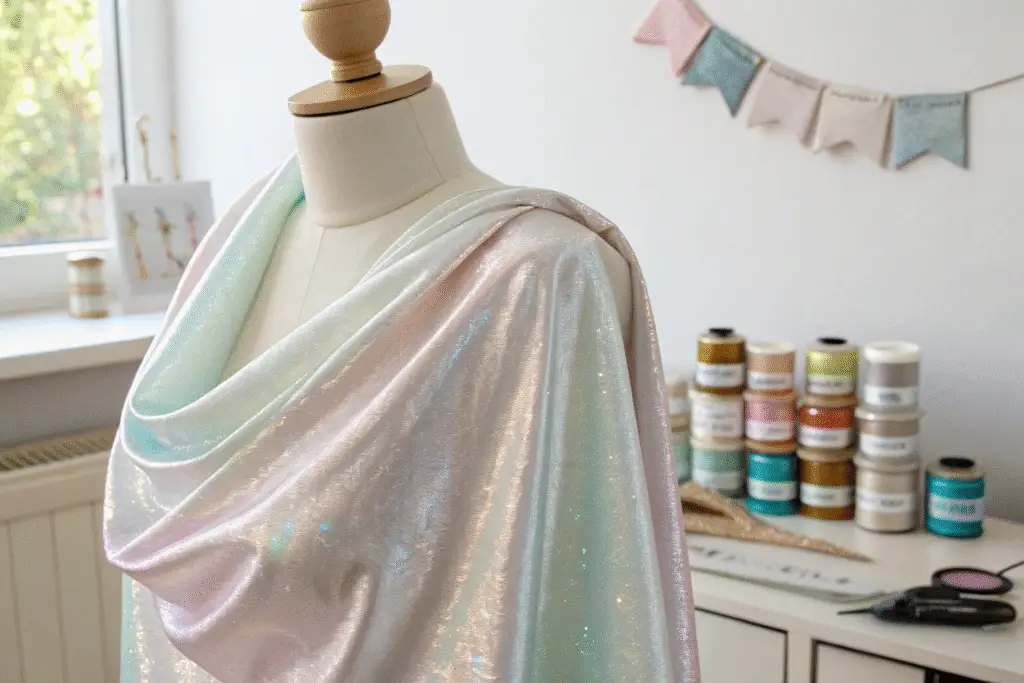
There’s a reason subtle holographic fabrics feel so refreshing. They don’t scream for attention. Instead, they give off this quiet glow that changes when you move. From my observation, American buyers who usually play it safe with cotton shirts and polyester blouses suddenly light up when they see a soft shimmer hidden in a collar or sleeve.
The truth is, subtle holographic fabrics solve the “too much” problem. A little shine works for office wear, evening wear, and even for casual kids’ clothes. Actually, I think this category has the best chance to go mainstream.
Why are subtle holographic fabrics popular?
It’s about versatility. A blouse with a pearly glow works in a boardroom but also at dinner. That duality is rare. Compared with heavy metallic foils, these fabrics feel lighter, softer, and don’t scratch the skin. People often compare the look to silk charmeuse, and I get that. It has that same slippery elegance. Interior designers even borrow this effect in luxury interiors to add quiet drama without loud colors.
How do brands use them effectively?
Well, the smartest brands place them strategically. I’ve seen trims on skirts, pocket linings, or even jacket hoods. In bridal, designers add subtle holo under lace to make dresses glow when the bride walks. Over in dancewear, subtle holographic mesh gives movement extra sparkle without overwhelming stage lights. It’s playful, but not ridiculous. That balance is what makes it stick.
Bold Mirror and Full-Surface Holographics
Now, this is the opposite end of the spectrum. Bold holographic finishes don’t whisper, they shout. When you see a performer step on stage in a full holographic coat, you don’t remember the cut of the jacket—you remember the light bouncing everywhere. And honestly, that’s the point.
These fabrics turn simple designs into instant statements. They work in markets where visibility equals sales: festivals, concerts, and social media feeds.
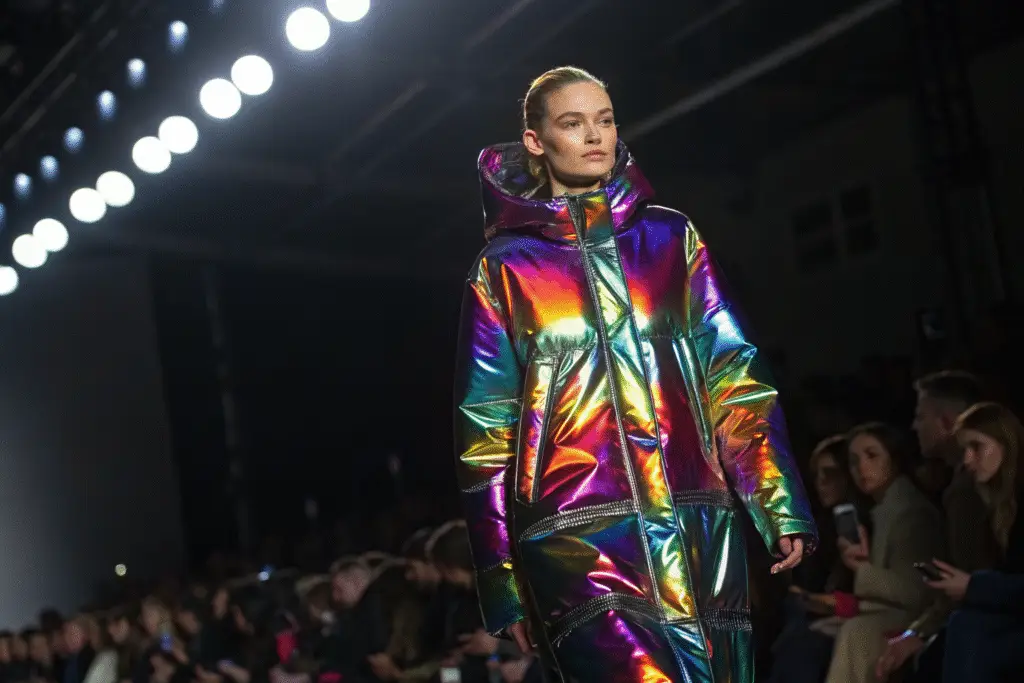
What makes full holographic finishes stand out?
The shock factor. A bomber jacket in plain polyester looks average. Add a holographic coating, and suddenly it belongs at Coachella. These fabrics connect directly to music culture and youth identity. Even Billboard covers feature holographic costumes for pop icons, because it photographs so well under stage lights.
Are there risks with durability?
Yes, and I’ve seen buyers get frustrated. Some finishes crack after two washes. Others peel when folded too long in shipping cartons. That’s why stretch holographic spandex is such a game changer. Suppliers like Spandex World now offer versions that bend without breaking. Laser-cut panels also help reduce bulk and heat issues. Still, I always tell clients: test wash, test stretch, test again. Otherwise, you’ll pay in returns and angry reviews.
Soft Iridescent and Pearlescent Color Shifts
If the mirror finish is loud, pearlescent holographics are its elegant cousin. They remind me of seashells I collected as a child—soft colors, shifting gently under sunlight. Surprisingly, many luxury buyers now request these finishes for handbags, jackets, and even sneakers.
The charm lies in their subtle complexity. They’re futuristic but not tacky, modern but still wearable every day.
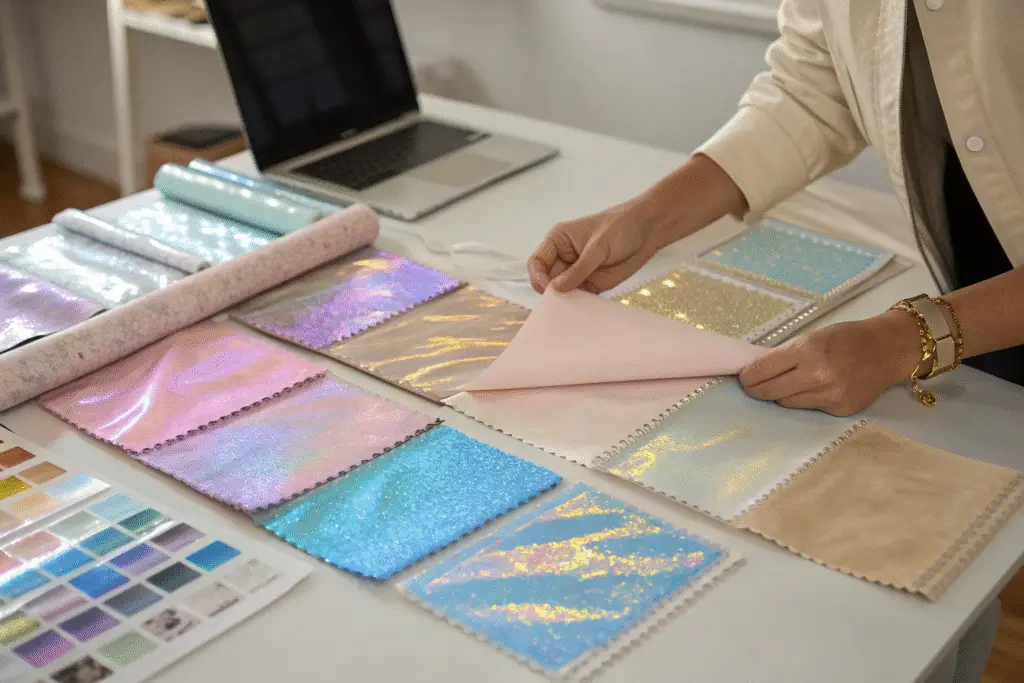
Why do brands invest in pearlescent finishes?
Because they differentiate without alienating. A pearly jacket feels new but doesn’t scare conservative customers. Luxury brands experiment with them in Gucci bags, while sportswear giants like Nike test iridescent trims on sneakers. From what I’ve seen, this category resonates with buyers who want modernity but not “costume.”
How are these fabrics produced?
Through coatings that copy nature’s tricks. Nanotechnology creates microscopic layers, just like butterfly wings. That layering bends light into smooth gradients. It’s more durable than old-school foils, and researchers in biomimicry are exploring bio-based alternatives. From my experience, American buyers love when I mention sustainability here—it makes them feel they’re ahead of the curve.
Textured and Functional Holographic Fabrics
This is where things get experimental. Some designers don’t want smooth holographic at all. They want texture: embossed, crinkled, or even flocked. Others push for holographic finishes that double as reflective safety gear. From my perspective, this is the most unpredictable but exciting zone.
It’s the mix of aesthetics and performance that makes it interesting.
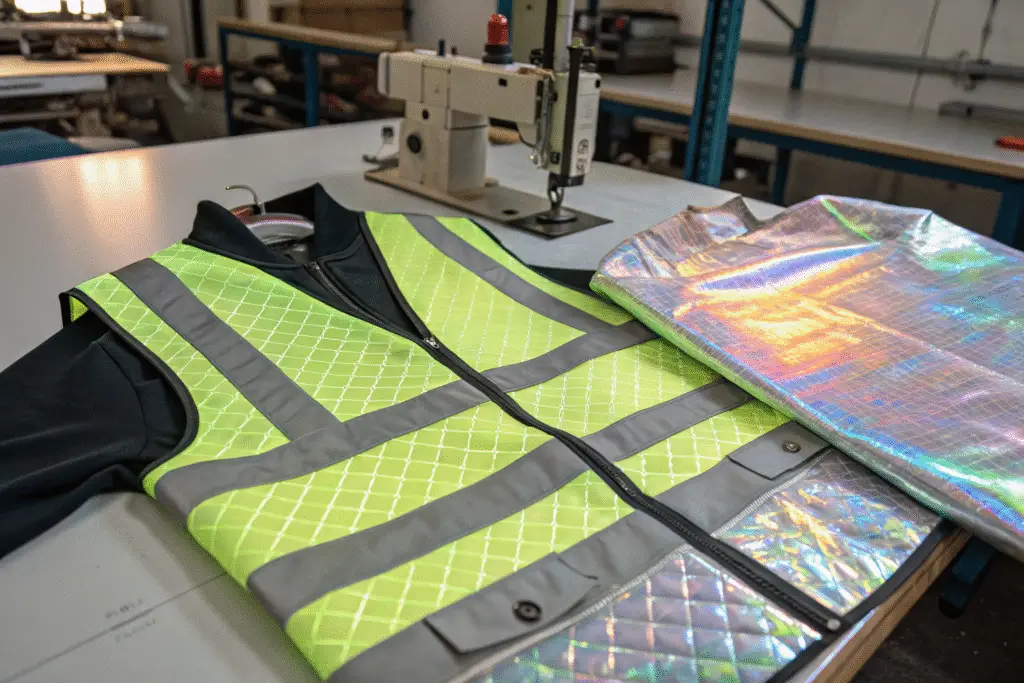
How do textured holographic fabrics enhance design?
Texture adds depth. When light hits an embossed surface, it scatters in different directions. Suddenly, a flat holo panel looks three-dimensional. Brands like Coach play with holographic embossing on leather goods, while Zara throws it on affordable handbags. For apparel, textured holographic mesh works in stage costumes, adding drama without weight.
What role do functional holographic finishes play?
Well, they’re bridging fashion and utility. Reflective strips on jackets keep cyclists visible but now look trendy. Some coatings even react to UV light, shifting colors outdoors. Big players like 3M Reflective already dominate safety markets, but startups in smart wearables are combining holographic looks with tech sensors. That overlap feels like the next frontier.
Conclusion
Looking back, holographic fabric isn’t one single trend—it’s many. From the quiet shimmer of subtle sheens to the loud mirror jackets of music festivals, from pearly soft tones to textured or even smart finishes, each path has its own buyers and risks. Honestly, it’s both exciting and tricky.
As someone running production in China, I’ve had conversations with American buyers who love the effect but worry about peeling or late deliveries. Those worries are real. That’s why, at Shanghai Fumao, we put extra effort into testing finishes and making sure they ship on time. If you’re thinking about adding holographic trends to your brand, reach out. Our Business Director Elaine is ready to discuss your ideas at elaine@fumaoclothing.com. I think you’ll find the right balance between bold creativity and reliable quality when you work with us.