If you’ve ever tried to source linen and wished you could actually trace it all the way back to the farm, you’re not alone. Many of us in the fashion industry know the frustration—suppliers talk big about sustainability, but when you ask for proof, the story gets blurry. Customers today are smarter than ever, and they want receipts. They don’t just want “eco-friendly linen,” they want to know exactly where that fabric came from.
Here’s the good news: you can source linen that’s truly traceable, from farm to closet. With the right suppliers, the right certifications, and the right logistics setup, you can turn traceability into a powerful advantage. Not only does it build trust, but it also sets your brand apart in a crowded market.
That’s why in this article, I’m going to walk you through the process—from understanding what traceable linen really means, to picking suppliers you can count on, to making sure your shipments don’t get stuck halfway across the world.
What Is Traceable Linen And Why Does It Matter?
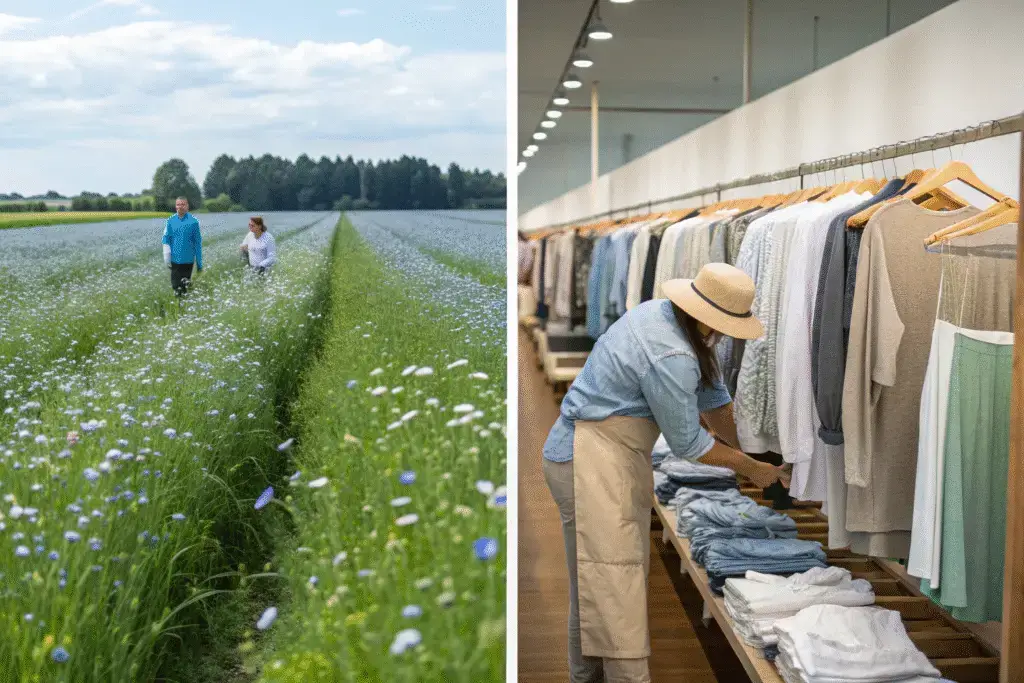
When we talk about “traceable linen,” we’re not just throwing around a trendy word. It means you can literally follow the fabric’s journey—starting with the flax farmer planting seeds, to harvesting, spinning, weaving, and finally, the garment hanging in your customer’s closet.
It matters because traceability equals trust. In today’s world, if a brand can’t show where its fabric comes from, customers may walk away. Fashion buyers in the U.S. and Europe are especially demanding about this.
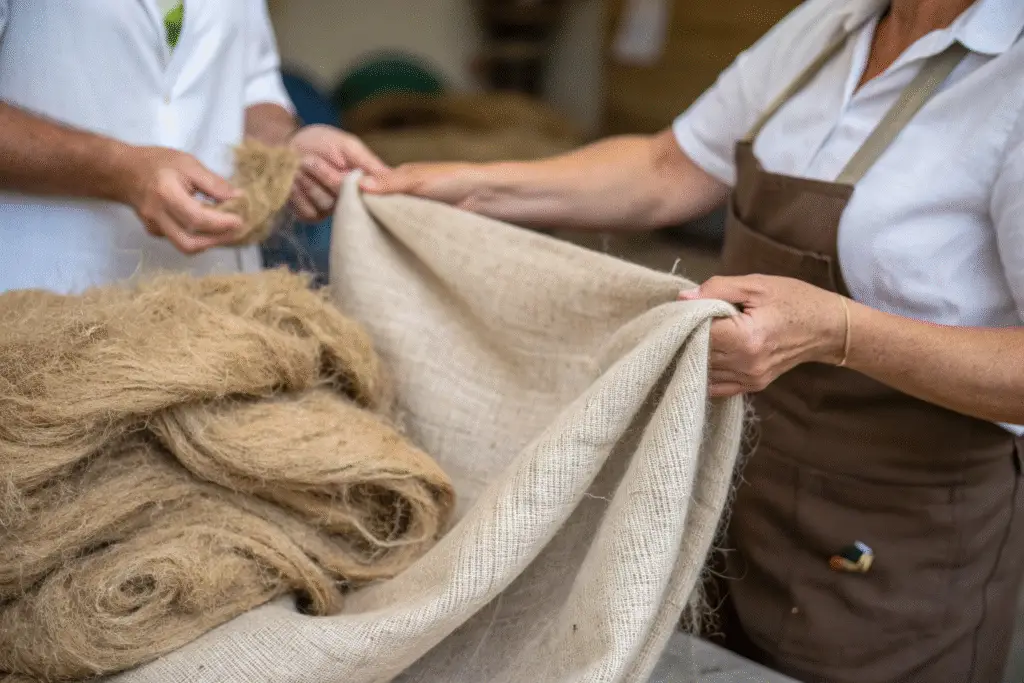
Why is traceability important for sustainable fashion?
Because it’s the only way to prove you’re not greenwashing. Think about it—if you can show your fabric’s full story, you’re not just making a claim, you’re showing proof. Organizations like Textile Exchange are pushing the whole industry in this direction. Plus, when you know your supply chain, you can ensure ethical sourcing and build stronger, longer-term supplier relationships.
How can brands communicate transparency to customers?
Don’t just slap “eco-friendly” on your tag. Instead, give your customers a way to see the journey for themselves. QR codes, blockchain, or trusted certifications like OEKO-TEX and GOTS all help. Imagine a shopper scanning a code and seeing the story of your linen, from flax fields to finished dress—it makes your brand unforgettable.
How To Identify Reliable Linen Suppliers?
Here’s where things get tricky. The market is crowded with suppliers making all kinds of promises. Some are the real deal, but others? Let’s just say they talk a lot more than they deliver.
The suppliers you want are the ones who back up their words with certifications, transparency, and real references. They’ll give you full traceability documents, let you see audits, and introduce you to other buyers they’ve worked with.

What certifications should you look for in suppliers?
There are a few gold standards here: European Flax, Masters of Linen, and BSCI for social responsibility. If your supplier has these, you can be more confident they’re not cutting corners.
How can you verify supplier credibility before placing large orders?
Don’t take their word for it. Ask for audits, quality reports, and proof of past exports. Better yet, if you can, visit their factory—even virtually. Trade platforms like Alibaba Verified Supplier and big fairs like Première Vision are also good places to find verified contacts.
How To Manage Certifications And Compliance?
If you’re serious about traceability, you can’t skip this part. Certifications are what make your claims solid. They’re the bridge between your sourcing story and your customer’s trust.
But here’s the catch—you have to stay on top of them. Certificates can expire, fake documents do exist, and standards can change. That’s why compliance should be an active part of your sourcing strategy.
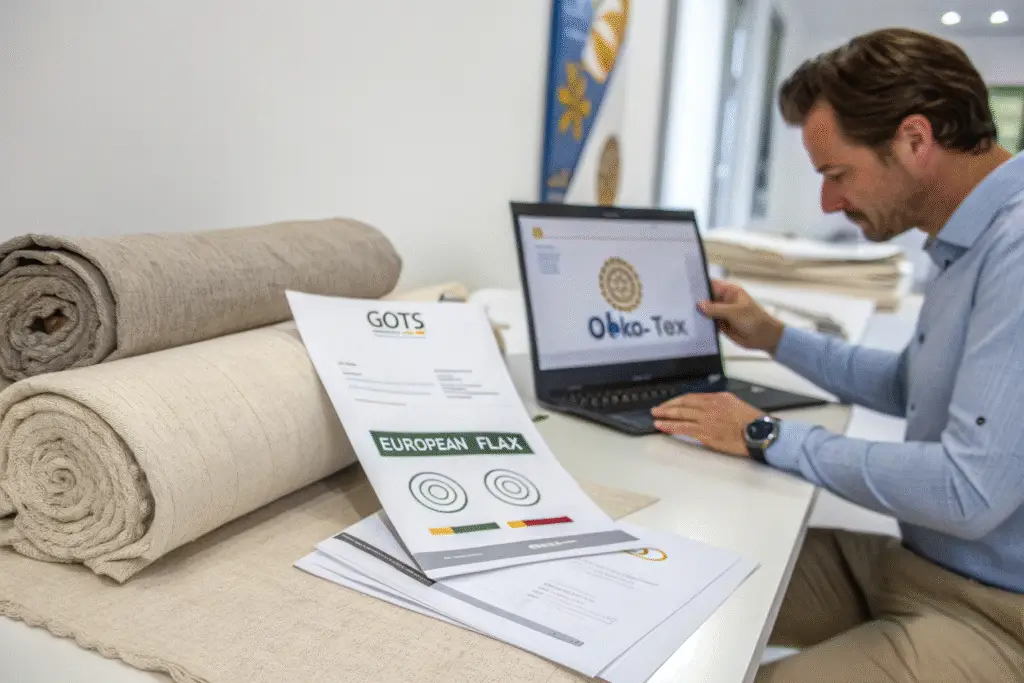
Which certifications guarantee sustainability and traceability?
Start with GOTS for organic standards, OEKO-TEX for safety, and European Flax for sourcing. These aren’t just stamps—they’re powerful selling points. When customers see them, they instantly connect with your commitment.
How to integrate compliance into sourcing strategy?
Make compliance part of the deal from day one. Build it into your contracts, and ask for updated certificates with every order. Use third-party auditors when you can, and lean on tools like the Higg Index to measure performance. Most importantly, train your team to spot red flags so you’re not fooled by fake papers.
How To Ensure Efficient Logistics And Delivery?
Now let’s talk logistics—the part no one wants to think about until something goes wrong. You could have the most beautiful linen in the world, but if it arrives late, you miss the season and lose money.
The secret is to work with logistics partners who know fashion exports inside and out. They’ll help you handle customs, avoid delays, and make sure your goods land in your warehouse on time.
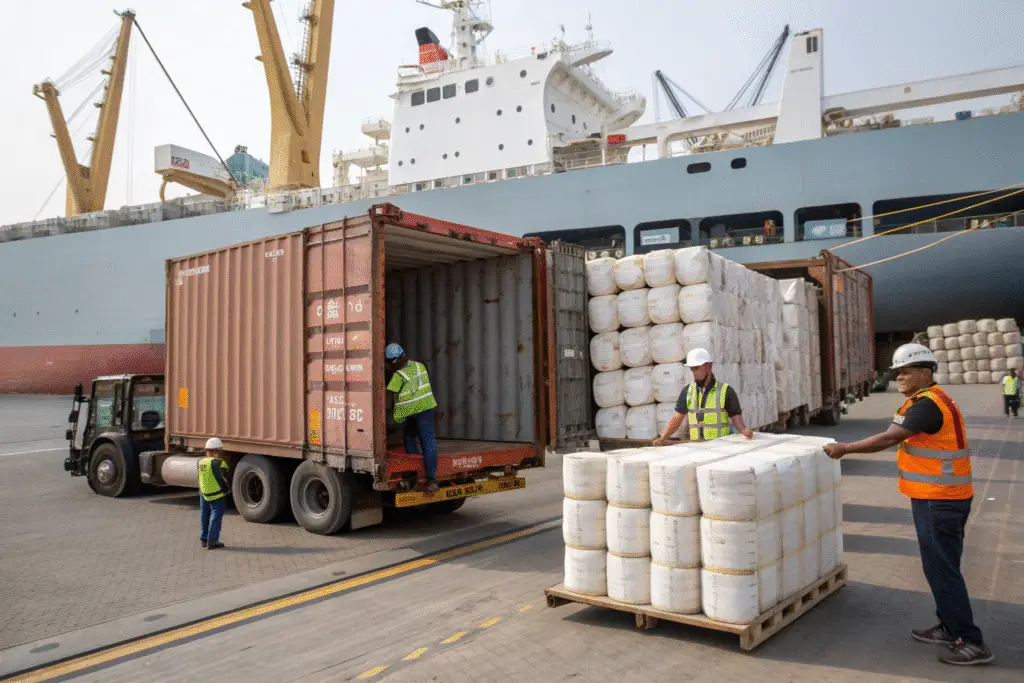
What logistics strategies reduce delays in sourcing linen?
Partner with specialized freight forwarders who already handle textiles. They know the paperwork, the shipping codes, and the pitfalls. Also, consider DDP shipping so the supplier takes full responsibility for getting goods to your door. It might cost a bit more, but it saves you a lot of headaches.
How can digital tools improve supply chain visibility?
You don’t have to sit in the dark anymore. Platforms like Project44 and ShipBob let you track shipments in real time. Imagine seeing your container of linen moving across the ocean right from your laptop. That’s the kind of visibility that keeps you in control.
Conclusion
At the end of the day, sourcing farm-to-closet traceable linen isn’t just about fabric—it’s about building trust. When you know your supply chain, and you can show it to your customers, you’re not just selling clothes. You’re selling a story they’ll want to wear.
And if you’re ready to take this step, we at Shanghai Fumao Clothing would love to be your partner. We’ve got five production lines, strong fabric expertise, and a clear commitment to traceability and quality. Send a message to our Business Director, Elaine, at elaine@fumaoclothing.com, and let’s make your next sourcing project not only successful but unforgettable.