If you’ve ever stepped into the desert under the blazing sun, you know it’s not just “a bit hot”—it’s punishing. The sun beats down, the air dries you out, and before you know it, your skin is burning and your energy is drained. The truth is, most people underestimate how brutal the desert really is. They throw on a light T-shirt and shorts, thinking it will keep them cool, only to end up sunburned, exhausted, and dangerously dehydrated.
The real secret to surviving—and even thriving—under desert sun isn’t just sunscreen. It’s wearing the right protective clothing. And that’s not about fashion trends or random fabric choices. It’s about a careful balance: shielding your skin from UV rays while keeping your body cool and comfortable.
That’s why I want to share the best practices for desert-sun protective clothing. I’ve worked with apparel buyers and brands who serve adventurous customers, and I’ve seen firsthand what works and what fails in extreme conditions. Let’s break it down step by step so you can avoid the costly mistakes others have made.
Which Fabrics Work Best For Desert Sun Protection?
Here’s where many people get tripped up: they assume “lightweight cotton” is enough. But in the desert, not all fabrics are created equal. Some will trap sweat and heat. Others might feel comfortable but let dangerous UV rays sneak through.
The fabrics that really work are tightly woven blends—think polyester mixed with cotton—or specialized UPF fabrics. These are tested to block harmful rays while staying breathable.
Why Are UPF Fabrics Recommended?
UPF fabrics are like armor you can wear without feeling like a knight in shining steel. With a rating of 50, they block nearly 98% of UV rays. Brands such as Coolibar have built their reputation on these fabrics, proving just how effective they are. Regular cotton may feel good at first, but when it gets wet from sweat, it loses most of its protective power.
Should Natural Or Synthetic Fibers Be Preferred?
This one’s tricky. Natural fibers like cotton and linen feel great, but they don’t hold up once moisture kicks in. On the other hand, polyester and nylon keep their protection even after sweat or washing. That’s why many top outdoor brands like Outdoor Research mix both—comfort from the natural, durability from the synthetic. In desert clothing, that combo is pure gold.
How Should Desert-Protective Garments Be Designed?
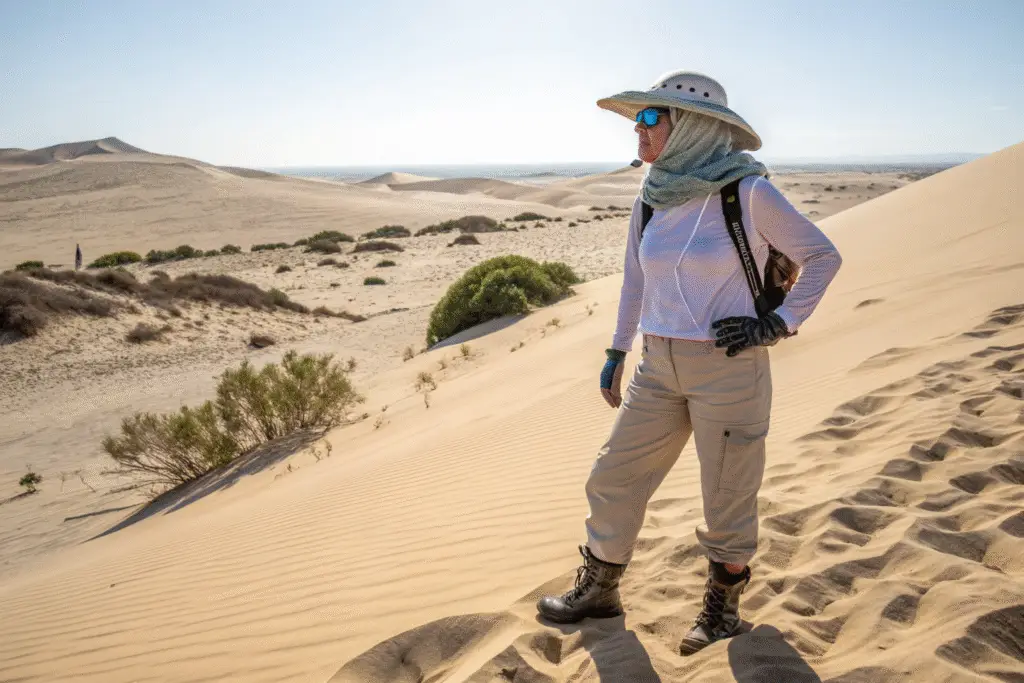
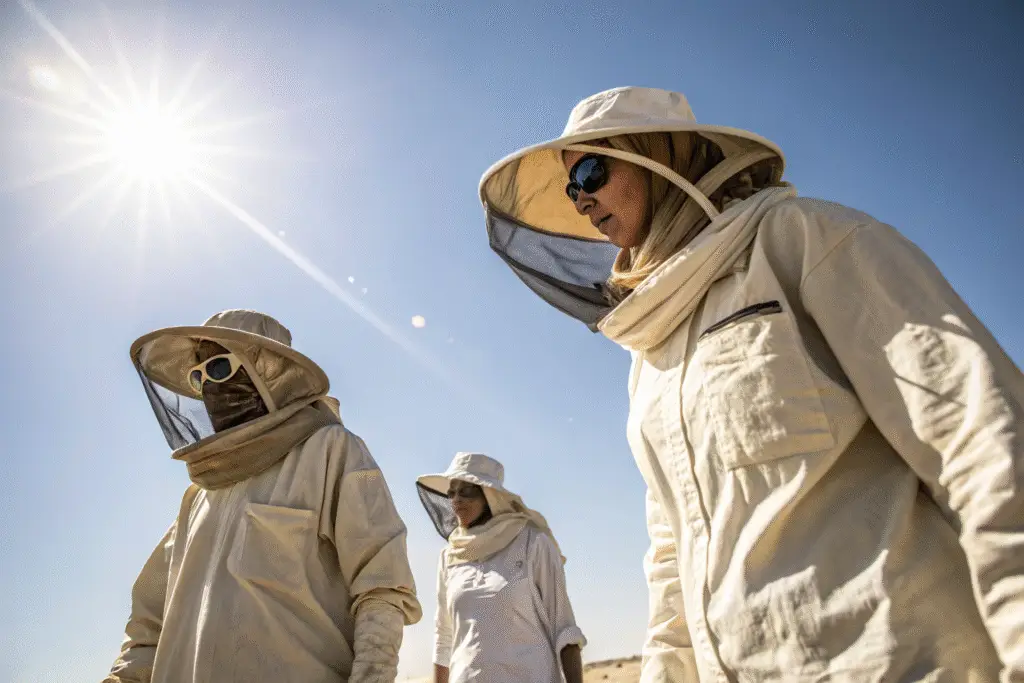
Even the best fabric won’t save you if the clothing design is wrong. I’ve seen travelers wear dark, tight tops and short sleeves in the desert, and it’s basically like stepping into an oven.
The smart design for desert wear includes long sleeves, loose fits, wide-brim hats, and built-in ventilation. It’s about covering up while still letting your body breathe.
Why Is Loose Fit Better In The Desert?
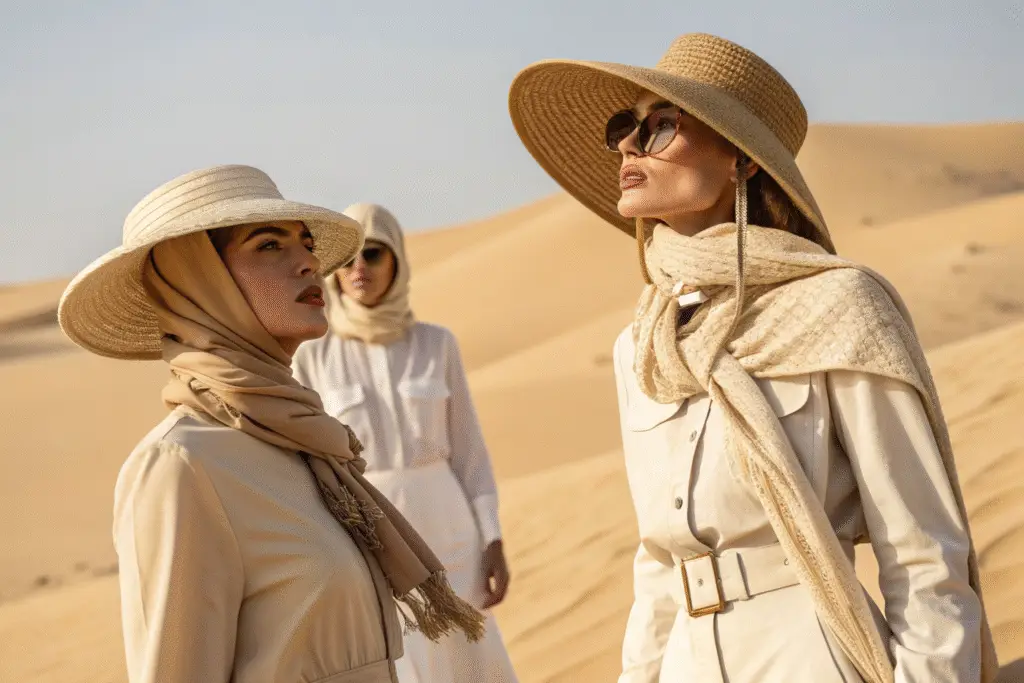
Loose clothing creates a pocket of air between your skin and the fabric. That little layer works like natural air conditioning. Traditional Bedouin robes prove this point—people have been using loose clothing for centuries because it works. National Geographic has some great insights on how desert cultures developed these smart styles.
Should Clothing Colors Be Light Or Dark?
It seems obvious: wear white, right? But here’s the catch—thin white shirts often let UV rays pass through. That’s why off-white, beige, and sand colors are better. They reflect the heat but also keep UV away. It’s no coincidence that brands like Patagonia use these tones in their desert-ready gear.
How To Maintain Comfort And Breathability?
We all know protective clothing is useless if it feels like you’re walking in a sauna. That’s why breathability and comfort can’t be an afterthought.
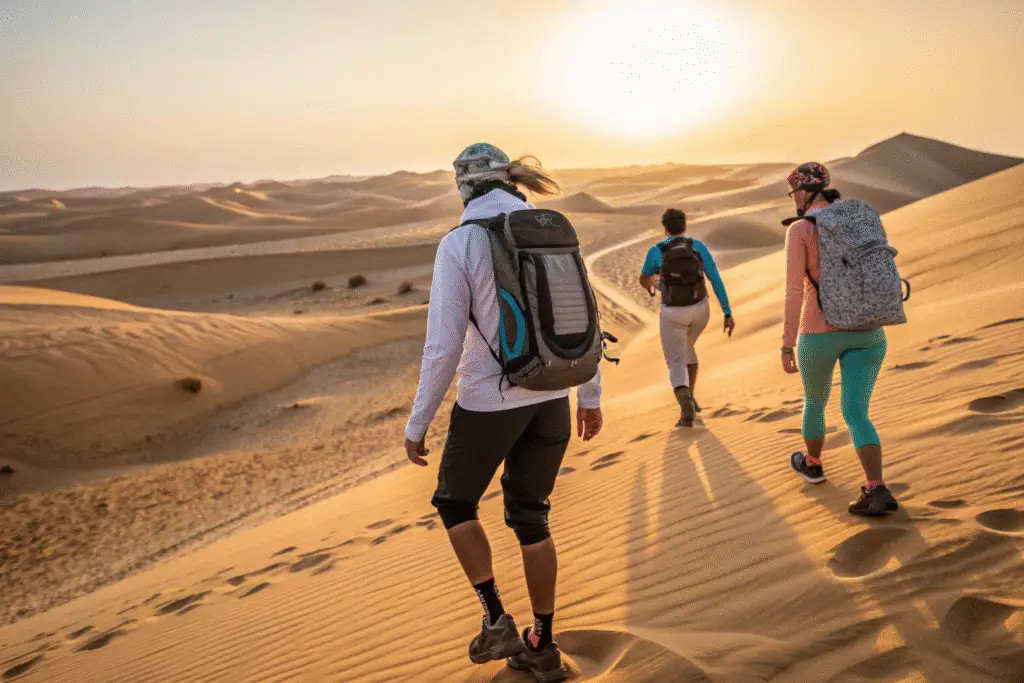
The key is moisture-wicking fabrics and smart ventilation. Mesh panels and sweat-drawing fibers keep you cool and dry while still blocking the sun.
Do Ventilation Panels Reduce Sun Protection?
People often worry that adding vents will weaken sun defense. The truth is, smart placement makes all the difference. Underarm vents, back panels, and chest openings hidden by overlapping layers let heat out without exposing skin. This is why companies like Columbia Sportswear use them in desert trekking gear.
Why Is Sweat Management Critical?
In desert air, sweat doesn’t just cool you—it evaporates so fast you barely notice. That leads to quick dehydration. Fabrics that pull sweat off the skin make the body’s cooling system more effective. And brands like REI Co-op suggest pairing a moisture-wicking shirt with a UPF-rated layer for maximum comfort.
What Safety Standards Should Desert Clothing Meet?
Here’s something many buyers miss: certifications. Without them, you’re gambling with safety. Some cheap suppliers will even fake certificates, which can ruin your brand’s reputation in seconds.
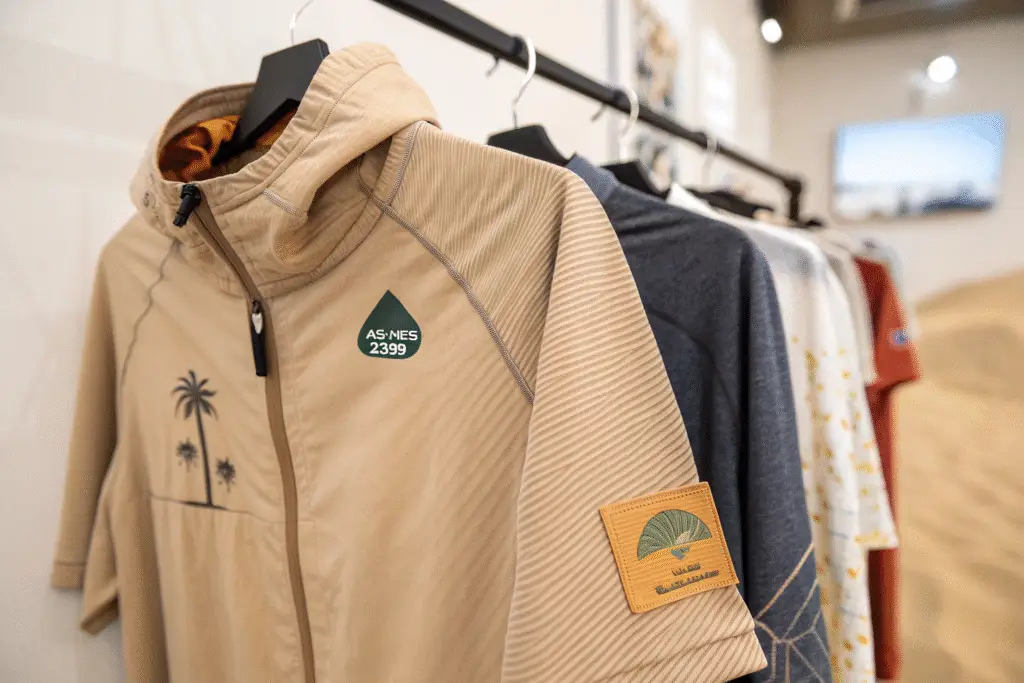
Desert clothing should always meet international UV standards like AS/NZS 4399, plus carry certifications that prove the fabrics are safe and effective.
Why Are Certifications Important?
Certifications like OEKO-TEX Standard 100 aren’t just stamps—they’re proof that your fabric is safe, skin-friendly, and actually protective. Without them, a brand risks selling clothing that looks protective but fails in real-world use.
How To Verify Supplier Quality?
Don’t just take a supplier’s word. Ask for third-party testing reports and see who they partner with. Reliable companies, like those working with Intertek, will have no problem sharing proof. This step weeds out shady suppliers who cut corners with fake promises.
Conclusion
At the end of the day, desert-sun protective clothing isn’t about trends—it’s about survival, comfort, and trust. You need UV-blocking fabrics, smart designs, breathable layers, and certified safety. Skip any one of these, and the risk climbs high.
At Shanghai Fumao, we take these lessons seriously. We’ve built our reputation on producing technical fabrics, getting real certifications, and delivering on time for global brands. If you’re planning to launch your own desert-protection clothing line—or even add a few protective pieces to your collection—we’d love to help.
Reach out to our Business Director Elaine at elaine@fumaoclothing.com and let’s build apparel that not only protects but also inspires confidence in every buyer who trusts your brand.