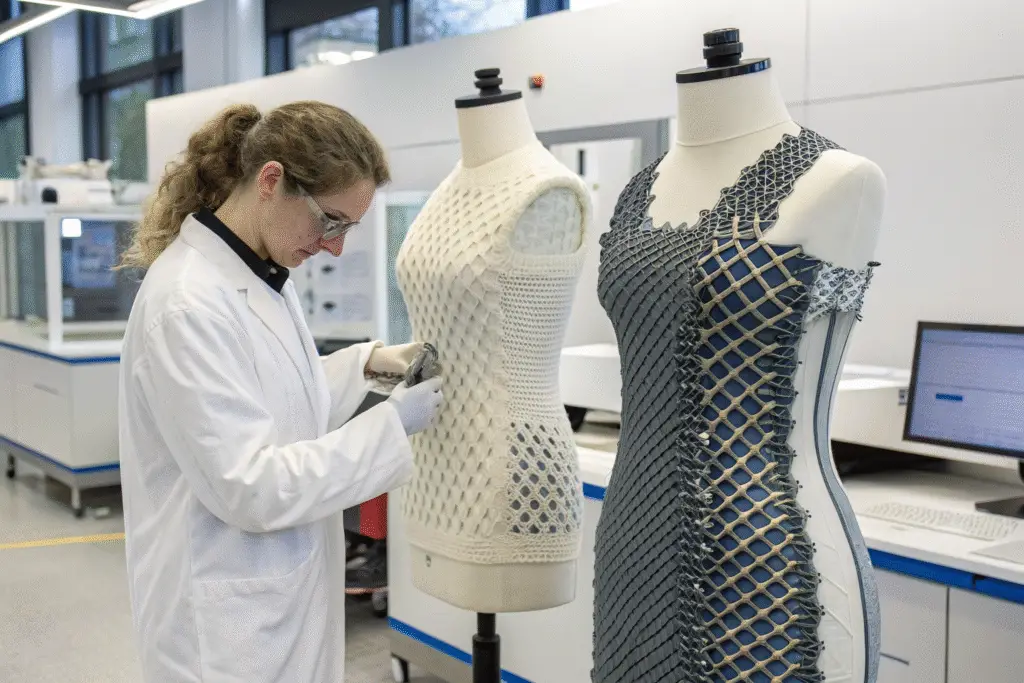
Fashion contributes significantly to emissions, and the industry is under pressure to provide solutions. Beyond recycling and energy efficiency, researchers now look to fabrics that actively absorb CO₂. These carbon capture textiles blend science with clothing, turning apparel into a functional climate tool.
Innovations in carbon capture textiles matter because they combine chemistry, biology, and nanotech to make clothing part of climate action.
From jackets to home fabrics, this new generation of textiles could reshape sustainability.
What Technologies Enable Carbon Capture In Textiles?
Textiles that absorb carbon rely on both engineered coatings and biological processes. Scientists are testing multiple methods to make fabrics capture emissions during use.
Key technologies include nanoparticles, engineered microbes, and mineral-based coatings applied directly to fibers.

What role do nanoparticles play?
Nanoparticle treatments, such as amine-based or titanium dioxide coatings, help bind CO₂. ScienceDirect shows functionalized fibers accelerate chemical reactions.
Can biology be integrated into textiles?
Yes. MIT researchers are developing fabrics with embedded microbes that capture carbon through bioactive processes.
What Challenges Limit Carbon Capture Textiles Today?
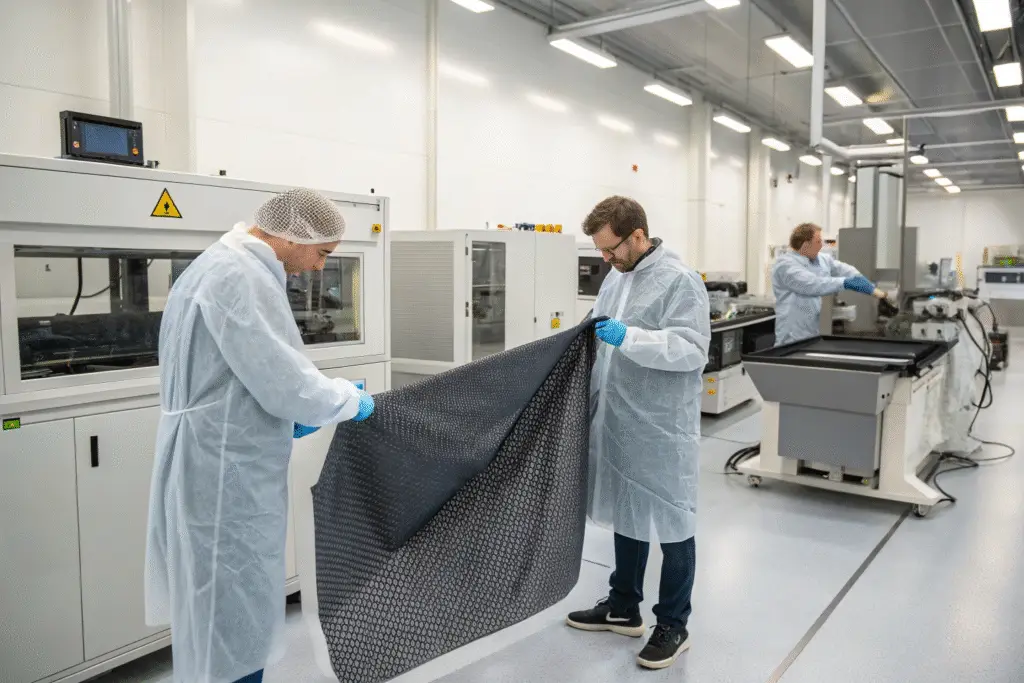
Despite strong potential, practical issues slow adoption. Questions of durability, washability, and mass production costs still remain.
The biggest challenges are performance longevity, scaling costs, and integration into current supply chains.
How durable are these fabrics?
Washing often reduces coating effectiveness. Nature points out that textile binders must improve to maintain capture performance after multiple cycles.
What about production costs?
Applying advanced coatings and bio-tech is expensive. Forbes reports that most sustainable textile breakthroughs require significant investment before mass rollout.
Why Are Carbon Capture Textiles Gaining Attention?
Climate policy and consumer expectations are pushing brands to innovate. Clothing that helps capture carbon offers a unique way to demonstrate leadership in sustainability.
Carbon capture textiles are gaining attention because they merge climate responsibility with real product innovation.

How big is the carbon challenge?
The United Nations estimates fashion produces up to 10% of global emissions, showing urgency for breakthrough solutions.
Why are consumers interested?
McKinsey research confirms that sustainability now drives purchasing, especially among younger consumers.
What Are Potential Applications Of Carbon Capture Fabrics?
These innovations go beyond T-shirts or jackets. Carbon-absorbing fabrics can support multiple industries by embedding functionality into existing textile products.
Applications include uniforms, household textiles, and industrial fabrics designed for filtration.

How can apparel use carbon capture?
Clothing can act as a wearable carbon sink. Fashion for Good has piloted projects where garments actively absorb CO₂.
Are there uses beyond clothing?
Yes. Curtains, carpets, and upholstery could clean indoor air, while industrial filters capture carbon at emission points. The International Energy Agency highlights textiles as part of scalable carbon removal.
Conclusion
Carbon capture textiles represent a bold direction for sustainable fashion. With nanoparticles, biological design, and new applications, they can transform garments into climate-positive tools.
Challenges remain in cost and wash durability, but the potential impact is significant. At Shanghai Fumao, we follow material breakthroughs and help brands source innovative fabrics responsibly. To explore advanced textile sourcing, contact our Business Director Elaine at elaine@fumaoclothing.com.