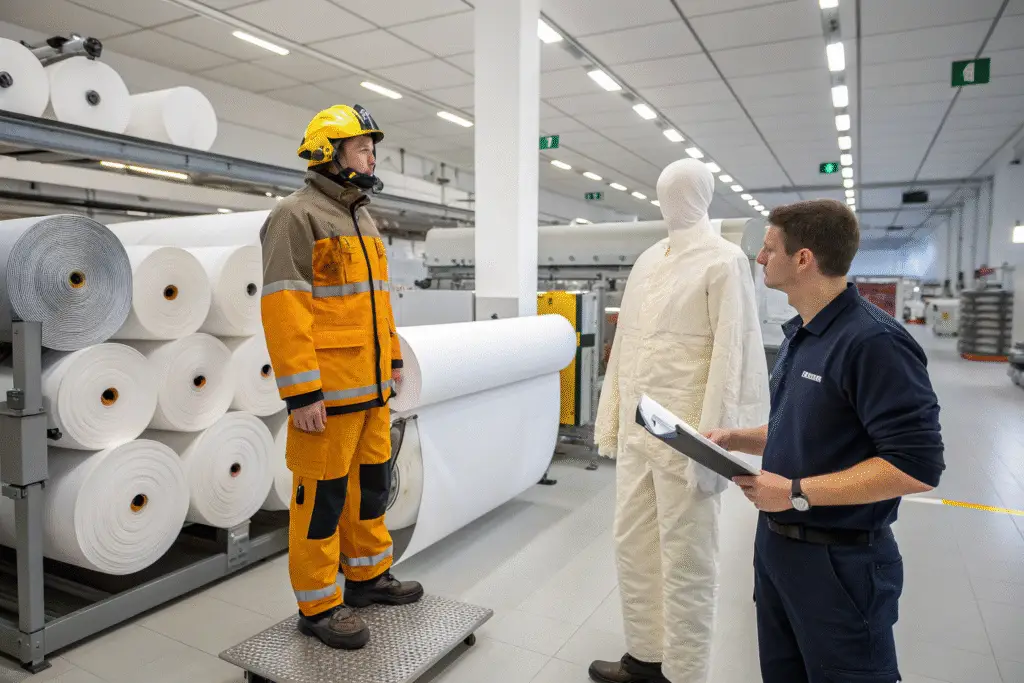
In apparel sourcing, buyers often ask for “chemical-free flame retardants.” From a scientific perspective, everything is chemical in nature, yet the term usually refers to fabrics without added flame-retardant finishes while still achieving legal safety benchmarks. To reach this balance, the approach should combine inherently flame-resistant fibers, careful fabric construction, thoughtful garment engineering, and verified independent testing. Contract clauses tied to restricted substance lists (RSLs) and manufacturing restricted substance lists (MRSLs) are also essential to prevent the introduction of unwanted chemistries.
The following sections present practical methods that brands can apply to meet these expectations.
How Should “No-Added FR” Be Defined Clearly?
Ambiguity can lead to risk, so precise definitions must appear in sourcing agreements.
A reliable practice is to declare that halogenated, phosphorus-based, or nitrogen flame-retardant finishes are not intentionally added, and require suppliers to demonstrate alignment with ZDHC MRSL v3.1.
Which Frameworks Assist This Process?
Working with OEKO-TEX® or bluesign®-approved facilities ensures restricted substances are excluded and compliance rules are respected.
Why Extend Scope To All Components?
Small details such as trims, linings, foams, and labels can create hidden flammability risks if left unchecked. Coverage across the entire garment avoids these oversights.
Which Inherently Resistant Fibers Replace Chemical Additives?
Rather than relying on topical treatments, material choice can provide protection from the start.
Wool, FR-modified cellulosics, and mineral fibers deliver natural or engineered resistance, lowering the need for additional finishes.
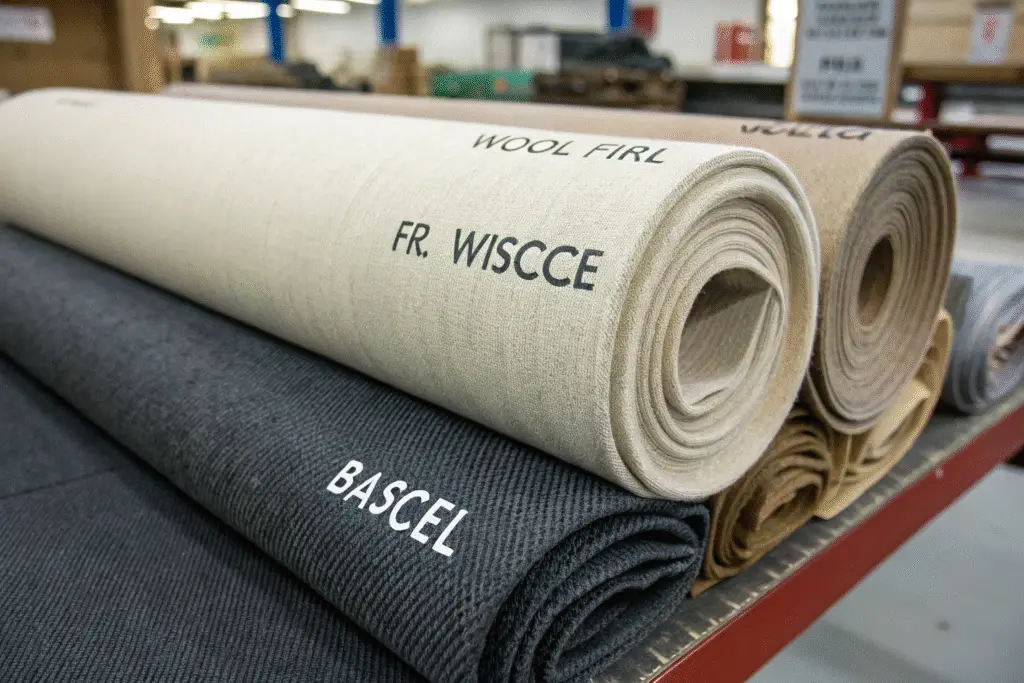
How Does Wool Contribute?
Wool chars instead of melting, often self-extinguishes, and works well in blends intended for outerwear or uniforms.
What Other Fibers Are Used?
LENZING™ FR and similar botanic-based fibers provide softness along with dependable resistance. For more extreme environments, basalt or glass textiles create stable non-combustible layers.
How Can Fabric Structure Improve Performance?
Fiber type is only one part of the solution. The way cloth is built has a significant effect on flammability.
Tightly woven structures, heavier weights, and layered barriers delay ignition and flame spread without the need for surface treatments.
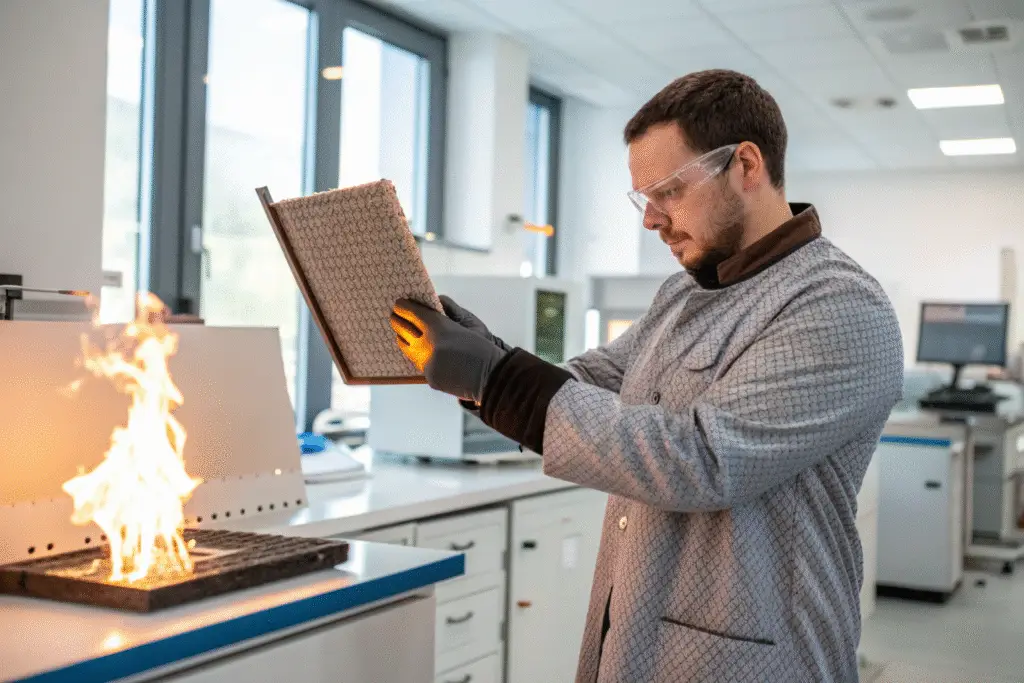
Which Adjustments Strengthen Protection?
Adding fabric mass slows combustion, while uniform finishing avoids hot spots that can burn faster.
Why Use Barrier Layers?
Non-combustible glass or FR-viscose interliners act as shields, keeping heat from reaching linings and reducing the chance of injury.
How Does Garment Design Support Safety Goals?
Design strategies also contribute to compliance.
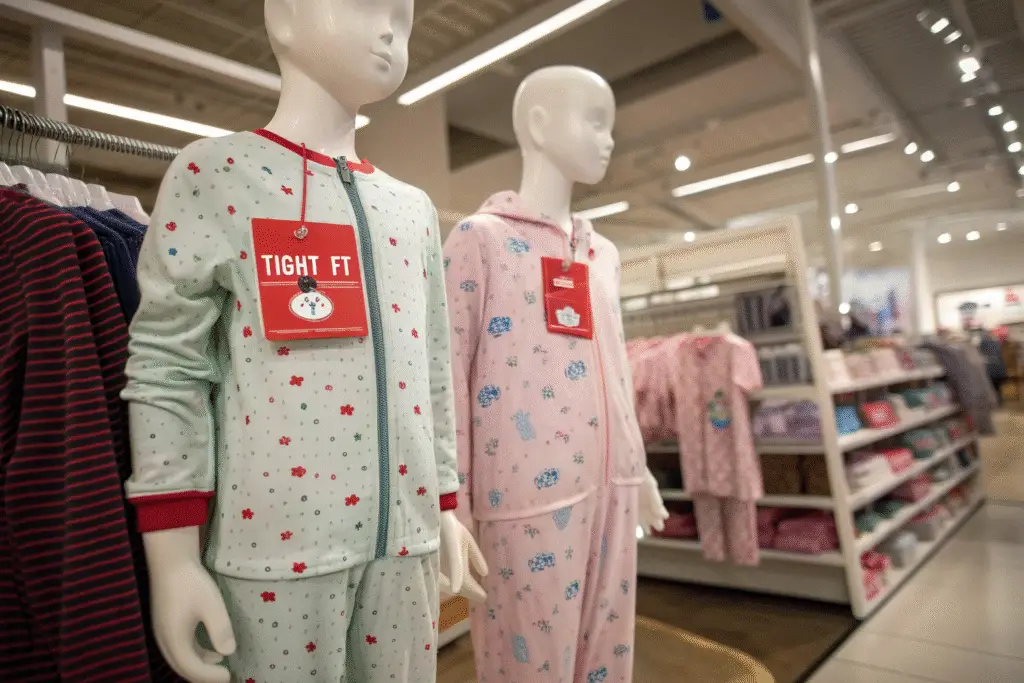
For children’s sleepwear in the U.S., garments may meet safety laws by using snug-fit specifications instead of relying on flame-retardant coatings.
Which Elements Require Attention?
Zippers, labels, or reflective trims may drip or ignite unless designed with resistant materials or positioned behind barriers.
Why Consider Regional Standards?
ISO and NFPA standards provide detailed accessory rules. Knowing these specifics prevents failures in final testing.
Which Tests Confirm Compliance Without Additives?
Even if finishes are avoided, third-party testing remains non-negotiable.
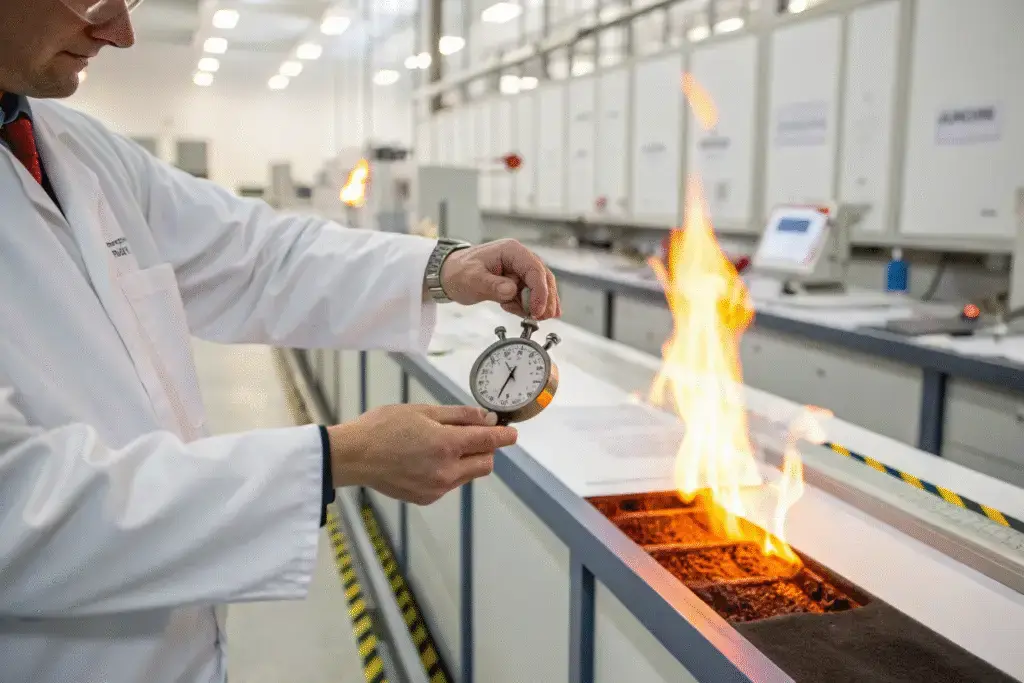
Both fabric-level and garment-level assessments are necessary to confirm conformity with ASTM, ISO, and NFPA standards.
Which Fabric Tests Are Used?
ASTM D6413 measures afterflame time, afterglow, and char length. This is widely adopted as a screening tool.
Which Garment Standards Apply?
European regulations include EN ISO 14116 and 11612. In the U.S., NFPA 2112 is critical for flash-fire garments and is often paired with ASTM manikin burn methods.
How Should Supply Chain Oversight Be Managed?
Sourcing is only as reliable as its weakest link, which makes documentation and control across the chain essential.
Requiring ZDHC MRSL compliance and OEKO-TEX® STANDARD 100 labels builds confidence for both regulators and consumers.

Why Keep Auditing?
Batch-level lab checks and renewed supplier declarations protect against drift in material sourcing and production.
What Must Be Recorded?
Certificates of Conformity should list each component and state clearly that no FR additives are intentionally present, with batch traceability attached.
Conclusion
Building garments with “chemical-free” flame resistance is practical when brands define clear terms, select fibers with inherent protective qualities, engineer structures thoughtfully, apply design strategies, and validate performance with global standards. Regular auditing and transparent documentation further reinforce credibility.
At Shanghai Fumao, we integrate inherent FR fibers, conduct ASTM D6413 fabric checks, and confirm garments against ISO or NFPA benchmarks. Our supply chain follows MRSL rules, and shipments can be arranged under DDP terms for simplified delivery. For collaboration inquiries, reach our Business Director Elaine at elaine@fumaoclothing.com.