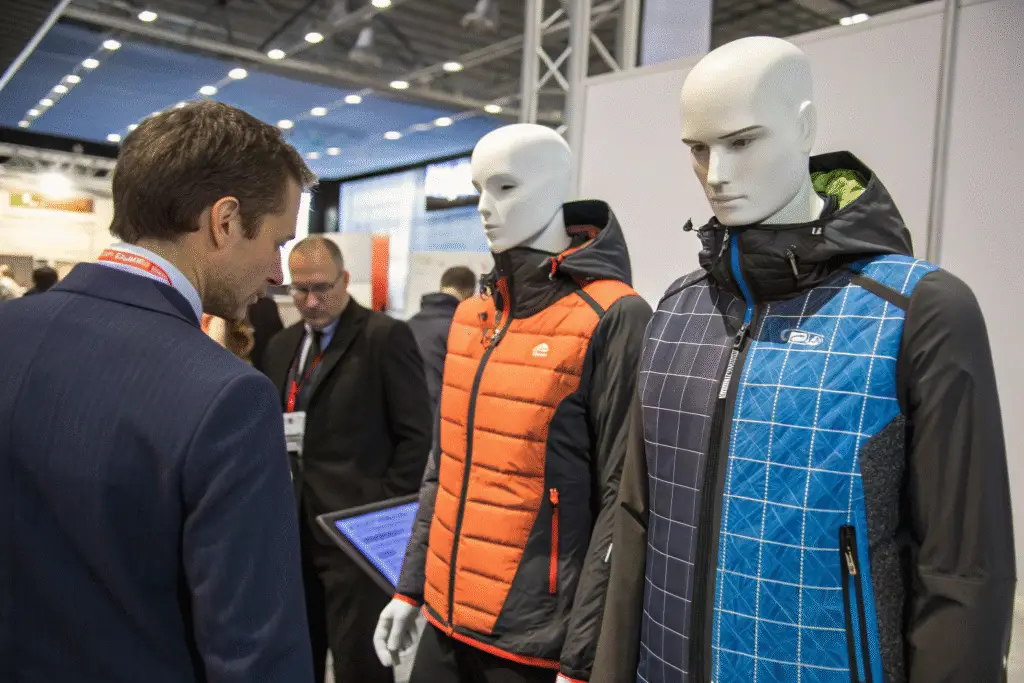
Outdoor garments today are expected to combine performance with technology and environmental responsibility. Among the most striking advances in this space is the solar-powered heating jacket. For apparel buyers, outdoor users, and brand developers, this solution offers independence from single-use batteries while providing reliable warmth.
Recent innovations include lighter solar modules, more efficient heating layers, and intelligent temperature management, making these jackets suitable for both everyday wear and challenging outdoor conditions.
In the following analysis, I will outline how solar integration is achieved, which heating systems are applied, how energy is stored, and where market opportunities are expanding.
How Are Solar Panels Built Into Jackets?
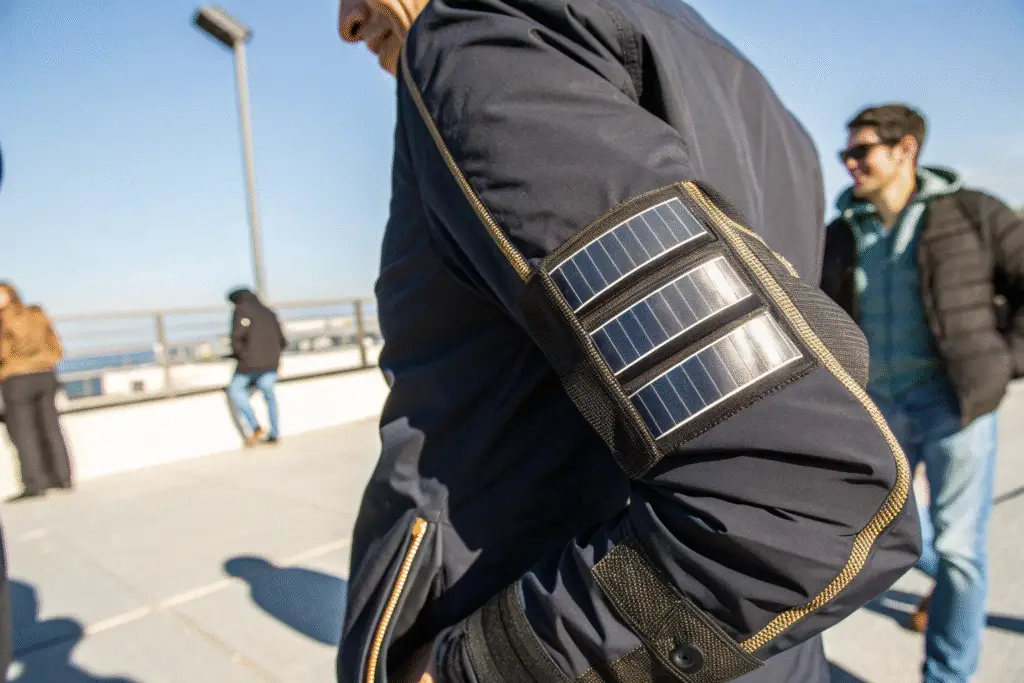
Through advanced textile processing, thin, flexible photovoltaic films can now be woven or laminated directly into outerwear. Unlike rigid panels, these components allow natural body movement without adding stiffness.
Current solar technologies rely on lightweight thin-film cells designed for resistance to weather and mechanical stress, which allows energy capture without sacrificing comfort.
Which Solar Cell Designs Dominate?
Most commonly, thin-film solar modules are chosen because of their light weight and adaptability. Compared with crystalline silicon options, they align more naturally with textiles.
Do They Perform Well Outdoors?
Yes. Studies cited by Solar Power World indicate that thin-film materials can still generate power in dim or indirect light, while protective coatings extend durability against rain and abrasion.
What Heating Methods Are Applied?
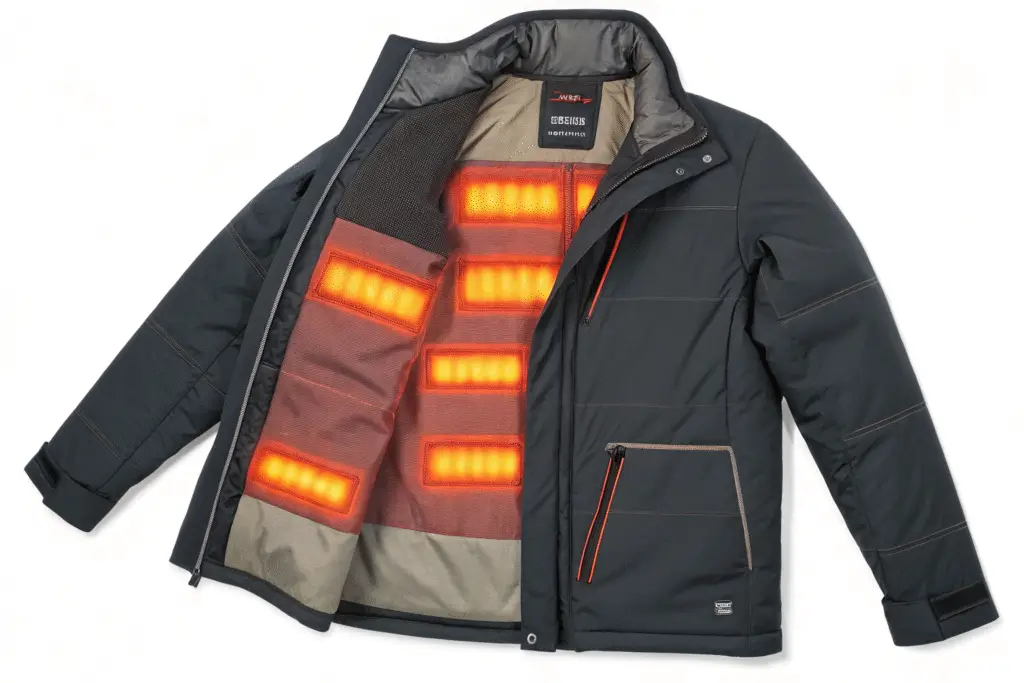
Heating layers in jackets have shifted from heavy wiring toward graphene-based membranes and carbon-fiber sheets. These materials are light, safe, and able to spread warmth evenly across the garment.
The adoption of such elements results in higher energy efficiency, greater comfort, and longer product lifespan.
What Generates The Heat?
Graphene coatings and carbon nanofiber mats dominate due to excellent thermal conductivity. Findings published by ScienceDirect highlight graphene’s ability to move heat quickly while remaining ultra-light, which makes it ideal for smart wearables.
How Is Energy Use Controlled?
Integrated microchips regulate heating output. Many jackets now feature thermostatic regulation systems that adapt automatically to environmental conditions and body temperature, conserving stored power.
How Is Solar Power Stored And Utilized?
Since sunlight is inconsistent, energy must be stored for later use. Designers embed rechargeable lithium-polymer packs inside linings to guarantee consistent function.
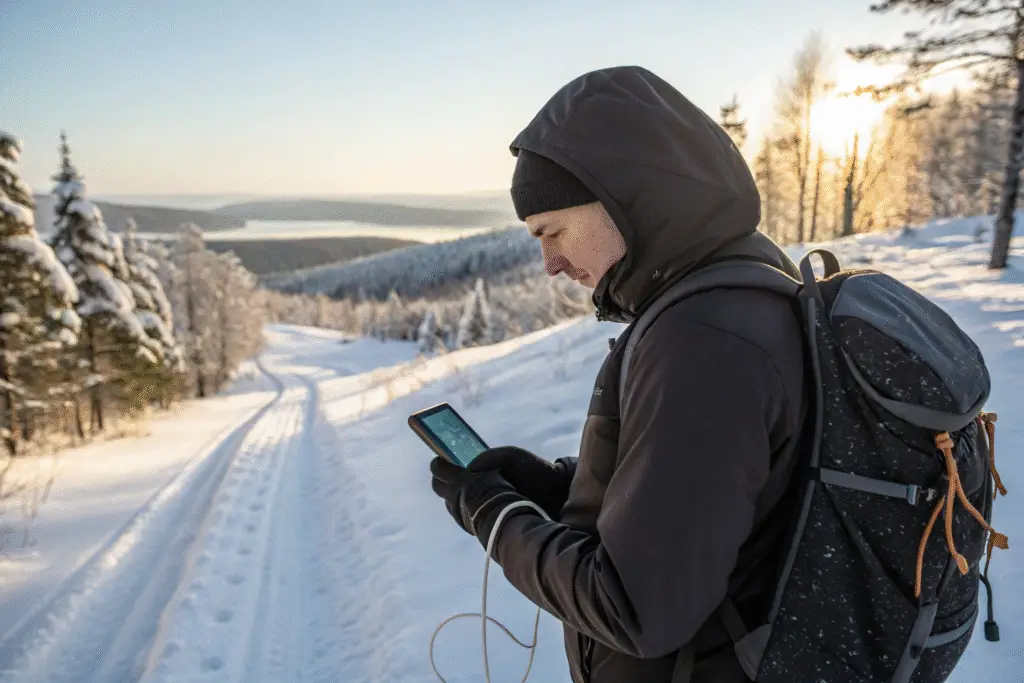
These batteries not only run the heating modules but also provide charging options for devices such as phones or GPS trackers.
Which Batteries Are Preferred?
Slim lithium-ion packs are commonly selected because they deliver stable energy and tolerate repeated charging cycles.
Can Jackets Function As Chargers?
Indeed. According to Outdoor Gear Lab, certain designs feature higher-capacity storage that powers both clothing heat systems and portable electronics, offering dual-purpose convenience.
What Are The Market Directions And Applications?
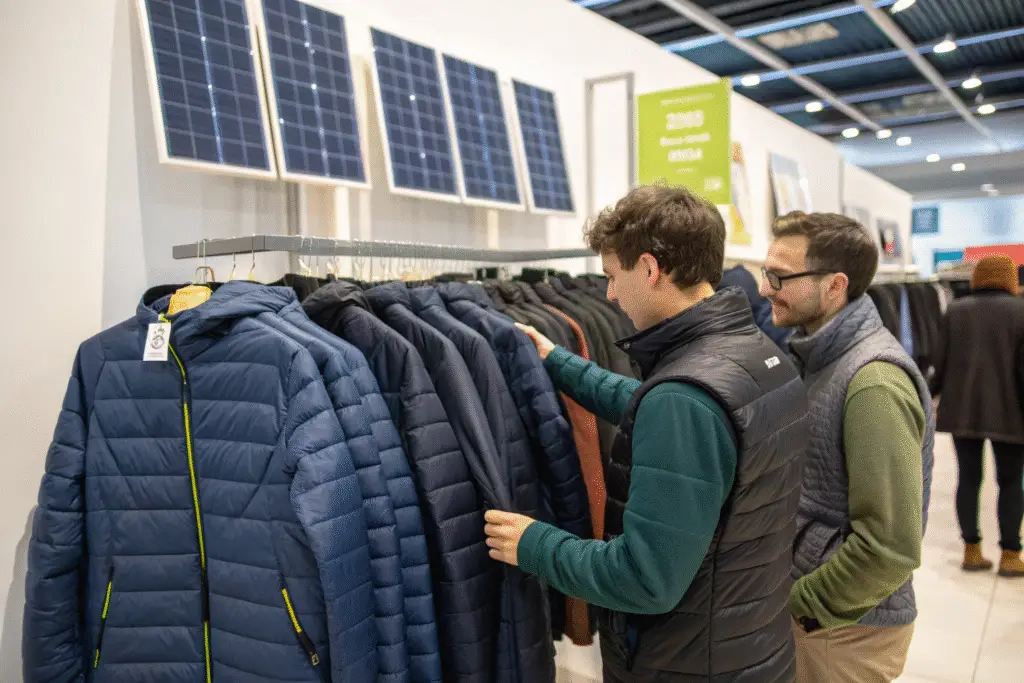
The reach of these jackets extends beyond specialist mountaineering. Military programs, urban commuters, and winter fashion lines are also adopting renewable-powered textiles.
Demand is climbing for apparel that blends sustainability with advanced utility, attracting environmentally aware customers as well as technology enthusiasts.
Which Regions Lead The Demand?
North America and Europe show the strongest interest. According to Fortune Business Insights, the smart fabric industry is projected to expand steadily, with solar-heated outerwear forming a notable segment.
Are Fashion Houses Engaged?
Yes. Designers working in wearable technology are testing hybrid urban jackets that combine modern styling with renewable functions. Commuter apparel that provides on-demand warmth while charging electronics is becoming a highlight.
Conclusion
The evolution of solar-powered heating jackets illustrates how wearable technologies now merge renewable energy with practical clothing functions. With flexible solar films, advanced heating membranes, and integrated energy packs, this innovation is shifting from niche exploration to mainstream apparel.
At Shanghai Fumao, we stay aligned with these developments in textile engineering and outerwear design. We assist international partners in sourcing advanced fabrics and creating sustainable products. For collaborations or project discussions, you can contact our Business Director Elaine at elaine@fumaoclothing.com.