Outerwear—it gets tested by rain, wind, snow, and daily wear. And let’s be honest, even the toughest jackets eventually rip, scratch, or lose their coating. To be honest, repairing gear with patches or sewing works, but it doesn’t always look good. That’s why researchers and brands are pushing forward with a new idea: fabrics that can repair themselves.
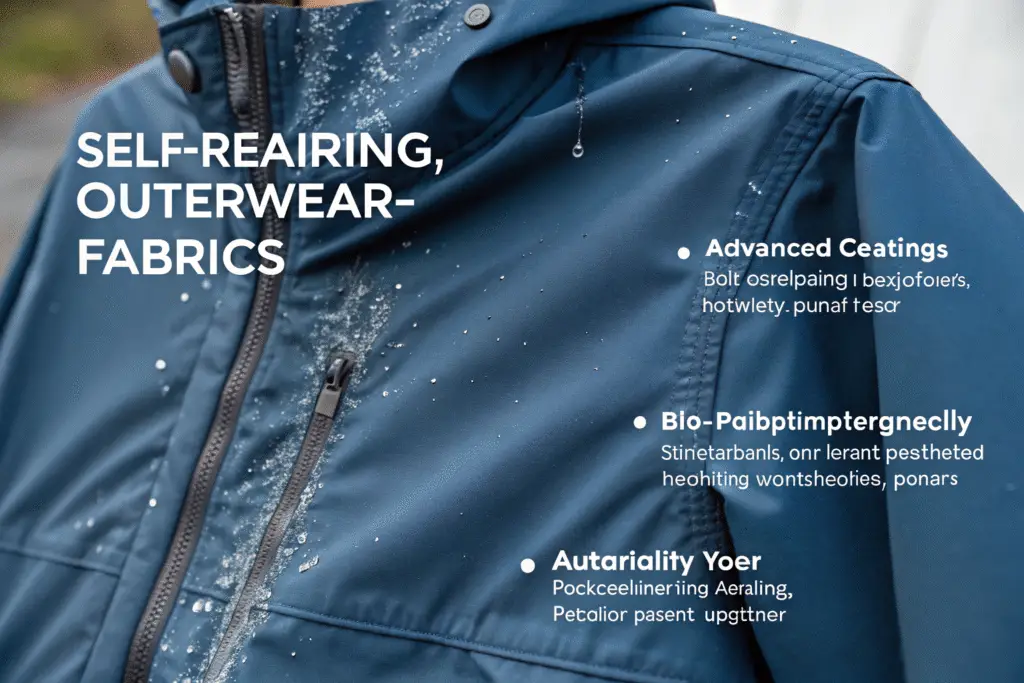
Self-repairing outerwear fabrics use advanced coatings, biopolymers, nanotech, or even bio-inspired materials to automatically seal scratches, tears, or water-repellent layers—making jackets last longer while cutting waste.
Actually, the technology is evolving fast. Personally I think it’s a mix of science fiction and very practical problem-solving. Let’s look at the main innovations now shaping this field.
Microcapsule-Based Self-Healing Coatings
One of the earliest approaches is microcapsule coatings—tiny bubbles embedded in the fabric that burst when scratched, releasing sealants to close the tear.
These coatings allow outerwear to self-repair small punctures or scratches instantly, without visible stitching.
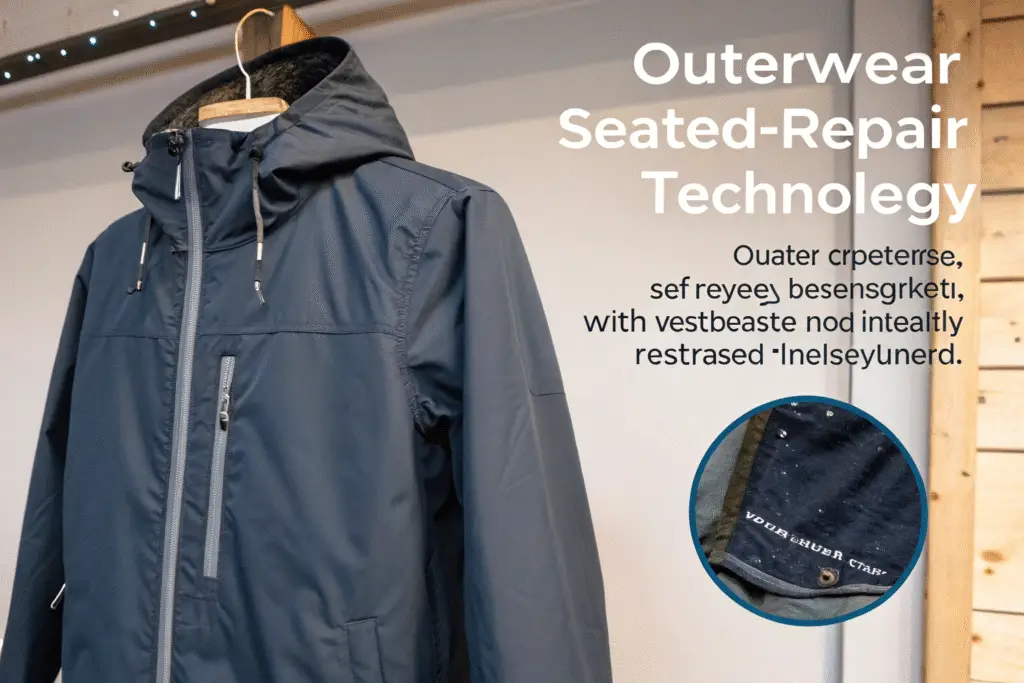
How Do Microcapsules Work in Jackets?
The concept is simple but clever. A polyurethane base holds microcapsules filled with bonding liquid. When cut, capsules break, and the liquid hardens when exposed to air. Research groups like SINTEF and experiments reported on Startup Fashion show how effective this is for waterproof jackets.
What Are the Benefits for Outdoor Gear?
Personally I think—it’s a lifesaver for hikers or climbers. A ripped raincoat can repair itself mid-expedition. No sewing kit required. Reports from Shanghaigarment.com suggest brands could integrate this at factory scale soon.
Protein-Based Biopolymer Coatings
Nature already provides inspiration—protein-based solutions can “heal” fabrics like cotton, wool, or polyester when treated properly.
These biopolymer coatings, applied through dipping processes, let outerwear fabrics repair structural damage.
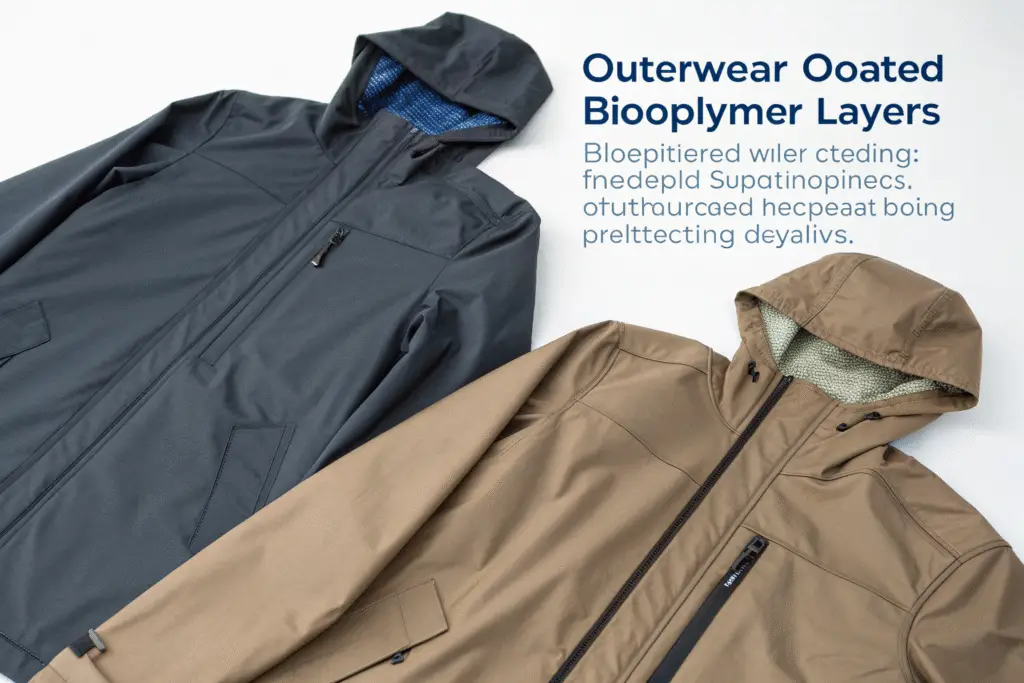
How Do Proteins Heal Fabrics?
At Penn State, researchers created a method to dip textiles into liquid proteins layer by layer. When the garment is scratched, the layers bond back together, restoring integrity. Allure explains how this may be used in uniforms and outdoor wear.
Could This Work in Daily Apparel?
Yes—actually, tests show it works on cotton and linen. Imagine a winter coat repairing itself after getting caught on a branch. The Futurism article highlights that the coating could be eco-friendly and biodegradable as well.
Nanotechnology and Smart Polymers
Sometimes, the answer is smaller than the eye can see. Nanoparticles and nanocoatings bring resilience and healing.
Nanotech-based fabrics repair themselves under UV light, pressure, or heat by reactivating molecular bonds.
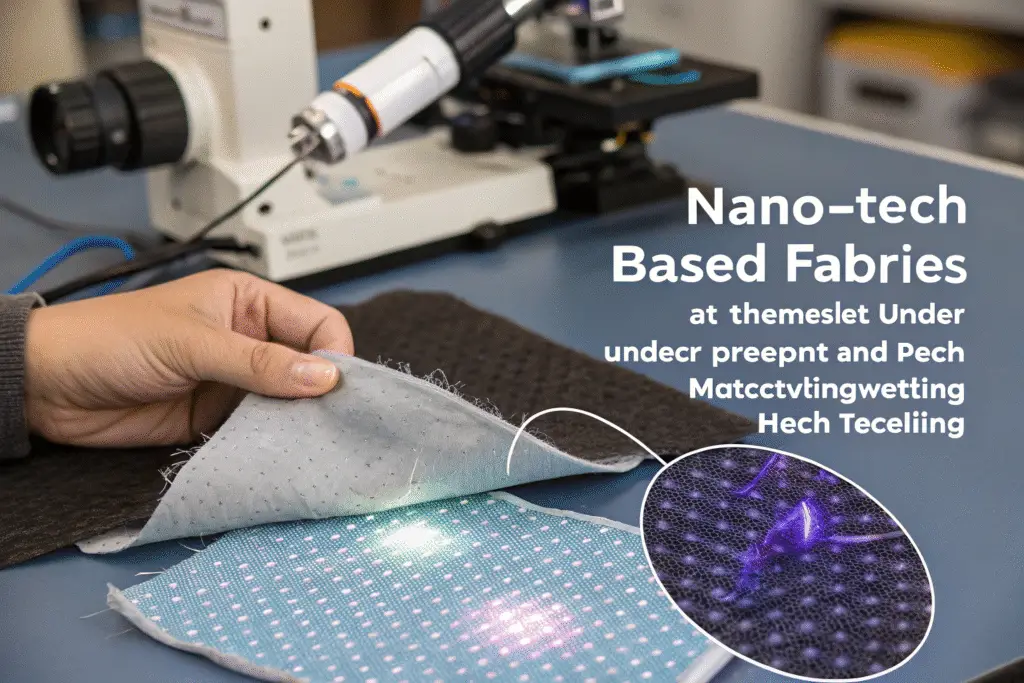
What Makes Nanotech Effective?
Nanoparticles can move back into scratches, sealing them automatically. Some textiles also use shape-memory polymers that return to their original form when heated. Studies covered on Fibre2Fashion describe these fabrics as both strong and flexible.
How Could Outdoor Brands Use It?
Personally I think this could mean jackets that restore waterproof membranes after scratches. Shanghaigarment.com reports nanocoatings might already be tested in next-gen outerwear prototypes.
Bio-Inspired Mycelium Repair
This one sounds like science fiction—mushroom roots helping jackets heal. But it’s real.
Mycelium-infused fibers can grow across scratches or tears, “stitching” the damaged area naturally.
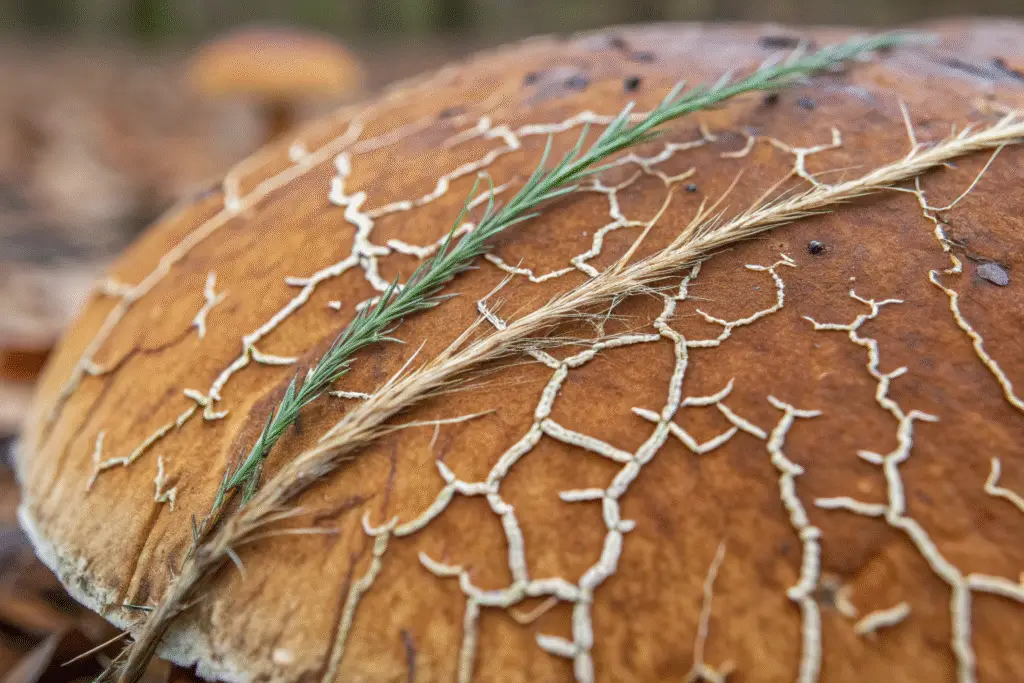
How Does Mycelium Work in Fabrics?
The fungal fibers expand and colonize the tear site. Over time, they restore structural strength. Articles on AI Wise Denim call it the “mushroom stitch.”
Is It Practical for Outerwear?
Not yet widely. Growth speed and control are challenges. But Technology Inquirer notes that lab studies prove it works. Personally I think—it’s early days, but very promising.
Reversible Cross-Linking Polymers
Some fabrics rely on chemical bonds that can break and reform.
Reversible cross-linking polymers repair themselves through ionic liquids and dipole interactions.
How Fast Do They Heal?
At National Yangming Chiao Tung University, tests showed fabrics recovering structure almost instantly. The polymer chains reassemble under mild conditions. More detail is shared on NYCU’s website.
Where Could They Be Used?
Personally I think—they suit technical jackets, uniforms, or gear exposed to extreme use. Rapid healing reduces replacement cycles.
Hydrophobic Self-Healing Finishes
Even when fabrics survive, coatings wear out—especially water repellency.
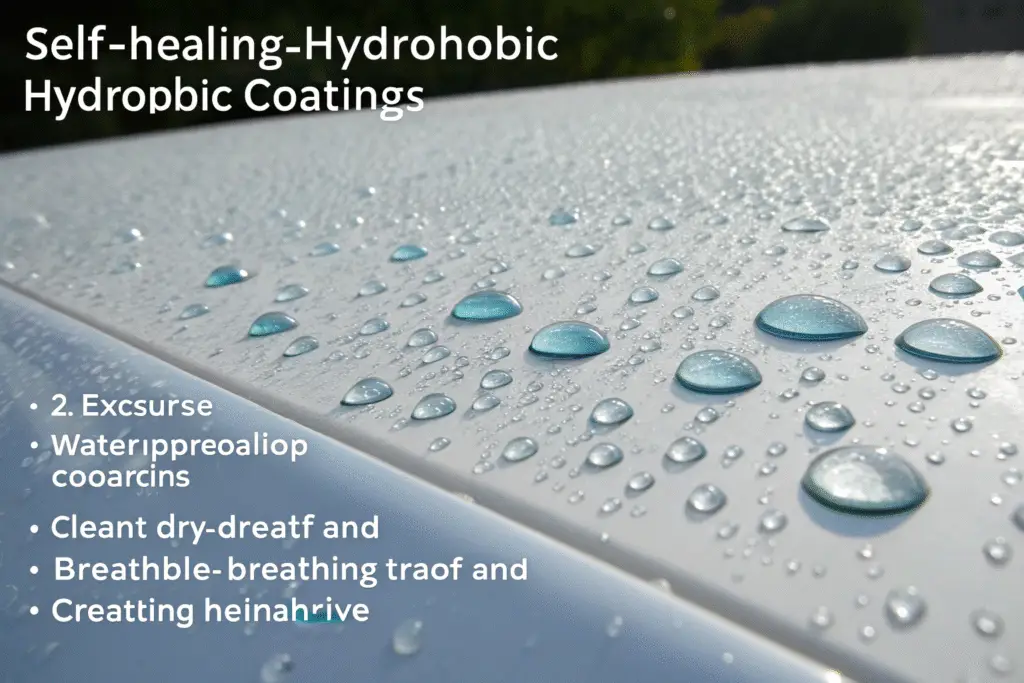
Self-healing hydrophobic coatings restore waterproofing and breathability by re-migrating special polymers to the surface.
How Do These Finishes Repair Themselves?
Special nanoparticles like SiO₂ reorient when heated, recreating a water-repellent layer. X-Mol reports that breathability is maintained.
Why Is This Useful for Outerwear?
Actually, it solves one of the biggest problems—jackets losing waterproofing after repeated washing. Personally I think, this could extend life cycles by years.
Conclusion
So, what innovations are shaping self-repairing outerwear fabrics? From microcapsule coatings to protein dips, from nanotech to mycelium, from smart polymers to self-healing hydrophobic finishes—outerwear is moving into a future where gear heals itself. To be honest, it’s not only about durability, but about sustainability too. Fewer replacements, less waste, better performance.
At Shanghai Fumao Clothing, we track these textile innovations closely, always seeking ways to bring them into real production for global apparel brands. If your company wants to explore cutting-edge outerwear manufacturing, contact our Business Director Elaine at elaine@fumaoclothing.com.