Cotton is the backbone of the global apparel industry, used in everything from basic T-shirts to luxury shirts. Yet, behind its popularity lies a serious problem. Conventional cotton farming often relies on heavy irrigation, chemical pesticides, and monocropping practices that strip the soil of nutrients. As a result, cotton consumes about 16% of the world’s insecticides and 6% of pesticides, despite occupying only 2.5% of global farmland. This imbalance makes it one of the most environmentally demanding crops.
Regenerative agriculture offers a way out. By focusing on soil restoration, biodiversity, and carbon capture, regenerative cotton farming helps reduce water usage, chemical dependency, and greenhouse gas emissions. For apparel brands, sourcing regenerative cotton is more than an ethical choice—it is a business strategy that strengthens supply chain resilience and provides a powerful sustainability story to share with consumers.
From my own work with buyers in the U.S. and Europe, I’ve seen a sharp increase in inquiries about regenerative cotton. Many leading brands now ask suppliers whether our fabrics are sourced from regenerative farms, showing how quickly the industry is shifting in this direction.
Why Is Regenerative Agriculture Different From Organic?
Organic farming eliminates synthetic pesticides and fertilizers, but regenerative agriculture goes further by actively improving ecosystems.
Instead of focusing only on what not to use, regenerative agriculture prioritizes outcomes such as soil carbon storage, water retention, and ecosystem resilience. For cotton growers, this means healthier soil that can continue producing high-quality fiber without relying on heavy chemical inputs.

Does It Really Improve Soil Health?
Yes. According to Regeneration International, regenerative methods such as no-till farming, composting, and cover cropping can increase soil organic matter by up to 20% in just five years. In practice, this means cotton plants grow in healthier, moisture-rich soil that is less prone to erosion. Farmers in India’s Madhya Pradesh region reported 15% higher yields after switching to regenerative practices compared to traditional cotton farming.
How About Water Efficiency?
Cotton has a reputation for being “thirsty,” often requiring over 2,700 liters of water to produce a single T-shirt. Regenerative techniques like mulching and intercropping improve soil’s ability to retain moisture, reducing irrigation needs by 30–40%. A pilot project in Maharashtra, India, demonstrated that regenerative cotton farms required significantly less water per bale compared to conventional systems, making them more climate-resilient in drought-prone areas.
What Are the Environmental Benefits for Cotton Buyers?
For buyers, regenerative cotton is not just another fiber option—it represents measurable impact.
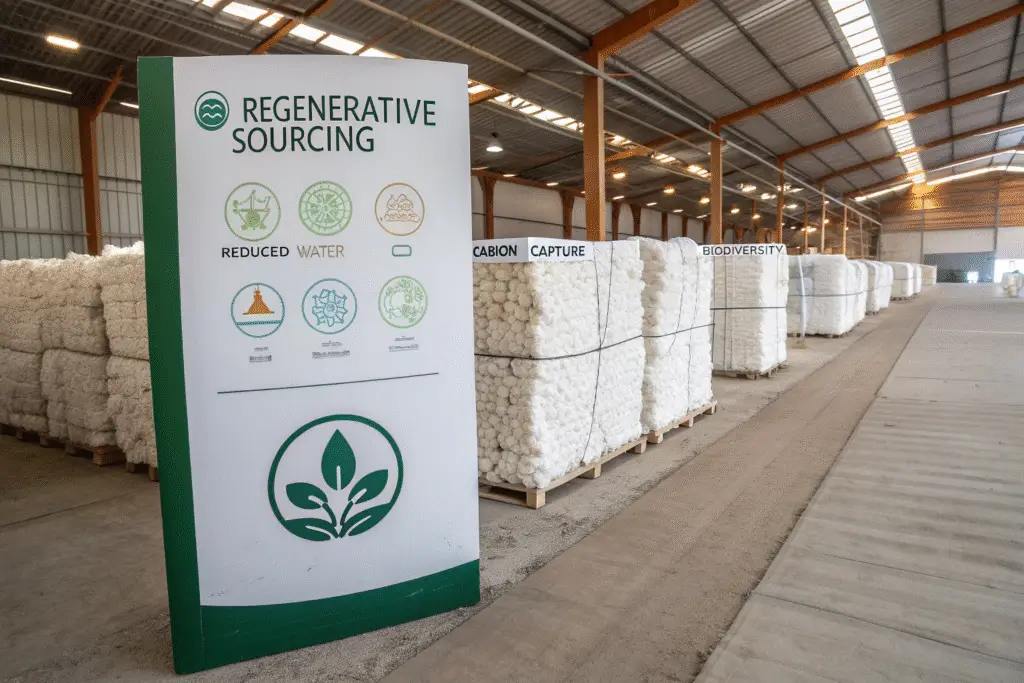
Sourcing regenerative cotton reduces greenhouse gas emissions, conserves water, and enhances biodiversity, aligning with global climate goals and sustainability targets set by leading fashion brands.
Does It Reduce Carbon Emissions?
Yes. Regenerative agriculture is a powerful carbon sink. According to Rodale Institute, regenerative farming practices can sequester up to 1 ton of CO₂ per acre annually. If applied to just 10% of the world’s cotton fields, this could offset the annual emissions of over 10 million cars. For fashion brands under pressure to meet Science Based Targets, regenerative cotton offers a credible pathway to carbon reduction.
How Does It Affect Biodiversity?
Traditional monoculture cotton fields often leave land barren of life. In contrast, regenerative cotton farms integrate hedgerows, pollinator habitats, and companion crops like legumes. A study in Nature Sustainability found that farms using regenerative techniques supported twice as many pollinators compared to conventional cotton farms. For brands, this strengthens sourcing claims and demonstrates a commitment to ecological restoration.
How Does Regenerative Cotton Benefit Apparel Brands?
For apparel brands, sourcing regenerative cotton is about more than raw material—it is about brand positioning.
Adopting regenerative cotton strengthens transparency, supports premium product pricing, and meets increasingly strict sustainability requirements from regulators and retailers.

Do Consumers Value Regenerative Cotton?
Yes. A First Insight survey revealed that 73% of Gen Z consumers are willing to pay more for sustainable products, and cotton is at the center of this preference. For example, brands that highlight regenerative cotton in marketing campaigns often see higher engagement rates on social media and improved sell-through in premium retail stores.
How Does It Support Brand Transparency?
Brands like Patagonia and Kering have invested heavily in regenerative cotton programs, often integrating blockchain traceability to verify farm-to-fabric sourcing. By publishing soil health data and carbon sequestration results, these brands build consumer trust and compliance with evolving regulations like the EU’s Green Claims Directive. For smaller labels, partnering with certified regenerative suppliers can provide a similar transparency advantage.
How Can Manufacturers Support Regenerative Sourcing?
Manufacturers are the bridge between regenerative farms and international brands.
By sourcing from certified cotton cooperatives, blending regenerative fibers into yarn production, and offering private-label solutions, manufacturers ensure brands can scale their sustainability initiatives without logistical disruption.
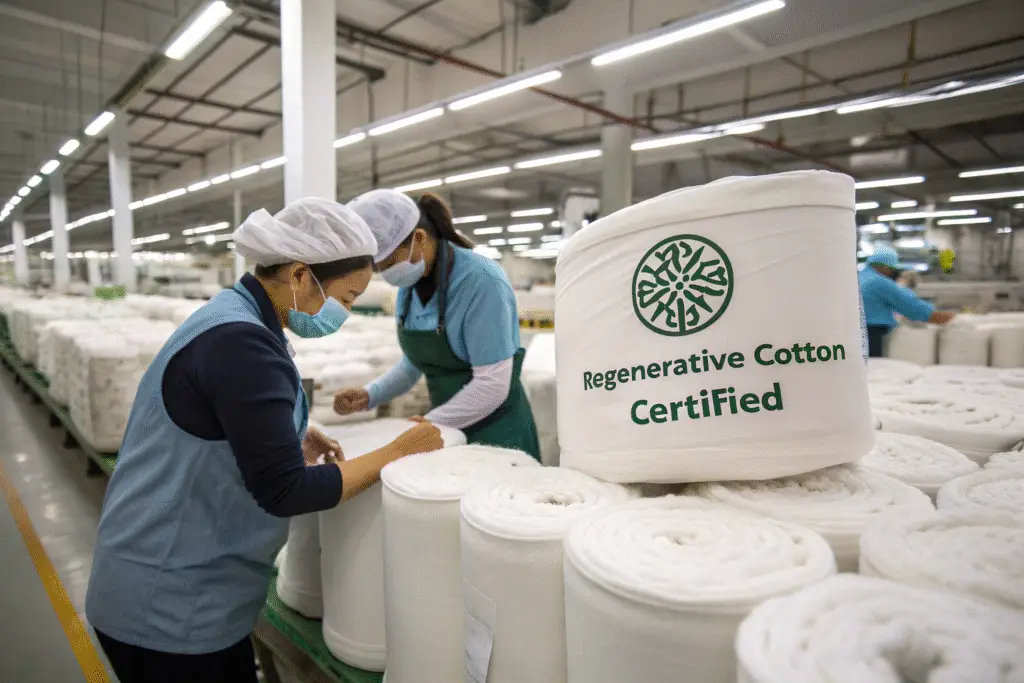
Can Regenerative Cotton Be Used in All Apparel Categories?
Yes. Regenerative cotton is versatile. It can be spun into yarn for T-shirts, polos, dresses, denim, outerwear, and luxury shirting. Levi’s has already launched denim collections made with regenerative cotton, proving it can meet the high durability requirements of jeans while aligning with sustainability promises.
How Do Manufacturers Ensure Traceability?
Factories often partner with certification bodies such as Regenerative Organic Certified (ROC) or the Better Cotton Initiative. With digital record-keeping and blockchain integration, they can provide buyers with detailed sourcing data. For apparel brands, this traceability not only satisfies compliance audits but also helps avoid reputational risks related to greenwashing.
Conclusion
Regenerative agriculture is no longer a niche practice—it is becoming the standard for responsible cotton sourcing. Unlike conventional or even organic farming, regenerative methods actively restore ecosystems, capture carbon, and support farming communities with long-term resilience.
For apparel brands, sourcing regenerative cotton provides a competitive edge: it ensures raw material stability, reduces environmental risks, and resonates with eco-conscious consumers willing to pay more for sustainability.
At Shanghai Fumao Clothing, we are proud to integrate regenerative cotton into our supply chain. With strong supplier partnerships, rigorous quality control, and end-to-end export services, we help brands transition smoothly into regenerative sourcing. If you want to explore how regenerative cotton can elevate your next collection, contact our Business Director Elaine at elaine@fumaoclothing.com.