
When machines fail without warning, entire production lines come to a halt. This leads to missed delivery schedules, wasted raw materials, and frustrated customers. Traditional maintenance methods such as scheduled servicing or fixing equipment only after breakdowns are no longer enough in today’s fast-moving apparel industry.
Predictive maintenance offers a smarter way. It uses sensors, data analytics, and AI to predict equipment failures before they happen, keeping production lines running efficiently and reducing costly downtime.
In my experience as a factory owner, switching to predictive maintenance changed how we manage risk. We no longer wait for machines to stop; instead, we act ahead of time. This saves costs and builds stronger trust with clients.
Benefits of Predictive Maintenance in Apparel Manufacturing
Apparel production lines run continuously, and every hour lost impacts delivery schedules. Predictive maintenance is more than a technology trend; it is a key factor in protecting productivity.
The main benefit of predictive maintenance is avoiding unplanned downtime. By analyzing vibration, temperature, and machine usage data, factories can service equipment before failures occur.
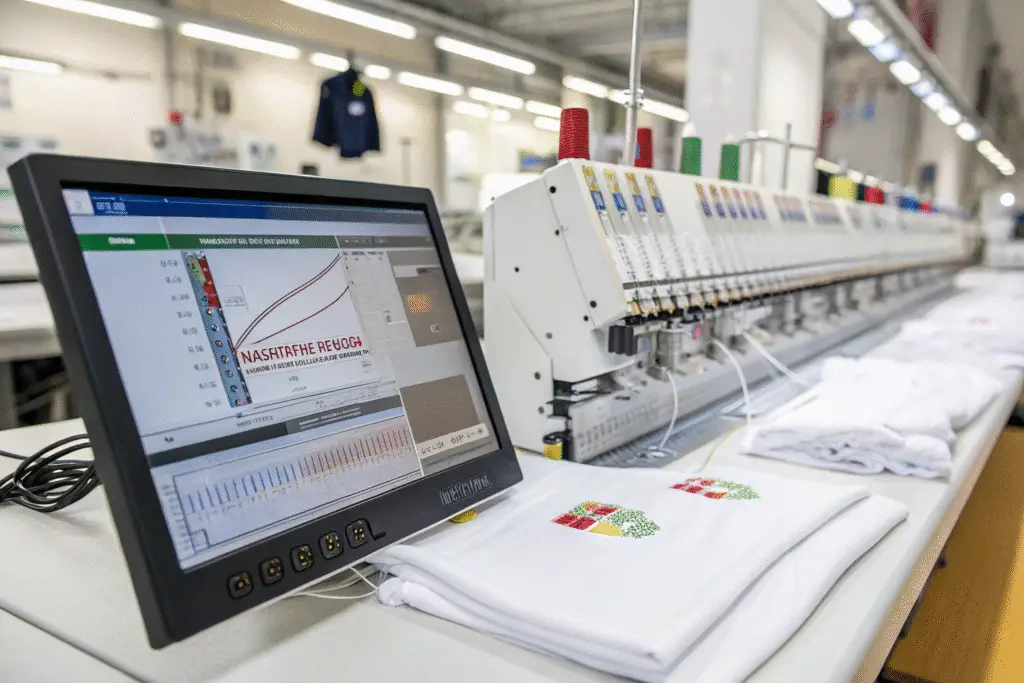
How does predictive maintenance reduce downtime?
Predictive maintenance identifies issues before they cause breakdowns. For example, sensors can detect unusual motor vibrations, alerting technicians to replace parts early. According to IBM’s predictive maintenance overview, this method cuts downtime by as much as 50%. This matters in fashion supply chains where timing is critical. Another resource, McKinsey on AI in operations, shows that predictive models allow firms to produce more without adding new machines.
Why is predictive maintenance cost-efficient?
Unplanned breakdowns often mean costly express shipments, overtime pay, and even lost clients. Predictive maintenance reduces these risks. It allows companies to plan part replacements and schedule service during non-peak hours. Reports from Deloitte’s Industry 4.0 insights highlight that predictive methods save 10–20% in maintenance costs compared to reactive strategies. The apparel industry, with thin margins, benefits greatly from these savings.
How Predictive Maintenance Improves Quality Control
Quality issues are a hidden cost in apparel manufacturing. A single faulty stitch machine can ruin thousands of garments. Predictive maintenance does not just protect uptime—it also protects product quality.
By keeping machines in optimal condition, predictive maintenance ensures consistent product quality and reduces defect rates.
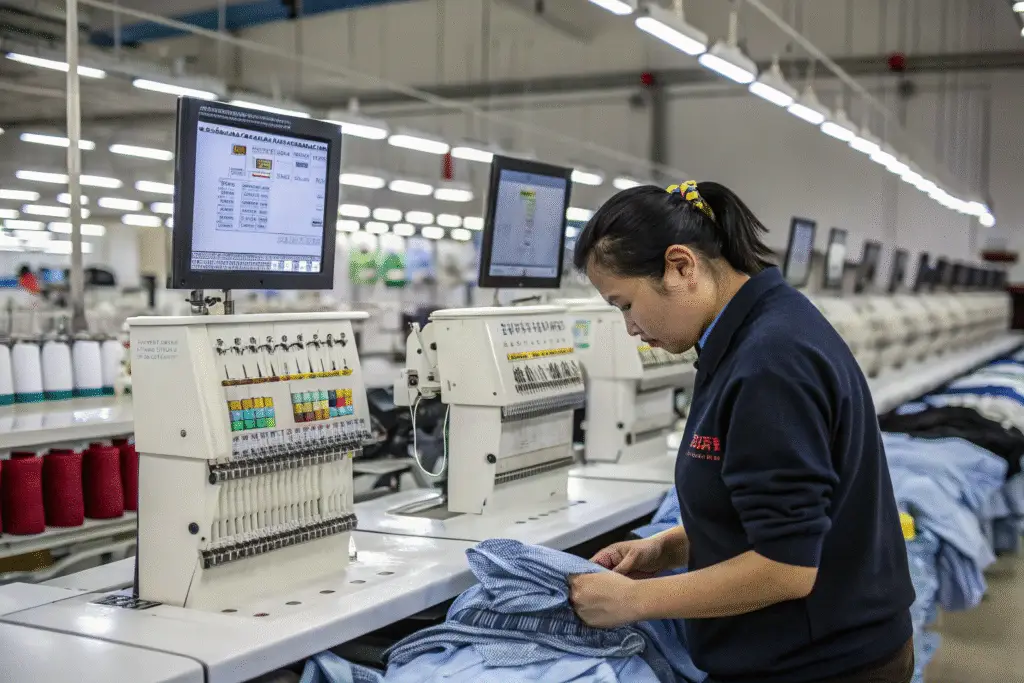
How does predictive maintenance prevent defects?
Sewing machines, knitting machines, and cutting tools require precision. If a blade or needle is misaligned, defects multiply quickly. With predictive monitoring, small performance shifts are flagged early. According to Siemens Industry 4.0 solutions, AI-driven analytics can track variations and prevent large-scale quality failures. Similarly, PwC research on smart factories shows predictive maintenance reduces defects by up to 30%.
Can predictive maintenance support sustainability?
Defective clothing often ends up as waste. Predictive maintenance reduces this waste by keeping production consistent. Better quality control means fewer rejected items, which supports sustainability goals. As World Economic Forum notes, reducing production waste is a major factor in meeting green commitments. Apparel brands increasingly value suppliers who can guarantee both quality and sustainability.
Predictive Maintenance vs Preventive Maintenance
Many factory owners confuse predictive and preventive maintenance. While both aim to reduce machine failures, their approaches are different.
Preventive maintenance follows fixed schedules. Predictive maintenance relies on real-time machine data. This difference makes predictive far more accurate and cost-effective.

Why is predictive maintenance more accurate than preventive?
Preventive schedules do not reflect actual machine condition. They might cause over-servicing or under-servicing. Predictive systems, on the other hand, analyze machine health continuously. A report from GE Digital confirms predictive maintenance can improve asset life by 20–40%. Another comparison by Accenture highlights that predictive methods adapt dynamically, unlike static preventive schedules.
When should factories still use preventive methods?
Preventive maintenance may still apply to simple, low-cost equipment. For example, basic fans or conveyors might not justify advanced sensors. However, for sewing, knitting, or cutting machines where downtime is costly, predictive systems pay off quickly. As Rockwell Automation suggests, hybrid strategies combining both approaches deliver the best balance.
Steps to Implement Predictive Maintenance in Apparel Production
Many apparel companies want predictive maintenance but do not know where to begin. Implementation requires planning, technology investment, and cultural change.
The steps include assessing machinery, installing sensors, building data models, and training staff. With the right roadmap, factories can integrate predictive systems smoothly.
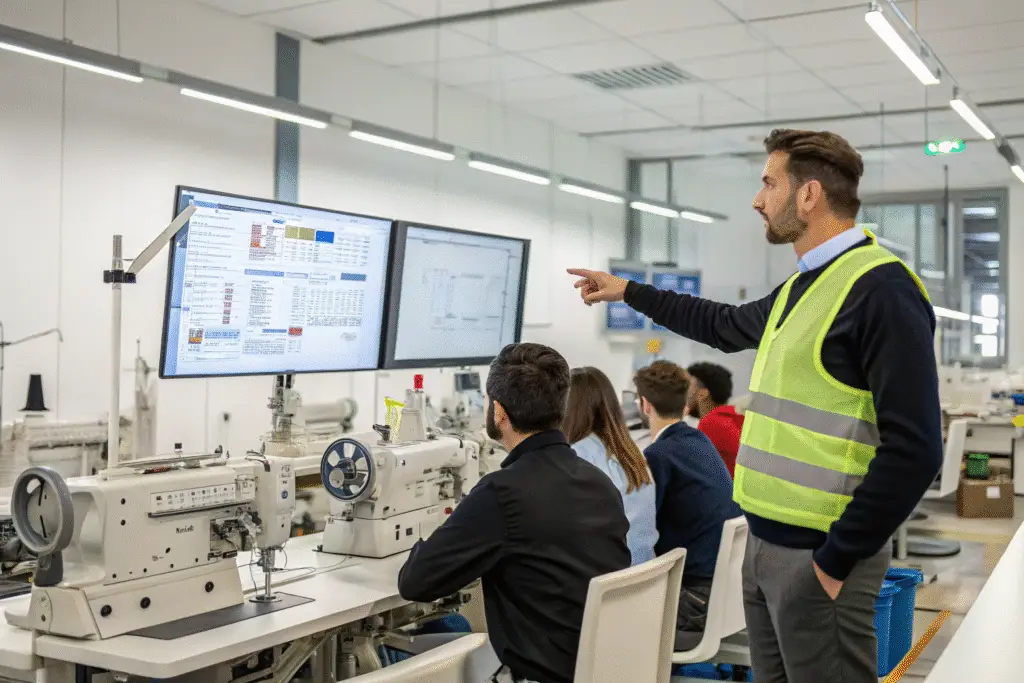
What are the first steps in adopting predictive maintenance?
Factories should start with high-value machines prone to breakdowns. They must install IoT sensors to collect data on vibration, temperature, and usage. According to SAP digital manufacturing insights, starting small and scaling gradually helps firms see results faster. Another useful resource is World Bank’s Industry 4.0 adoption guide, which emphasizes training staff early in the process.
How can companies train teams for predictive maintenance?
Technology is only effective if workers know how to use it. Companies must invest in training operators and technicians to interpret data. MIT Sloan research on digital skills shows that digital readiness is as important as technology itself. Similarly, Harvard Business Review stresses that leadership support is critical for cultural adoption. By educating teams, predictive maintenance becomes part of daily practice.
Conclusion
Predictive maintenance is no longer optional in apparel manufacturing. It is a practical necessity. It prevents downtime, reduces costs, improves quality, and supports sustainability. For factory owners like me, it means we deliver to clients on time and maintain trust in a competitive market.
If you are a U.S. apparel brand looking for a reliable partner who values efficiency and innovation, Shanghai Fumao is here to help. Contact our Business Director Elaine at elaine@fumaoclothing.com to discuss how predictive maintenance and advanced manufacturing can bring your apparel ideas to life.