The textile industry is facing a radical shift. Brands, manufacturers, and researchers are pushing the boundaries of what fabric can do. One of the most revolutionary directions is the emergence of self-cleaning textiles—materials that can resist dirt, eliminate odors, and even kill bacteria without a single wash.
Self-cleaning textile innovations are transforming fabric performance through nanotechnology, bio-inspiration, photocatalysis, and smart fibers—delivering cleaner, longer-lasting, and more sustainable garments.
If you're a garment brand or sourcing manager looking for next-gen fabric advantages, understanding these technologies could redefine your product offerings. Below, I’ll walk you through the most important innovations currently changing the future of textile hygiene.
What Are Superhydrophobic Coatings In Textiles?
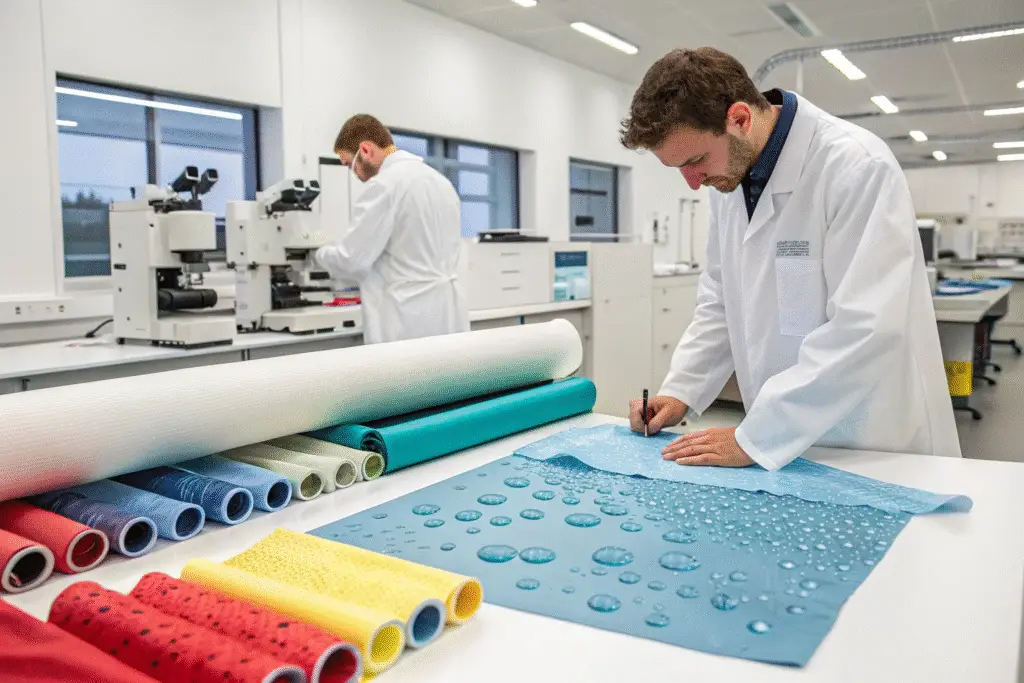
In nature, the lotus leaf stays dry and clean because of its microscopic structure. Scientists have replicated this feature in textiles through superhydrophobic finishes that make water, oil, and dirt slide right off.
Superhydrophobic coatings on textiles mimic nature’s water-repelling structures using nanotech and chemical finishes—delivering passive, durable self-cleaning functionality.

How Do These Lotus-Inspired Fabrics Work?
Using nano- and micro-scale surface roughness combined with low surface energy materials, textiles become nearly impossible to wet. When water hits the surface, it forms beads that roll away, picking up dust and particles.
- Plasma treatment, as detailed on Wikipedia, is often used to achieve hydrophobicity without using environmentally harmful chemicals.
- Fibre2Fashion highlights applications of these coatings in outdoor wear and uniforms where minimal laundering is a priority.
These finishes are ideal for activewear, children’s clothing, and industrial uniforms.
Are There Drawbacks To Superhydrophobic Textiles?
Yes, primarily wear resistance. With repeated friction or washing, some coatings degrade. However, advances in plasma-etched surface engineering and dual-layer nano-coating systems are addressing this. Many Chinese labs now offer coatings lasting over 50 washes under ISO 6330.
Some solutions use silica-based nanostructures while others explore bio-based wax polymers for better sustainability.
How Do Photocatalytic Self-Cleaning Fabrics Work?
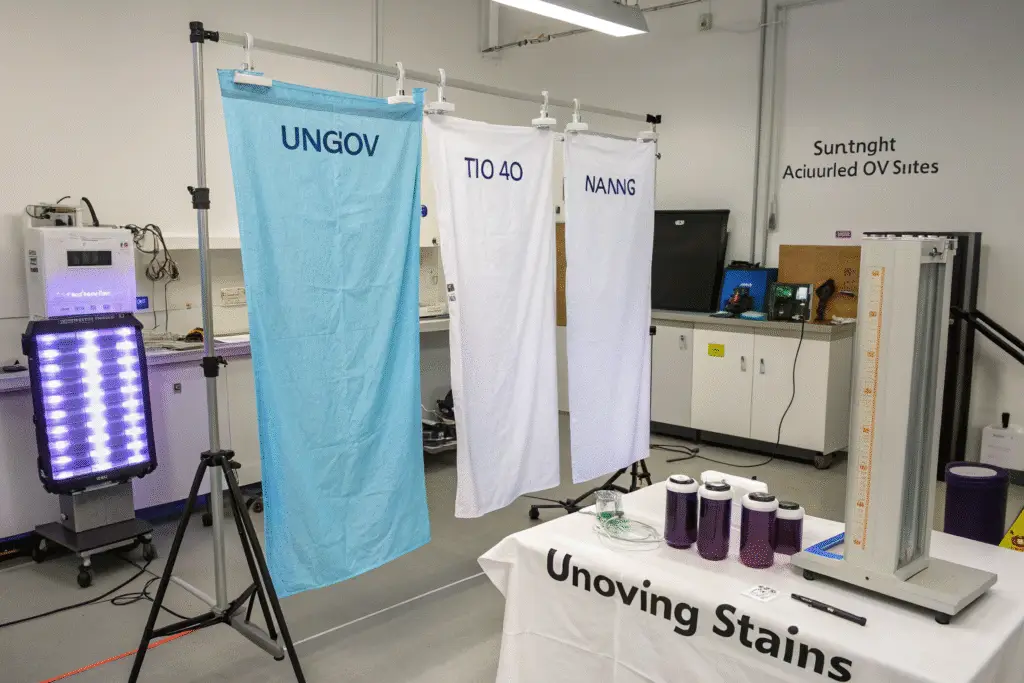
Imagine clothes that clean themselves when left in the sun. That’s the promise of photocatalytic self-cleaning textiles—fabrics coated with nanoparticles that activate under light to destroy organic compounds, odors, and microbes.
Photocatalytic textiles use TiO₂ and silver nanocoatings that trigger chemical reactions under light, decomposing dirt and killing bacteria.
What Materials Are Used In These Coatings?
The most common is titanium dioxide (TiO₂). When exposed to UV or sunlight, it produces reactive oxygen species that oxidize organic matter.
- India's ARCI developed the Sun Wash jeans, featuring TiO₂ microspheres with silver nanoparticles for natural cleaning under sunlight.
- According to Wikipedia, photocatalytic textiles are becoming standard in sectors needing odor control and hygiene—like healthcare and hospitality.
Silver nanoparticles (AgNPs) also add antimicrobial properties, preventing bacterial growth and odor even after extended wear.
Where Are These Used Commercially?
High-end sportswear brands and military contracts are already using these coatings. Some technical textiles integrate N-TiO₂ + AgI nanoparticles to boost effect under visible light.
Research published on ScienceDirect shows enhanced photocatalytic self-cleaning even under weak light—making the fabric useful in indoor conditions.
What Are Light-Activated Smart Textiles?
Beyond passive cleaning, some textiles are now optically activated—meaning they begin a cleaning or sterilizing process when exposed to a specific wavelength of light. These are not just smart—they're transformative.
Light-activated smart textiles use embedded compounds or LEDs to sterilize, bleach, or refresh fabrics when exposed to indoor or artificial light.
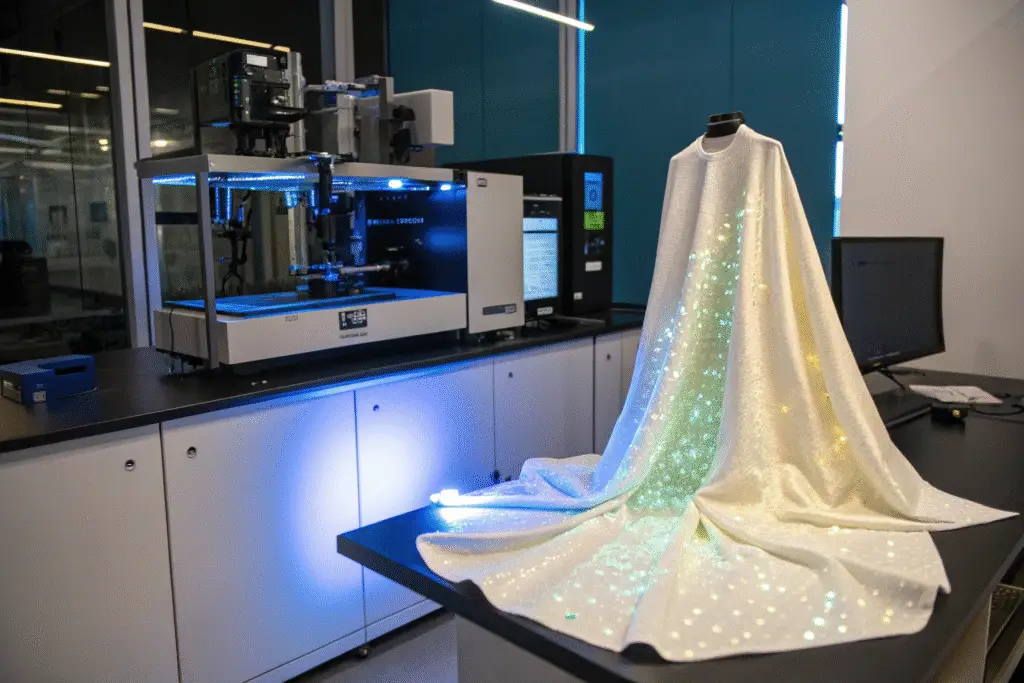
How Are These Light-Cleaning Fabrics Made?
One example comes from UC Davis, where fabrics treated with 2-anthraquinone carboxylic acid release radicals under light exposure that kill germs and remove stains (Wired article).
Another innovation by Accenture Labs and CU Boulder uses embedded micro-LEDs that activate photocatalytic coatings on command.
Are These Technologies Scalable?
Currently, light-activated textiles are more expensive due to chemical processing and power management (in LED-based systems). But innovations in printable photoreactive inks and solar-powered activation are making them more accessible.
This category is ideal for medical PPE, travel apparel, and outerwear for high-dirt environments.
What Are Emerging Smart Fiber Innovations?
The future of self-cleaning textiles lies not just in coatings but in the fiber itself. Scientists are developing fabrics that clean, regulate moisture, and change color—without any post-treatment or external devices.
Emerging smart fibers combine self-cleaning with color change, moisture control, and thermal responsiveness—creating truly multifunctional fabrics.
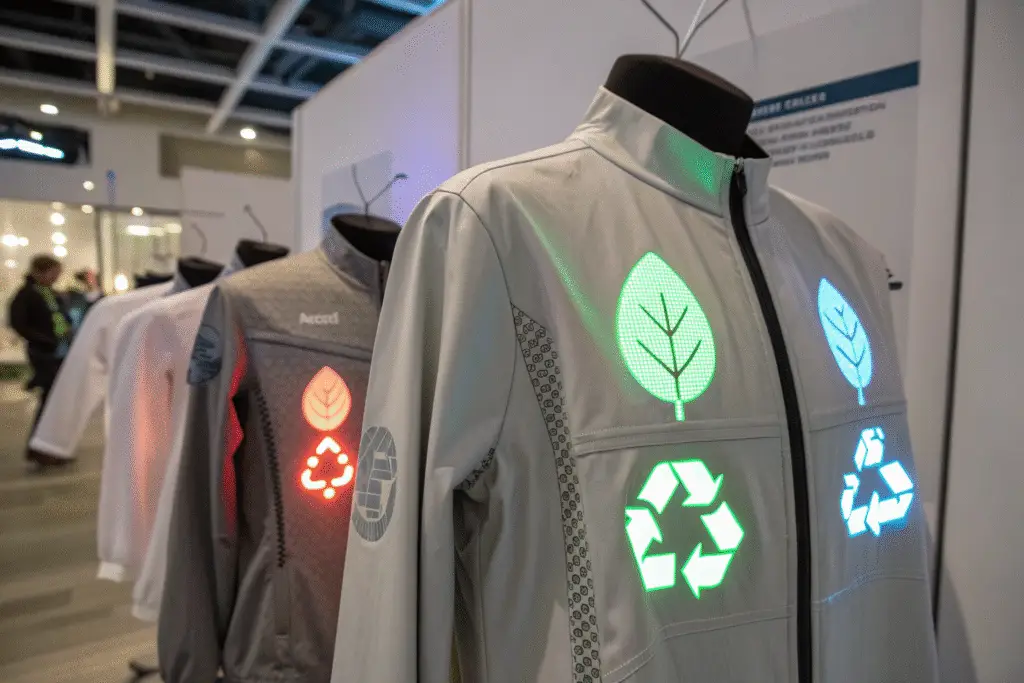
What Are The Most Recent Breakthroughs?
- A Finnish team is working on waterless cotton fabrics that self-clean through molecular structuring (Aalto University).
- Chinese researchers are developing core-sheath fibers with built-in hydrophobic layers and color-shifting outer coatings.
These fibers don’t rely on surface coatings that fade. Instead, they’re engineered at the yarn level, offering much longer lifespans.
What Are The Applications?
Sectors like infant wear, elderly care, and space travel textiles will benefit immensely. The ability to have multifunctionality + self-cleaning + durability built into the fabric itself is a massive leap from spray-on or dip-coating approaches.
Researchers in Japan and Germany are also exploring integration with energy-harvesting capabilities, further expanding use cases.
Conclusion
From lotus-inspired coatings to light-powered fabrics and nano-engineered yarns, the self-cleaning textile landscape is rapidly evolving. These innovations not only solve age-old laundry and hygiene issues but also redefine sustainability, especially for sectors like activewear, healthcare, and packaging.
For us at Shanghai Fumao, staying ahead means working with textile scientists, certification bodies, and forward-thinking brands. We are actively integrating photocatalytic RPET, hydrophobic finishing, and nano-embedded smart fabrics into our offerings.
If your brand is ready to explore custom production of self-cleaning apparel or accessories, contact our Business Director Elaine at 📧 elaine@fumaoclothing.com. Let’s create something that outlasts every wash.