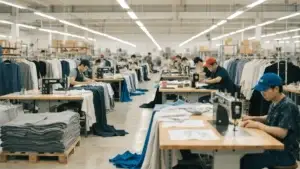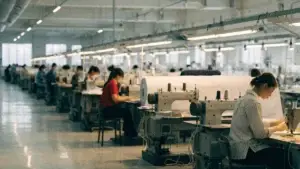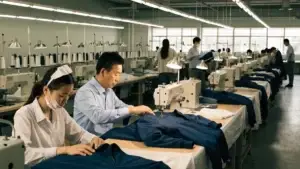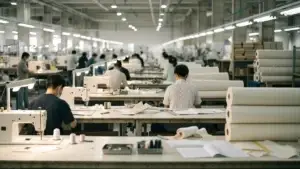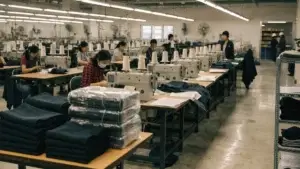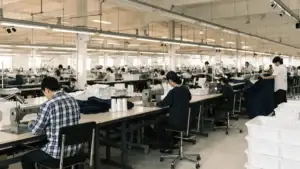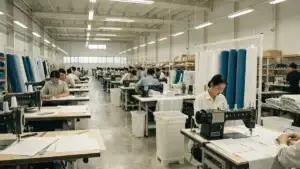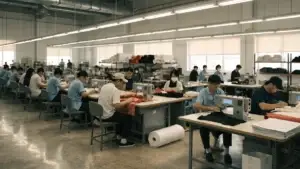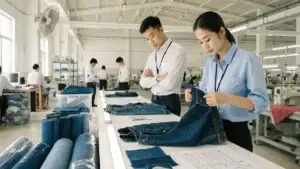
When I discuss apparel manufacturing with U.S. buyers, many of them are curious about how factories in China are adopting new technologies. One of the biggest game-changers today is collaborative robotics, often called cobots. I understand why buyers ask about this—because delays, quality issues, and rising labor costs have long been pain points in the garment industry.
Collaborative robotics is transforming garment factories by improving efficiency, reducing errors, lowering costs, and enhancing worker safety while ensuring consistent quality.
This is not just a future vision. Cobots are already here, and they are reshaping the way apparel is designed, cut, sewn, and shipped. Let me explain why.
How Do Cobots Improve Efficiency In Production?
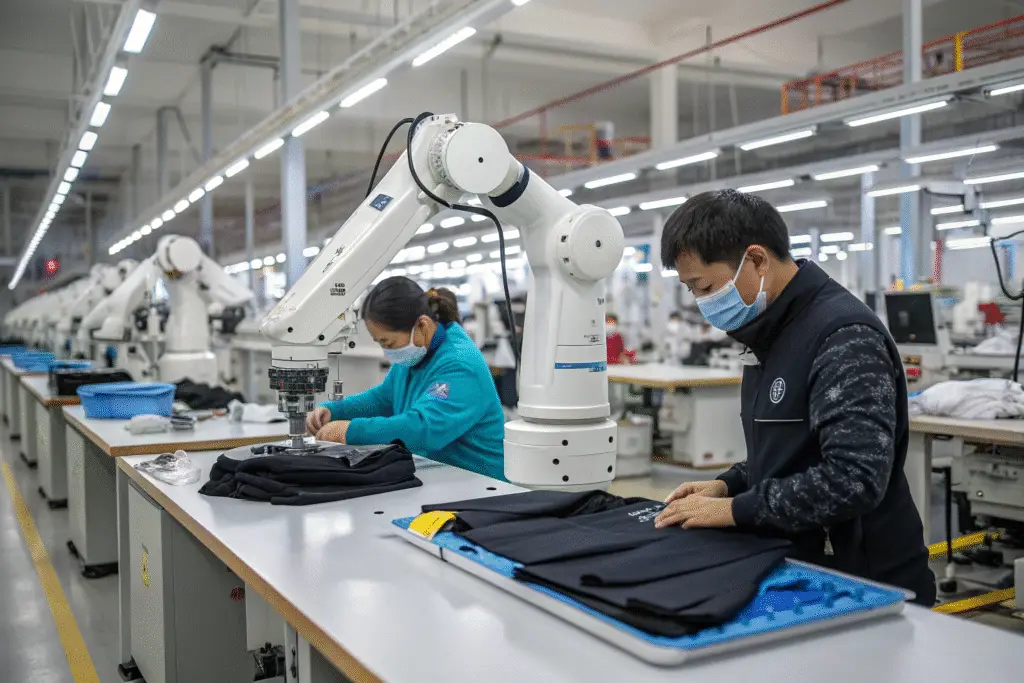
Efficiency is critical in garment factories, where deadlines are tight and buyers demand on-time delivery. Cobots help meet these goals by handling repetitive and time-consuming tasks.
Cobots speed up production while allowing human workers to focus on creative and supervisory roles.
Which Tasks Do They Handle Best?
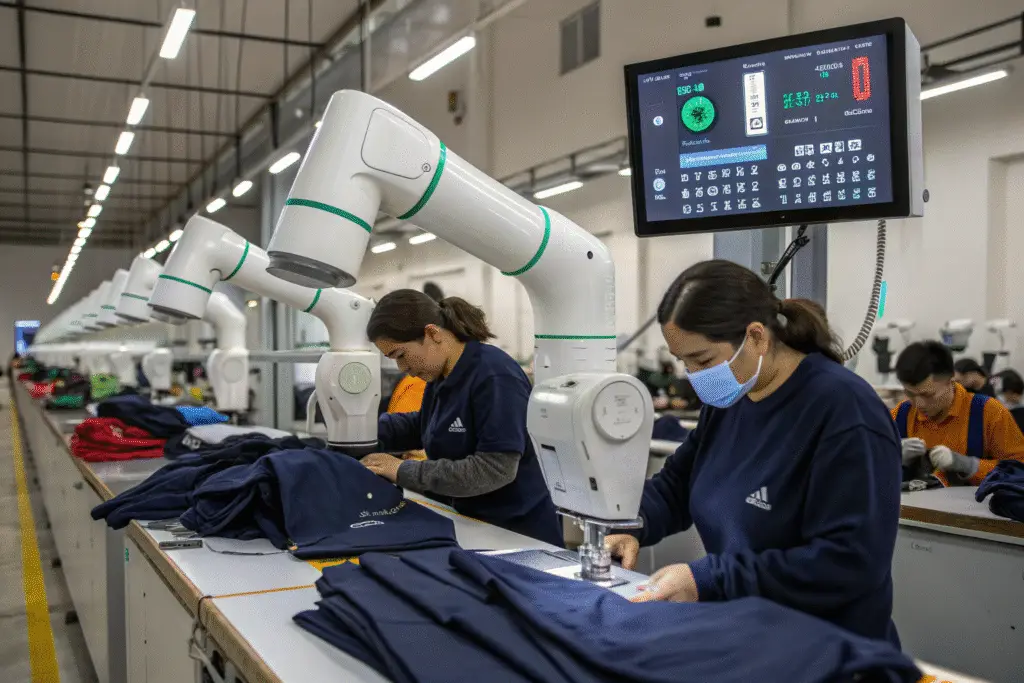
Cobots excel at fabric cutting, folding, packaging, and even simple stitching. For more insights, see Robotics Tomorrow on cobot applications.
How Do They Support Workers?
Instead of replacing workers, cobots assist them, reducing fatigue and boosting productivity. Read more from Universal Robots on cobot benefits.
Do Cobots Improve Quality Control?
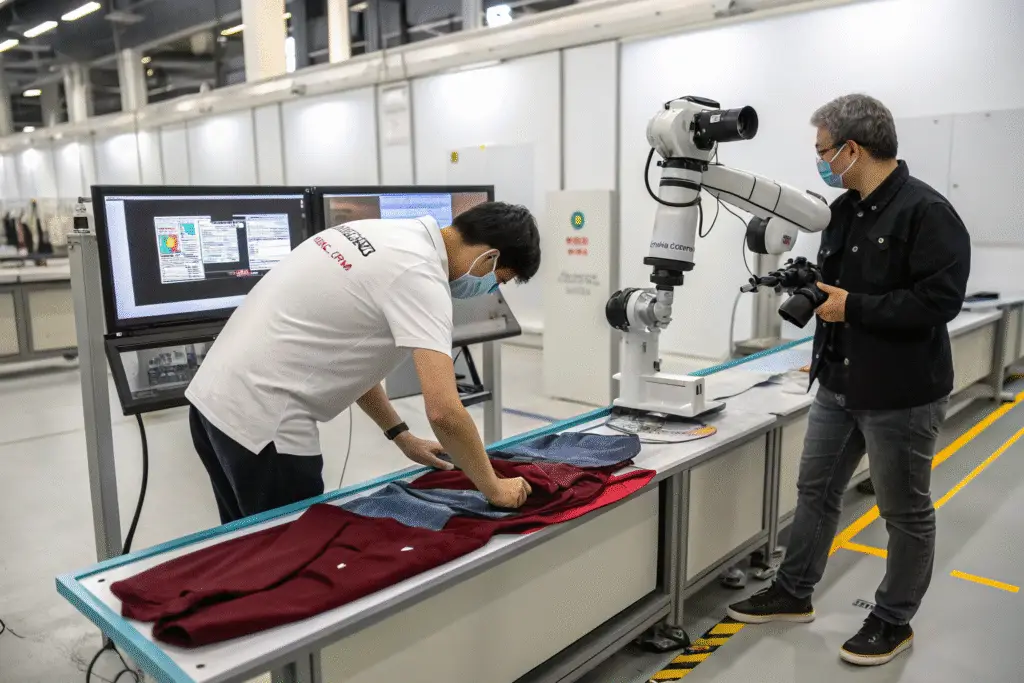
Buyers care deeply about consistency. Even one defective batch can damage a brand’s reputation. Cobots make quality control more accurate by using sensors and AI.
Cobots ensure higher accuracy in quality checks, minimizing defects and rejections.
Can Cobots Detect Tiny Errors?
Yes. Advanced vision systems can spot irregular stitching or size mismatches better than the human eye. Learn more at Automation World.
Do They Replace Human Inspectors?
No. They enhance human inspectors by handling repetitive checks, while humans handle final approval. More details at ScienceDirect study on robotics in textiles.
How Do Cobots Reduce Costs For Apparel Buyers?
For U.S. buyers, price competitiveness is always a priority. Cobots help factories control costs by reducing waste, labor overtime, and production errors.
Cobots lower operational costs while keeping garment quality high, making sourcing more attractive for buyers.
Are Cobots Expensive To Install?
Initially yes, but long-term savings outweigh the setup costs. According to McKinsey, automation pays back quickly in labor-intensive industries.
How Do Buyers Benefit From Cost Savings?
Lower production costs allow factories to offer better prices to international buyers without compromising quality. See Deloitte’s manufacturing insights.
Do Cobots Improve Worker Safety And Satisfaction?
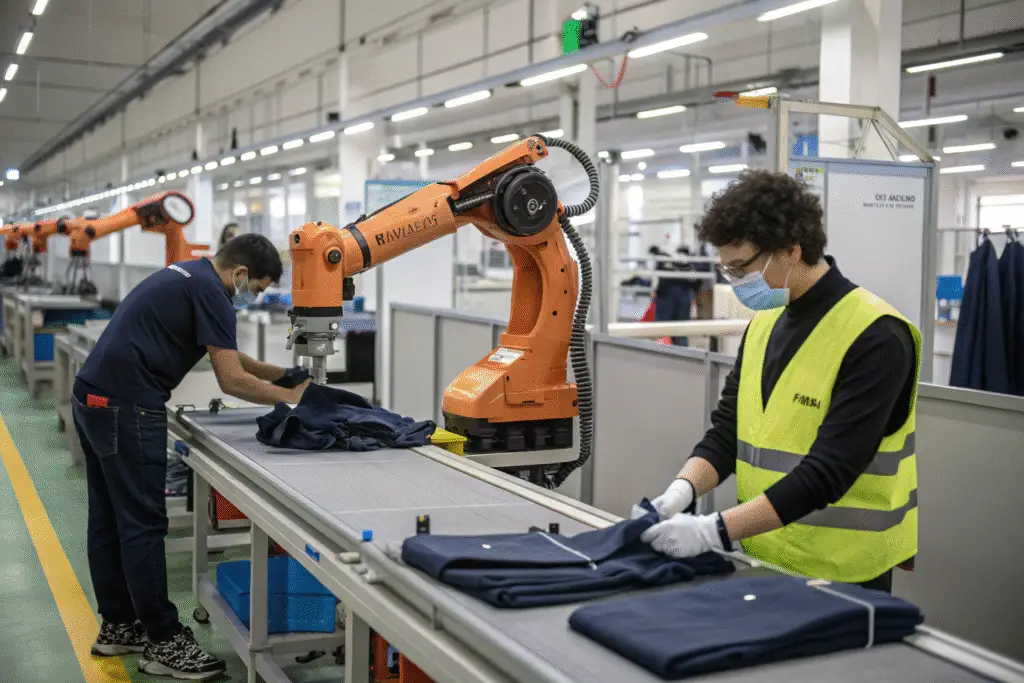
Safety is another key factor in apparel factories. Repetitive motions and heavy lifting often cause worker injuries. Cobots solve this by taking over physically demanding tasks.
Cobots reduce workplace injuries and create safer, more satisfying work environments.
Are Workers Comfortable With Cobots?
Yes. Unlike traditional robots, cobots are designed to work alongside humans safely. More details at IFR International Federation of Robotics.
How Do They Improve Morale?
By removing tedious tasks, cobots allow workers to focus on skilled and creative jobs, boosting job satisfaction. Learn more from MIT Technology Review.
Conclusion
Collaborative robotics is not science fiction; it is already advancing garment factories today. From faster production to precise quality control, lower costs, and safer work conditions, cobots bring real value to both manufacturers and global buyers.
At Shanghai Fumao, we are exploring collaborative robotics to enhance efficiency and reliability in our apparel production lines. If your brand is looking for innovative, future-ready partners, contact our Business Director, Elaine, at strong>elaine@fumaoclothing.com</strong and let’s create smarter apparel manufacturing together.