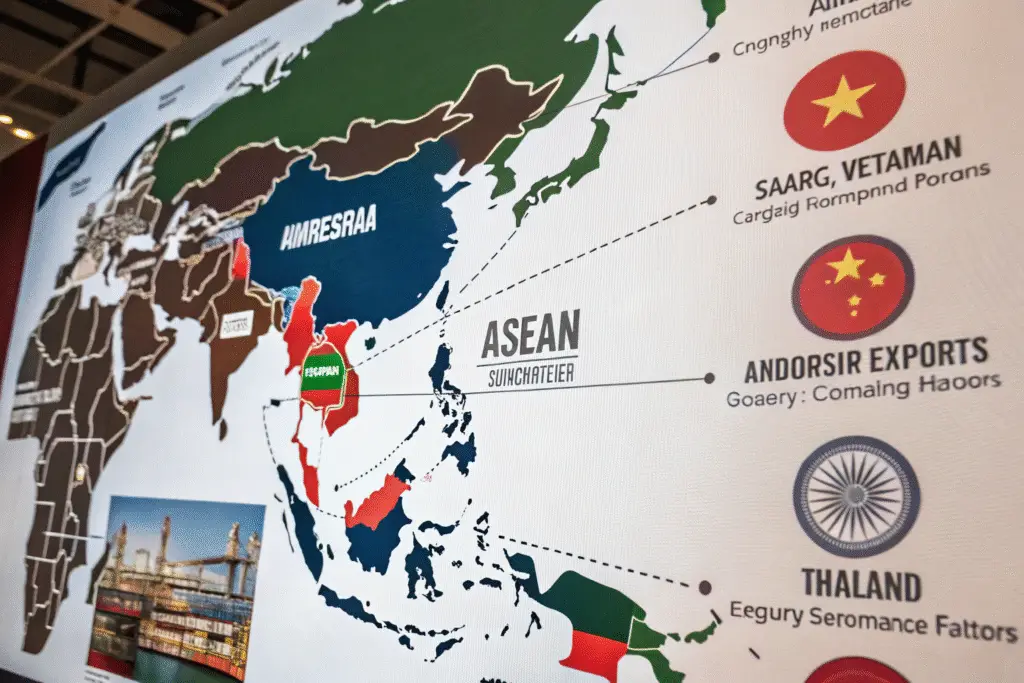
As of 2025, more than 80% of US fashion and apparel brands have shifted the bulk of their sourcing strategies away from SAARC countries (like India, Bangladesh, Pakistan) and toward ASEAN nations such as Vietnam, Indonesia, and Cambodia.
This isn’t a short-term trend. It reflects deep structural and strategic shifts in:
- Cost stability
- Compliance readiness
- Lead times
- Tariff positioning
In this article, we break down why ASEAN is now the preferred zone—and what SAARC suppliers must do to stay relevant.
What’s Driving the Shift to ASEAN in 2025?
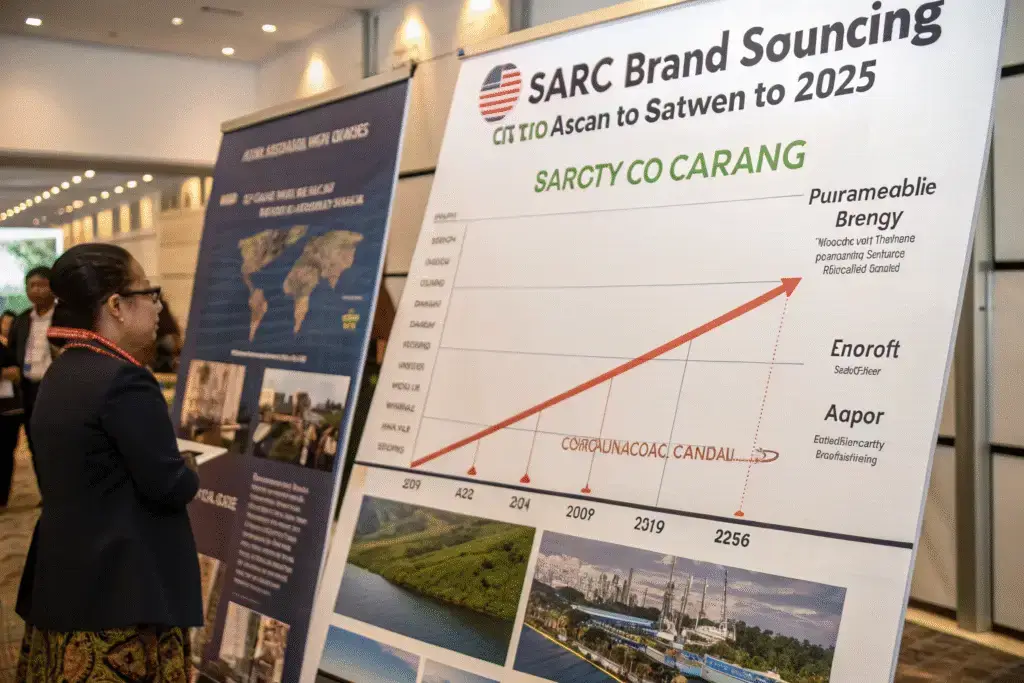
Several key trends have created a sourcing pivot toward ASEAN:
🔹 1. Tariff Advantages & Trade Deals
- Vietnam & Cambodia benefit from preferential US access under GSP (Generalized System of Preferences) or bilateral agreements.
- India & Pakistan, on the other hand, have faced renewed tariff pressure and loss of US GSP eligibility.
- ASEAN–US digital trade agreements streamline customs and documentation.
🔹 2. Faster Lead Times & Logistics
- Vietnam, Thailand, and Indonesia offer 28–35 day delivery cycles (factory to US port), compared to 45–60 days from parts of South Asia.
- Proximity to integrated supplier zones—like yarn-dye-print in one zone—enhances speed and flexibility.
🔹 3. Better Compliance & ESG Ratings
- US brands increasingly score factories using tools like Higg Index, Sedex, WRAP.
- Vietnamese and Thai factories often score higher due to:
- Cleaner energy
- Digitized traceability
- Social compliance training
📈 A 2024 McKinsey survey showed 73% of American brands rated Vietnam’s compliance ecosystem as “best in Asia.”
ASEAN vs SAARC: Key Sourcing Metrics Compared
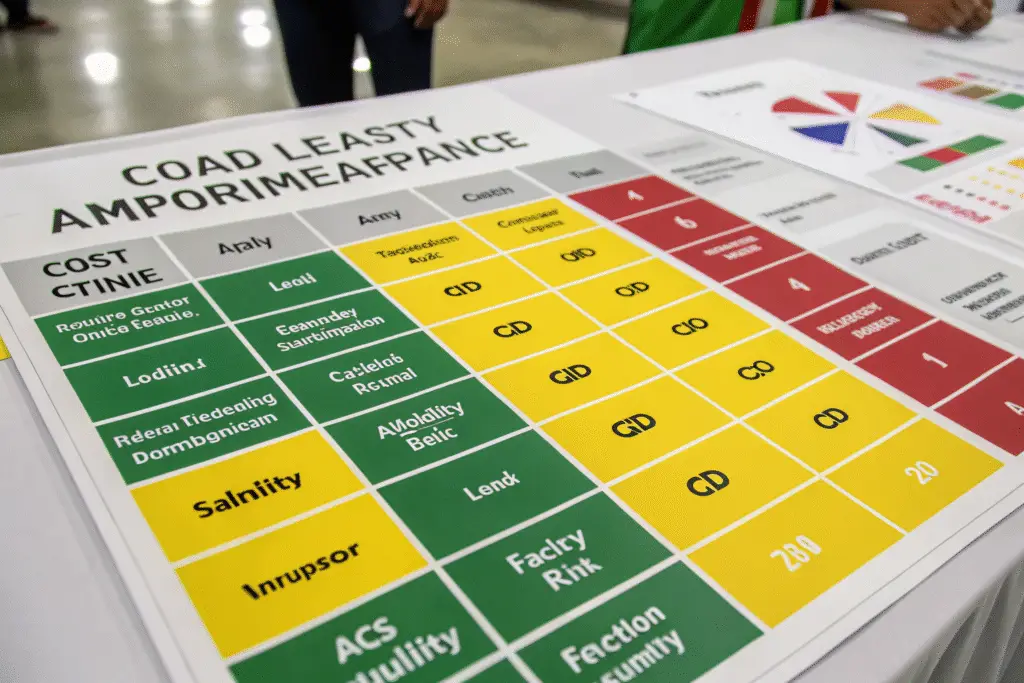
| Metric | ASEAN (2025) | SAARC (2025) |
|---|---|---|
| Average FOB Cost (USD) | $4.25 | $4.05 |
| Lead Time (days) | 28–35 | 40–60 |
| Higg FEM Compliance Score | High (75–85) | Moderate (55–70) |
| Labor Disruption Index | Low | Medium–High |
| Political Stability | Stable (Thailand, VN) | Variable (Pakistan) |
| Green Factory Adoption | 65%+ in VN, IDN | <30% in BD, PK |
Even though South Asia often still wins on pure FOB pricing, the risk-adjusted sourcing cost is now lower in ASEAN when compliance and timing are factored in.
Which Products Are Leading the ASEAN Shift?
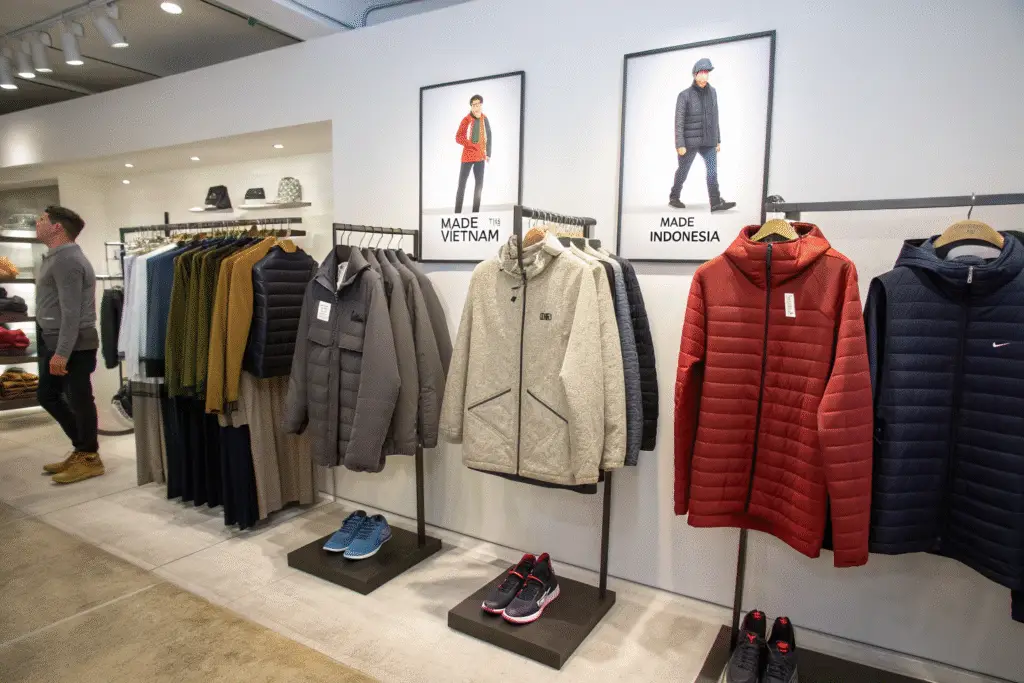
Certain product categories have been entirely re-centered to ASEAN:
Top Categories Moving to ASEAN:
- Performancewear / Sportswear
- Vietnam’s bonded zones support Nike, Adidas, and Under Armour.
- Technical Outerwear
- Thailand and Indonesia have weather-sealed garment capabilities.
- Women’s Knits / Athleisure
- Cambodia’s cost edge + China-backed mills provide strong value.
- Footwear
- Vietnam is now the #2 global supplier after China.
SAARC still holds ground in basic cotton knits and woven bottoms, especially in Bangladesh and India—but high-margin products are moving.
What SAARC Suppliers Must Do to Stay Competitive
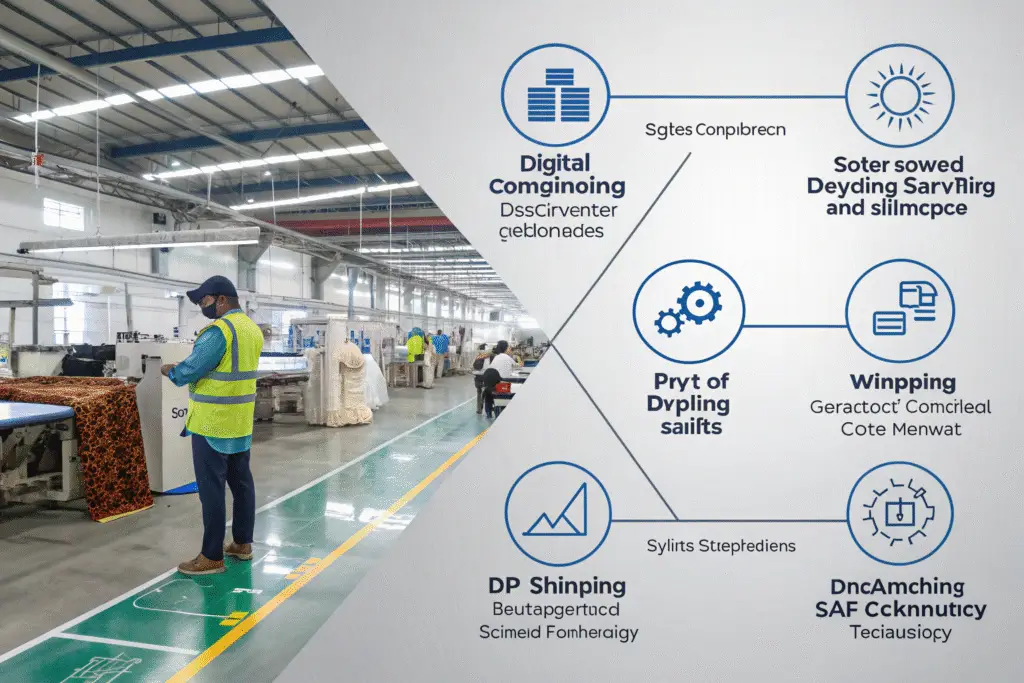
There is still a future for SAARC—but suppliers must adapt fast:
✅ 1. Upgrade ESG Audits
- Aim for Higg Index 70+ scores and WRAP Gold.
- Adopt transparent wage reporting.
✅ 2. Accelerate Digital Traceability
- Offer blockchain or QR-enabled sourcing reports.
- Use PLM integrations for brand tracking.
✅ 3. Improve Delivery Consistency
- Join bonded warehouse networks for faster shipping.
- Shift from EXW to DDP or FOB + freight support to attract brands.
✅ 4. Invest in Green Factory Ratings
- Pursue LEED, BSCI, and GOTS certifications.
- Highlight solar, wind, or zero-discharge processes.
✅ 5. Build Category Specialization
- Bangladesh: Scale up technical denim & certified cotton.
- India: Invest in smart uniforms and premium wovenwear.
Conclusion: ASEAN Is Winning, But SAARC Isn’t Out—Yet
The 2025 sourcing pivot is clear: US brands want speed, reliability, and compliance, even more than the cheapest FOB quote.
ASEAN delivers on that promise, with countries like Vietnam and Indonesia now seen as “China-plus-one” or even “China alternatives.”
But SAARC still matters—especially if suppliers modernize quickly and offer strategic value beyond price.
At FUMAO, we help global brands:
- Compare ASEAN vs SAARC sourcing scenarios
- Access verified green and compliant factories
- Model shipping, lead time, and ESG exposure
📩 Want to audit your supplier risk in light of this regional shift? Contact us at elaine@fumaoclothing.com and we’ll map a smart multi-region plan tailored to your apparel categories.