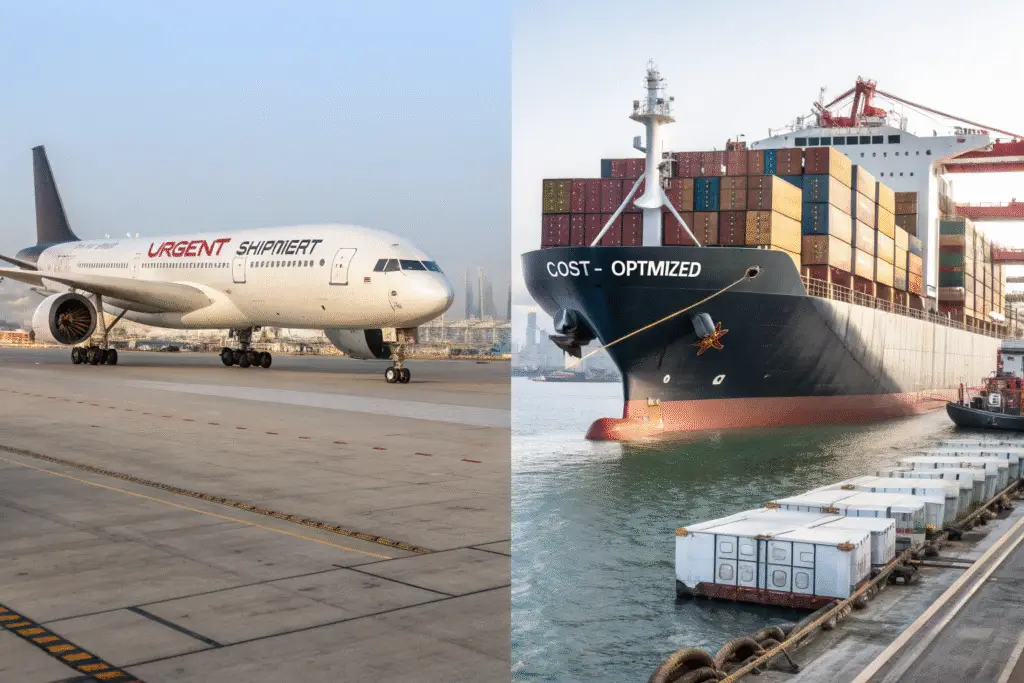
In 2025, volatile tariffs are throwing apparel sourcing into chaos. U.S. importers face sudden shifts—like India’s 38.9% garment duty—and scramble to reroute or expedite orders. But here’s the dilemma:
Should you pay more for air shipping to beat tariff deadlines—or stick with slower, cheaper sea freight and risk extra duty exposure?
Let’s compare both modes from a strategic angle. Whether you’re running a DTC brand, managing wholesale drops, or sourcing seasonal apparel, this guide will help you balance speed, cost, and tariff risk in real time.
When Does Air Freight Actually Save Money on Tariffs?
Most buyers assume air freight is always more expensive. But in tariff shift scenarios—like a 20% hike coming in 10 days—the faster method might protect your bottom line.
Air shipping helps you land goods before new tariffs hit, making it a short-term savings strategy despite higher logistics costs.
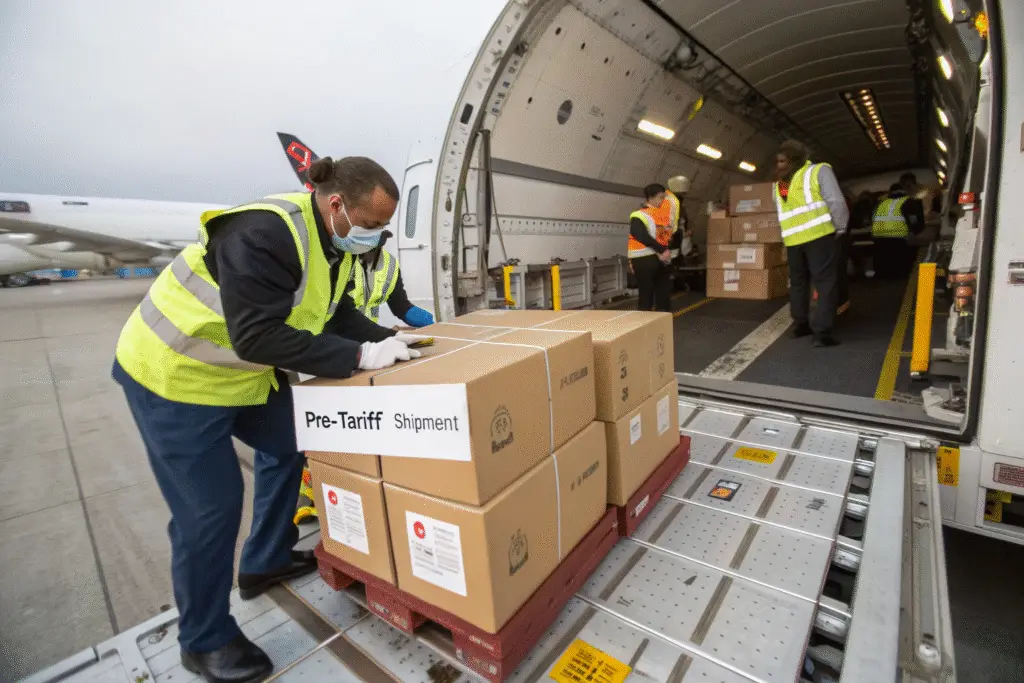
How to Use Air to Beat Tariff Cutoffs?
Let’s say a 15% tariff hike on Bangladeshi apparel starts May 15. You have 5,000 polos in production and two options:
| Shipping Mode | Lead Time | Arrival Date | Tariff Applied? | Extra Duty Cost |
|---|---|---|---|---|
| Sea Freight | 24 days | May 22 | Yes | ~$3,800 extra |
| Air Freight | 5 days | May 10 | No | $0 |
Air freight costs ~$2,700 more—but you save $3,800 in duties. Net savings = $1,100.
Use tools like SimplyDuty or Flexport’s calculator to run your own simulations.
When Does Air NOT Make Sense?
- For low-margin bulk basics (e.g., socks, uniforms)
- When shipping from stable-tariff regions like China under DDP
- When customs capacity at destination is delayed (e.g., pre-holiday)
Always factor in U.S. port congestion or air cargo delays before committing.
Is Sea Shipping Still the Best Long-Term Cost Saver?
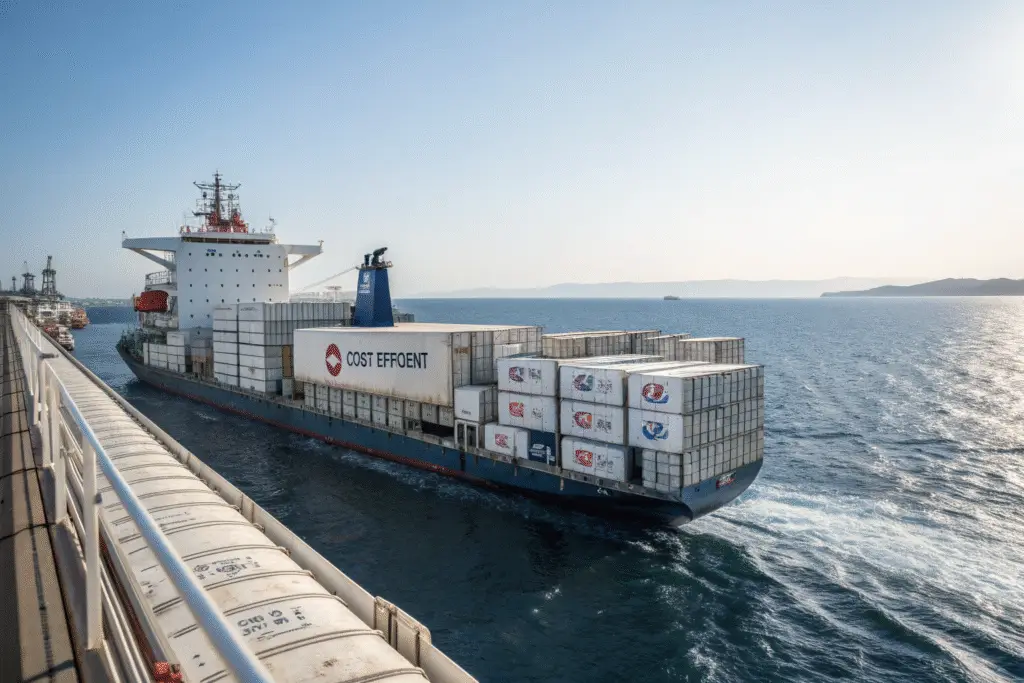
Yes—if time is on your side. Sea freight still offers unbeatable per-unit cost, especially for seasonal products, stable tariff windows, or large orders.
Sea is 4–6x cheaper per kg than air, making it ideal for orders unaffected by tariff urgency.
Sample Comparison: 5,000-unit Hoodie Order
| Mode | Freight Cost | Transit Time | Tariff Risk Exposure | Use Case |
|---|---|---|---|---|
| Air (DDP) | $8,500 | 5–7 days | Low (pre-tariff safe) | Emergency shipment |
| Sea (DDP) | $2,000 | 22–28 days | High (if tariff changes) | Restocking, low-risk items |
Air costs $6,500 more. But if the tariff rate remains unchanged, that money is lost. Sea becomes the logical option for products not under pressure.
Explore hybrid shipping too: air 20%, sea 80% for mixed SKU strategies.
What Tools Help Predict Tariff Timing & Optimize Shipping?
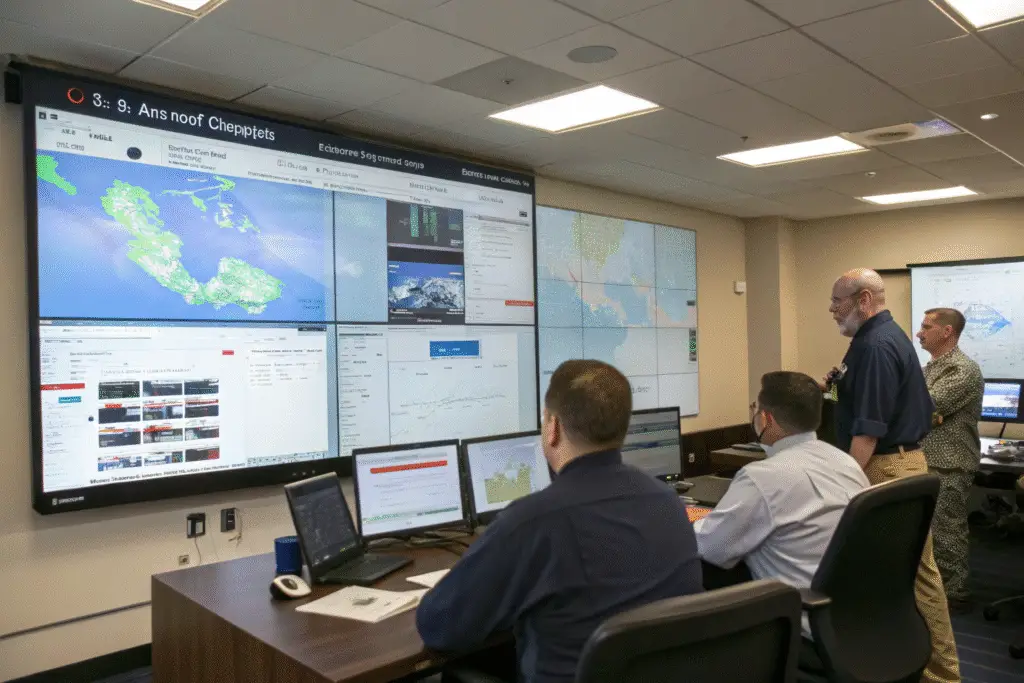
Your shipping strategy is only as good as your tariff forecasting. Smart buyers now track:
- U.S. Trade Representative (USTR) announcements
- Port-to-port lead times
- Order production status vs deadline
- Customs clearance timing buffers
Matching tariff risk windows with freight mode is the key to unlocking real savings.
Best Tools for MSMEs and Brands
- USITC Tariff Tracker – Upcoming rate changes
- Project44 – Real-time ocean tracking
- C.H. Robinson Navisphere – Cost-to-deliver modeling
- Alibaba Logistics – Small batch freight quotes
We also provide in-house guidance to clients using shipment scenario modeling—balancing duty forecasts, warehouse readiness, and mode selection.
Can DDP Cover Tariff Surprises?
Partially. If your supplier offers true DDP, they’re responsible for duty at the moment of customs clearance. So if the item enters U.S. customs before the deadline, you’re protected.
At Shanghai Fumao, we monitor tariff windows and adjust shipping mode proactively for our clients to ensure landed-cost clarity.
Which Mode Is Better by Product Type and Urgency?
Still not sure when to use air or sea? Here’s a product-based cheat sheet:
| Product Type | Ideal Mode | Why |
|---|---|---|
| Fast-fashion drops | Air | Beat trend + tariff windows |
| Corporate uniforms | Sea | Predictable reorder timing |
| Seasonal outerwear | Hybrid | Early SKUs by air, rest by sea |
| Kidswear launches | Air | CPSIA check + launch deadline |
| Basic tees/socks | Sea | Margin too low for air |
| Activewear sets | DDP (Sea) | Predictable if shipped pre-season |
Buyers should also factor retail launch dates, sales events, and factory capacity into their mode selection.
Conclusion
In the era of unpredictable tariffs, “fast vs cheap” is no longer a binary choice—it’s a tactical one. Shipping via air can save you thousands when beating a tariff deadline, while sea shipping keeps your margins healthy for long-term restocking.
At Shanghai Fumao, we help U.S. apparel brands make smarter freight choices with DDP support, tariff monitoring, and hybrid logistics modeling.
Want to ship ahead of the next duty hike or avoid paying air rates unnecessarily? Contact our Business Director Elaine at elaine@fumaoclothing.com to find the right mode for your product and profit goals.