When U.S. tariffs on Indian garments surged to 38.9%, many American apparel buyers found themselves scrambling for alternatives. India, once considered a price-sensitive haven for sourcing, suddenly lost its competitive edge. Now the big question is: who’s next in line?
Vietnam and Bangladesh have emerged as promising options for buyers seeking to shift away from Indian factories. But can they match the reliability, volume, and agility required by U.S. brands in 2025?
For brand owners like Ron, who depend on high-volume, low-margin sourcing, every percentage point in landed cost matters. Let’s examine whether these emerging regions can truly fill the gap left by India’s pricing fallout.
Are Vietnamese Factories Equipped for High-Volume Orders?
Vietnam has gained momentum in global apparel trade, thanks to its political stability, strong trade deals, and consistent labor quality. But as demand shifts from India, can Vietnam absorb large-scale U.S. orders without bottlenecks?
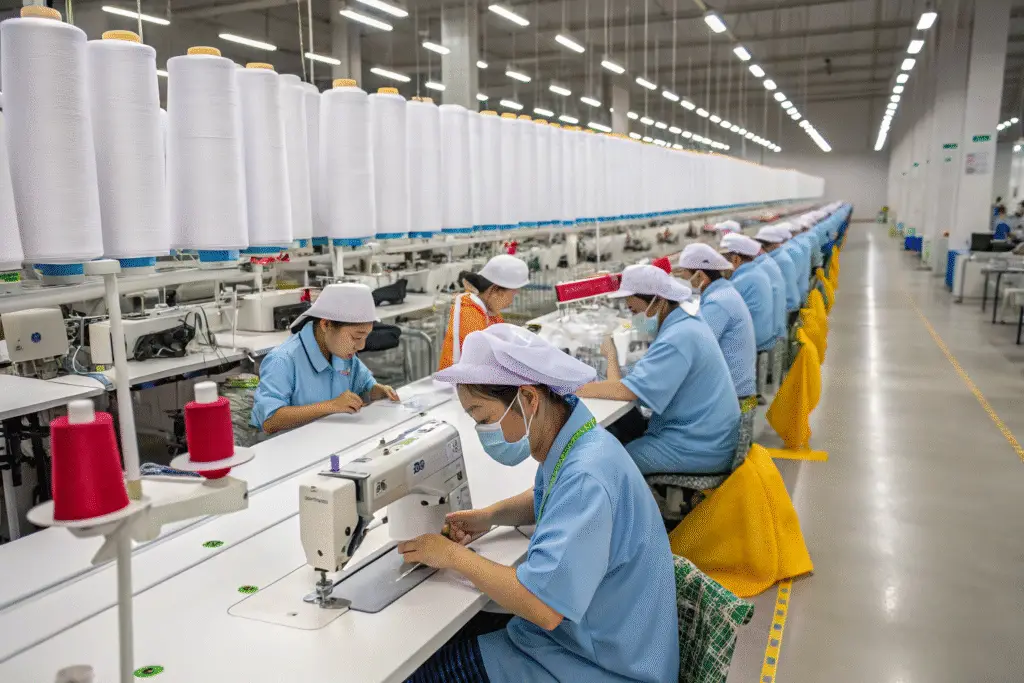
Vietnamese garment factories are highly efficient but face limitations in capacity, dependency on imported materials, and increasing lead times for U.S. buyers.
Can Vietnam Handle Short-Lead Time Programs?
Vietnam’s largest manufacturers can manage large bulk orders—but not without delays. The biggest issue? Raw material imports. Over 50% of Vietnam’s fabrics are imported from China, creating a two-tier dependency: production and upstream sourcing.
Even when you place your garment order, fabric sourcing can delay actual production by 2–3 weeks. This makes Vietnam less ideal for fast fashion or quick-turn orders from U.S. distributors.
What Trade Advantages Does Vietnam Offer?
Vietnam benefits from strong global agreements like the CPTPP and EVFTA. However, the U.S. is not part of these deals, which means Vietnamese exports to the U.S. do not receive tariff exemptions the way they might in Europe or Japan.
That said, Vietnam’s labor cost (averaging $270/month) still provides a buffer compared to China, although rising wages and limited workforce growth could erode this advantage.
Can Bangladesh Compete on Both Price and Compliance?
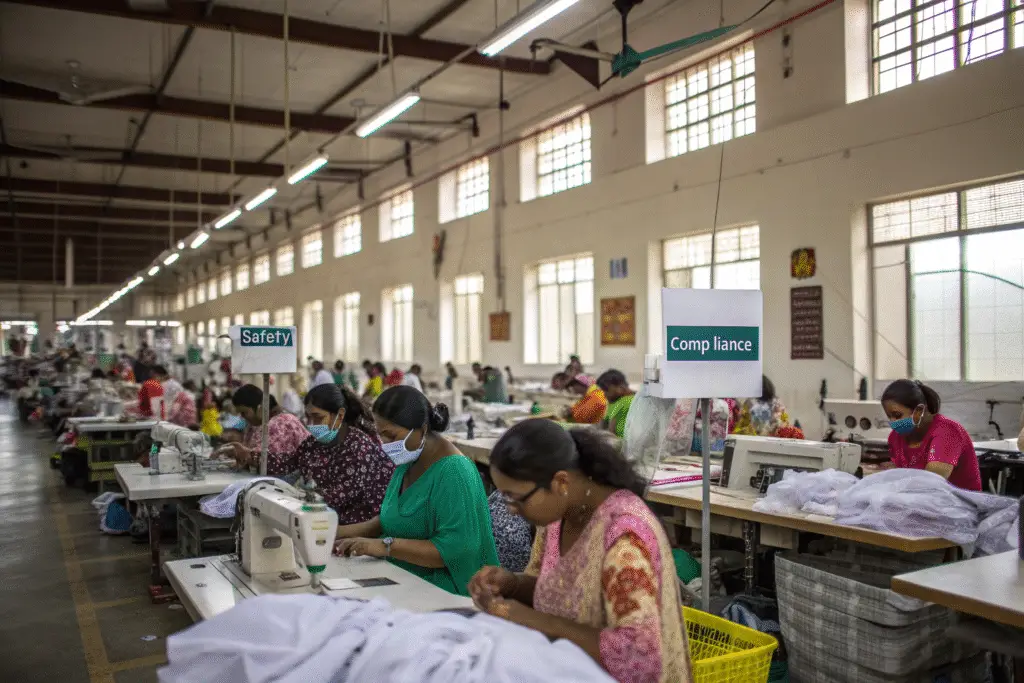
Bangladesh is the second-largest apparel exporter in the world and a favorite for basics like t-shirts, trousers, and kidswear. It also boasts one of the lowest labor costs in Asia.
For cost-conscious U.S. buyers, Bangladesh remains the cheapest alternative, but the trade-off includes compliance risks, logistics issues, and slower delivery times.
Is Bangladesh Suitable for Complex Apparel Styles?
No. Bangladesh excels in basic garments and uniform production. But if your brand depends on complex cuts, trims, or fashion-forward collections, factories may lack the flexibility or technical know-how to deliver.
For example, a women’s activewear top with mesh panels and reflective tape may require 2–3 extra production steps, which many Bangladeshi factories aren’t equipped to handle.
In contrast, Chinese or Turkish factories specialize in high-value segments, giving more versatility for niche product lines.
How Reliable Are Bangladesh’s Social Compliance Standards?
Despite progress, Bangladesh has a mixed record. The Rana Plaza tragedy triggered global reforms, and many large factories now hold WRAP, BSCI, and Accord certifications. Still, smaller subcontractors may bypass these standards.
That’s why many U.S. buyers work only with Tier-1 vendors or through audit platforms like Sedex. Without careful vetting, there’s a real risk of reputational damage and product seizure at U.S. customs.
How Do Lead Times and Shipping Compare Across Regions?
Speed to market is a major concern for U.S. buyers in 2025. With seasonal fashion cycles accelerating, lead time becomes a deal breaker.
Compared to Vietnam and Bangladesh, Chinese factories still lead in delivery speed—especially under DDP shipping models.
Which Country Offers the Fastest Delivery to the USA?
Here’s a simplified lead time comparison (door-to-door to Los Angeles port):
| Country | Avg. Production Time | Sea Transit | Total Lead Time |
|---|---|---|---|
| China | 20-25 days | 12-15 days | 32-40 days |
| Vietnam | 25-30 days | 18-21 days | 43-51 days |
| Bangladesh | 30-35 days | 24-28 days | 54-63 days |
| India | 25-30 days | 22-26 days | 47-56 days |
This makes China the best fit for time-sensitive dropshipping, flash sales, and urgent replenishments. Buyers prioritizing speed and reliability should evaluate DDP-capable factories with export-ready documentation.
How Do Port and Infrastructure Impact Delivery?
Bangladesh suffers from frequent port congestion at Chittagong, leading to average delays of 5–7 days, especially during monsoon seasons. Vietnam’s Ho Chi Minh ports are better, but less automated than China’s mega-terminals like Ningbo or Shenzhen.
For consistent shipping reliability, China remains unmatched. It offers multimodal transport options (rail, air, sea) and real-time tracking integration with platforms like Maersk Flow.
Should You Diversify or Consolidate Post-Tariff?
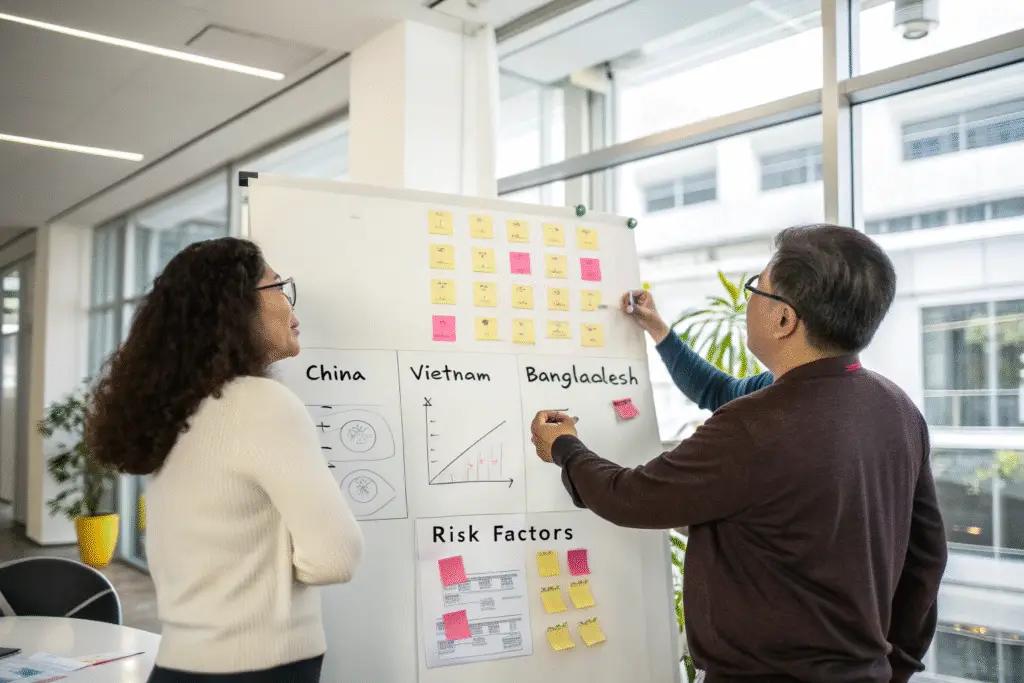
With India’s tariff spike and growing global volatility, many U.S. apparel companies are asking: should I spread my risk or double down on the most efficient partner?
A hybrid strategy—balancing cost, compliance, and lead time—is often best. But full consolidation with a DDP-capable Chinese factory can reduce complexity and increase margins.
Is “China + 1” Still the Winning Model?
Yes. Instead of replacing China, U.S. buyers can supplement it with Vietnam or Bangladesh based on product type.
- Use Bangladesh for basic knits (tees, polos, uniforms).
- Use Vietnam for mid-range fashion and woven styles.
- Use China for activewear, outerwear, kidswear, and anything requiring fast shipping or detailed customization.
This portfolio approach lets you hedge tariff risks while maintaining production continuity.
How Can You Simplify Post-Tariff Sourcing Operations?
Here’s how some buyers are doing it:
- Signing volume-based contracts with DDP suppliers in China.
- Using third-party QC platforms to vet factories in Bangladesh.
- Negotiating flexible MOQs and rolling shipments for Vietnam orders.
- Building direct digital integration between factory ERPs and U.S. 3PL warehouses.
These measures help reduce overdependence on a single region while maintaining profitability in a post-tariff world.
Conclusion
The 38.9% U.S. tariffs on Indian garments have triggered a regional sourcing reset. Vietnam and Bangladesh are valuable allies—but only for specific product categories and buyer profiles. They can’t fully replace the reliability, scale, and delivery speed that top Chinese factories offer, especially under DDP.
At Shanghai Fumao, we work directly with U.S. brand owners and importers to provide transparent, all-in-one apparel solutions—from design to doorstep delivery. If you’re rethinking your sourcing portfolio for 2025, we can help you restructure it without cost surprises or compliance risks.
Ready to move away from tariff headaches and supplier delays? Contact our Business Director Elaine at elaine@fumaoclothing.com and explore how our China-based DDP production can support your next collection.