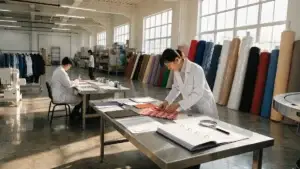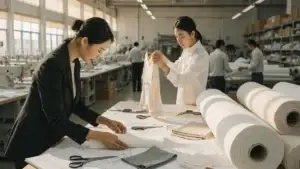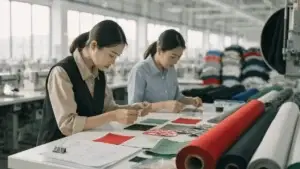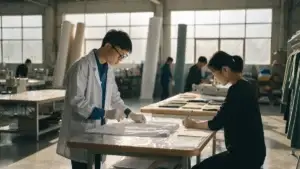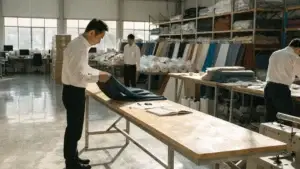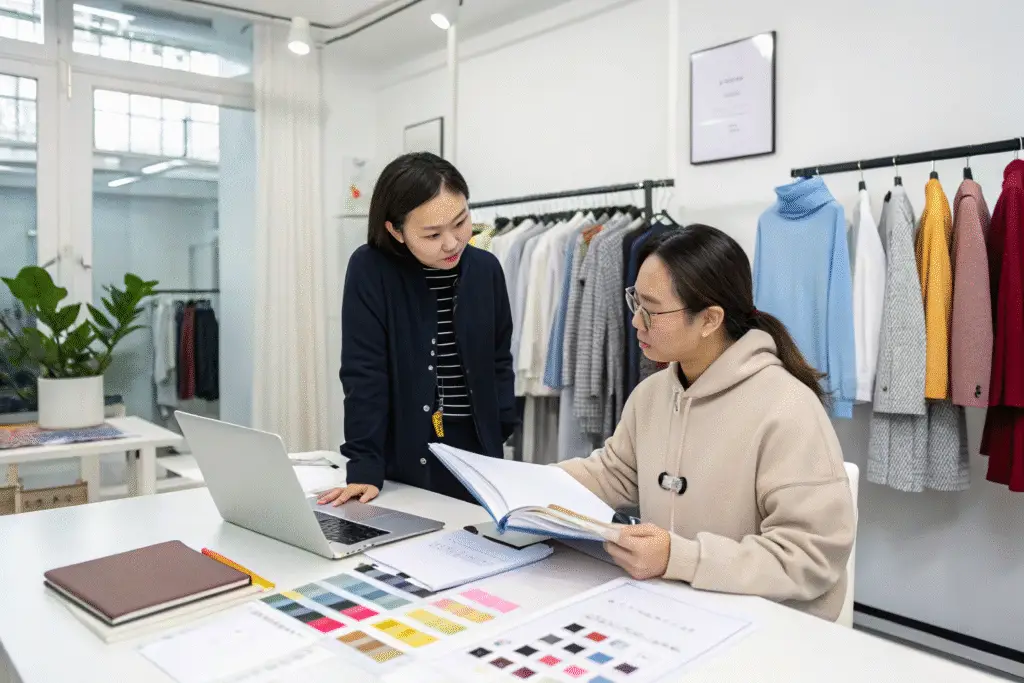
Minimum order quantity (MOQ) is one of the most misunderstood constraints in apparel sourcing—especially when you're managing a multi-style order. Whether you're buying five different SKUs for a new collection or trying to test new categories, knowing how to structure your minimums can mean the difference between a profitable order or wasted inventory.
To manage MOQ across styles successfully, you need to negotiate smarter with factories, combine fabric bases, plan for color efficiency, and understand what actually drives supplier minimums.
This guide is built for brand owners like Ron—those sourcing in bulk from China, Vietnam, or India, but struggling to meet style-by-style minimums. I’ll break down how we handle mixed-style orders in our own factory and what you should look for when placing diverse apparel POs.
What Drives Minimums in Garment Manufacturing?
Factory minimums aren’t random—they’re based on technical and economic factors. Each garment style requires a specific sewing line setup, fabric purchase lot, and finishing method. Understanding these drivers helps you negotiate effectively.
Why Do Fabric Mills Set High Minimums?
Most fabric suppliers work with greige goods—uncolored fabric that needs to be dyed. Their dyeing machines operate best when filled fully. For example, one dye vat may require 500–1000 meters minimum. That’s why factories often ask for one color per 300–500 pieces per style.
If you're running T-shirts, hoodies, and joggers in the same black cotton blend, combining fabric usage can help. This lets the mill dye once and split across styles. Use Pantone TCX swatches for color standardization across garments.
How Do Sewing Lines Influence MOQ?
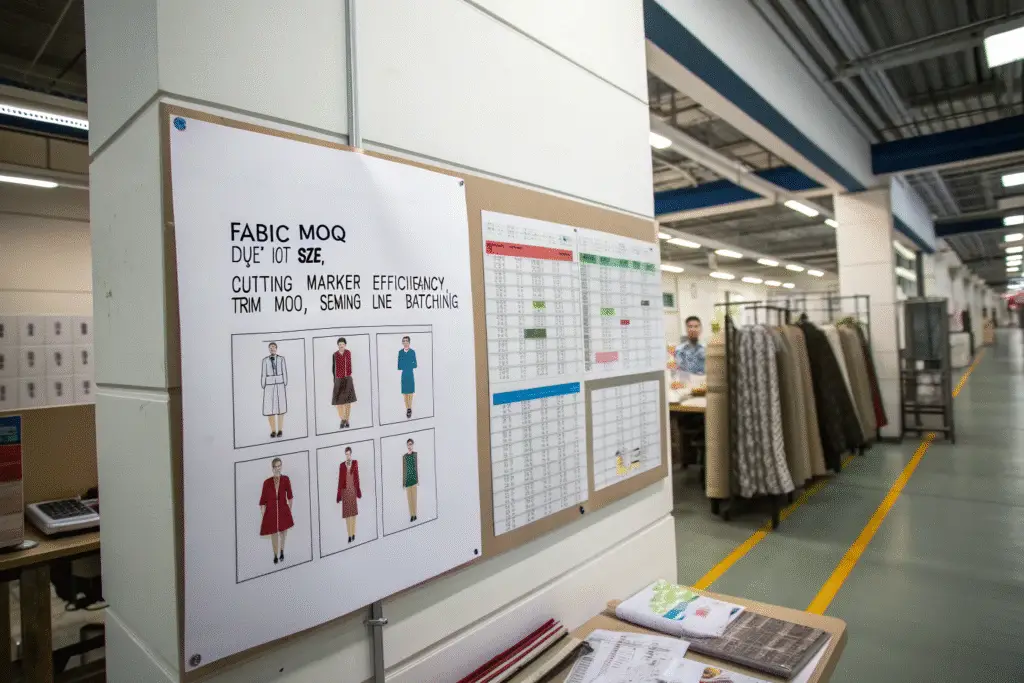
Each style needs a different line setup—sewing a hoodie is not the same as a blouse. Sewing operators require training per design. This setup cost is why most factories need 300–500 pieces per style to make it worthwhile.
However, if the construction is similar, like T-shirt vs muscle tank, the factory may accept mixed production with minor changeovers. Ask if the line can use shared machinery, especially for knitwear and simple styles. Tools like Techpacker help you standardize BOMs and optimize MOQ.
How Can You Group Styles to Reduce Total MOQ?
Grouping is the most effective MOQ strategy. You can negotiate a total order minimum—say 2000 pieces—while splitting that across 4 or 5 styles if you play smart with fabric, trims, and color usage.
Can You Use the Same Fabric for Different Styles?
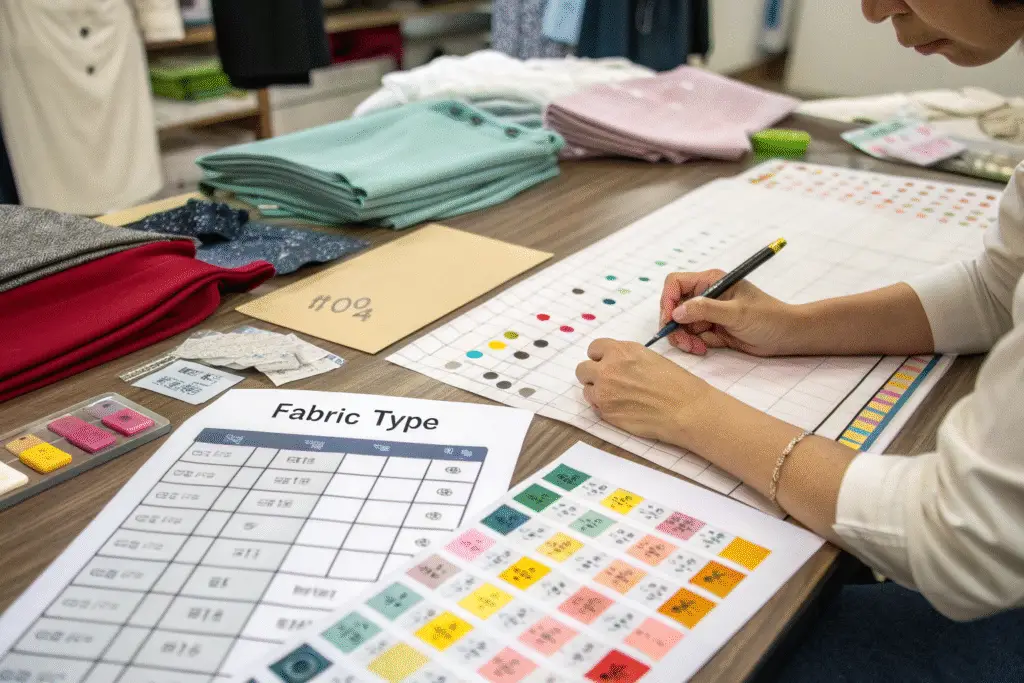
Absolutely. Many brands run T-shirts, tanks, and dresses using the same cotton-spandex jersey or polyester mesh. Ask the factory to suggest a common base fabric that works across multiple silhouettes.
Once fabric is standardized, it’s easier to batch dye and meet mill MOQ. Make sure your fabric consumption (yards/style) is calculated accurately—use tools like Aptean Apparel ERP or ask your factory for marker efficiency charts.
Don’t forget trims—labels, buttons, zippers. Many trim suppliers ask for 1000+ pieces per label or color. To solve this, use universal size labels, common hang tags, and same zipper types across multiple garments. This reduces unit cost and trim waste.
If you use Avery Dennison, you can set up a branded accessory library that services all SKUs consistently. Trims account for 5–15% of garment cost—optimize early.
What Is the Best Way to Negotiate MOQ Flexibility?
You can’t eliminate MOQ, but you can manage it with strategy. Start by being upfront about your target volume, timeline, and style plan. Most reliable factories will try to work with you—especially if you're building a long-term partnership.
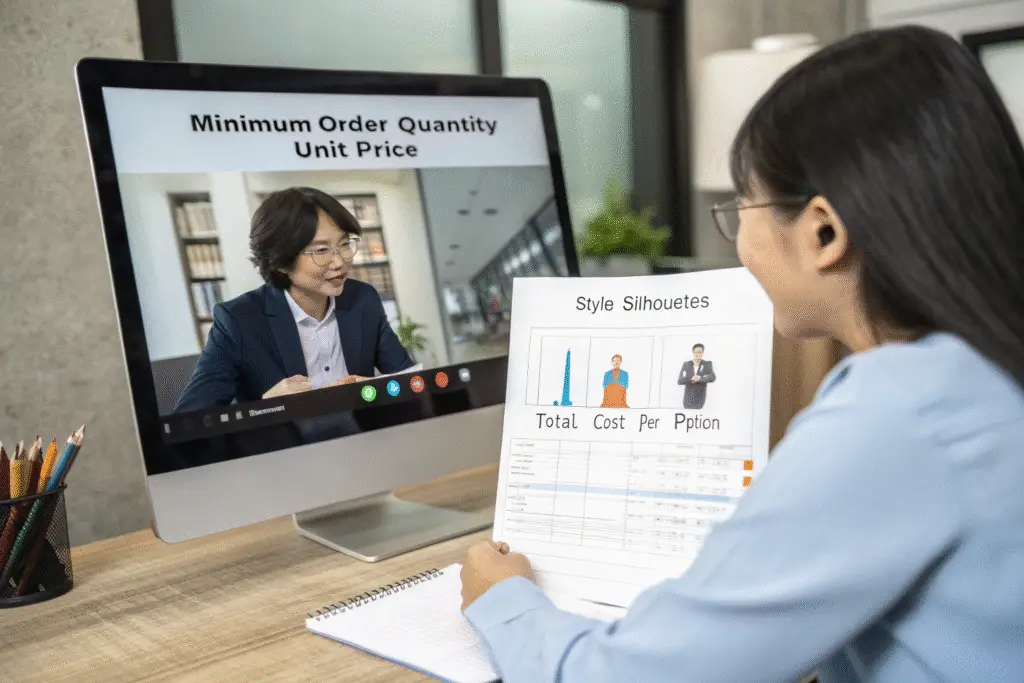
Can You Negotiate by Total Order Value Instead?
Yes. Some suppliers may allow smaller minimums per style if you commit to a total order value—say $20,000 across styles. They’ll balance low-run styles with high-run ones. This is called a blended MOQ.
Offer to run some core styles in higher quantity and treat others as test styles. If you build a forecasted reorder plan, factories are more open to flexible minimums. That’s how we work with several U.S. clients on new capsule collections.
What Tools Help Communicate MOQ Expectations Clearly?
Use platforms like Pivot88 or SupplyCompass to manage BOMs, tech packs, and MOQ discussions digitally. Always include your MOQ target in the RFQ stage. Share a line plan showing each style, color, fabric, and trim—this helps the factory plan materials in advance.
Even if the factory says “no” to your MOQ, they may offer alternatives—such as using available leftover fabric or reusing deadstock trims.
How Can You Forecast Styles Without Overcommitting?
Forecasting multiple styles for production is tricky—especially when you’re launching a new brand or product line. The goal is to meet factory minimums without overstocking slow-moving SKUs.
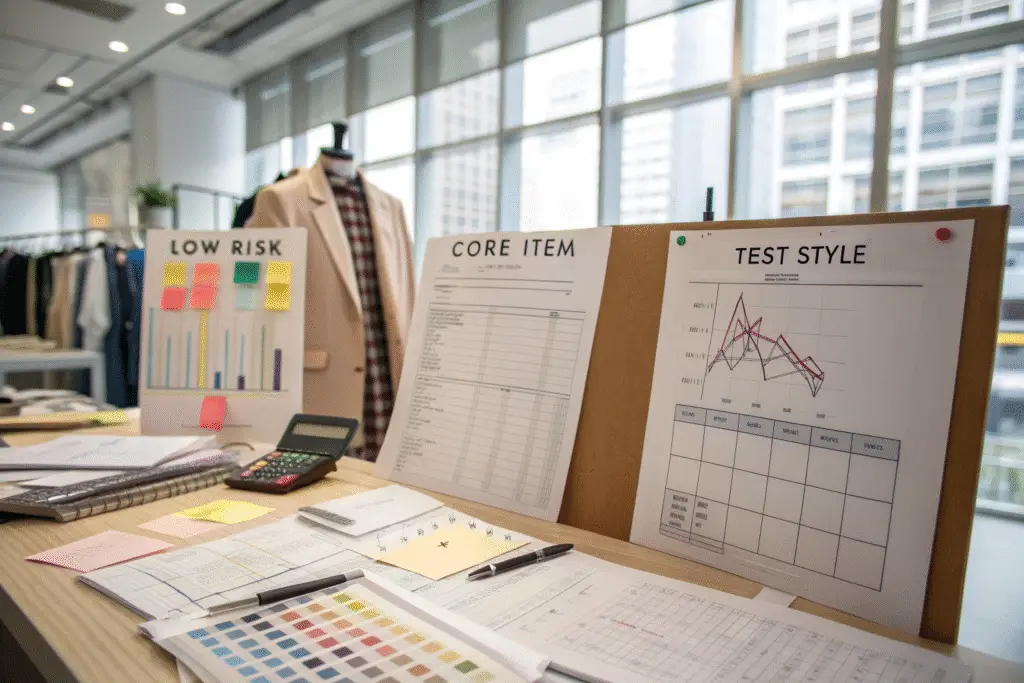
How Do You Decide Which Styles Deserve Higher Volume?
Start with historical sell-through if you have it. Styles that have performed well—basic tees, joggers, hoodies—should take up 60–70% of volume. Use the remaining quota on trend-driven or niche items like cropped tops or jumpsuits.
You can also review Google Trends or past Shopify sales to decide which colors, fits, or price points are hot. The more data you share with your supplier, the better they can guide your MOQ mix.
How Can You Use Pre-Orders to Meet Minimums?
Set up a limited pre-sale campaign using your product mockups. This allows you to test customer interest and lock in early orders. Platforms like Kickstarter or Crowdfunder can fund production and reduce your inventory risk.
Alternatively, run your first batch with a preorder plus buffer model—produce 10–20% more than pre-sold quantity. This builds safety stock while minimizing dead inventory. Some of our clients use this tactic when testing new seasonal SKUs.
Conclusion
Managing minimums across multiple clothing styles doesn’t require compromising your brand vision. It’s about optimizing material overlap, understanding factory logic, and negotiating MOQ flexibility based on order value, fabric grouping, and trim alignment.
At Fumao Clothing, we support multi-style orders with flexible MOQ strategies, real-time fabric inventory tracking, and cost-efficient planning. Whether you’re launching 3 or 10 styles, we help you make the math work while maintaining premium quality and timely delivery.
Reach out to our Business Director Elaine at elaine@fumaoclothing.com and let us show you how to structure a scalable, profitable mixed-style clothing order from China.