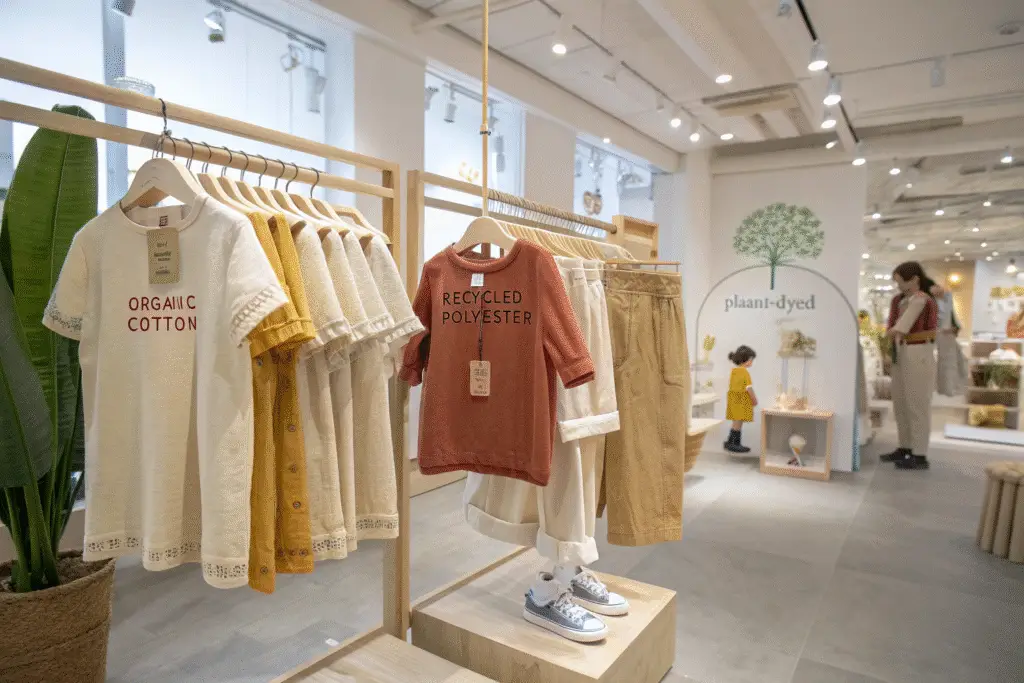
Children’s fashion is no longer just about cuteness or comfort—it’s now about sustainability. Parents, especially millennial and Gen Z buyers, are increasingly choosing eco-friendly kids' wear that aligns with their values. As a clothing manufacturer, understanding these trends is key to staying relevant and competitive in both domestic and international markets.
Eco-conscious kidswear now combines natural materials, ethical production, and circular design with playful aesthetics and high safety standards. At Shanghai Fumao, we’ve seen a 60% surge in demand for sustainably produced children’s apparel—especially from U.S. and European clients aiming to serve eco-aware parents.
In this article, we explore the emerging trends shaping the future of environmentally responsible kidswear manufacturing and sourcing.
What Sustainable Materials Are Dominating Kids' Wear?
Fabric is the foundation of any apparel line, and in kids’ fashion, safety and softness are non-negotiable. But sustainability is now a third must-have. More brands are demanding certified eco-materials that are gentle on the skin and kind to the planet.
From farm to fiber, the focus is on responsibly sourced, biodegradable, or circular textiles.
Why Is Organic Cotton Still a Top Choice?
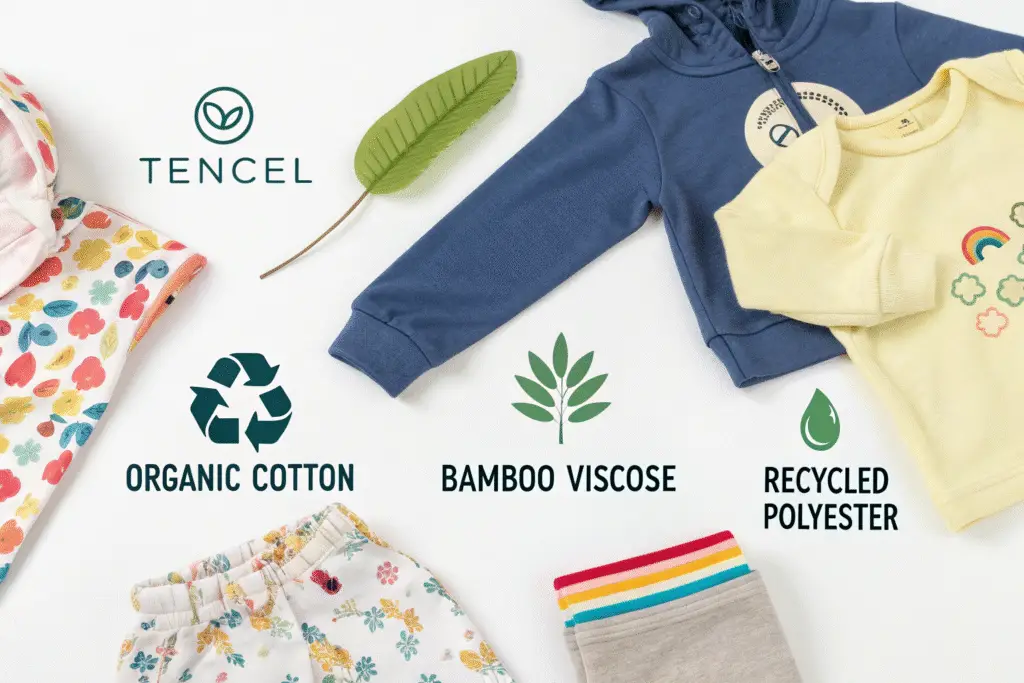
Organic cotton remains the gold standard for eco kidswear because it’s:
- Free from toxic pesticides and synthetic fertilizers
- Softer and more breathable for sensitive skin
- Backed by certifications like GOTS and OEKO-TEX
Parents trust labels like Hanna Andersson and Burt's Bees Baby because they clearly promote organic credentials.
At Fumao, we source GOTS-certified cotton from Chinese and Indian mills for baby bodysuits, pajamas, and daywear.
What Role Do Bamboo and Recycled Fibers Play?
Bamboo viscose is gaining attention for its silky texture and fast-growing nature. While not perfect (due to chemical processing), newer closed-loop bamboo production reduces waste.
Meanwhile, recycled polyester (rPET) made from bottles is used in:
- Winter jackets
- Swimwear
- Rainproof outerwear
Brands like Mini Rodini and Patagonia Kids lead in these areas.
Make sure any recycled claim is supported by GRS certification to avoid greenwashing.
How Is Design Shifting Toward Circular Fashion for Kids?
Fast fashion and kidswear traditionally went hand in hand—after all, kids grow fast. But that mindset is changing. Now, designers are embracing circular fashion principles to reduce waste and extend product lifecycles.
From adjustable sizing to multi-use designs, the goal is more wear per garment.
What Are “Grow With Me” Designs and Why Are They Popular?
“Grow with me” styles adapt to a child’s growth by including:
- Foldable cuffs
- Adjustable waistbands
- Stretchy panels
Brands like Petit Pli use patented expansion designs, while others follow a simpler pattern-based approach. These reduce the need for frequent buying—and appeal to conscious parents.
At Fumao, we support elastic-based grow features with OEKO-TEX approved trims and easy-size grading.
Are Modular and Multi-Wear Garments Becoming Mainstream?
Yes—especially in jackets, dungarees, and layering sets. Features include:
- Detachable sleeves
- Reversible fabrics
- Convertible styles (e.g., romper to T-shirt dress)
Such designs promote longevity and reuse across siblings. You’ll find innovation examples at Circular Design Guide by IDEO and brands like Jackalo.
Factories need skilled pattern teams to execute modular designs well—and that’s something we at Fumao specialize in.
How Are Eco Certifications Driving Consumer Trust?
Transparency is the new marketing. With greenwashing concerns rising, parents now look for visible, verifiable sustainability labels. Certification isn’t just a bonus—it’s expected.
Certifications for eco kidswear provide proof of ethical sourcing, chemical safety, and environmental impact reduction.

Which Certifications Are Most Important for Eco Kids’ Clothing?
Top certifications in demand include:
- GOTS – Global Organic Textile Standard (fiber + process)
- OEKO-TEX® Standard 100 – Chemical safety for skin contact
- BCI – Better Cotton Initiative (not organic but more sustainable)
- GRS – Global Recycled Standard for rPET and blended fibers
- FSC – Paper packaging and hangtag material
Certifying bodies like Control Union or Intertek issue these labels.
Make sure your factory can trace and document certifications through annual audits and material origin declarations.
How Do Certifications Influence Retailer and Platform Requirements?
Many retailers now require proof of sustainability claims before onboarding brands. For example:
- Nordstrom’s Sustainable Style collection requires GOTS/GRS
- Amazon Climate Pledge Friendly prioritizes OEKO-TEX and bluesign®
- Zulily highlights GRS-certified outerwear in its Eco Boutique section
You can read compliance summaries on Fair Trade Certified and Textile Exchange’s program guide.
At Fumao, we regularly assist clients in preparing audit reports and tracking chain-of-custody documentation.
What Role Does Packaging and Branding Play in Eco Kidswear?
Sustainability doesn’t stop at the garment. Eco-aware parents care about how the product arrives, how it’s wrapped, and how reusable or compostable that packaging is.
Smart, sustainable branding reinforces your message and reduces waste.

What Are the Best Packaging Solutions for Eco Kids’ Brands?
Sustainable packaging includes:
- Compostable mailers made from corn starch
- Recycled kraft boxes with soy ink logos
- Biodegradable garment bags
- FSC-certified hangtags and recycled sticker seals
Suppliers like noissue and EcoEnclose provide made-to-measure options for small and large brands.
Fumao offers full-package service with DDP shipment and packaging integration, so you never have to repackage products overseas.
How Can QR Codes and Digital Labels Support Transparency?
Instead of bulky care booklets, brands now embed QR codes that link to:
- Product origin maps
- Material explanations
- Wash care tutorials
- Donation or resale platforms
This reduces paper use and builds brand trust. Providers like Scantrust and Treet for resale integration offer plug-and-play APIs for eco kidswear.
We help brands embed these QR designs into labels and print files during the packaging phase.
Conclusion
Eco-friendly kidswear is more than just a trend—it’s a growing movement driven by mindful parenting, global standards, and fashion innovation. From sustainable fabrics to grow-with-me design and certified transparency, brands who lead in this space earn long-term customer loyalty.
At Shanghai Fumao, we specialize in helping global brands produce safe, sustainable, and stylish kidswear—without sacrificing quality or delivery reliability. Want to launch or optimize your eco kidswear line?
📩 Contact our Business Director Elaine at elaine@fumaoclothing.com to learn how we can bring your ethical children's apparel vision to life.