When Ron launched his first clothing line using an overseas supplier, he wired 100% upfront—and didn’t hear back for three weeks. The factory wasn’t dishonest, just disorganized. But that misstep nearly cost him his retail window. He later asked me, “How should I structure payments when I don’t fully trust the supplier yet?”
The best payment terms for new clothing supplier relationships balance risk and trust. Start with partial upfront payments (like 30/70 TT), use trade assurance where possible, and move to open terms only after reliability is proven.
In this article, I’ll share the payment terms that successful buyers use during early-stage partnerships. Whether you’re sourcing through Alibaba, a trade show, or direct factory contact, these strategies will help you stay protected while building solid supplier trust.
Why Are Payment Terms Crucial in Apparel Sourcing?
Payment terms can make or break your sourcing experience. Too lenient, and you risk non-delivery or late shipments. Too strict, and your factory may prioritize other clients. Striking the right balance ensures production gets done on time while protecting your cash flow.
Payment terms serve as financial guardrails for new clothing supplier relationships. They help buyers manage risk, cash flow, and production accountability—especially in the first few orders.
At Fumao, we’ve worked with hundreds of new buyers over the years, and the most common issue is not quality—it’s unclear payment expectations leading to tension and miscommunication.

What Are the Most Common Apparel Payment Terms?
For first-time orders, the most widely used terms include:
- 30/70 TT: 30% deposit to begin production, 70% before shipment (standard)
- LC at sight: Letter of Credit released upon shipping documents (for large orders)
- Alibaba Trade Assurance: Buyer protection system (for smaller transactions)
These terms are designed to reduce risk for both sides. More flexible options come with long-term relationships or insurance backing.
More information can be found at Alibaba Trade Assurance Guide or Incoterms 2020 overview.
Why Is 100% Upfront Payment Risky?
Paying 100% upfront exposes you to delays, poor quality, or total loss. While some small factories request it to cover materials, experienced suppliers usually agree to partial deposits. We advise buyers to avoid full advance payments unless the order is small and low risk.
Instead, ask for a milestone-based approach—e.g., 30% at PO, 40% after sample approval, 30% pre-shipping. Learn more about safe structures at Sourcing Hub.
How to Negotiate Fair Terms as a First-Time Buyer?
Negotiating payment terms as a new buyer is tricky. You need to show seriousness without exposing yourself to financial risk. Factories want assurance that you’ll pay. You want assurance that they’ll deliver. The middle ground is structure.
Start with partial upfront terms and gradually build toward net terms as your relationship and order volume grow. Use third-party tools for initial protection if needed.
We usually offer new buyers 30/70 TT with real-time production photo sharing, or LC for larger projects. As confidence grows, so can flexibility.

What Should You Offer on Your First Order?
If you’re placing your first order, propose:
- 30% deposit, 70% against B/L copy
- Use Alibaba Trade Assurance if it’s a small supplier
- Add milestone conditions (e.g., 50% only after pre-shipment inspection)
Make sure your PO includes penalties for delays or quality failure. A helpful negotiation template is available from Global Sources.
Can You Build Trust Without Overpaying?
Yes. Share clear production timelines, be responsive, and pay on time. A reliable factory will see you as a long-term partner, not a one-time opportunity. This paves the way for net 30, net 60, or open account terms after 2–3 successful orders.
At Fumao, we’ve upgraded multiple U.S. buyers to D/P terms (Documents Against Payment) or 20/80 splits after just two cycles with smooth cooperation.
What Tools and Guarantees Protect Your Payment?
New supplier relationships come with uncertainty. That’s why third-party systems or bank-backed mechanisms are essential. They offer protection for buyers while giving suppliers a structured framework to ship with confidence.
Use Alibaba Trade Assurance, letters of credit, or escrow services to secure your funds when dealing with unproven suppliers. These tools add transparency and timeline discipline to your first few orders.
We always recommend third-party inspection before releasing final payment—especially for fashion goods with sizing, color, or label variables.
How Does Trade Assurance Work?
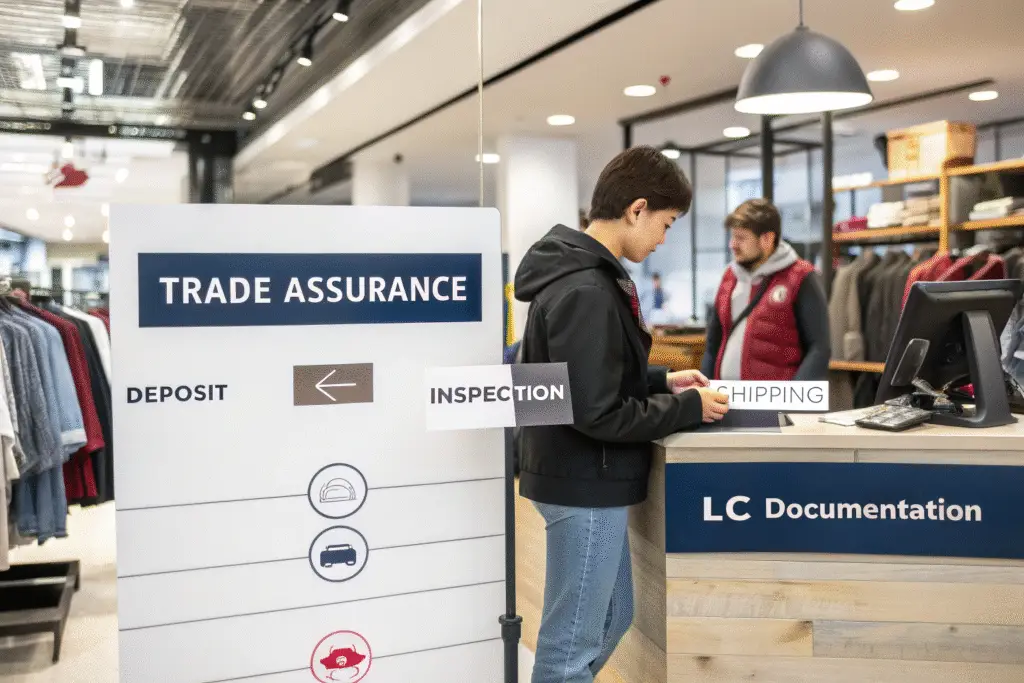
Alibaba’s Trade Assurance holds your payment in escrow. Funds are only released when your supplier ships and matches the agreed terms. It includes support for refunds and delay disputes.
This is ideal for small-to-medium orders and gives new buyers confidence. Learn more at the official Alibaba Trade Assurance page.
Is a Letter of Credit Suitable for Apparel?
Yes—especially for large volume orders. LC at Sight is a bank-backed instrument that releases payment only when specific documents are presented, such as Bill of Lading, Packing List, and Inspection Report.
Using LC requires strong documentation practices on both sides. Factories familiar with export processes, like ours, handle LCs smoothly through partner banks such as HSBC or ICBC.
When Should You Transition to Open Terms?
As the partnership evolves, buyers and suppliers can shift to more trust-based terms. This opens better cash flow for brands and improves planning flexibility for factories. But it must be earned through consistency.
Open account terms like Net 30 or Net 60 are best reserved for high-volume, long-term clients with a history of timely payments and stable forecasts.
At Fumao, we extend Net 30 to buyers who have completed 3+ on-time PO cycles with successful inspection reports and no payment delays.

What Are Typical Timelines for Gaining Open Terms?
For mid-size U.S. brands, open terms usually come after:
- 3–5 successful production cycles
- Consistent monthly orders over $10,000
- Clean inspection records
- On-time payments without reminders
Factories may also request a credit report or trade references. You can obtain one via Coface or Dun & Bradstreet.
How Can You Secure Flexible Terms Without Risking Control?
Request partial open terms—such as Net 15 on the final 30% balance. This lets the factory manage cash flow while giving you some breathing room. Always keep communication open, share forecasts, and avoid overpromising timelines.
We also offer seasonal buyers deferred payment plans tied to delivery dates (e.g., Net 20 after receipt) to ease pre-holiday inventory planning.
Conclusion
Payment terms are not just numbers—they reflect trust, risk tolerance, and maturity in your supplier relationship. By starting conservatively with 30/70 or Trade Assurance, and scaling to LC or open terms as reliability grows, you can protect your cash flow while empowering your supplier to deliver.
At Fumao Clothing, we welcome transparency and structure. That’s why our buyers keep coming back—not just for our garments, but because we make payments predictable, safe, and scalable.
If you’re looking for a factory that balances flexibility with reliability, let’s talk. We’ll help you build not just product—but a lasting supplier partnership.