
Importing clothing from China or other countries can be incredibly profitable—if you know your real costs. Many apparel brands focus only on the factory unit price, not realizing that shipping, customs, duties, warehousing, and compliance fees can double or even triple that base cost. Misjudging landed cost is one of the fastest ways to kill profit margins.
The true landed cost of imported clothing includes the unit price, freight charges, import duties, brokerage fees, insurance, warehousing, and last-mile delivery. Understanding each component ensures accurate pricing and healthy margins.
As a Chinese garment factory owner working with brands like Ron’s in the U.S., I’ve helped many clients go beyond the per-piece price. This article breaks down how to calculate your full landed cost per SKU so you can scale smartly, not blindly.
What Costs Are Included in a Landed Cost Calculation?
Many importers believe the “price” is what they pay the factory. But that’s only the beginning. True landed cost reveals what each item actually costs to reach your warehouse, ready for sale.
Landed cost is the total cost to bring goods from the manufacturer to your warehouse door, including all fees and logistics.
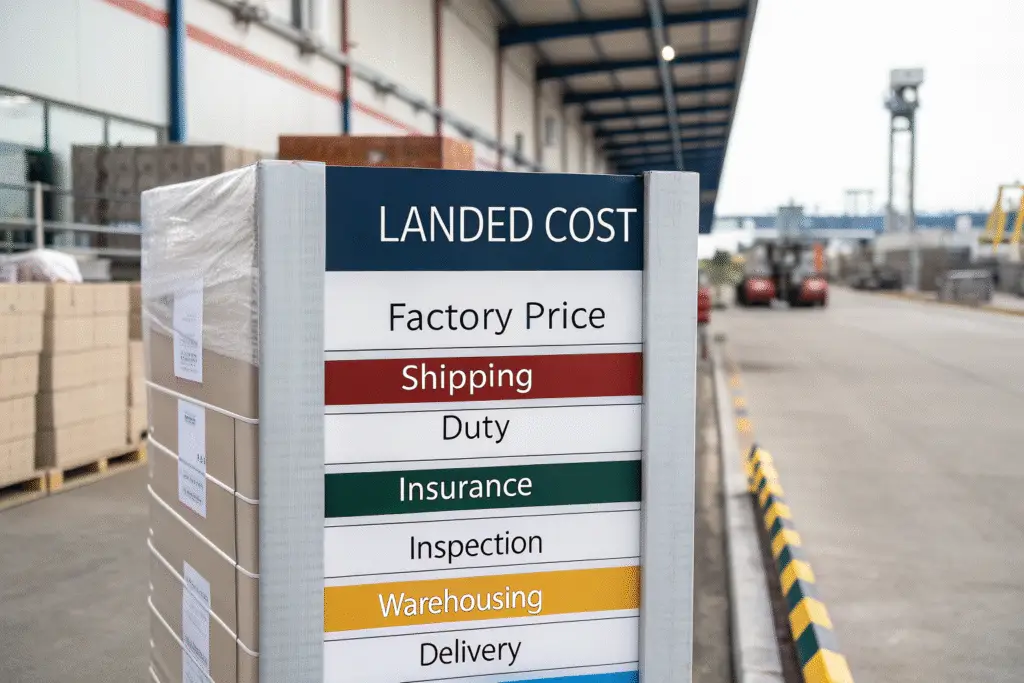
What Are the Key Components of Landed Cost?
Here’s a full list:
| Cost Category | Examples |
|---|---|
| Product Unit Price | FOB or EXW price from factory |
| Freight & Shipping | Air or sea freight, fuel surcharges, port charges |
| Customs Duties & Tax | Import duties, VAT/GST, anti-dumping taxes |
| Insurance | Marine cargo or transport insurance |
| Brokerage & Docs | Customs broker fees, clearance fees, inspection charges |
| Compliance & Testing | Prop 65, CPSIA, lab tests |
| Warehousing & Delivery | Container unloading, 3PL storage, last-mile freight |
As an example: If your shirt costs $2.50 FOB and lands in California with $1.20 freight, $0.45 duty, and $0.35 in logistics, your true landed cost is $4.50—not $2.50.
Which Incoterms Affect Landed Cost Responsibility?
Know whether your price is:
- EXW (Ex Works) – Buyer pays everything from factory door onward
- FOB (Free on Board) – Factory delivers to port, buyer handles freight forward
- CIF/DDP (Cost, Insurance, Freight/Delivered Duty Paid) – Factory includes most costs in invoice
Using Incoterms smartly allows you to control or delegate different cost components.
How to Calculate Import Duties and Tariffs?
Tariffs are one of the biggest variables in landed cost—and one of the most misunderstood. They vary by product, material, and destination. A simple cotton t-shirt and a polyester jacket may have completely different duty rates.
Duties are calculated as a percentage of the customs value, often the FOB price, and are based on the item’s HS code and country of origin.
How Do You Classify Clothing Correctly?
Use the Harmonized System (HS) code to classify each product. For example:
| Product | HS Code | Typical U.S. Duty |
|---|---|---|
| Cotton T-shirt | 6109.10 | 16.5% |
| Polyester Activewear | 6110.30 | 32% |
| Wool Coats | 6201.11 | 15% |
We help clients with pre-classification of their styles to avoid customs clearance issues.
What Tools Help Calculate Duties?
Don’t forget anti-dumping duties or Section 301 tariffs (China-U.S. trade dispute), which can add 7.5–25% on top of base duty.
How Does Freight Mode Affect Landed Cost?
How you move your goods matters as much as what they cost. Choosing air for speed vs. sea for cost efficiency changes landed price significantly.
Sea freight is cheaper per unit but slower, while air freight is fast but can multiply your per-unit cost.
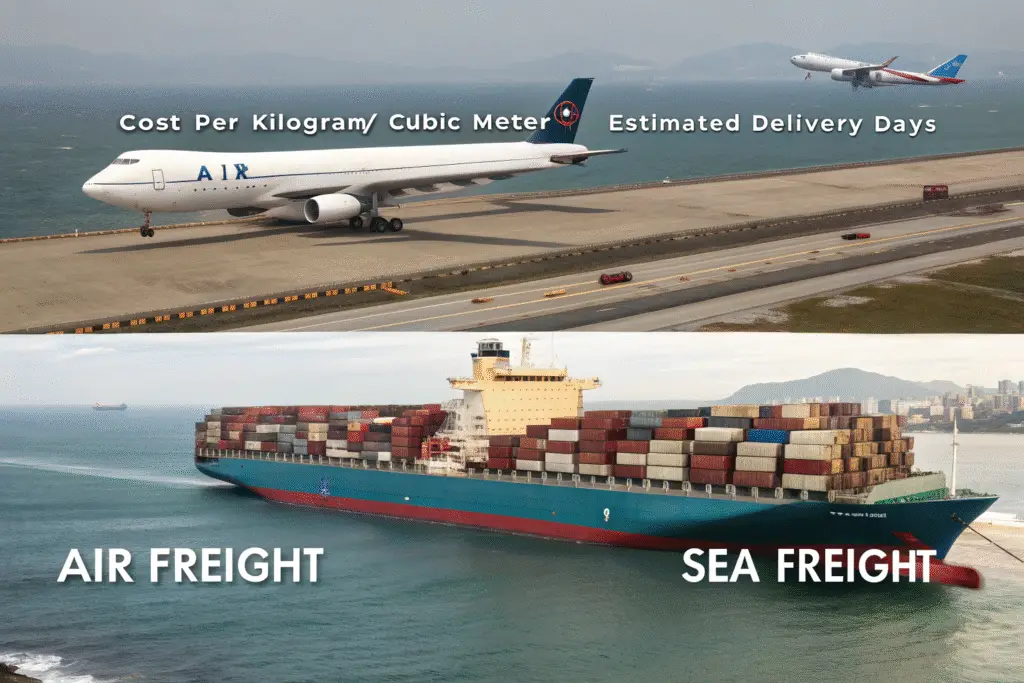
When Should You Use Air vs. Sea?
| Mode | Transit Time | Cost (per kg) | Best For |
|---|---|---|---|
| Sea Freight | 25–35 days | $0.15–$0.40 | High volume, low urgency |
| Air Freight | 3–7 days | $4–$8 | Small urgent shipments |
| Express (DHL) | 2–5 days | $7–$12 | Samples, <50 kg parcels |
One client shipping yoga pants via express paid $2/unit more than sea freight—but launched in time for peak Q1 sales, earning a 65% ROI.
How to Reduce Freight Charges?
- Consolidate orders into full container loads (FCL)
- Use a reliable freight forwarder
- Avoid peak-season shipping (Sept–Jan)
- Negotiate multi-order contracts for better LCL rates
We help our clients book FCL containers at reduced rates via our in-house logistics team.
How to Include Hidden Costs in Landed Pricing?
Beyond obvious costs, smaller fees can quietly eat your profit if not tracked. These often go unnoticed until it’s too late.
Hidden costs like labeling, packaging upgrades, warehousing, currency fluctuations, and transaction fees must be included in your per-piece cost model.
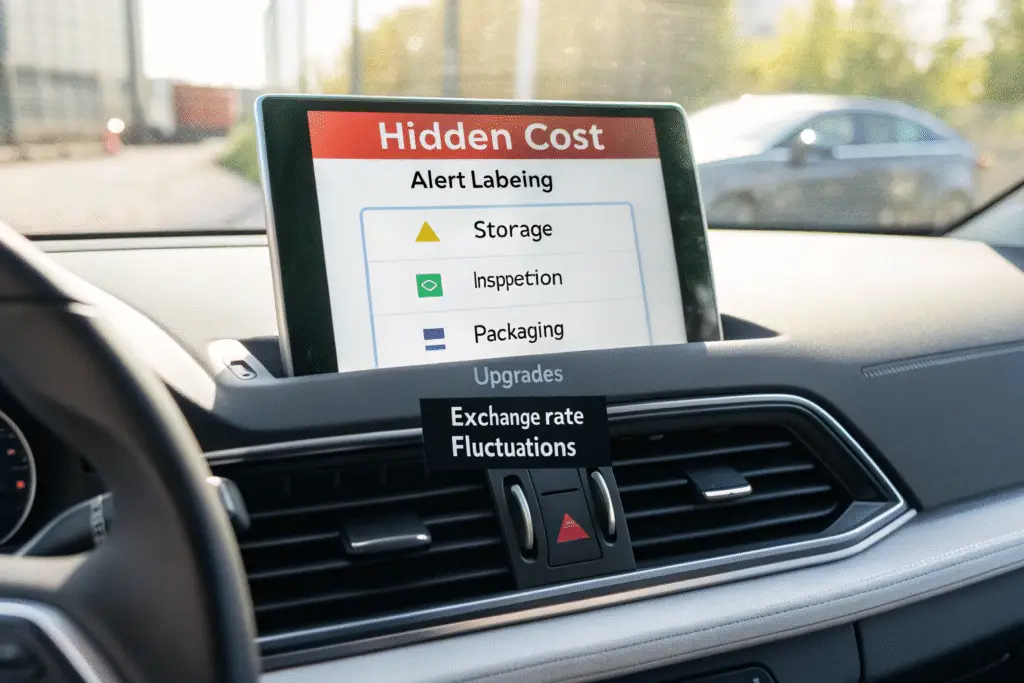
What Are the Most Common Hidden Costs?
- Labeling ($0.05–$0.20/unit)
- Custom polybags or boxes ($0.10–$0.50/unit)
- Inspection fees (QIMA, Intertek) $200–$400 per shipment
- Exchange rate losses (especially USD/CNY fluctuations)
- Last-mile delivery to your 3PL or warehouse
For example, if you forget to account for 3% PayPal fees on a $10,000 payment, that’s $300 lost in margin.
How to Build a Landed Cost Template?
Use a Google Sheet or Excel model with formulas for each component. Here’s a sample template to get started.
We also offer our clients a factory-built calculator to estimate per-style, per-country landed costs, which helps during quotation and budget planning.
Conclusion
Understanding your true landed cost is the difference between guessing and scaling. It lets you price confidently, negotiate better, and avoid sudden surprises in your profit and loss.
At Fumao Clothing, we work closely with our clients to break down every cost from PO to warehouse delivery. When you know your real numbers, you make smarter decisions—and build a stronger brand.
Let’s calculate your next landed cost together and make every shipment count.