Too many brands start wide and dilute fast. But building a capsule around one hero item helps you focus your message, streamline production, and hook buyers with purpose.
The key to a successful single-item capsule is choosing a versatile anchor piece—then designing around it with intent, not excess.
In this guide, I’ll show you how we help clients center entire collections around one star garment—and how that clarity creates stronger storytelling, faster sell-through, and lasting brand recall.
Selecting the Right Anchor Piece for Your Capsule?
Your core item isn't just a garment—it's your message. Choose the wrong one, and everything built around it will wobble.
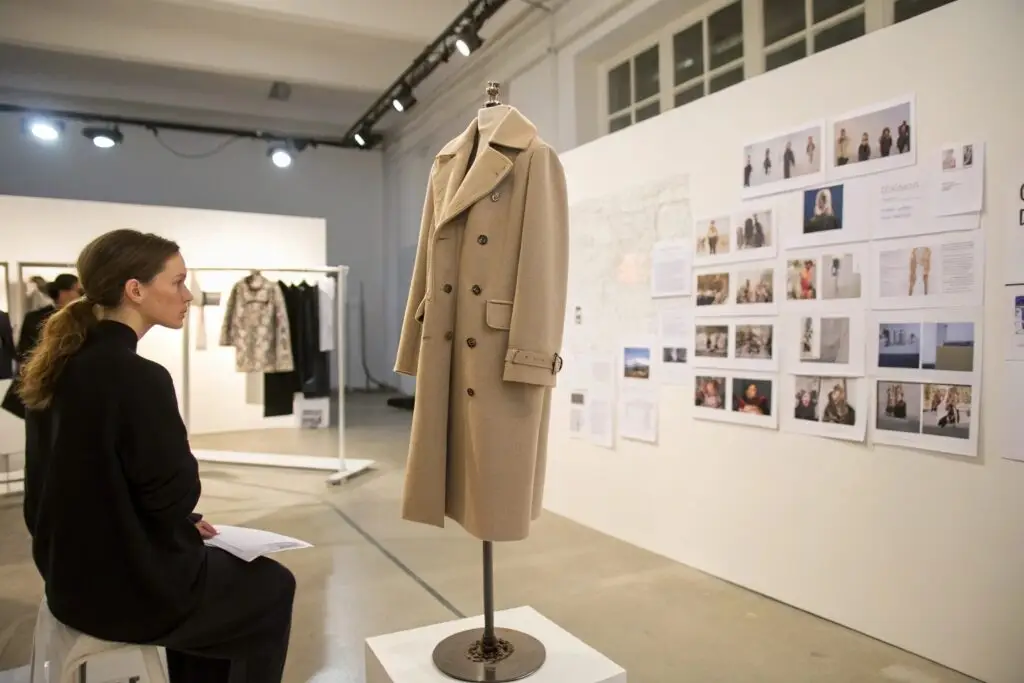
An effective capsule anchor must be timeless, functional, and layered with identity—able to carry styling, marketing, and production weight.
What types of garments work best as capsule centerpieces?
Start with silhouettes that:
- Work across seasons
- Serve multiple occasions
- Adapt to both formal and casual looks
- Allow layering and accessory styling
These are proven anchors we often recommend:
| Anchor Garment | Why It Works |
|---|---|
| Shirt dress | Belted, open as duster, over trousers |
| Relaxed blazer | Sharp or slouchy, pairs with anything |
| Wide-leg pant | Works with tees, shirts, knits, cropped tops |
| Slip dress | Can layer under/over, dress up/down |
| Oversized shirt | Tunic, shacket, layered over tank |
We test anchor strength with a simple question:
Can this item create at least 5 unique looks?
If not, we keep exploring.
What mistakes do designers make when choosing a hero piece?
Two common errors:
-
Picking a trend-forward piece
→ Looks great now, but fades fast. Avoid asymmetrical hems, hyper-feminine cuts, or bold prints for your core. -
Choosing something too niche
→ If your hero item only works in one climate, market, or body type, it won’t scale.
Instead, go for quiet confidence. Think of it as the “leading actor” of your capsule—the rest of the cast must support it.
Designing Supporting Items That Maximize Versatility?
Once your hero is chosen, every other piece must serve it. Supporting items should expand possibilities, not distract.
Smart supporting pieces unlock the hero’s potential—letting your core garment flex across silhouettes, climates, and customer moods.
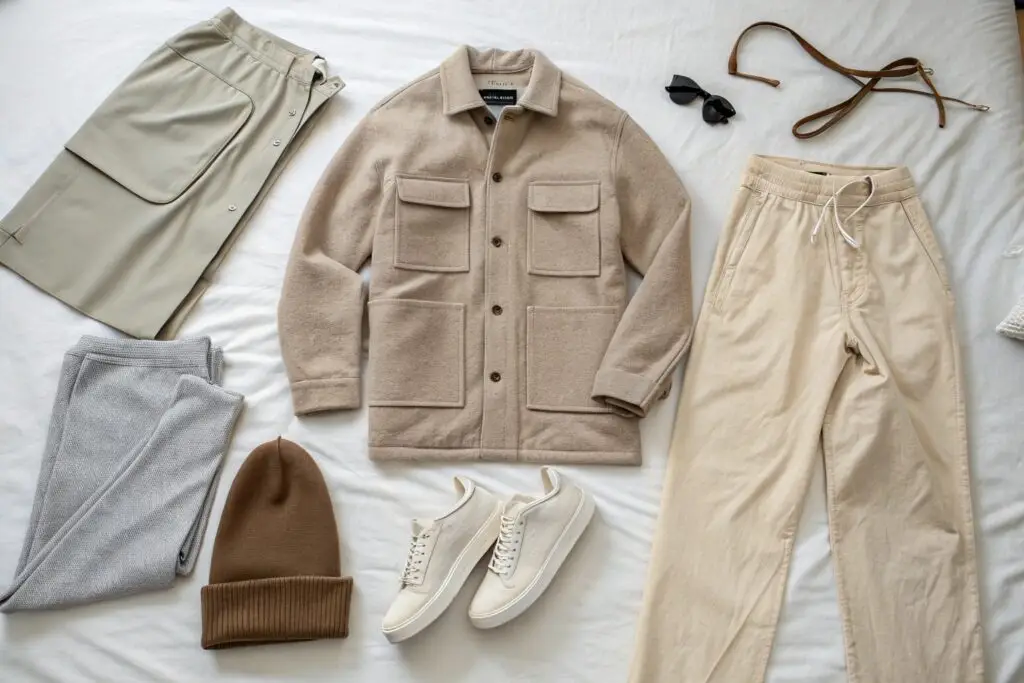
How do you design pieces that extend your anchor item’s utility?
We start with outfit logic. For each function (work, travel, date night), we design one styling companion that:
- Matches the anchor’s proportion (e.g. cropped jacket for wide-leg pants)
- Echoes its color tone (or adds intentional contrast)
- Shares fabric compatibility (e.g. same wash instructions)
Example:
If your hero is a navy slip dress…
| Supporting Piece | Function |
|---|---|
| White cotton tee | Layers under for casual feel |
| Soft blazer | Adds polish for business look |
| Ribbed cardigan | Transitional, cozy, layered styling |
| Straight-leg pant | Transforms dress into tunic silhouette |
We also build supporting items with reversibility, elasticity, or dual closures—anything that increases how many ways they can be worn.
How many pieces should support one anchor in a tight capsule?
For a 6–10 piece capsule, I recommend:
- 1–2 layering tops
- 1–2 outer layers
- 1–2 bottom options
- 1 accessory or belt
- Optional: one print or texture variation of the anchor
That way, the hero item remains the center visually and functionally, while everything around it extends its story.
Creating Color Harmony Around the Core Garment?
You want your capsule to look like a collection, not a closet of random items. That cohesion begins with color.
By choosing a palette that radiates from your anchor item, you build unity across garments, photography, and customer styling.
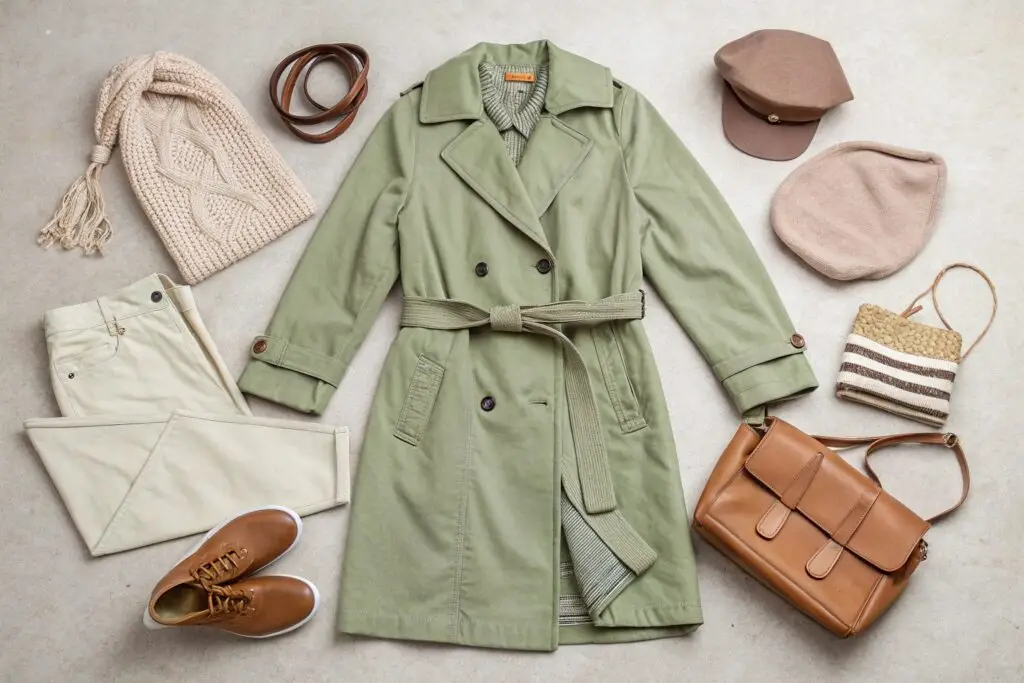
How do you build a capsule color palette from one garment?
Start with the hero’s dominant tone.
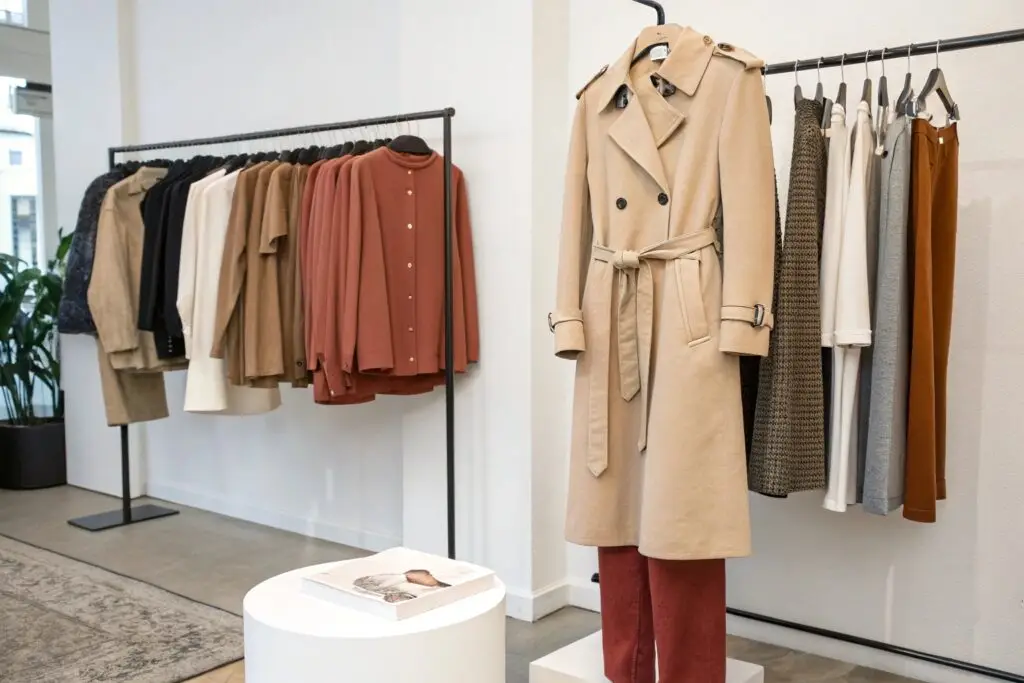
Let’s say your anchor is a camel-toned trench coat. Your palette might be:
- Core neutral: camel
- Base: black or bone
- Accent: rust or olive
- Metal: brass or matte black
Here’s how that unfolds:
| Palette Role | Color Example | Applied To... |
|---|---|---|
| Base | Bone | Shirts, tank, button-down |
| Anchor | Camel | Trench (core item) |
| Accent | Rust | Wide-leg pant, scarf, sock details |
| Neutral contrast | Black | Loafers, bag, coat buttons |
Use the 60-30-10 rule:
- 60% neutral/base
- 30% mid-tones (camel, rust, gray)
- 10% pop or contrast
This allows seamless outfit pairing while giving your photography a warm, editorial feel.
What color mistakes weaken single-item capsules?
- Too many anchors: If three items fight for attention, your buyer gets overwhelmed.
- Inconsistent undertones: Cool gray next to warm beige? Feels off.
- Hard shifts: If your pants are bold red and your jacket is ice blue, nothing feels modular.
The trick is to make every other color feel like an echo of the hero item.
Color cohesion = visual storytelling.
How One Hero Item Can Define Your Brand Identity?
The right anchor item can become your signature. It’s not just about versatility—it’s about memorability.
When one garment reflects your design values, lifestyle promise, and visual DNA, it becomes a living logo—and builds loyalty.
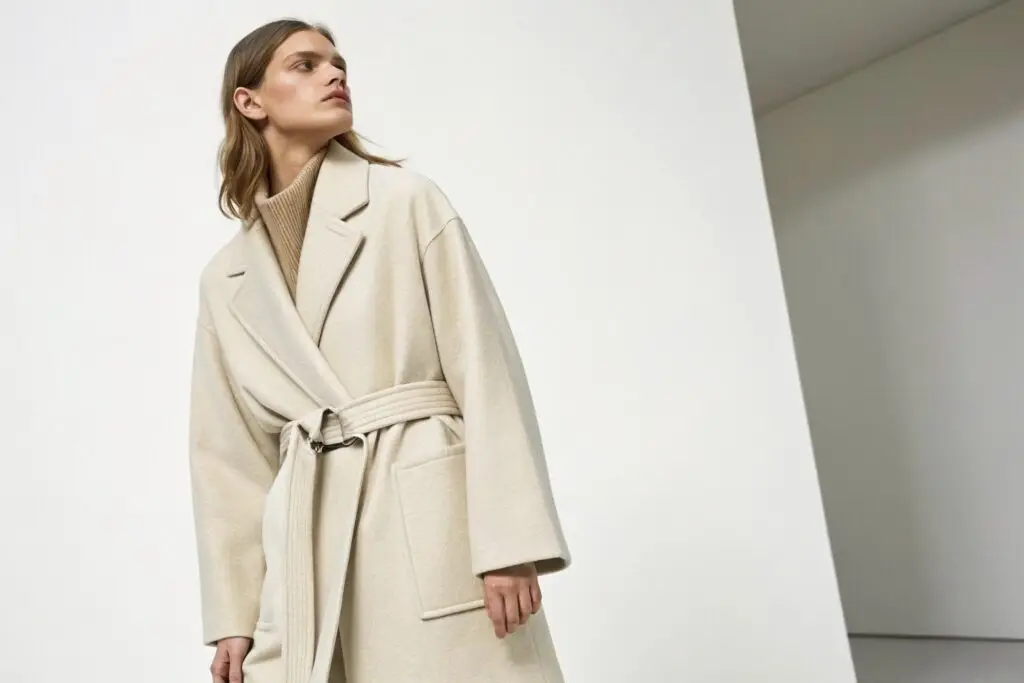
How can a single piece build long-term recognition?
Through consistent repetition with subtle reinvention.
Example:
One of our clients launched with a cropped wrap jacket. Every season, they updated:
- Fabric (linen, wool blend, ripstop)
- Color (bone, pine, terracotta)
- Detail (new lining, button placement)
It became their icon. Even buyers who never bought the full capsule returned just to see the new version.
Your hero piece can act as:
| Brand Function | Execution Example |
|---|---|
| Signature item | Repeat style with seasonal fabric |
| Visual cue | Use in every campaign lookbook |
| Production stabilizer | Forecast inventory with confidence |
| Price anchor | Keep margin strong for this item |
Buyers like consistency. And when your hero garment represents comfort, creativity, and quality—they remember you.
How do you choose the right item to build brand DNA around?
Ask these three:
-
Does it reflect our values?
(e.g. soft tailoring, modular dressing, street-to-office) -
Can it evolve without losing identity?
(e.g. color shifts, trim updates, length tweaks) -
Would a buyer recognize us if they saw this in a store rack, without a logo?
If the answer is yes—you’ve found your core.
Conclusion
One hero item. That’s all it takes to focus your capsule, elevate your design voice, and create deeper connections with your buyers. Build your collection around what matters—and the rest will follow.