It’s easy to create pretty clothes. It’s harder to create pieces that actually get worn. If your capsule looks good but doesn’t perform, it fails.
Balancing function and fashion means creating capsule items that support daily life while still aligning with your brand’s style vision.
This article breaks down how I approach the real-world demands of capsule design—especially when working with buyers who prioritize both comfort and presentation.
Designing Capsules That Fit Real-Life Routines?
If a piece looks good but can’t survive a normal week—commutes, work, errands, heat, spills—it won’t stay in your customer’s rotation.
To make a functional capsule, you must design for the buyer’s actual lifestyle, not just their aspirational one.
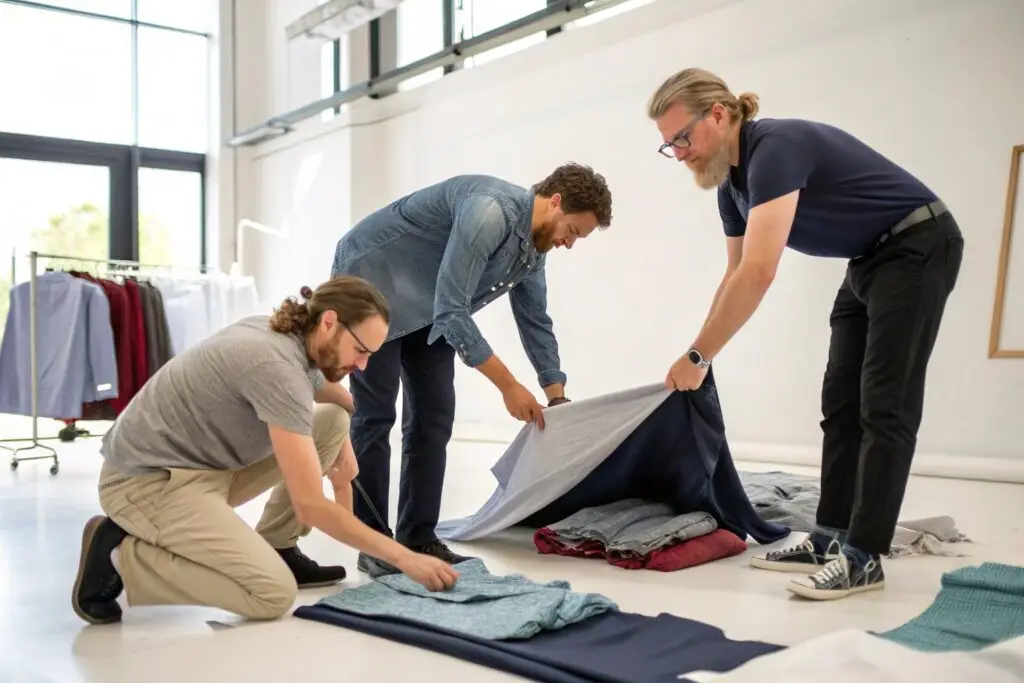
How do you design for everyday life without sacrificing style?
It starts with observation. Who is your buyer? How do they move through the day?
Here’s an example buyer profile we use:
| Buyer Type | Key Needs | Capsule Solutions |
|---|---|---|
| Urban commuter | Wrinkle resistance, stretch, polish | Knit trousers, fluid shirting |
| Busy mom | Easy care, no-fuss layers | Pull-on pants, oversized tees, jackets |
| Creative freelancer | Style identity + comfort | Statement shirts, elastic pants, loafers |
Then, we build around three design anchors:
- Modularity – tops that tuck or untuck, sleeves that roll
- Durability – stress-tested seams, washable fabrics
- Styling freedom – color and shape combos that adapt
We also simulate routines during fittings: sitting, reaching, layering. If the hem rides up or fabric bunches, we revise.
What causes most capsules to fail in terms of real-life use?
Common mistakes include:
- Dry-clean-only fabrics
- Styles that can’t be worn with a bra
- No pockets
- Difficult closures (buttons behind the neck, side zips)
One of our capsule clients created a beautiful satin slip dress. It looked great in photos. But it couldn’t be layered, wrinkled easily, and required special wash care. Sales tanked after launch.
Fashion without function is just fantasy. You need both.
Choosing Fabrics That Combine Comfort and Style?
Even the best-designed piece will sit in the closet if the fabric feels scratchy, heavy, or traps heat.
Fabrics that blend tactile comfort with a premium look are essential to creating wearable, re-orderable capsule lines.

What fabric types work best for high-rotation, stylish capsules?
We divide capsule fabrics into three tiers:
| Category | Key Fabrics | Use Cases |
|---|---|---|
| Core basics | Cotton jersey, modal, bamboo blends | Tees, tanks, soft dresses |
| Smart casual | Twill, tencel, viscose | Pants, shirts, overshirts |
| Premium touch | Crepe, rib knits, ponte | Dresses, office pieces, formal layers |
We test each fabric for:
- Stretch recovery
- Pilling resistance
- Colorfastness after washing
- Softness against skin
For example, I love using modal blends. They feel silky, don’t wrinkle, and breathe well. And twill trousers maintain structure without stiffness.
We also advise using the same fabric across multiple pieces in a drop. A single knit can become a tee, jogger, and midi dress—reducing sourcing and improving cohesion.
What’s the downside of using trend-driven or novelty fabrics?
They often look exciting but fail fast.
Examples:
- Sheer mesh—hard to layer, prone to tears
- Vinyl or faux leather—sweaty, rigid, poor size flexibility
- Heavy boucle or boucle knits—beautiful texture but not packable or seasonless
Capsule buyers care about repeat wear. You need fabric that works with body movement, time, and washing machines—not just photo shoots.
Functional Details Buyers Actually Look For?
A hidden pocket or rolled cuff can be the difference between a returned item and a repeat order.
Functional details—if thoughtfully added—make capsule garments more usable, increasing buyer satisfaction and loyalty.
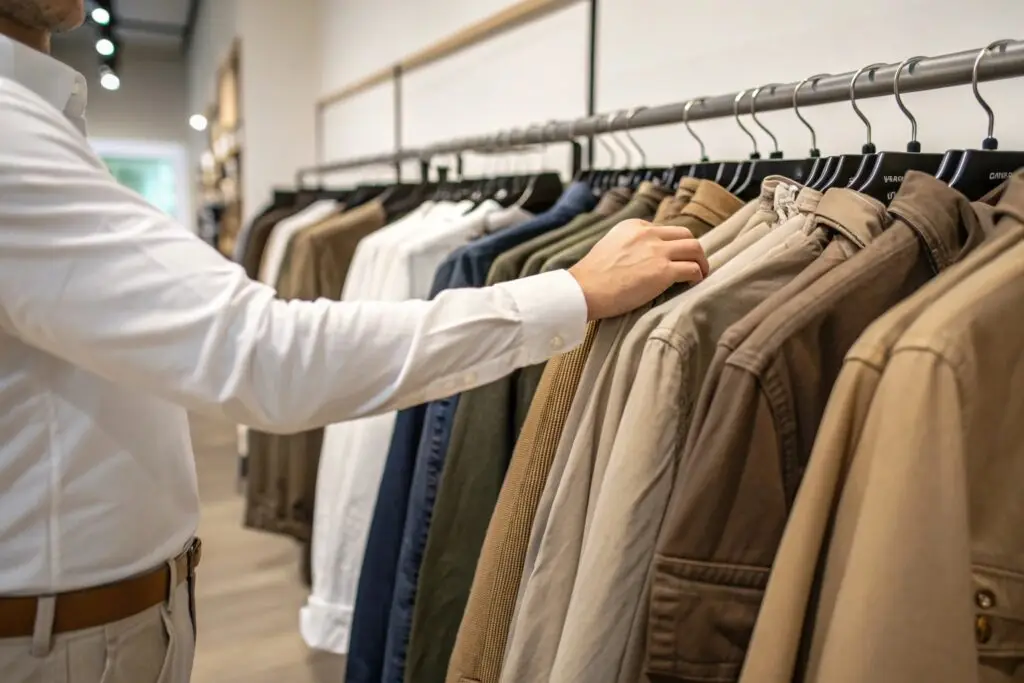
Which functional elements do buyers consistently value in capsule pieces?
Here’s what our buyers love:
| Detail | Why It Matters |
|---|---|
| Deep side pockets | Phone, keys, hand access |
| Adjustable waist | Post-meal comfort, shared sizing |
| Convertible sleeves | Hot-cold transitions, workplace settings |
| Hidden buttons/snaps | Modesty, layering ease |
| Double-stitched hems | Durability in rotation |
For example, our cargo jogger has an internal drawcord and dual-entry pockets. It’s our most reordered unisex item.
Other favorite upgrades:
- Side slits on longer shirts (mobility)
- Bra-friendly straps (especially on tank tops)
- Two-way zippers on jackets
We also test usability with real wearers. If it takes more than 30 seconds to put on—or needs instructions—it’s too complex for capsule logic.
How do you integrate function without compromising aesthetics?
Use invisible solutions. For example:
- Instead of big elastic bands, add hidden back-shirring
- Replace bulky drawstrings with flat interior ties
- Add magnetic snaps behind plackets
One tip I always share: let styling elements do double duty.
- A belt becomes a waist adjuster.
- A collar tab turns a dress into a wrap.
- A hem cord adds shape and size range.
Good design hides function in plain sight.
How to Make Practical Pieces Look Elevated?
Function often gets wrongly associated with bland basics. But practical garments don’t have to be boring—they just need the right design lens.
Elevated capsule pieces use proportion, finishing, and texture to feel modern while staying wearable.
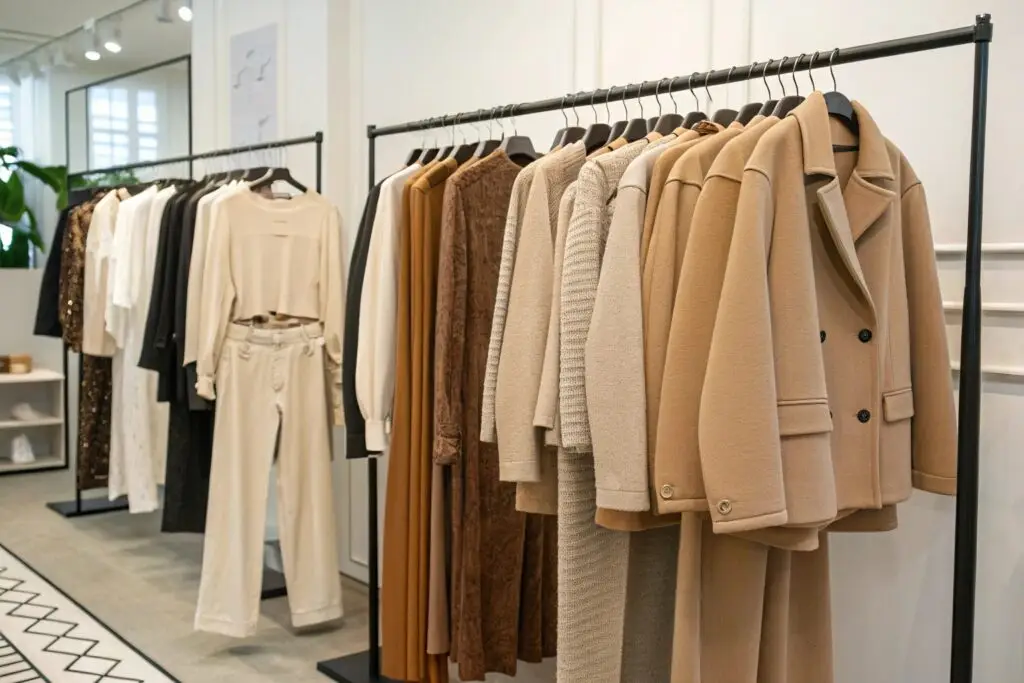
What style strategies make functional designs look high-end?
We work with three main techniques:
-
Monochrome layering
→ Choose two similar tones (e.g. cream and oat) in fluid pieces -
Structured simplicity
→ Use strong lines, clean seams, and sharp hems -
Tone-on-tone texture
→ Mix matte and sheen versions of the same color
Here’s a comparison:
| Item | Practical Base | Elevated Enhancement |
|---|---|---|
| Jersey tee | Cotton-modal | Drop shoulder, thick neck binding |
| Cargo pant | Stretch twill | Pin-tuck seam, narrow ankle |
| Overshirt | Washed cotton | Hidden placket, curved hem |
| T-shirt dress | Ribbed knit | Side slit, detachable belt |
We also add subtle luxury markers: wide hems, French seams, matte hardware, logo-free tags.
Buyers notice. One of our clients told me:
“Your pieces feel simple, but every detail feels intentional. That’s why they sell.”
How do you balance cost when upgrading practical styles?
We prioritize where it counts.
- Spend more on base fabric quality
- Choose 1–2 signature finishes (e.g. stitch detail, soft metal zip)
- Use smart construction—sometimes fewer seams = cleaner look + lower labor
Even with small changes, your capsule can stand apart.
In capsule fashion, looking effortless is the effort.
Conclusion
Balancing function and fashion doesn’t mean choosing one over the other. It means designing capsule pieces that do more—look good, feel great, and fit real life. When every piece supports both movement and style, your collection earns loyalty—not just likes.