Today’s buyers care more about comfort, self-expression, and versatility than strict gender rules. Designing only for "him" or "her" no longer meets the market.
A gender-neutral capsule collection focuses on shape, color, and styling freedom—so every piece can be worn and loved by anyone.
In this guide, I’ll share what I’ve learned helping international buyers plan inclusive, profitable capsule wardrobes that move beyond binary fashion.
Choosing Silhouettes That Work Across All Genders?
Designing for multiple body types and style identities starts with the cut. And no, “just size it up” isn’t enough.
Silhouettes that work across genders tend to be relaxed, modular, and adjustable—focused on comfort and layering, not curves.
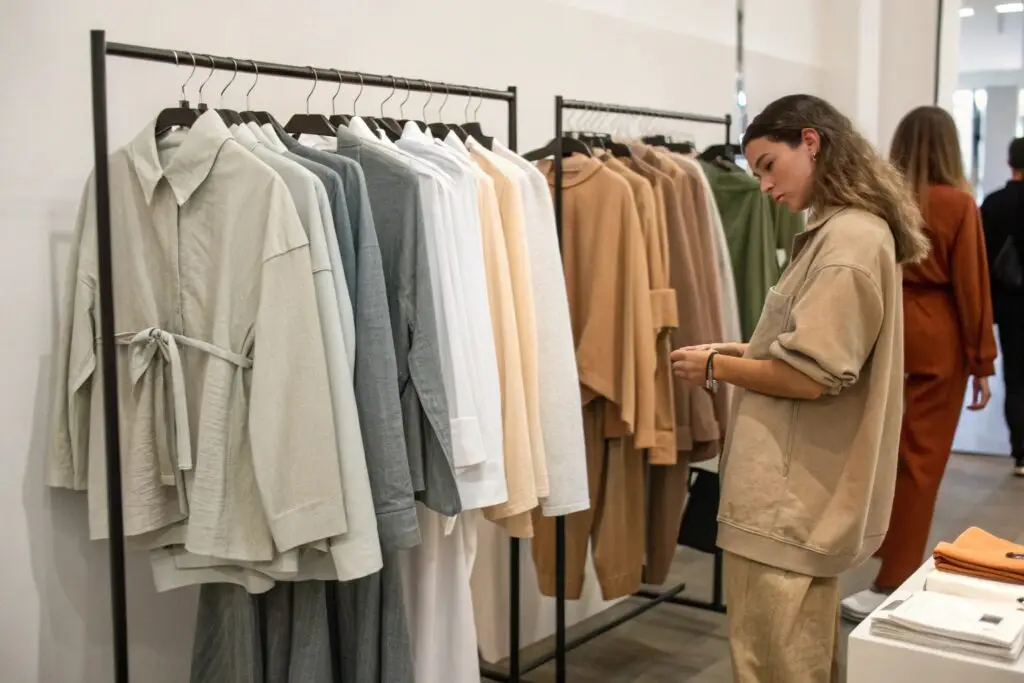
Which silhouettes offer both structure and flexibility for all body types?
The best gender-neutral designs don’t erase shape—they invite different bodies to interpret them. I recommend:
- Boxy T-shirts: no taper at the waist, longer sleeve lines
- Straight-leg trousers: elasticated waistbands, extended rises
- Shirt jackets (shackets): drop shoulders, easy fit
- Oversized button-downs: work as tunics, dresses, or shirts
- Layered vests: optional shape without gender signals
We build all these with extra room in the bust, hip, and thigh areas—but without exaggerating proportions.
| Garment | Genderless Adaptation |
|---|---|
| Oversized tee | Longer sleeves, straight hem |
| Utility trousers | Mid-rise, stretch panels, double pockets |
| Boxy knit vest | Cropped or full-length, open sides |
| Blazer jacket | Relaxed shoulders, no dart shaping |
These styles allow styling through accessories, not body fit. That’s the key to making them inclusive.
What common fit issues arise in gender-neutral designs—and how to solve them?
Three big ones:
-
Too narrow shoulders for masculine bodies
→ We add a 1.5–2cm tolerance on shoulder seams -
Too tight hips for curvier bodies
→ We build in more sweep and flexible darts at the back -
Sleeve/torso lengths feeling “off”
→ Adjustable hems, cuff tabs, and variable inseams solve that
Also: we avoid fly zippers unless needed. Side closures or elasticated waists create a smoother user experience.
Building a Palette That Supports Inclusive Styling?
Color carries powerful gender signals—often unintentionally. One wrong tone can alienate half your potential buyers.
A well-chosen palette allows self-expression without locking anyone into coded color norms—and blends easily across pieces.
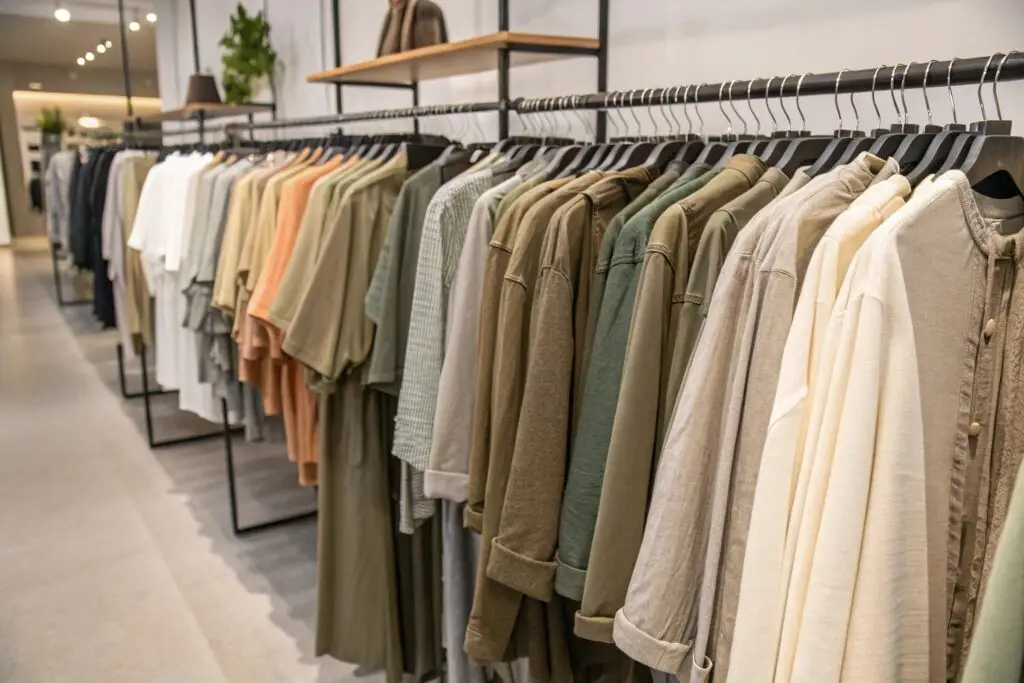
Which color combinations feel balanced, modern, and inclusive?
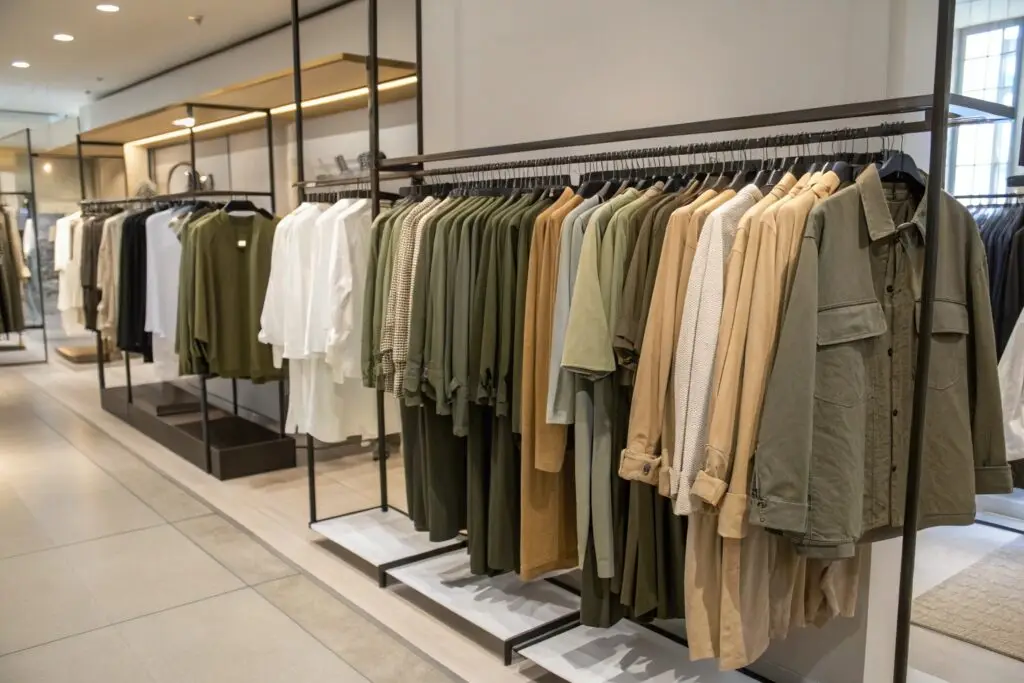
The best palettes combine earth tones, deep neutrals, and muted accents. I often start with 3 pillars:
- Dark base: charcoal, navy, stone black
- Light balance: bone, ivory, pale gray
- Soft accent: olive, clay, rust, muted lavender
These colors work on all skin tones and photograph well.
| Palette Role | Example Colors | Visual Function |
|---|---|---|
| Core Neutral | Charcoal, sand, off-white | Build wardrobe base |
| Accent Pop | Olive, brick, seafoam | Add personality |
| Crossover Tint | Lavender, steel blue | Slight warmth/coolness blend |
What we avoid: saturated primaries (too juvenile), pastels (often gendered), or heavy black-only capsules (fatigue + flat images).
How does color affect customer styling confidence?
If buyers see a pink shirt next to navy trousers, their brain labels it “feminine.” But show that same shirt with a matching clay jacket and black boots, and it’s suddenly unisex.
Color groupings teach your buyer how to wear things.
We always:
- Show neutral-to-accent transitions in lookbooks
- Avoid labeling shades by name (no “dusty rose” or “man blue”)
- Build accessories in matching tones to guide full styling
Color isn’t just visual—it’s emotional. Make people feel welcome in every shade you choose.
Key Pieces for a Unisex, Mix-and-Match Wardrobe?
Not all items in a capsule need to be completely neutral—but a core of versatile, layering-friendly pieces will do 80% of the styling work.
To build a unisex capsule wardrobe, prioritize modular tops, adjustable bottoms, and layerable outerwear that can easily mix across looks.
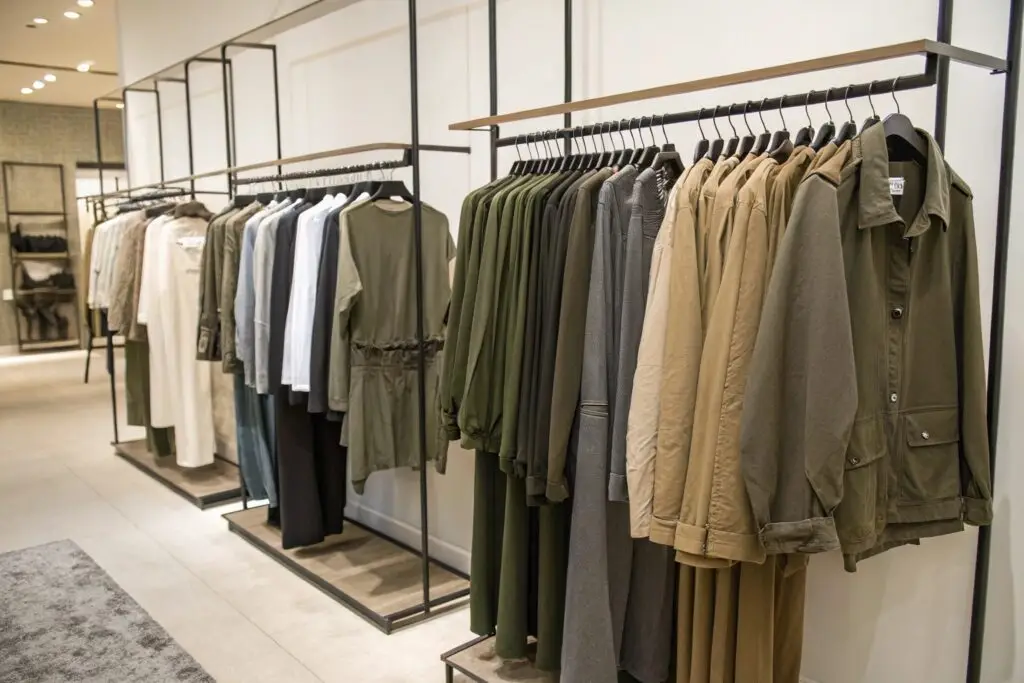
What are the “anchor” garments every gender-neutral capsule should include?
In our most successful unisex capsules, these five always appear:
- Crewneck boxy tee – build 2–3 in different base colors
- Oversized shirt – stripes or solid, worn open or tucked
- Elasticated drawstring pant – formal material, casual vibe
- Mid-weight shacket – top layer, replaces hoodies or coats
- Straight-cut shorts or skirt-pants hybrid – warm-weather ready
Optional additions:
- Ribbed tank or halter (for layer play)
- Utility vest
- Beanie or crossbody bag
Here’s a capsule combo sample:
| Top | Bottom | Layer | Final Styling |
|---|---|---|---|
| Bone boxy tee | Rust drawstring pant | Clay shacket | Sneakers, tote |
| Striped shirt | Black hybrid skirt | — | Loafers, cap |
| Lavender tank | Gray trousers | Navy shirt-jacket | Scarf, leather bag |
Each piece must work in at least 3 outfits to earn its place. That’s our rule.
How do you make accessories feel inclusive without being bland?
Details matter. Instead of bold branding, we use:
- Recycled leather or canvas textures
- Neutral metals (brushed silver, brass)
- Soft angles or geometric shapes
- Gender-free fit (adjustable caps, mid-width bags)
One of our buyers sells the same scarf in three capsules per year—just color-shifted—and always sells out.
Accessories are identity tools. Keep them adaptable and buyers will build their own look.
How to Market Gender-Neutral Capsules Effectively?
You’ve built a great capsule. But if your visual language, copy, or model choice suggests a specific gender, buyers will still sort the products that way.
Effective marketing of gender-neutral collections requires showing inclusivity at every touchpoint—without making it performative.
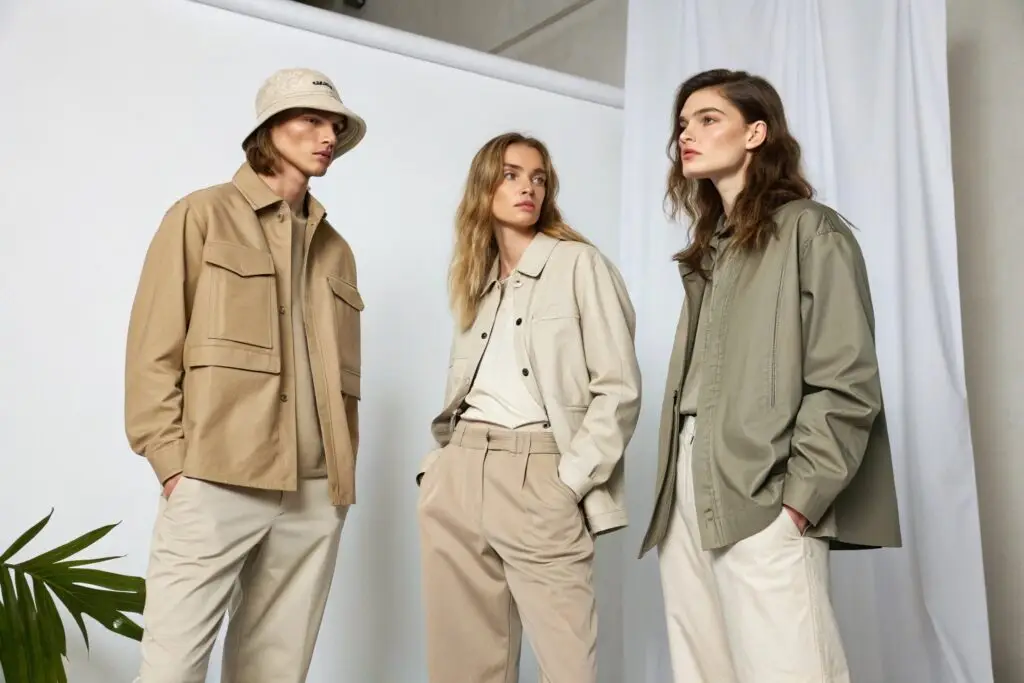
What are best practices for model selection and styling?
We use diverse models across gender expressions and body types. But we don’t frame it as “look how inclusive we are”—we let the photos speak.
Important notes:
- Style the same piece 2–3 ways
- Avoid gendered props or settings
- Choose poses that feel strong, soft, and real
Example:
A gray wide-leg trouser might be shown on:
- A broad-shouldered model with a tucked-in tee
- A curvier model with a layered cardigan
- A non-binary model wearing a loose blouse and cap
Same pant, three lives.
How should you write product copy and category descriptions?
Keep it simple, flexible, and benefits-focused.
Instead of:
“Women’s shirt with a relaxed silhouette for stylish comfort”
Use:
“Boxy-fit shirt made for layering, movement, and everyday ease”
Avoid gendered size charts. Use flat measurements or label “Regular Fit / Oversized Fit” instead of “Men’s Large” or “Women’s Medium.”
Where possible:
- Let customers filter by fit not gender
- Emphasize usage scenario: travel, work, casual
- Include testimonials from diverse users
Marketing should match your values. If the collection is truly for everyone, show that in every click and scroll.
Conclusion
Gender-neutral fashion is more than a category—it’s a mindset. By focusing on shape, comfort, color, and freedom, you build capsules that speak to how people live, not just how they look.