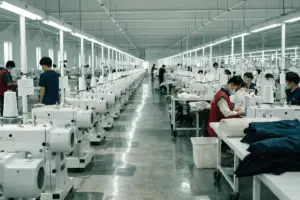
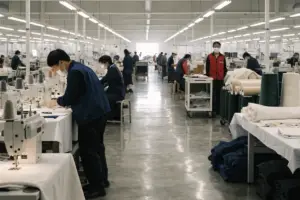
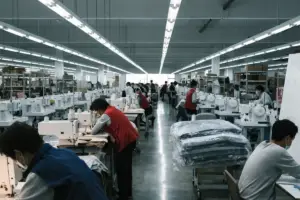
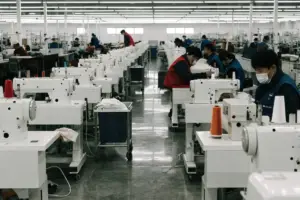
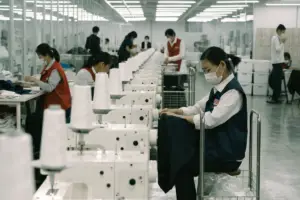
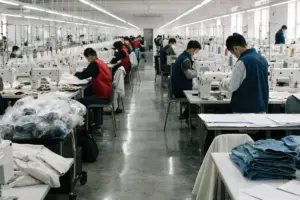
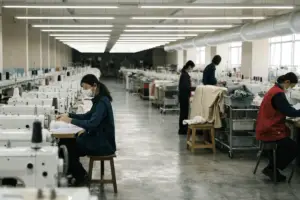
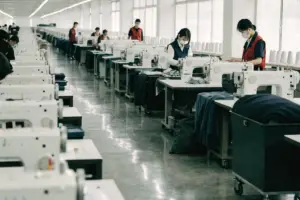
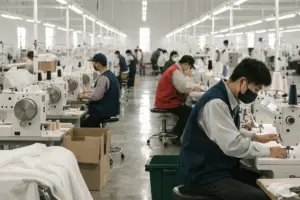
Once a hidden strength, Leicester’s garment hub became a cautionary tale—then, a catalyst for reform.
After public scrutiny and labor abuse revelations, UK fashion supply chains have undergone restructuring—driven by transparency, ethical sourcing demands, and legal accountability.
At Fumao, we’ve worked with UK buyers navigating this transformation. Sourcing isn’t just about price anymore—it’s about principles, traceability, and public trust.
How UK fashion brands improved supply chain transparency?
Pressure didn’t just come from the government—it came from customers. Brands could no longer say “we didn’t know.”
UK fashion brands improved transparency by mapping supply tiers, increasing third-party audits, joining ethical initiatives, and using digital tracking tools to trace materials and labor.

What steps have major brands taken?
- Tier 1–3 Supplier Disclosure: Publicly listing not just factories, but mills and trim providers
- Audit Intensification: Surprise inspections, worker interviews, independent bodies
- Digital Traceability1: QR-code or blockchain-backed product histories
- Commitment to Ethical Charters: Joining groups like Fast Forward, ETI, ACT
For example, brands like ASOS, Primark, and M&S now publish extensive supply chain data—something unheard of a decade ago.
How does Fumao support this for UK buyers?
- Provide traceable fabric origin reports2
- Offer factory-level audit results3 and real-time production updates
- Include batch-specific material declarations with each shipment
Transparency isn’t a burden—it’s our new baseline.
What led to the Leicester garment industry crisis?
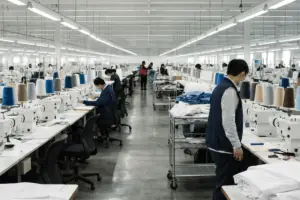
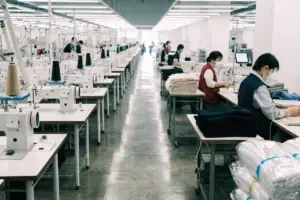
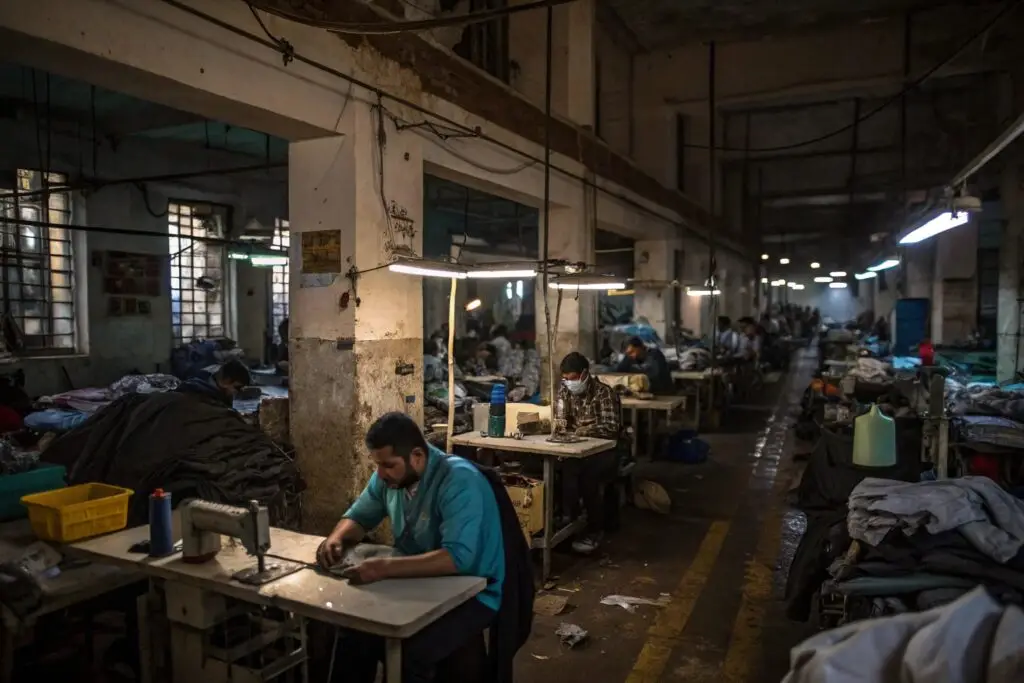
For years, Leicester’s factories were a hidden supply chain engine—until they became the face of exploitation.
The Leicester garment crisis was triggered by exposés of underpaid labor, poor conditions, and a lack of brand accountability—fueled by fast fashion’s race to the bottom.
What were the key events?
- 2020: Media reports uncovered garment workers earning as little as £3.50/hour
- Boohoo scandal4: A major supplier’s poor practices came to light, triggering national outcry
- COVID-19: Exacerbated unsafe working conditions5 and delays in payment
- Parliamentary Inquiry6: UK government launched investigations into illegal labor practices
These events forced brands to re-evaluate sourcing models—and consumers began to demand answers.
What systemic issues were revealed?
- Subcontracting chains without oversight
- Lack of enforcement for UK labor laws
- High-pressure orders with low pricing and impossible timelines
- No formal compliance tracking in many domestic factories
The crisis didn’t just shake Leicester—it reshaped UK sourcing logic.
Is ethical sourcing reshaping UK apparel manufacturing?
Yes—and now, ethical sourcing isn’t just a PR play. It’s reshaping how and where clothing gets made.
Ethical sourcing is pushing UK manufacturers to invest in legal labor, better wages, transparent contracts, and digital accountability—restoring trust in local production.

What changes are being made at the factory level?
- Employment contracts with living wages and full benefits
- On-site audits with photographic proof and staff interviews
- Time-stamped production logs7 and GPS-verified location sharing
- Clear buyer–vendor terms: No last-minute PO changes or payment delays
Factories in Leicester and beyond are now marketing their compliance8—as a feature, not a cost.
How does this affect sourcing decisions?
| Before Crisis | Post-Crisis Reforms |
|---|---|
| Speed above all | Speed + traceability |
| Cheap labor, no questions | Legal labor, audited vendors only |
| Verbal agreements | Formal contracts + penalty clauses |
| Local = safe assumption | Local = verified assumption |
We advise clients to now layer UK production with overseas sourcing—using British capacity for compliant, limited-run SKUs that require full traceability.
What role does fast fashion play in UK supply chain reform?
Ironically, fast fashion sparked the problem—and may now push the solution.
Fast fashion’s demand for speed and volume exposed labor abuses, but it’s also driving investment in tech-enabled, ethical, domestic production as part of a cleaner brand identity.

How are fast fashion brands adjusting?
- Moving some production to audited UK microfactories9
- Investing in modular product lines that reduce SKU overload
- Launching “Made Ethically” labels with verified suppliers
- Introducing price transparency tools10 for consumer education
Boohoo, once the center of scandal, is now piloting on-shore units with full compliance reporting.
Other brands are following:
- PrettyLittleThing released a traceability pledge
- ASOS rolled out ESG-linked supplier scorecards
- New Look committed to digital chain-of-custody logs by 2026
Can fast fashion really be ethical?
Only if:
- Orders match capacity
- Prices support legal wages
- Brands commit to continuity, not one-off press wins
At Fumao, we build long-term partnerships—not hit-and-run POs. That’s the only way sourcing becomes sustainable.
Conclusion
The Leicester crisis exposed painful truths—but it also sparked overdue reform. UK fashion supply chains are rebuilding with transparency, ethics, and accountability at their core. At Fumao, we’re proud to support clients who treat traceability not as a trend—but as the foundation for doing business right.
-
Explore how digital traceability enhances transparency and accountability in supply chains, ensuring ethical practices. ↩
-
Discover the significance of traceable fabric origin reports in promoting sustainable and ethical sourcing in the fashion industry. ↩
-
Learn about the importance of factory-level audits in maintaining ethical standards and improving supply chain transparency. ↩
-
Exploring this link will provide insights into the Boohoo scandal’s implications for labor rights and industry practices. ↩
-
Understanding the consequences of unsafe working conditions can highlight the urgent need for reform in labor practices. ↩
-
This resource will shed light on the government’s response to labor violations and the future of garment industry regulations. ↩
-
This link will help you understand the importance of time-stamped logs in ensuring accountability and traceability in production. ↩
-
Exploring this resource will provide insights into how compliance marketing can enhance factory reputation and attract clients. ↩
-
Explore how audited UK microfactories are transforming the fast fashion industry and ensuring ethical production practices. ↩
-
Discover the importance of price transparency tools in educating consumers about ethical fashion pricing. ↩