When I first started my clothing brand, I chose the wrong printing method. My customers soon complained about faded designs, and I faced frequent returns. To avoid these costly mistakes, what are the different methods of apparel printing available?
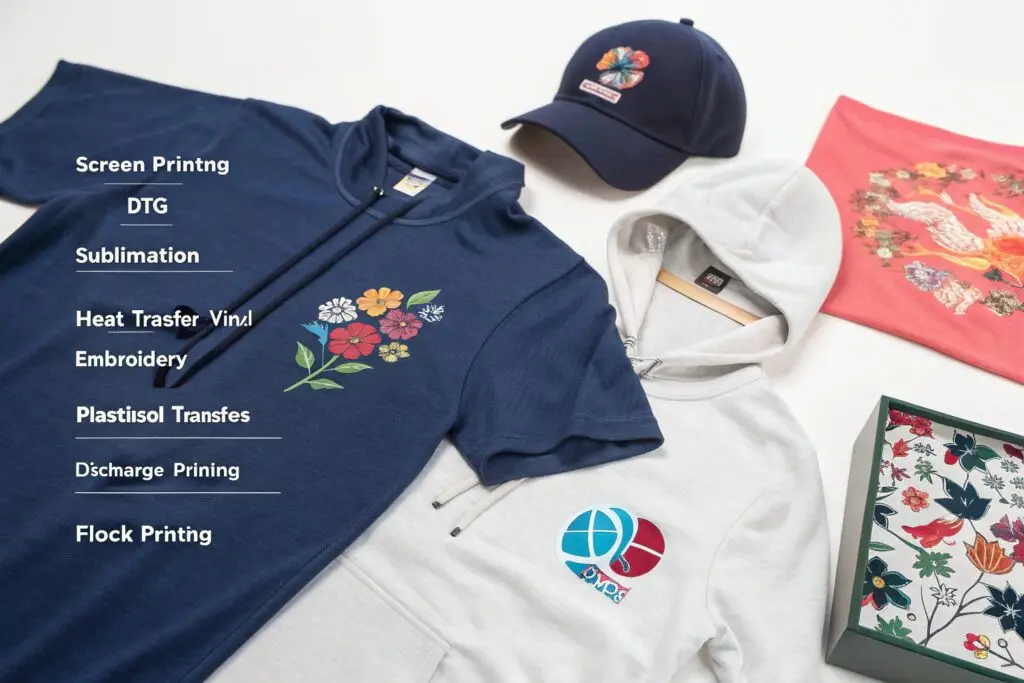
The most popular apparel printing methods include screen printing, direct-to-garment (DTG), sublimation, heat transfer vinyl (HTV), embroidery, plastisol transfers, discharge printing, and flock printing. Each technique suits different types of fabrics, quantities, and design complexities, significantly influencing print quality and durability.
Understanding the different apparel printing methods helps me pick the right option, ensuring customer satisfaction and reducing unnecessary costs. Let's dive deeper into these methods and their ideal uses.
What Are the Methods of Garment Printing?
When I misunderstood the available printing methods, the wrong choice cost me time, money, and customer loyalty. What exactly are the most common garment printing methods, and how do they differ?
Common garment printing methods include screen printing, DTG, sublimation, heat transfer vinyl (HTV), embroidery, discharge printing, plastisol transfers, and flock printing. Screen printing and DTG are widely used for T-shirts, sublimation for polyester garments, and embroidery for premium branding.
How does screen printing differ from DTG printing?
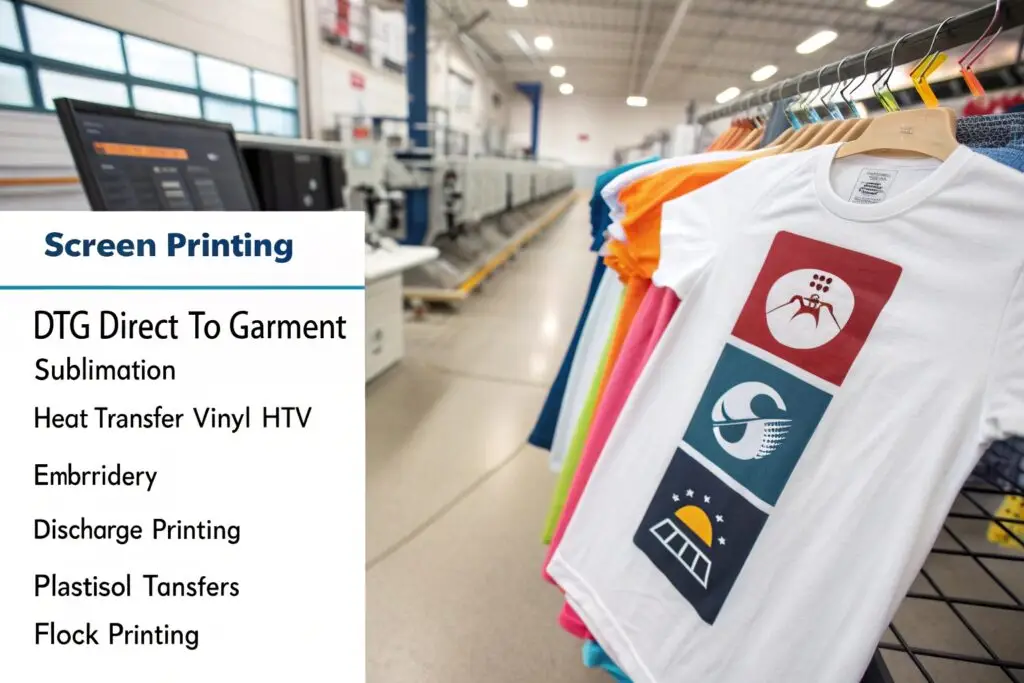
Screen printing involves pressing ink through a mesh stencil onto fabric. It's great for bulk production. DTG, however, uses inkjet printers to print directly onto garments and suits smaller, detailed orders.
| Printing Method | Ideal Quantity | Durability | Ideal Designs |
|---|---|---|---|
| Screen Printing | 50+ | High | Simple, fewer colors |
| DTG Printing | 1–50 | Medium | Complex, photographic prints |
When should I choose embroidery for garments?
Embroidery stitches logos and designs onto garments using thread, offering high durability and a premium look. It's ideal for:
- Corporate uniforms
- Hats, polos, jackets
- Premium branding that requires durability and professional appearance
What Are the 8 Types of Printing Methods?
Initially, I underestimated the importance of knowing different apparel printing techniques. Selecting the wrong method can damage my brand reputation. So, what exactly are the eight common apparel printing methods?
The eight popular types of apparel printing methods include screen printing, direct-to-garment (DTG), sublimation, heat transfer vinyl (HTV), embroidery, plastisol transfers, discharge printing, and flock printing. Each method offers unique benefits and suits different apparel applications.
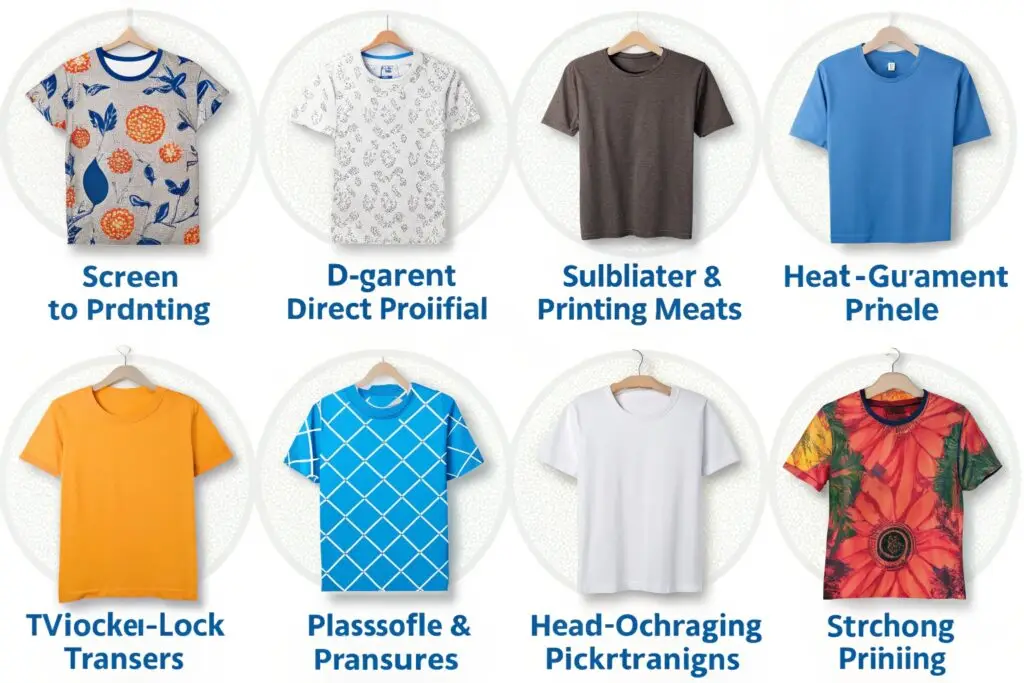
Quick summary of the 8 apparel printing methods:
| Method | Best Application | Durability |
|---|---|---|
| Screen Printing | Bulk orders, simple designs | High |
| DTG Printing | Small batches, detailed designs | Medium |
| Sublimation | Polyester apparel, sportswear | Very High |
| Heat Transfer Vinyl | Personalized apparel, small runs | Medium |
| Embroidery | Premium garments, professional branding | Very High |
| Plastisol Transfers | Small-medium orders, vibrant prints | Medium-High |
| Discharge Printing | Dark garments, vintage effects | High |
| Flock Printing | Textured designs, specialty apparel | Medium |
What makes sublimation printing unique?
Sublimation printing uses heat to transfer dye onto polyester fabrics, embedding ink into fabric fibers. Advantages include:
- Permanent prints with vibrant colors
- Perfect for sportswear and activewear
- Excellent print quality that doesn't fade or peel
What Are the Four Most Common Methods of Textile Printing?
My early mistakes taught me the importance of focusing on the most common methods. Not knowing which ones were widely used hurt my business decisions. What exactly are the four most widely used textile printing methods?
The four most common textile printing methods are screen printing, direct-to-garment (DTG) printing, sublimation printing, and heat transfer vinyl (HTV). Screen printing remains the industry standard for bulk apparel printing, while DTG is ideal for detailed designs and smaller quantities.
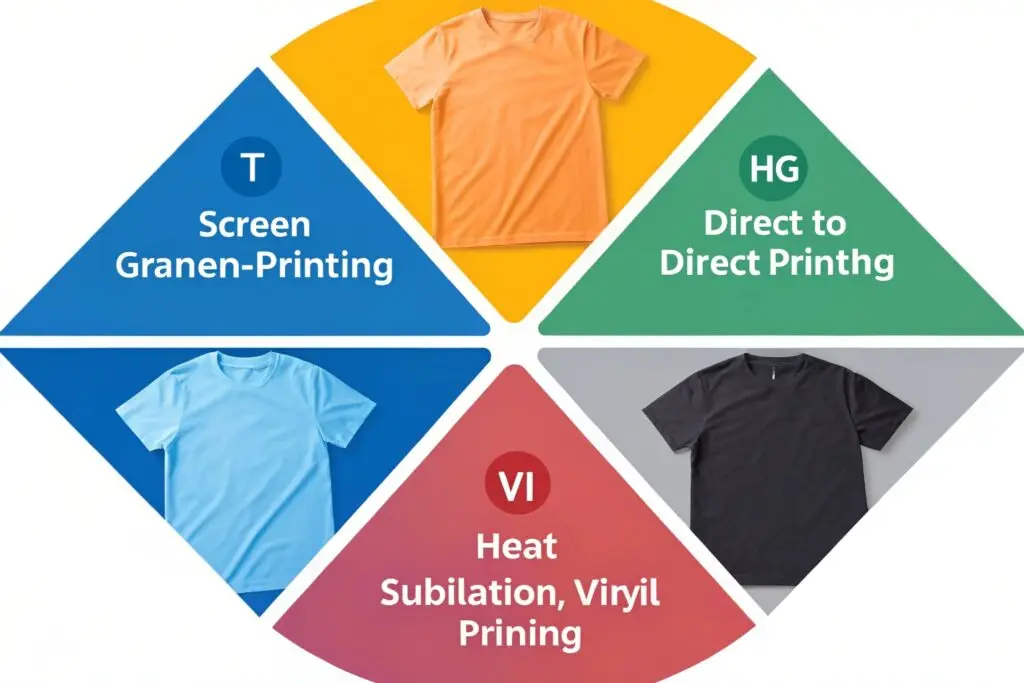
How do these four methods compare?
Here's a clear comparison based on practical experience:
| Method | Cost Effectiveness | Ideal Quantity | Print Quality |
|---|---|---|---|
| Screen Printing | High (bulk) | Large orders | Very Good |
| DTG Printing | Medium | Small orders | Excellent |
| Sublimation | Medium | Small-Medium | Excellent |
| Heat Transfer Vinyl | Medium | Small batches | Good |
When should I choose heat transfer vinyl (HTV)?
HTV uses heat to press vinyl onto garments. It's excellent for:
- Customized single pieces or small batches
- Names and numbers on sports jerseys
- Short-term promotional apparel
What Is the Best Printing Method for Clothes?
Initially, my unclear choice of printing method led to disappointed customers. The question became clear: What is truly the best printing method to use for clothes?
Screen printing is generally considered the best method for printing on clothes, especially for bulk orders, due to its affordability, durability, and vibrant print quality. DTG printing is ideal for detailed designs and small orders, while sublimation suits polyester fabrics best.
Why does screen printing remain the most popular?
Screen printing continues to be widely preferred for several reasons:
- Cost Efficiency: Extremely affordable for bulk orders
- Vibrant Colors: Excellent print quality and durability
- Versatility: Effective on various fabrics, primarily cotton and blends
When is DTG the better choice?
DTG printing provides several advantages when screen printing isn’t ideal:
- Detailed Artwork: Complex, photographic designs print clearly
- Smaller Orders: Cost-effective for limited runs or custom pieces
- Quick Turnaround: Less setup time than screen printing
Understanding when to switch to DTG helped me better serve specific customers and orders.
Conclusion
Selecting the right apparel printing method significantly impacts product quality, cost-efficiency, and brand reputation. Screen printing offers excellent value for large batches, while DTG and sublimation cater to specialized or detailed designs. Clearly understanding these methods ensures satisfied customers and profitable operations.