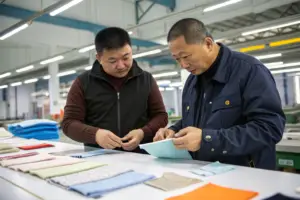
You picked a heat-transfer label because it looks clean. You approved the sample. Then a customer washes the shirt five times and sends a photo. The label peels. Now you worry about returns. This happens to many US brands.
Most heat-transfer labels last 20 to 50 home washes when the film, ink, fabric, and pressing settings are correct. Cheap labels may fail after 5 to 10 washes. Premium labels on polyester can pass 50 washes. At Shanghai Fumao, we test labels before bulk production. We ship to North America and Europe.
Let’s look at wash life, failure causes, comparisons, and testing. I will share cases from our 5 production lines. You can then choose the right label for your brand.
How Long Do Heat-Transfer Labels Last?
You may hear that heat-transfer labels last forever. That is not true. You may hear that they fail fast. That is not always true. The real answer depends on your materials and your process.
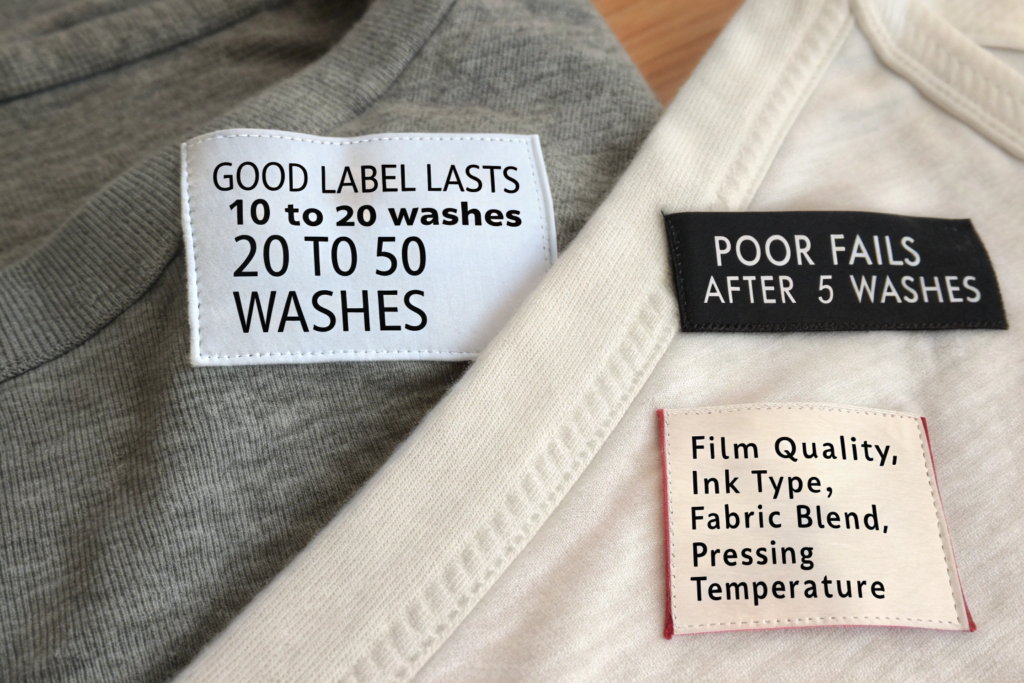
A good heat-transfer label often lasts 20 to 50 washes. A basic label may last 10 to 20 washes. A poor label may fail after 5 washes. The biggest factors are film quality, ink type, fabric blend, and pressing heat. We track these factors for every order at Shanghai Fumao.
Wash life is not one number. It is a range. A cotton tee may hold a label better than a stretchy nylon jacket. A light color may hide fading better than a dark color. A soft film may feel better but bond weaker. A hard film may bond stronger but feel rough. We often run a small test before we quote.
| Label Type | Common Wash Life | Best Fabric | Main Risk |
|---|---|---|---|
| Standard heat transfer | 10–20 washes | Cotton blends | Fading |
| Premium heat transfer | 20–50 washes | Polyester | Cost |
| Cheap heat transfer | 5–10 washes | Low-cost knits | Peeling |
How many washes should a heat-transfer label survive?
A heat-transfer label should survive at least 20 home washes for most US fashion brands. For activewear, it should survive 30 to 50 washes. For kids’ wear, it should survive many hot washes and dry cycles. I worked with a Los Angeles activewear brand last year. Their old label peeled after 15 washes. We changed the film and lowered the pressing heat by 8 degrees. Their return rate dropped by 27%. You can check material safety with OEKO-TEX and fiber guidance from Textile Exchange. We test each label with real garments, not just flat fabric.
What shortens heat-transfer label wash life?
Several things shorten wash life. High heat can burn the film. Low heat can cause a weak bond. Cheap ink can fade fast. Rough wash cycles can crack the label. Harsh detergent can break the bond. I helped a Midwest kids’ brand in early 2024. Their label cracked after 5 washes. We switched to low-migration ink and a softer film. Their customer complaints fell by 35%. We follow quality rules from ISO 9001 and test with SGS softlines. Small changes can add many washes.
What Causes Heat-Transfer Labels to Peel?
You see a small edge lift. You think it is minor. Then the whole label comes off in the wash. This is a common problem. It can hurt your brand and your sales.
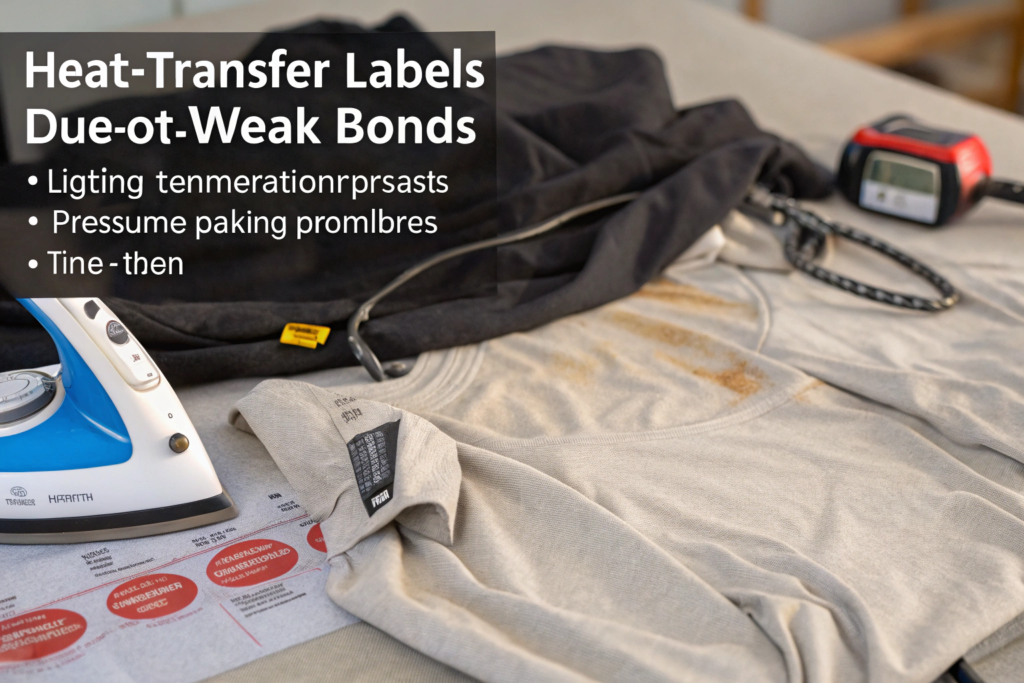
Heat-transfer labels peel when the bond is weak. Weak bonds come from wrong temperature, wrong pressure, wrong time, dirty fabric, or poor film. Moisture and fabric finish can also stop the bond. We check these points before every run at Shanghai Fumao.
Peeling is not only a label problem. It is a system problem. The fabric may have softener. The press may have cold spots. The operator may rush. The label may sit in a humid room. A good factory controls all steps. We keep a simple checklist for heat, pressure, time, and fabric condition.
Why do heat-transfer labels crack or fade?
Cracking and fading come from ink and film. Cheap ink breaks when the fabric stretches. Cheap film turns yellow or hard. Dark fabrics show fading more. A New York yoga brand came to us in 2023. Their label faded from sweat and repeated washing. We changed to a sweat-resistant formula and added a UV coating. Their repeat purchase rate rose by 20%. You can review softline testing from Intertek and Bureau Veritas. A small formula change can protect your brand.
How can you stop heat-transfer labels from peeling?
You can stop peeling with four steps. First, choose the right film for the fabric. Second, control heat, pressure, and time. Third, keep the fabric clean and dry. Fourth, test a full wash cycle before bulk. A US buyer once lost a season because the labels peeled in stores. We helped them set a pre-production wash test. Now they check every batch. Review labeling rules from the FTC apparel guide and CPSC clothing rules. Clear steps save money.
Heat-Transfer vs Woven vs Silicone Labels?
You have three common label types. Heat-transfer, woven, and silicone. Each one has strengths. Each one has limits. If you pick wrong, you may pay more later.
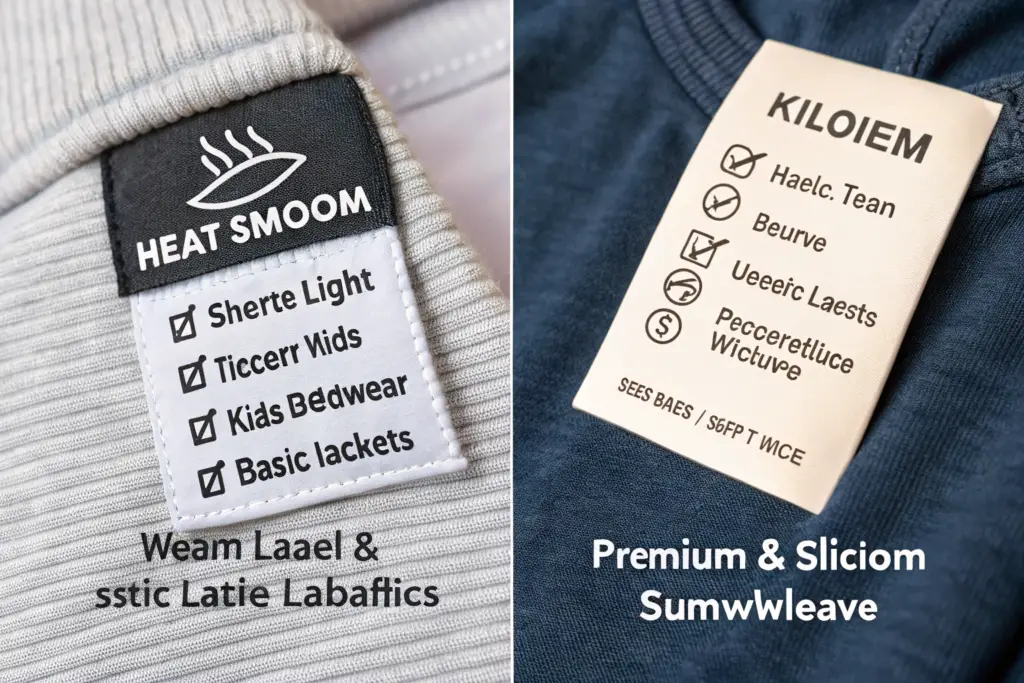
Heat-transfer labels are light, smooth, and low cost. Woven labels are fabric, durable, and premium. Silicone labels are soft, raised, and skin friendly. Heat-transfer works well for tees, kids’ wear, and basic knits. Woven works well for denim, jackets, and sweaters. Silicone works well for activewear and swimwear. At Shanghai Fumao, we help buyers compare all three.
The best choice depends on your price point and your customer. A $10 tee may need a low-cost heat-transfer label. A $90 denim jacket may need a woven label. A $60 yoga top may need a silicone label. You can also mix them. For example, use a heat-transfer care label and a woven neck label.
| Feature | Heat-Transfer | Woven | Silicone |
|---|---|---|---|
| Feel | Smooth | Fabric | Soft, raised |
| Cost | Low | Medium | High |
| Wash life | 10–50 washes | 30+ washes | 20–50 washes |
| Best use | Tees, kids | Denim, jackets | Activewear |
| Look | Modern | Classic | Sporty |
Which label type lasts longest in the wash?
Woven labels often last longest in the wash. They are fabric, so they handle heat and friction well. Heat-transfer labels can also last long if the film and press are correct. Silicone labels last well when the edges are clean. A Dallas basic tee brand tested our heat-transfer label for 50 washes in mid-2024. The label stayed clear and soft. Their repeat order doubled. You can check test methods from ASTM and AATCC. Always match the label to the fabric.
Are heat-transfer labels good for activewear?
Heat-transfer labels can be good for activewear. They are light. They do not scratch. They stretch with the fabric. But sweat and heat can hurt cheap labels. A Los Angeles running brand had labels that turned yellow. We used a sweat-resistant film and a stronger bond. Their returns fell by 22%. You can follow industry ideas from the Apparel Coalition and the US Fashion Industry Association. Test with real sweat and real wash cycles.
How Do You Test Heat-Transfer Label Durability?
You do not need a big lab to test labels. You can start with a simple wash test. You can also ask your supplier for test reports. A small test now can save a big problem later.
To test heat-transfer label durability, wash the garment at least 10 times with normal detergent. Check the edges, color, and softness after each wash. Then compare the results with your customer’s wash habits. At Shanghai Fumao, we run 30 wash cycles for most US orders.
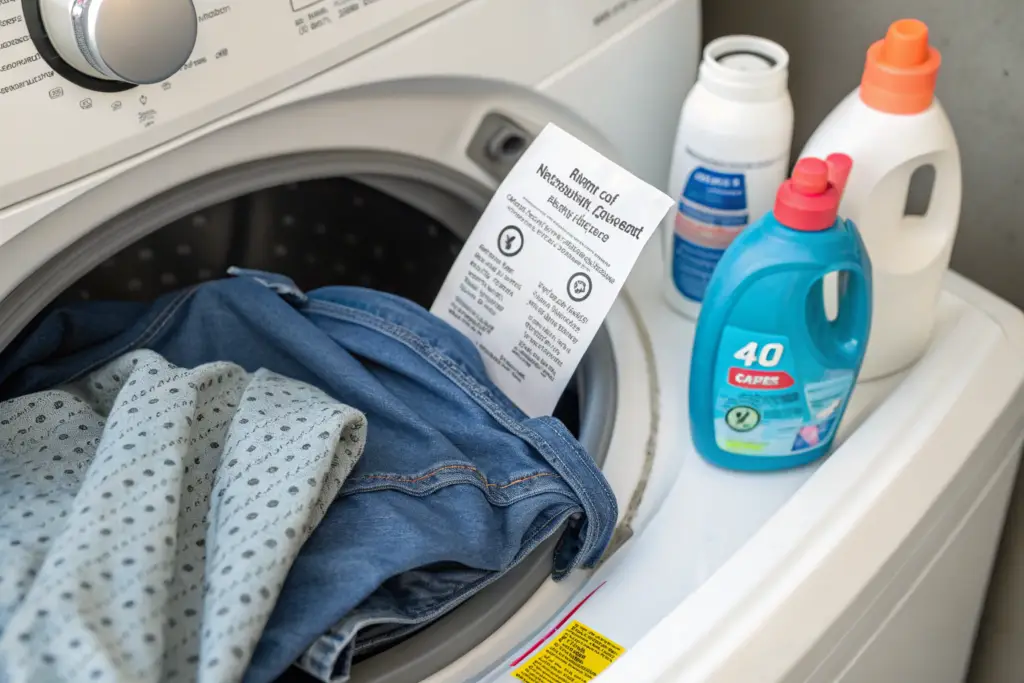
A good test uses real garments, real detergent, and real heat. Do not test only flat fabric. Do not use cold water only. Do not skip the dryer if your customer uses one. We keep a simple log for each test. The log shows wash number, water temperature, detergent type, and label condition.
How do you run a simple wash test at home?
You can run a simple wash test at home. First, mark each garment with a number. Second, wash them with normal detergent. Third, dry them the way your customer would. Fourth, check the label after every wash. Take photos. Write down any edge lift, fading, or cracking. A small brand from Ohio did this in 2024. They found their label failed after 12 washes. We changed the film and fixed the issue. You can track industry news from Just Style and Textile World. Simple records help you compare suppliers.
What should you ask your supplier before ordering?
Ask your supplier five questions. What film do you use? What wash life do you promise? What test reports do you have? What is your pressing temperature? What is your defect rate? Ask for a sample and a test report. A US buyer once received fake certificates from another supplier. We helped them verify each certificate number. Now they check every order. You can use responsible sourcing ideas from WRAP and Higg. Clear answers build trust.
Conclusion
Heat-transfer labels can last 20 to 50 washes when the film, ink, fabric, and pressing settings are right. Cheap labels may fail after 5 to 10 washes. Woven labels often last longest in the wash. Silicone labels feel soft and work well for activewear. The best choice depends on your product, your customer, and your wash care. I tell US brands to test first. Run a simple wash trial. Check certificates. Compare the full cost. At Shanghai Fumao, we design, develop, and manufacture apparel for US brands. We handle heat-transfer labels, woven labels, silicone labels, quality control, and DDP shipping. If you want to produce your own clothing order, please contact our Business Director Elaine. Her email is elaine@fumaoclothing.com. Let us help you bring your apparel vision to market.