The fashion industry is one of the most energy-intensive sectors, and buyers are under pressure to reduce their carbon footprint across the supply chain. Traditional factories often rely heavily on fossil fuels, which increases greenhouse gas emissions. U.S. and European buyers are now prioritizing suppliers that align with their sustainability goals.
Solar-powered garment factories offer a cleaner, more efficient, and future-proof production model. They reduce energy costs, meet regulatory requirements, and attract eco-conscious consumers.
As a manufacturer, I have seen a surge in interest from international buyers asking whether our facilities use renewable energy. Let’s explore why solar power is becoming a competitive advantage in apparel sourcing.
What Are Solar-Powered Garment Factories?
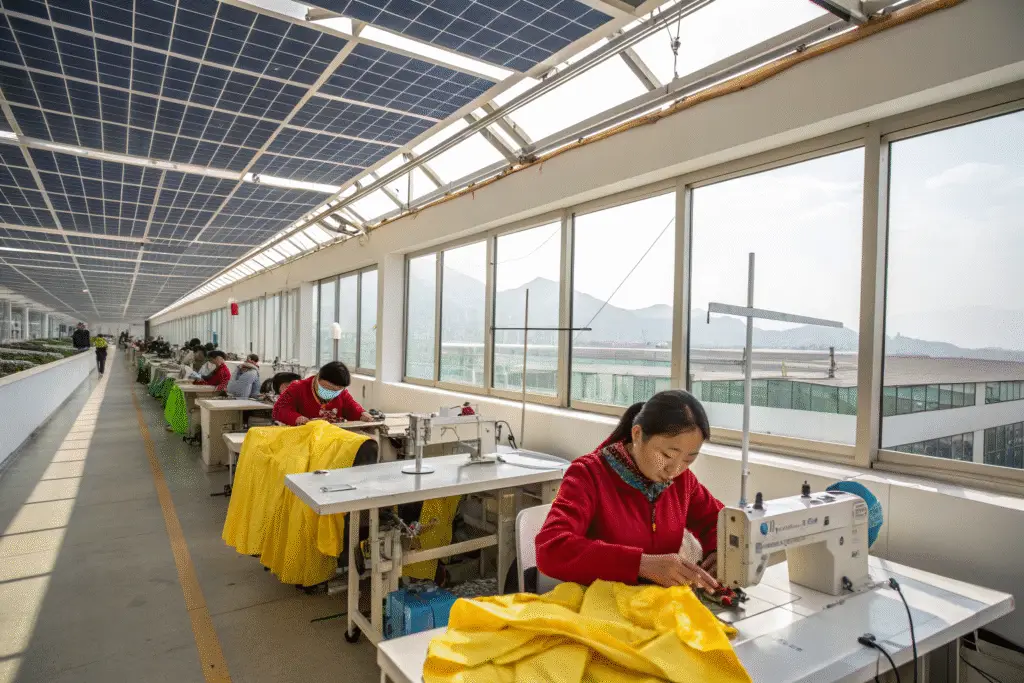
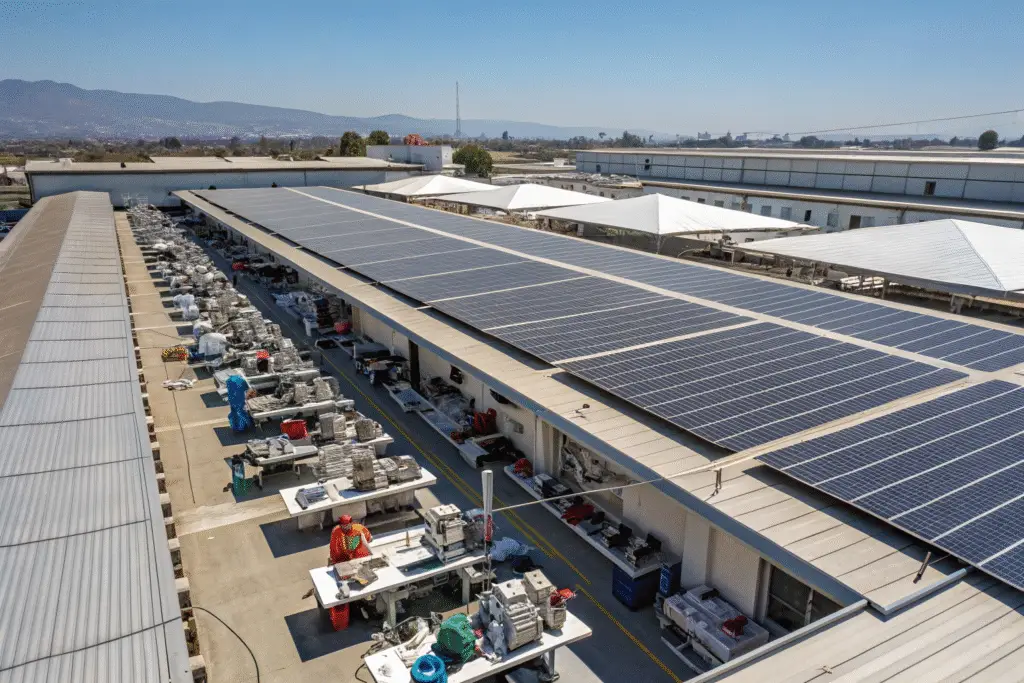
Solar-powered garment factories are facilities that generate electricity from photovoltaic (PV) solar panels to run their production lines, lighting, and operations.
They integrate renewable energy into apparel production, making the supply chain greener and more efficient.
How Do They Work?
Solar panels capture sunlight and convert it into electricity that powers sewing machines, dyeing units, and lighting systems. In some cases, factories use hybrid systems combining solar with grid electricity to ensure stable production. More details are available from SolarPower Europe.
Why Are They Important?
Because energy is one of the highest cost and environmental burdens in apparel production. According to Textile World, switching to solar reduces operating costs and carbon emissions significantly.
How Do Solar-Powered Factories Support Sustainability?
Sustainability is the main driver of solar-powered adoption. Buyers want to ensure that the factories they partner with follow low-impact, eco-friendly production.
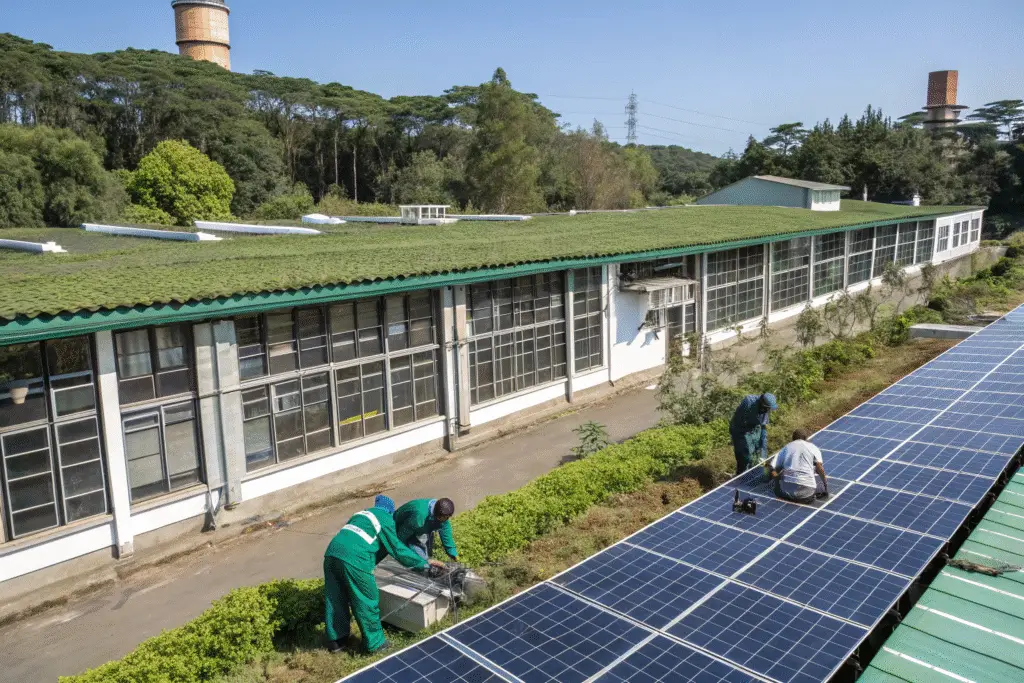
Solar-powered factories cut emissions, reduce dependency on fossil fuels, and support certifications.
Do They Reduce Carbon Emissions?
Yes. By using renewable electricity, factories can cut CO₂ emissions by up to 40–60%. This directly helps buyers achieve Scope 3 sustainability targets. Reports from Sustainable Apparel Coalition confirm that renewable energy is a key factor in apparel supply chain decarbonization.
Can They Support Certifications?
Absolutely. Using solar power helps factories comply with certifications like OEKO-TEX STeP and LEED, which assure buyers of sustainable and responsible production practices.
What Are the Business Advantages for Buyers?
Beyond environmental benefits, solar-powered factories create clear business advantages for buyers.
They offer stable pricing, brand value improvement, and risk reduction.

Do They Lower Energy Costs?
Yes. Once installed, solar systems drastically reduce electricity bills, meaning suppliers can offer buyers more competitive pricing. According to Fibre2Fashion, long-term cost savings from solar integration are passed down to clients.
How Does It Improve Brand Value?
Sourcing from solar-powered factories allows brands to promote their commitment to renewable energy. This boosts consumer trust and enhances marketing. Insights from Business of Fashion show that eco-driven marketing strengthens consumer loyalty.
Where Can Buyers Find Solar-Powered Suppliers?
Locating reliable solar-powered suppliers requires research and partnerships with certified factories.
Buyers can source them through trade shows, sustainability platforms, and direct supplier connections.
Which Countries Lead in Solar-Powered Apparel Production?
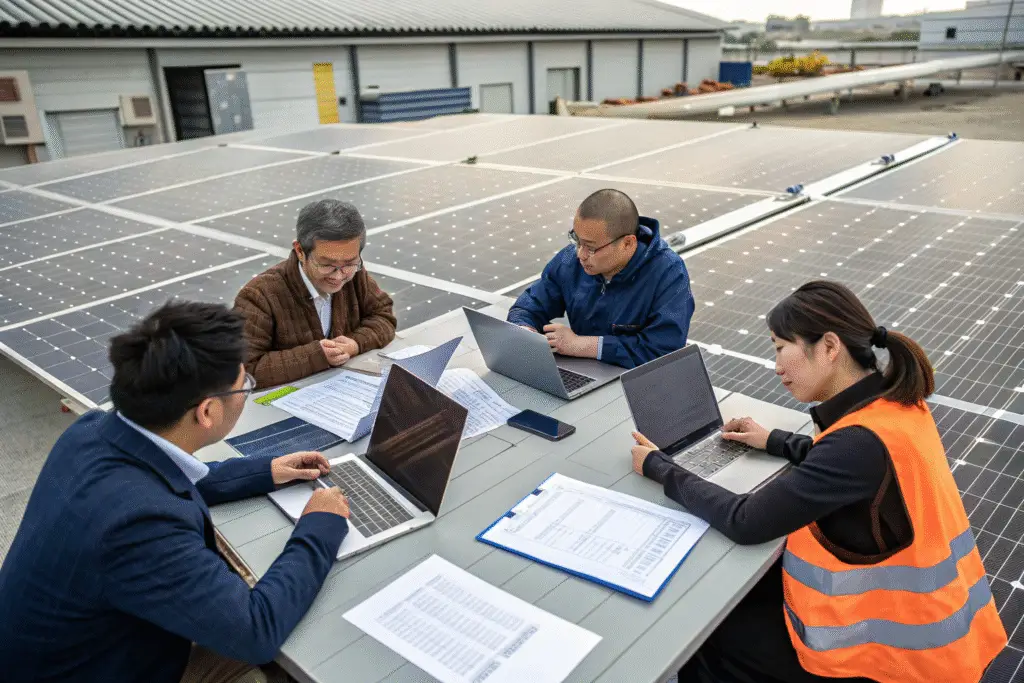
China, India, and Bangladesh are scaling solar garment production due to government incentives. Reports from Clean Energy Asia highlight rapid adoption in Asian textile hubs.
Can Buyers Use Digital Platforms?
Yes. Platforms like Fibre2Fashion and Alibaba list suppliers with renewable energy credentials. Buyers also connect through sustainability-focused expos like Techtextil.
What Is the Future of Solar-Powered Apparel Production?
Solar energy adoption in apparel will only accelerate in the coming years.
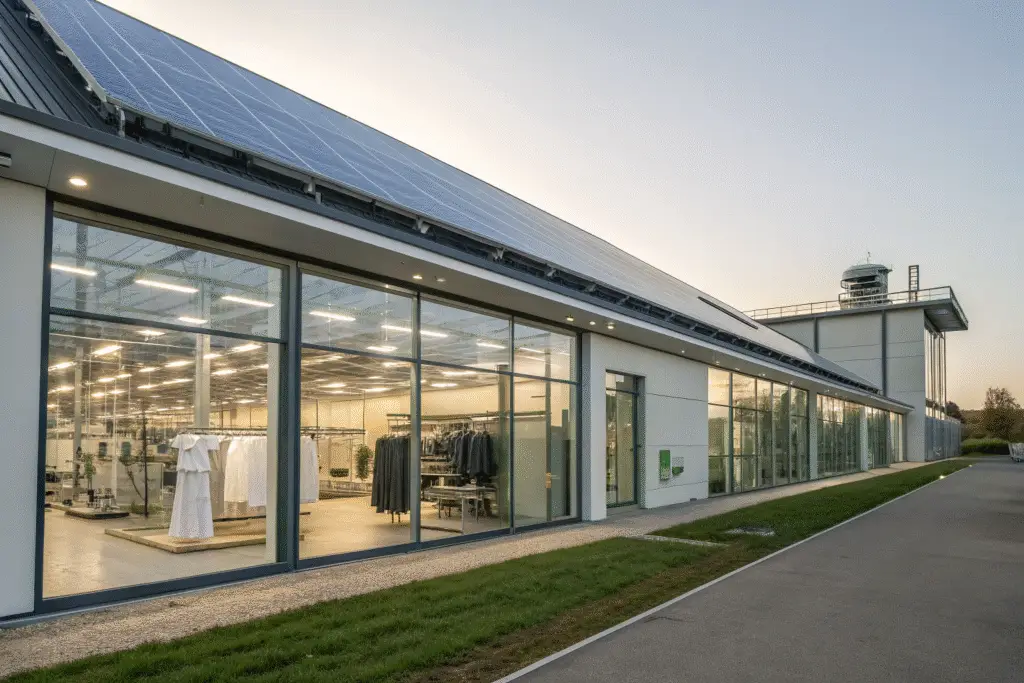
The future points to larger-scale adoption, government incentives, and integration with smart energy systems.
Will Solar Power Become Industry Standard?
Yes. With stricter carbon regulations in the EU and U.S., solar-powered suppliers will become the preferred choice. According to Vogue Business, renewable-powered factories will soon be mandatory for premium buyers.
How Will Technology Improve?
Smart grids, battery storage, and AI-driven energy management will make solar even more reliable. Research in Journal of Cleaner Production confirms that advanced solar systems will shape the next generation of apparel factories.
Conclusion
Solar-powered garment factories are more than an eco-upgrade—they are a competitive advantage. They reduce costs, improve sustainability credentials, and future-proof supply chains. For U.S. and European buyers, sourcing from solar-driven suppliers ensures alignment with market expectations and consumer values.
As a Chinese apparel manufacturer, I encourage buyers to explore solar-powered sourcing for their clothing lines. If you are ready to partner with a sustainable and reliable factory, we at Shanghai Fumao are here to support you. Please contact our Business Director Elaine at elaine@fumaoclothing.com to begin your eco-friendly apparel journey.