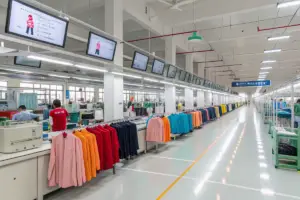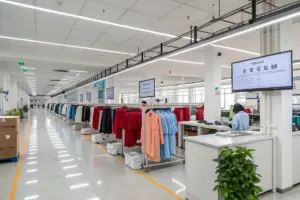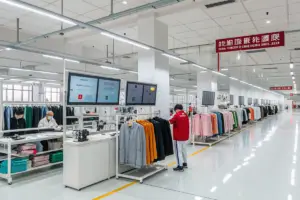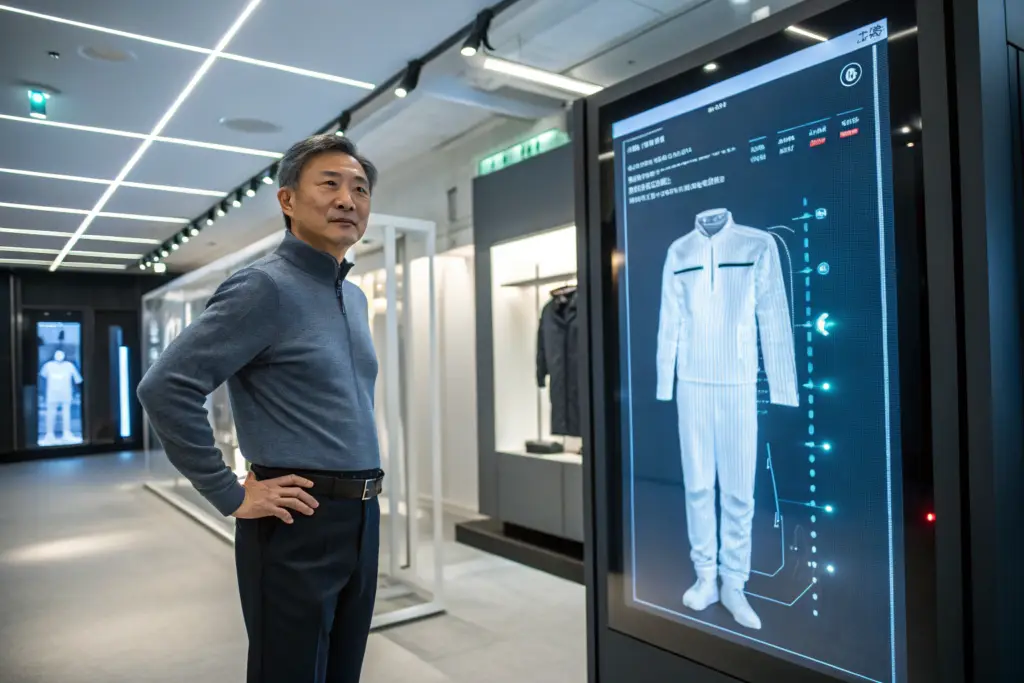
You have a sample. You put it on a fit model. You look at it. You see wrinkles. You see pulling. You make adjustments. You send it back. The next sample is better. But it still needs work. You go through multiple rounds. Each round takes weeks. Each round costs money. I have seen this process take months. But there is a faster way. Artificial intelligence is changing how we fit garments. It does not replace the fit model. It enhances the process. It makes it faster. It makes it more accurate.
Based on our experience integrating AI into our sample development process, AI can reduce fitting time by 40% to 60%. AI analyzes the garment on a digital avatar. It identifies fit issues. It suggests adjustments. It predicts how the garment will fit on different body types. For example, last year we worked with a brand from Los Angeles. They had a fitted dress that required 5 physical fit rounds. The process took 3 months. We used AI to analyze the first sample. The AI identified that the bust dart was too high and the waist was too tight. The pattern maker made the adjustments. The second physical sample was perfect. The brand saved 2 months of development time. That is the power of AI in fitting.
So, how can AI assist in the garment sample fitting process? Let me break it down. I will explain what AI fitting is. I will show you how it works. I will discuss the benefits. And I will give you a framework for integrating AI into your fitting process.
What Is AI-Assisted Fitting?
AI-assisted fitting is not just a 3D model. I remember a client from New York. They had a 3D model. They thought it was AI. It was not. The model showed the garment. But it did not analyze the fit.
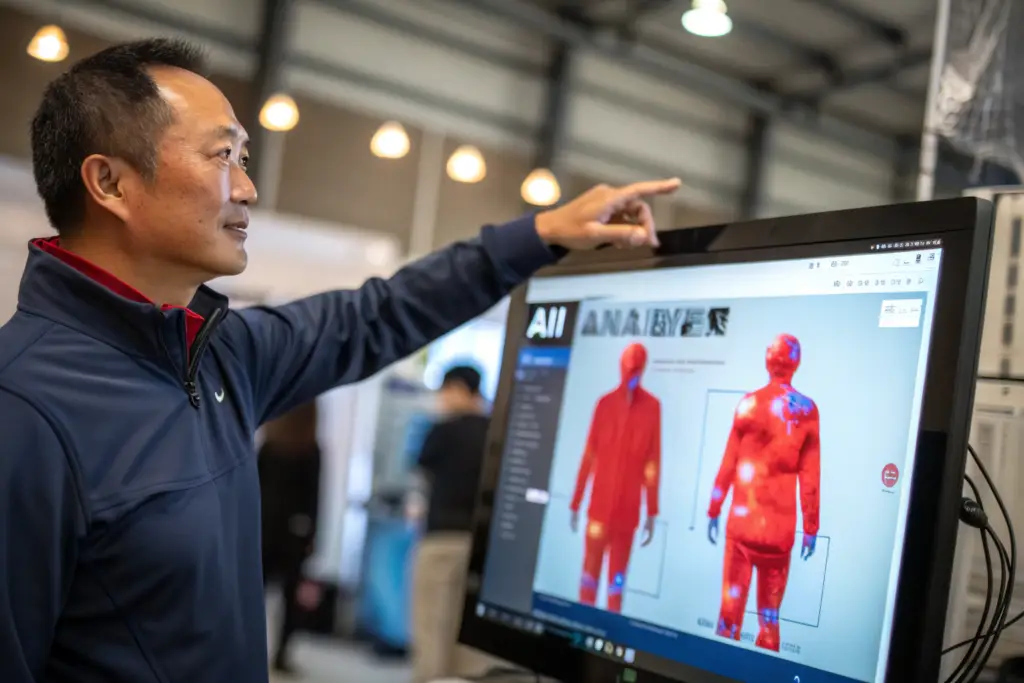
AI-assisted fitting uses machine learning to analyze how a garment fits on a digital avatar. It identifies fit issues such as tightness, looseness, and wrinkles. It quantifies the issues. It suggests adjustments. For the New York client, we introduced AI fitting software. The software created a digital avatar with the same measurements as their fit model. The digital sample was placed on the avatar. The AI identified that the shoulder was 0.5 inches too wide. For woven shirts, AI can analyze collar fit and sleeve pitch. For knits, it can analyze neckband stretch and hem balance. For denim, it can analyze rise, thigh, and leg opening. AI does not replace the fit model. It provides data that the pattern maker can use.
How Does AI Analyze Fit?
AI analyzes fit by:
- Creating a 3D digital avatar with exact measurements
- Placing a digital sample on the avatar
- Simulating how the fabric behaves (drape, stretch, weight)
- Measuring pressure points (where the garment is tight)
- Measuring ease (where the garment is loose)
- Identifying wrinkles and tension lines
For a sportswear client, the AI identified that the armhole was too high. The pattern maker lowered it by 0.25 inches. The next sample fit perfectly.
What Data Does AI Provide?
AI provides:
- Pressure maps (red for tight, blue for loose)
- Wrinkle analysis (where fabric is gathering)
- Ease measurements (how much room is in each area)
- Fit predictions for different body types
- Suggested adjustments (e.g., “reduce shoulder by 0.5 inches”)
For a denim client, the AI provided a heat map showing pressure at the waist. The pattern maker let out the waist by 0.5 inches.
How Does AI Reduce Physical Fit Rounds?
Physical fit rounds take time. I remember a client from Chicago. They did 5 physical fit rounds. Each round took 2 weeks. The total was 10 weeks. The client missed their launch.
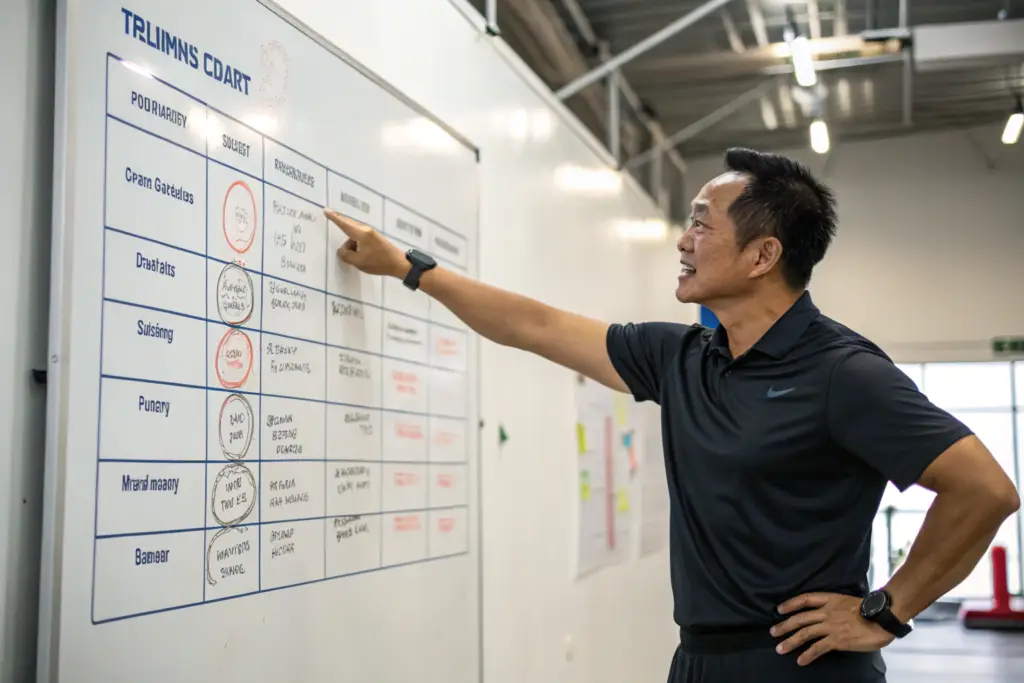
AI reduces physical fit rounds by catching issues early. Instead of sending a physical sample for every adjustment, you review the digital sample. The AI identifies issues. The pattern maker adjusts. The next physical sample is closer to final. For the Chicago client, we used AI for the first two fit rounds. The AI identified shoulder, armhole, and waist issues. The pattern maker made all adjustments. The first physical sample was 90% correct. They did 2 physical rounds instead of 5. For woven shirts, AI can replace the first two fit rounds. For knits, it can replace the first round. For denim, it can replace the wash sample rounds. AI reduces physical rounds by 50% to 70%.
How Many Physical Rounds Can AI Replace?
AI can replace:
- First fit round (identifies major issues)
- Second fit round (refines adjustments)
- Wash sample rounds (for denim)
- Size set rounds (for grading validation)
For a sportswear client, AI replaced 2 physical rounds. The client saved 4 weeks of development time.
What Is the Time Savings from AI Fitting?
Time savings come from:
- No shipping time (digital files are instant)
- Faster adjustments (AI identifies issues immediately)
- Fewer rounds (2 instead of 4 or 5)
For a denim client, AI saved 3 weeks of development time. The client launched before their competitors.
How Does AI Improve Fit Accuracy?
Human observation is subjective. I remember a client from Boston. Two people looked at the same sample. One said the shoulders were too wide. One said they were fine. The pattern maker did not know who to believe.
AI provides objective data. It does not guess. It measures. For the Boston client, we used AI to analyze the sample. The AI measured that the shoulder was 0.5 inches past the shoulder point. That was data. The pattern maker reduced the shoulder by 0.5 inches. For woven shirts, AI can measure collar gap and sleeve pitch. For knits, it can measure neckband stretch percentage. For denim, it can measure rise height and thigh circumference. AI data is consistent. It does not change based on who is looking. The pattern maker has exact numbers to work with. The fit is more accurate.
How Accurate Is AI Fit Analysis?
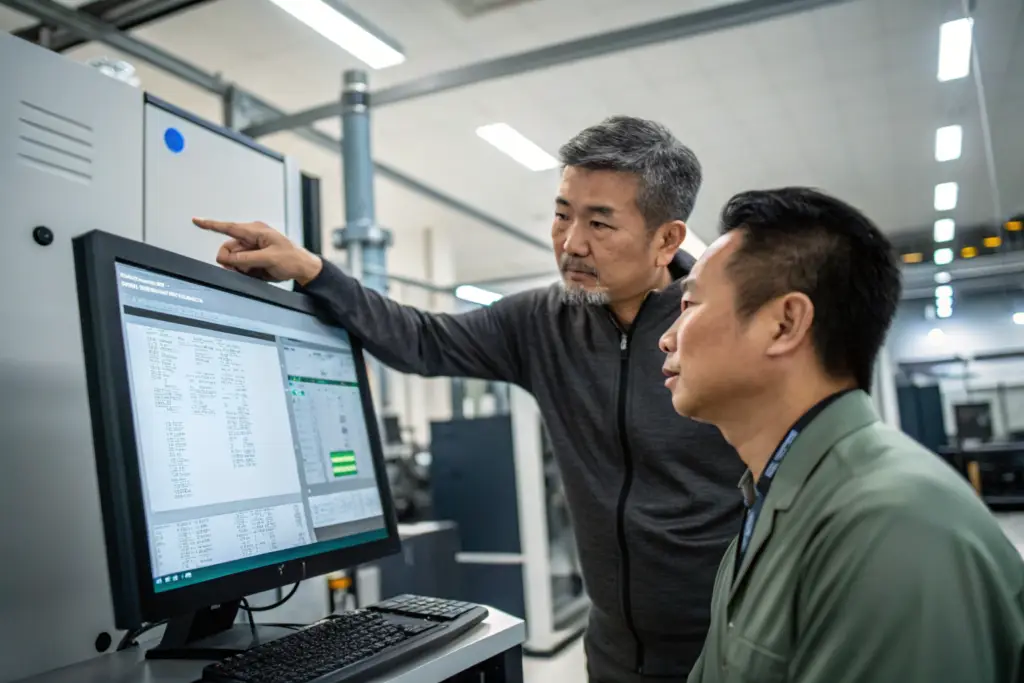
AI fit analysis is accurate to within 0.1 inches for pressure points and ease measurements. It is more accurate than human observation. For a sportswear client, the AI identified a 0.25-inch issue in the armhole. The human eye did not see it. The adjustment improved the fit.
How Does AI Account for Fabric Properties?
AI uses digital fabric libraries. The fabric properties are input: weight, stretch, recovery, drape. The AI simulates how the fabric behaves. For a denim client, the AI accounted for the 2% stretch in the denim. The fit prediction was accurate.
How Do You Integrate AI into Your Fitting Process?
Integrating AI requires a new workflow. I remember a client from Seattle. They bought AI software. They did not change their process. They still did 5 physical rounds. The AI did not help.
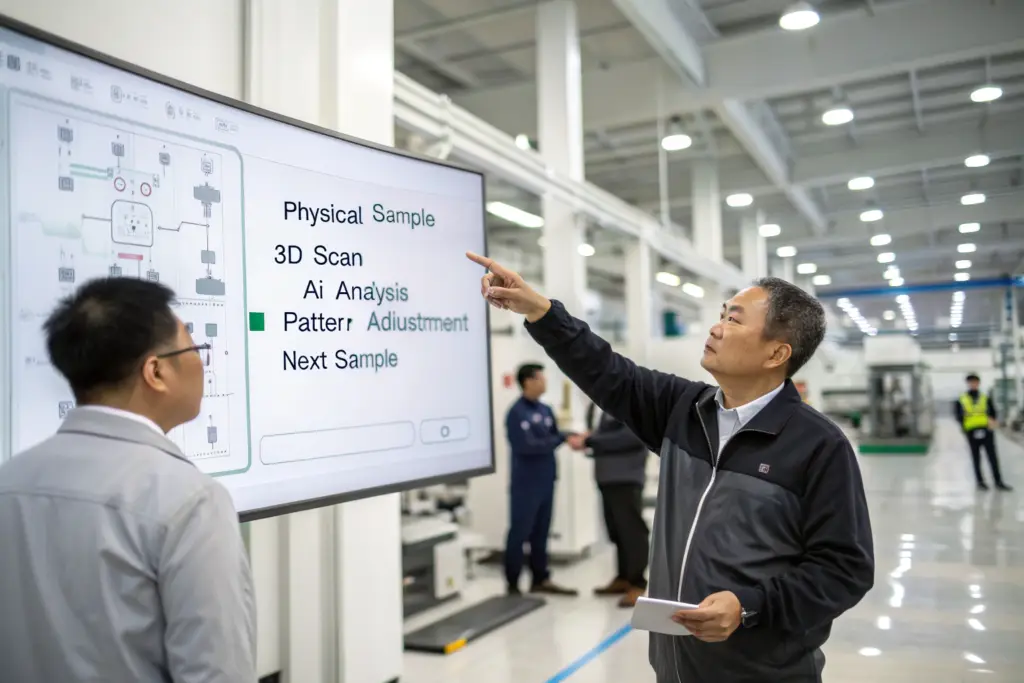
Integrate AI at the beginning of the fitting process. After the first physical sample is made, scan it or create a digital version. Use AI to analyze the fit. Identify issues. Make pattern adjustments. Then make the next physical sample. For the Seattle client, we now integrate AI after the first physical sample. The AI identifies issues. The pattern maker adjusts. The second physical sample is often the final sample. For woven shirts, the AI analysis takes 1 hour. For knits, it takes 30 minutes. For denim, it takes 1 hour. The investment in AI pays off in fewer rounds.
What Is the New Fitting Workflow with AI?
The new workflow is:
- Make first physical sample
- Create digital version (3D scan or CAD)
- Run AI fit analysis
- Identify issues and get adjustment suggestions
- Adjust pattern
- Make second physical sample (often final)
For a sportswear client, this workflow reduced fit rounds from 4 to 2.
What Tools Do You Need for AI Fitting?
You need:
- 3D design software (CLO 3D, Browzwear)
- AI fit analysis software
- Digital fabric library
- Trained pattern maker
For a denim client, we provided the tools and training. The client now uses AI for all fit samples.
Conclusion
AI assists in the garment sample fitting process by analyzing fit on a digital avatar. It identifies issues with objective data. It suggests adjustments. It reduces physical fit rounds by 50% to 70%. It improves accuracy. It speeds up development. AI does not replace the fit model. It enhances the process. It gives pattern makers exact numbers to work with.
At Shanghai Fumao, we have integrated AI into our fitting process. We use 3D scanning and AI analysis. We provide digital fit reports. We reduce physical rounds. We help our clients launch faster.
Let us show you how AI can improve your fitting process. Contact our Business Director, Elaine, directly at elaine@fumaoclothing.com. Ask about our AI fitting service. We will show you how we use technology to get fit right faster.