Tariffs are rising—and so is fraud. In 2025, U.S. apparel buyers like Ron are no longer just worried about higher import duties. They’re also facing a surge in falsified certifications, origin misreporting, and hidden supplier switches. These issues now carry not only profit risks—but legal penalties.
Enter blockchain traceability. Smart brands are adopting it to combat fraud, build trust, and comply with evolving customs demands. It’s not just tech hype—it’s a strategic fix in a high-risk environment.
As a Chinese garment manufacturer working with U.S. buyers facing post-tariff complexity, I’ve seen firsthand how blockchain tools reduce disputes, accelerate clearance, and ensure supplier honesty. Here’s how blockchain is reshaping supply chain trust—style by style, tag by tag.
Why Is Supplier Fraud Rising in 2025’s Apparel Market?
As new tariffs and ESG regulations raise the cost of doing business, some suppliers cut corners. Others outright cheat.
The result? U.S. brands are hit with fake documents, mislabeled fiber content, and “ghost factories” producing outside the agreed spec.
What Types of Fraud Are Most Common?
| Fraud Type | Description |
|---|---|
| Fabric origin falsification | Declaring Chinese fabric as Vietnamese to avoid tariffs |
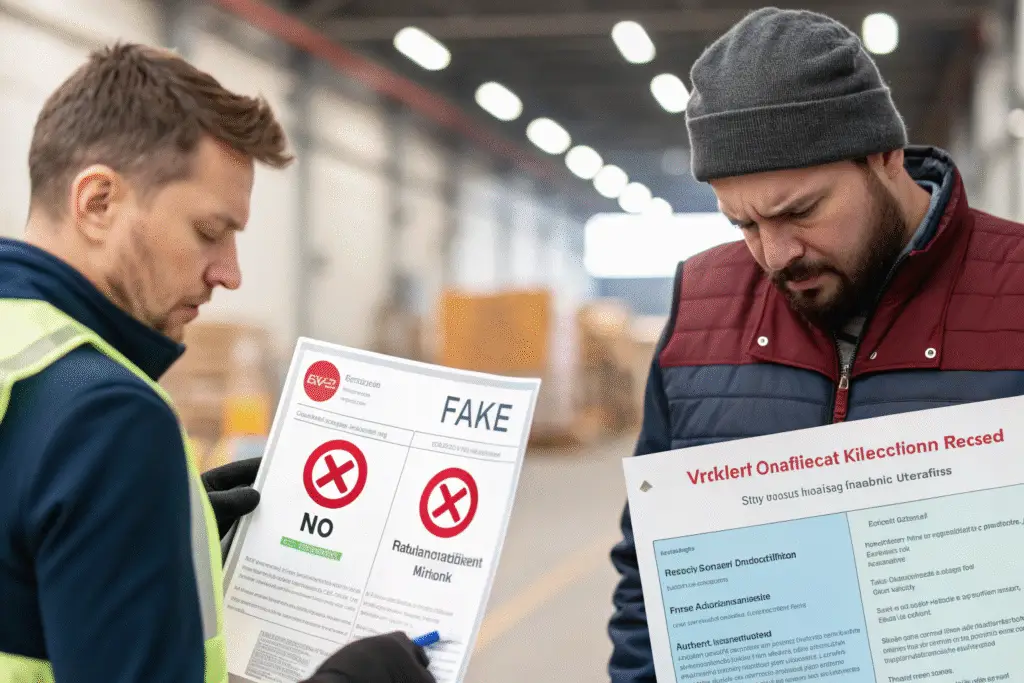
| Certificate forgery | Fake OEKO-TEX or GOTS claims on packaging |
| Factory switching | Subcontracting to unapproved workshops |
| Fiber mislabeling | 60% poly declared as 100% organic cotton |
The U.S. CBP now screens origin claims more aggressively. If caught, importers can face reclassification, penalties, or brand damage. This is where blockchain traceability adds protection.
What’s the Risk for U.S. Buyers?
A client of ours previously bought from a third-party supplier in Vietnam. The supplier switched to a hidden Chinese factory to save cost. Customs flagged the package; duties were reassessed; and the brand had to pay $28,000 in back tariffs.
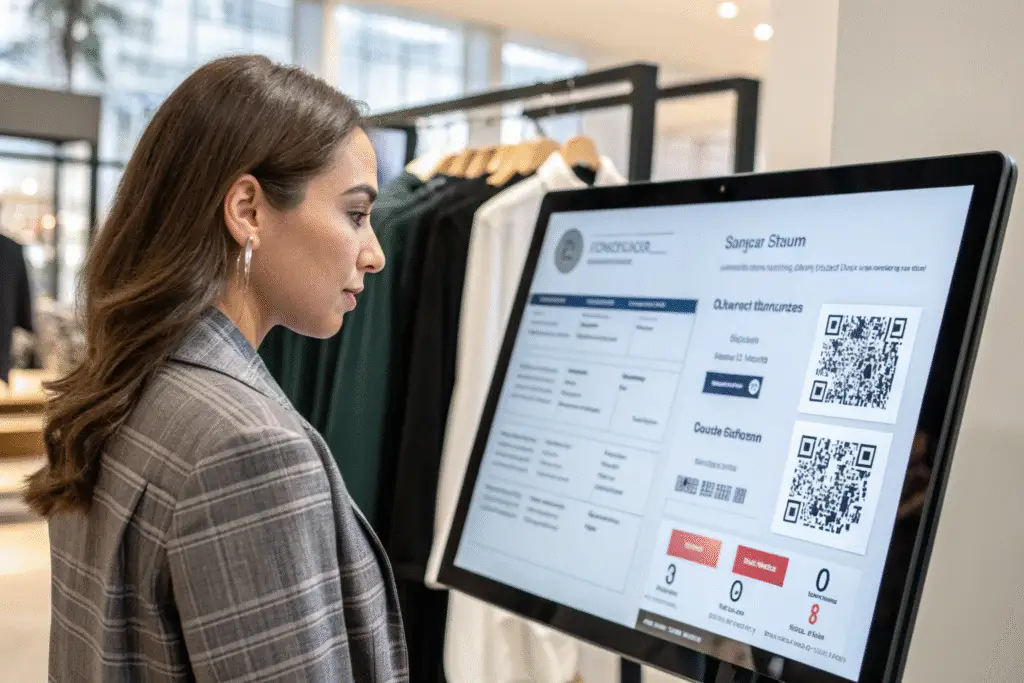
We now integrate QR-tracked chain-of-custody records—removing reliance on PDF certificates alone.
How Does Blockchain Ensure Transparency from Cotton to Container?
Blockchain isn’t magic—but it is powerful. Think of it as a tamper-proof, cloud-based ledger where every supply chain event is recorded, timestamped, and locked.
From farm to factory to freight, blockchain verifies the entire product journey—and makes supplier tampering nearly impossible.
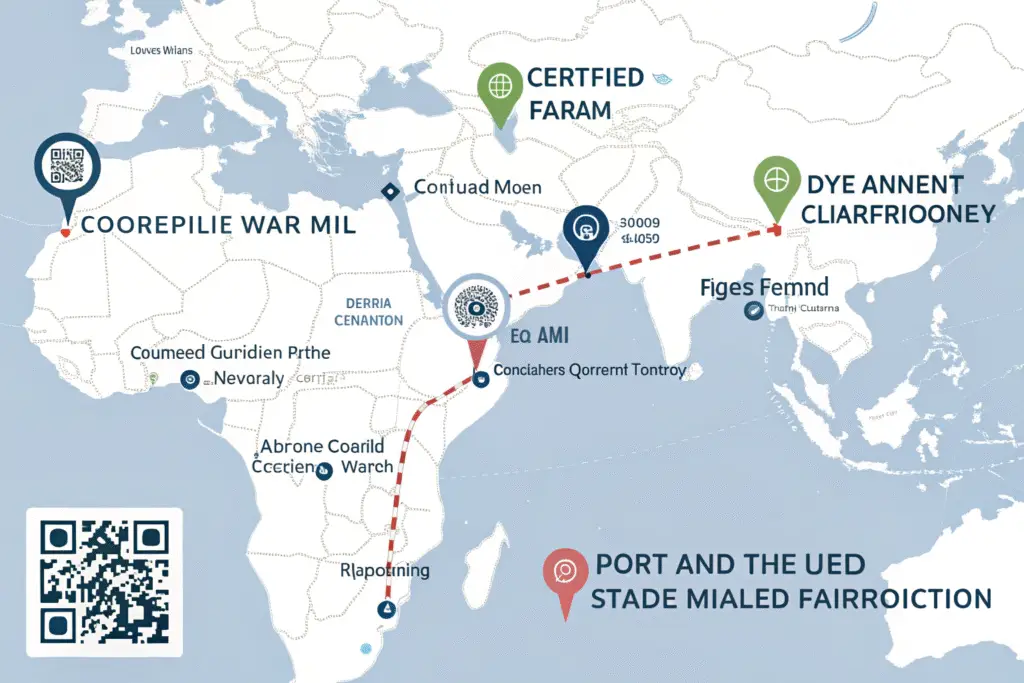
How Does It Work?
- Raw Material Entry: Certified cotton (e.g. GOTS farm) logged with geo-tag and timestamp
- Fabric Conversion: Spinner adds yarn info; mill adds dye batch data
- Garment Factory: Cutting, sewing, and QC stages uploaded as secure entries
- Shipping + Customs: HTS code, country of origin, and duty declaration verified
Each actor has a role-specific access key. Brands, customs, and retailers can scan a single QR on the garment and see its full verified trail via platforms like TextileGenesis or TrusTrace.
What’s the Advantage vs. Traditional Certificates?
Old method: a printed GOTS or BSCI PDF that can be easily altered
New method: blockchain entry with:
- Timestamp
- Issuing party
- Geo-location match
- Unchangeable cryptographic hash
It’s not about “trusting the document”—it’s about trusting the process.
Can Blockchain Lower Tariff Risk and Speed Customs Clearance?
Yes. In fact, many customs agencies—including CBP and EU DG TAXUD—are moving toward accepting digital chain-of-custody records for tariff verification.
Blockchain reduces documentation gaps, avoids misclassification, and supports faster DDP clearance.
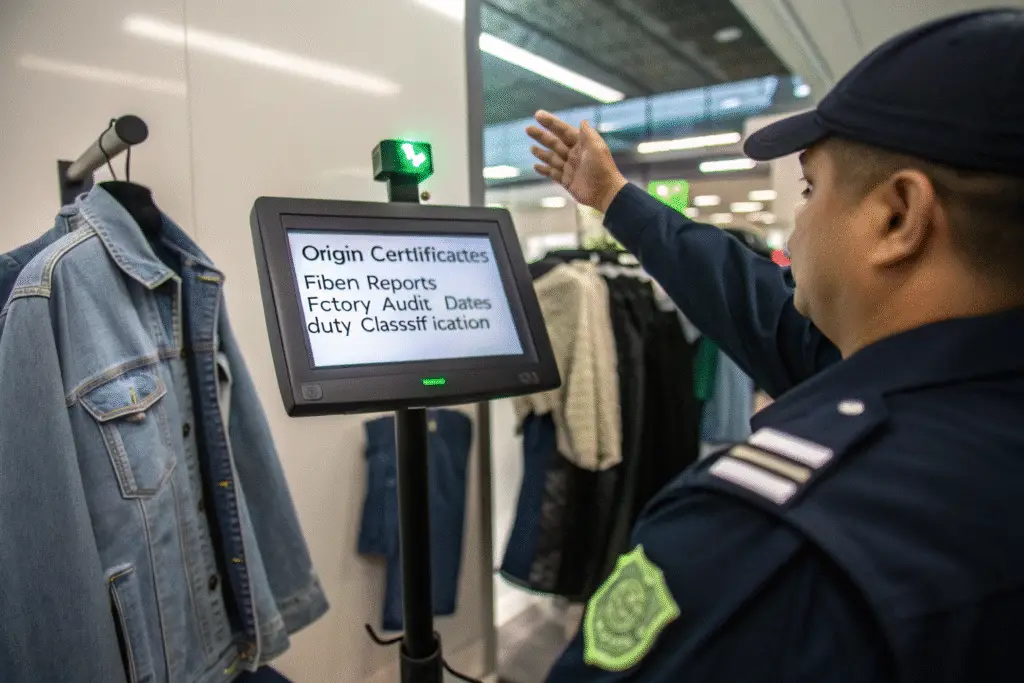
How Does This Help U.S. Apparel Buyers?
- Origin Proofing: If sourcing from Vietnam or Bangladesh but using Chinese fabric, blockchain tags show exact mill coordinates
- HTS Alignment: Fiber percentages logged upstream help match correct tariff codes
- Duty Claims: Importers can justify “made in Vietnam” claims with exact sewing timestamps and factory GPS
We integrate tools like Everledger or IBM Food Trust (adapted for apparel) for this.
Any Real-World Wins?
One of our buyers selling on Amazon faced a chargeback due to alleged “non-organic content” in baby rompers. With blockchain-backed Textile Exchange records, we proved the cotton origin and salvaged the listing.
Another reduced customs clearance time from 5 days to 2 by submitting digital blockchain reports as part of their ACE Entry Filing process.
How Can Small and Mid-Sized Brands Access Blockchain Benefits?
The great news? You don’t need to be Nike or Patagonia to use this tech. Blockchain is becoming scalable—even for 500pcs MOQs.
Modern factories like ours now offer blockchain traceability as a value-added service for private label and wholesale buyers.
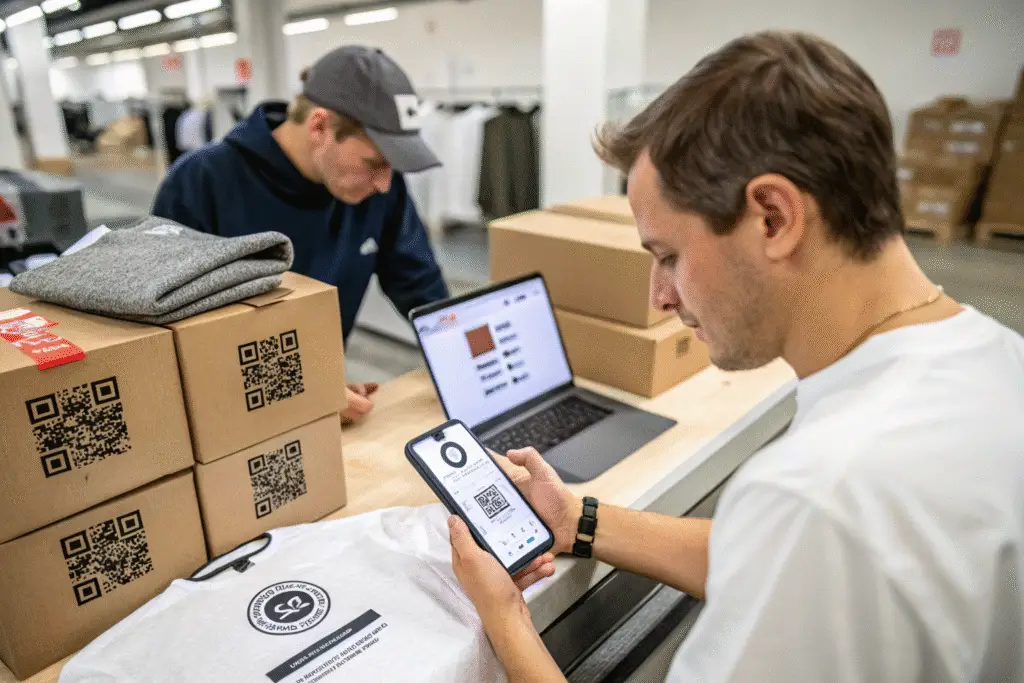
What’s the Setup Process?
- Choose Verified Inputs: We source from certified spinners/mills with trace-ready output
- Activate Tracking Platform: We use partners like TrusTrace or internal ledger tools
- Create QR-Linked Tags: Each style receives unique scannable data chain
- Distribute to Buyer + Retailer: You access live updates or export PDF reports for customs
We’ve built this into our DDP workflow—so no extra customs steps are required.
Can You Use Blockchain for Branding?
Absolutely. Your hangtag can link to a “proof of supply” story: certified cotton from Gujarat, dyed in Zhejiang, stitched in Shanghai. This enhances trust and conversion.
Some clients even embed carbon footprint data and OEKO-TEX reports into the traceability chain—great for Shopify, Faire, and Amazon storefronts.
Conclusion
Tariffs might be the price you pay, but fraud is the risk you can’t afford. Blockchain traceability gives buyers control, proof, and speed in a supply chain where trust is no longer optional.
At Shanghai Fumao, we now offer blockchain-backed DDP shipments, fiber verification, and QR-enabled labeling for MOQ orders starting at 300pcs. Our goal? To help you reduce fraud, clear customs faster, and build buyer confidence with every SKU.
Want to add blockchain protection to your next apparel order? Contact our Business Director Elaine at elaine@fumaoclothing.com—and let’s bring full traceability to your supply chain.