In a market flooded with options, QR-enabled apparel offers an interactive brand extension. A simple scan transforms a garment into a gateway to product origin, care tips, rewards, or exclusive content.
This merging of physical products and digital engagement elevates customer experience, enhances transparency, and opens new revenue streams—making QR-enabled clothing the next retail game-changer.
I’ve guided U.S.-based brands on seamless QR integration across apparel lines. Here’s why it’s transforming retail and how to apply it profitably.
How Do QR Codes Bridge Physical and Digital Shopping?
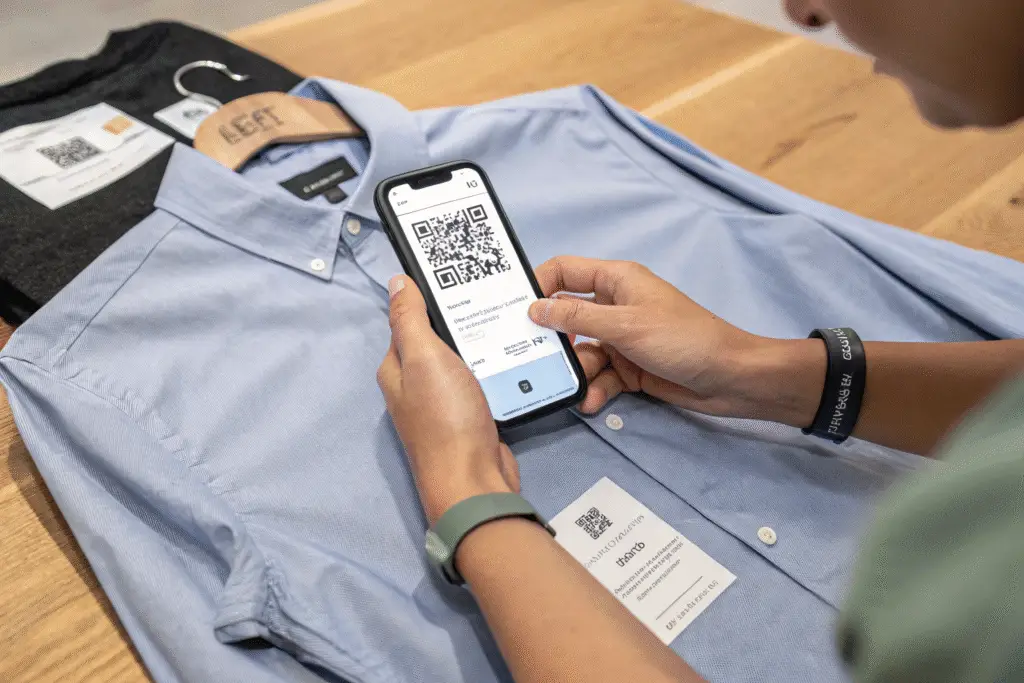
QR turns each garment into a digital portal.
Consumers expect transparency. With QR-enabled clothing, they can instantly access styling tips, sustainability info, and loyalty programs—right from the clothes they wear.
Why Do Consumers Respond to QR Engagement?
QR codes create instant gratification. Over 70% of shoppers use QR codes in retail for product info and deals (Statista). They appreciate convenience and are more likely to trust brands providing enhanced information.
What Digital Features Work Best with QR?
Smart uses include:
- Product authenticity checks via blockchain-enabled scans
- Extended care guides for longevity
- Video styling content to enrich fitting
- AR try-on overlays built into apps
These features enhance product utility and deepen the buyer-retailer relationship.
Why Is Transparency a Retail Differentiator?
In a trust-driven market, transparency sells.
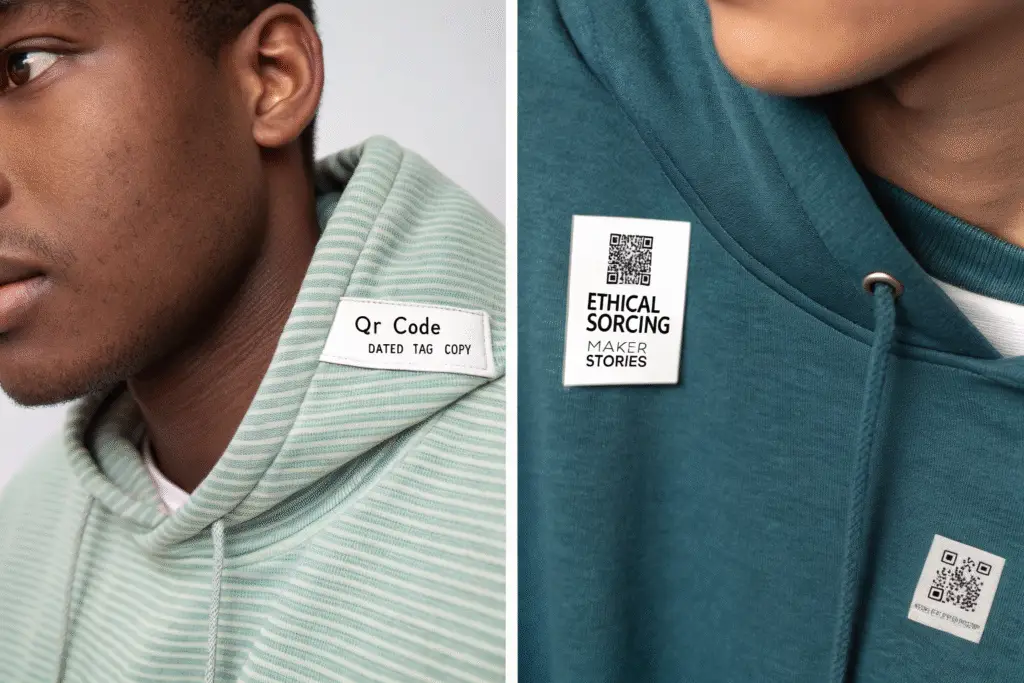
QR-enabled clothing gives customers clear, honest data about origin, materials, and labor—building deeper brand loyalty and price justification.
Can QR Codes Help Trace the Supply Chain?
Yes. Brands like Everlane and Patagonia use QR or NFC tags to show factory location, worker conditions, and emissions data. Studies show 80% of consumers buy more from transparent brands.
Do QR Labels Build Price Value?
Definitely. When consumers know exactly what they’re buying—e.g., certified organic cotton—they’re willing to pay more. QR-coded verification reassures and justifies premium pricing strategies.
How Can QR Clothing Boost Loyalty Programs?
QR insights drive retention.
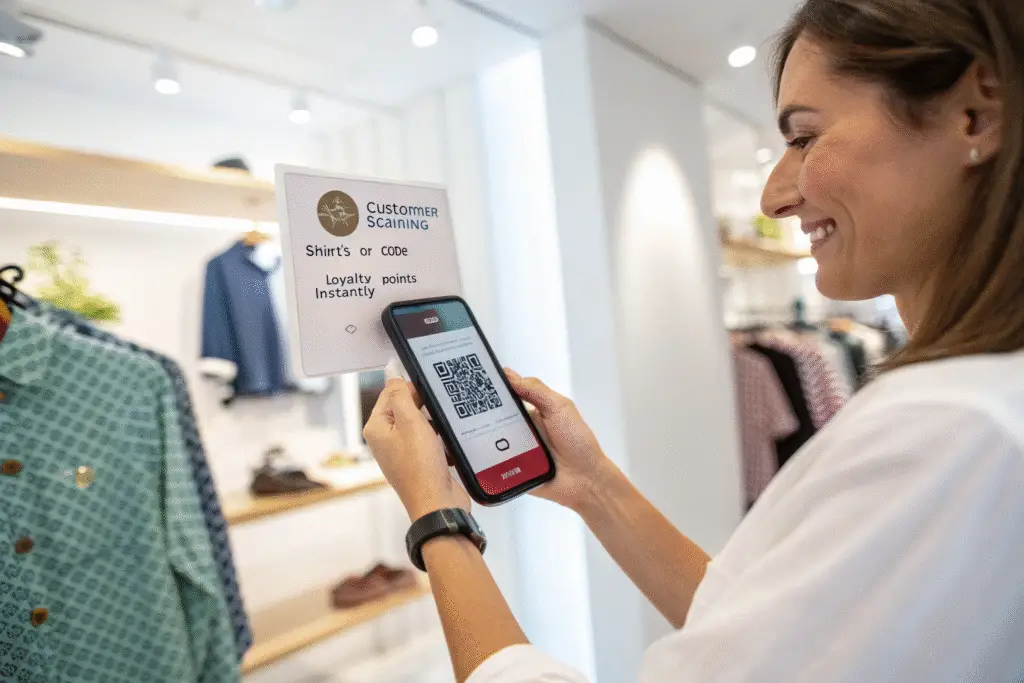
QR-enabled garments become loyalty gateways—scanning directly triggers rewards, updates, or style community content.
How Does QR Tie Into Gamified Loyalty?
QR scans can reward points per wear, check-in, or share—encouraging repeat engagement. Brands like Nike and H&M use app-linked scans to gamify sustainable behavior and increase app usage metrics.
Can Loyalty via QR Increase LTV?
Absolutely. Studies show that loyalty program users spend 30–60% more than casual shoppers. QR encourages daily interaction with brand content—not just shopping.
What Are the Operational Benefits for Brands?
QR isn’t just for customers—it’s an analytics tool.
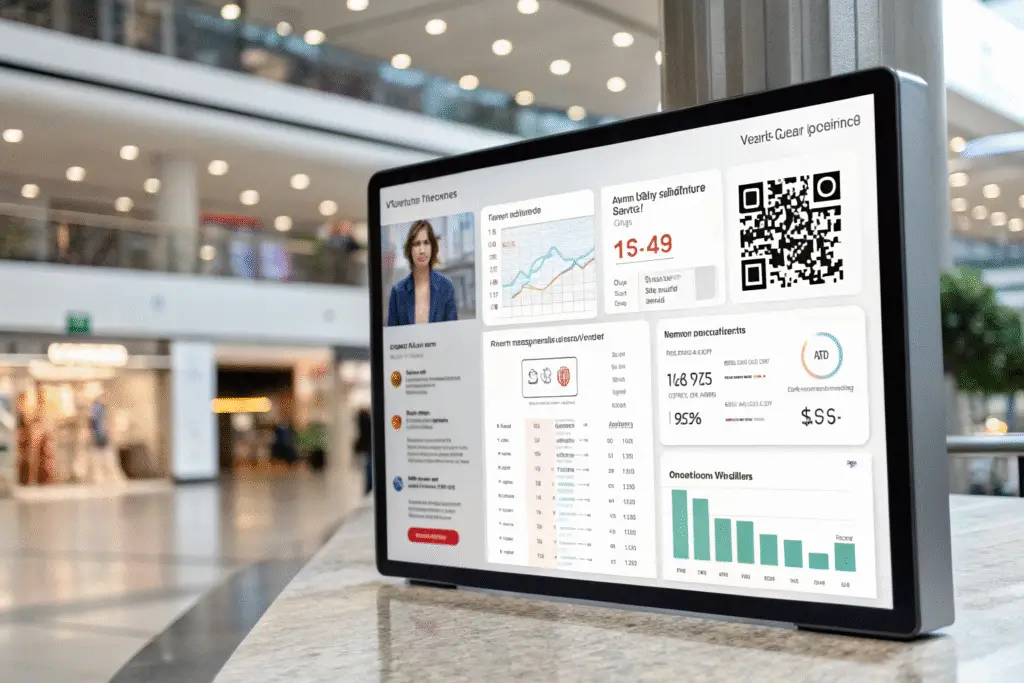
Brands gather real-time scanning data—identifying popular SKUs, store visits, and product performance anonymously.
How Does Scan Data Inform Merchandising?
Scan frequency helps track product engagement by geography or demographics. Retailers can reorder SKUs faster and retire underperforming styles sooner.
Does QR Save Money on Returns?
When customers access care instructions immediately, mis-washing drops. Some brands report up to a 15% decrease in return rates after integrating care guides via QR.
How to Integrate QR Into Apparel Seamlessly?
Implementation matters.
Key steps: choose durable materials, track digital links, test scan placement, and partner with experienced manufacturers.
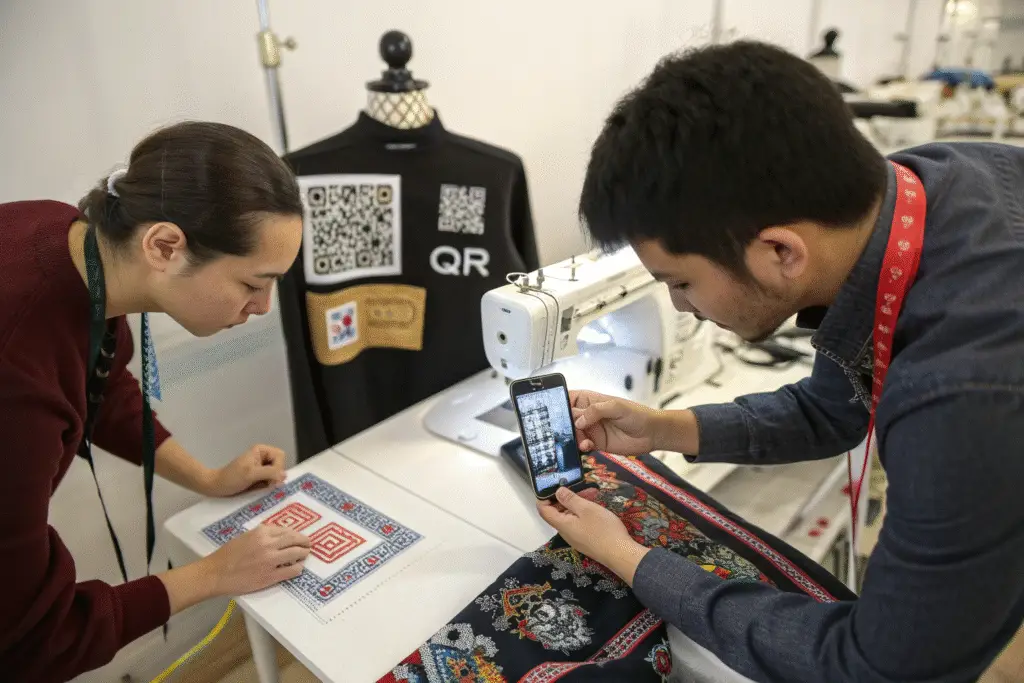
Which QR Labeling Methods Are Best?
Common options include:
- Woven labels with integrated QR
- Silicone patches for jackets/sweatshirts
- Hang tags ideal for premium caps/coats
- Reinforced hemback labels for durability
Quality printing and testing is essential to prevent wear damage.
What About Tech Setup and Linking?
You’ll need:
- Dynamic QR service to change linked content
- Mobile-optimized landing pages for fast load
- Analytics dashboard for tracking
- Maintenance plan to update expired scans
Several SaaS providers specialize in garment QR solutions.
Conclusion
QR-enabled clothing is more than novelty—it’s a practical advancement that merges physical apparel with digital retail ecosystems. By providing transparency, engagement, loyalty tools, and data insights—all from a scan—this innovation is redefining retail expectations.
Brands who adopt QR clothing early will stand out in competitive markets—creating stronger connections, higher trust, and new revenue channels. Are you ready to scan into the future of retail?