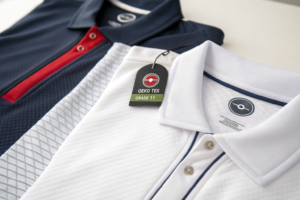
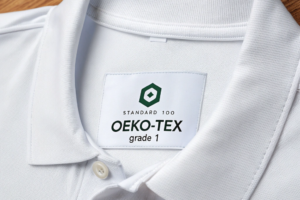
When you select a performance polo or a technical base layer, you're choosing a garment engineered for intense, prolonged contact. These aren't casual tees worn for a few hours; they're second-skin layers designed to manage sweat, regulate temperature, and withstand friction during a full 18-hole round or a rigorous training session. But what happens when the very fabric that's meant to protect and enhance performance becomes a source of irritation? This is the critical juncture where skin-safe certification, specifically OEKO-TEX Standard 100 Class 1, transitions from a "nice-to-have" feature to an essential, non-negotiable component of your product's integrity.
Skin-safe certification is crucial for collar T-shirts (golf polos) and base layers because these garments create a high-risk zone for chemical exposure due to prolonged, occlusive skin contact under sweat and friction. OEKO-TEX Class 1 certification provides scientific verification that the fabric and all its components are free from levels of harmful substances—like allergenic dyes, formaldehyde, and heavy metals—that could cause irritation, allergies, or long-term sensitization, especially in sensitive areas like the neck, underarms, and torso. It is the definitive guarantee that the garment's performance chemistry is safe for its most intimate application.
We witnessed the consequences of overlooking this firsthand. A brand we now partner with had previously sourced a high-end moisture-wicking base layer from another factory. The fabric performed well in lab wicking tests, but within weeks of market launch, they received a cluster of complaints from customers with sensitive skin reporting contact dermatitis around the neck and seams. The root cause was traced to an unregulated allergenic disperse dye that had not been tested for in the factory's basic compliance check. The cost of the recall and brand damage far exceeded the marginal savings on fabric. This experience is why, at Shanghai Fumao, OEKO-TEX Class 1 is our mandatory starting point for all performance wear development—it's our proactive shield against such preventable failures.
1. The Anatomy of Risk: Why Collars and Base Layers Are High-Contact Zones
To understand the necessity of certification, you must first understand the unique physiological and environmental stresses these garments endure. The risk is not hypothetical; it's engineered by the product's very purpose.
Collar T-shirts (Golf Polos) and base layers are designed for maximal skin contact in areas that are particularly sensitive and prone to sweat accumulation and friction. This creates a perfect storm where any residual chemicals in the fabric can be readily transferred to the skin.
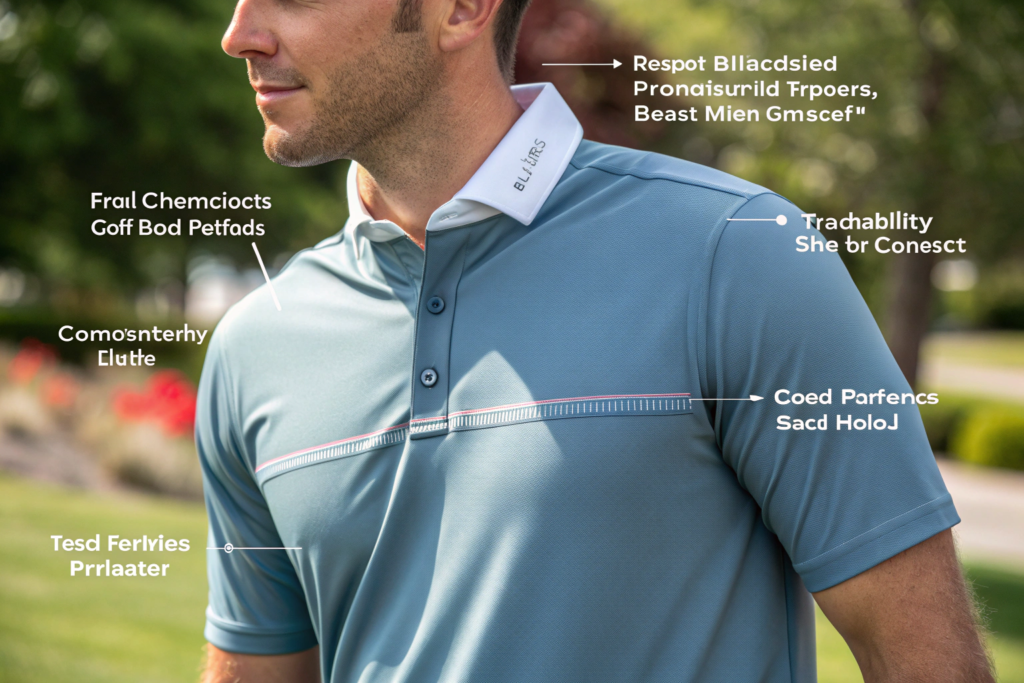
The Collar: A Perfect Storm of Stress Factors
The collar of a golf polo is a critical risk area due to:
- Constant Friction: It rubs against the neck with every swing and turn.
- Sweat Concentration: The neck is a primary sweat zone. Sweat acts as a solvent, potentially extracting residual chemicals from dyes and finishes.
- Sensitive Skin: The skin on the neck is often more sensitive than on the arms or torso.
- Sun Exposure: This area is frequently exposed to UV radiation, which can degrade some chemical finishes over time.
A non-certified fabric might use a formaldehyde-based resin for "easy-care" wrinkle resistance. Under the heat and sweat of a golf round, this can lead to the release of free formaldehyde, a known skin irritant and allergen, directly onto the neck. OEKO-TEX Class 1 sets a near-undetectable limit for formaldehyde, eliminating this risk.
Base Layers: The "Second Skin" That Can't Betray the First
Base layers are the foundation of a performance outfit. Their risk profile is defined by:
- Occlusive Environment: They are worn tight against the skin, often under other layers, trapping heat and moisture.
- Full-Body Contact: Irritation can occur anywhere, creating a widespread problem.
- Dynamic Movement: They stretch and recover repeatedly, which can mechanically abrade fibers and finishes.
- Moisture-Wicking Chemistry: The functional finishes that make them performance-ready must themselves be safe.
An uncertified base layer with an antimicrobial silver-ion treatment might exceed safe concentration levels or use a carrier chemical that is an irritant. OEKO-TEX testing evaluates the safety of such functional finishes, ensuring the technology that keeps you dry doesn't make you itch. This is a core part of our product development vetting at Shanghai Fumao.
2. Beyond "Hypoallergenic": The Science of OEKO-TEX Class 1 Verification
Many suppliers loosely use terms like "skin-friendly" or "hypoallergenic." These are marketing claims, not standardized certifications. OEKO-TEX Standard 100, particularly Class 1, replaces vague promises with laboratory-verified facts.
OEKO-TEX certification is a rigorous, pass/fail scientific assessment based on the latest toxicological research. It doesn't just test for a few known irritants; it screens for over 100 regulated and non-regulated substances, with Class 1 employing the strictest limits in the textile industry.
What Makes the Class 1 Standard Uniquely Suitable?
Class 1 is the baby-products standard. Its extreme strictness is precisely what makes it ideal for high-sweat, high-contact athletic wear:
- Stringent pH Control: Ensures the fabric is skin-neutral (pH 4.0-7.5), preventing disruption of the skin's protective acid mantle, which is crucial when sweat alters the skin's natural pH.
- "Not Detectable" Limits for Allergens: For known allergenic disperse dyes, the limit is effectively zero.
- Comprehensive Extractability Tests: Chemicals are tested for their potential to be extracted in saliva, sweat (acidic and alkaline), and even water, simulating real-world conditions.
This scientific backbone is why we treat the OEKO-TEX certificate not as a final sticker, but as the foundational document in our quality assurance process. For every roll of fabric destined for a polo or base layer, we verify its valid Class 1 certificate before it enters our cutting room. This systemized check is what allows us to offer a genuine safety guarantee.
The Business Case: Protecting Your Brand from Liability
Investing in certified materials is a powerful risk mitigation strategy. The business implications of a skin-reaction incident are severe:
- Direct Financial Loss: Product recalls, refunds, and legal settlements.
- Brand Equity Erosion: Negative reviews and social media publicity can permanently damage a brand's reputation for quality and care.
- Retailer Fallout: Major retailers may drop a brand or impose costly penalties for compliance failures.
By sourcing OEKO-TEX Class 1 certified garments from a verified manufacturer like us, you are not just buying a product; you are purchasing a documented chain of custody and due diligence that protects your business. Our full-package manufacturing includes providing all certification documents, giving you an audit trail for your own compliance needs.
3. The Fumao Protocol: Integrating Certification from Yarn to Finished Garment
At Shanghai Fumao, skin-safe certification is not a last-step inspection. It is an integrated protocol that governs our entire production chain for performance wear. We understand that a certificate for the fabric is meaningless if the thread, labels, or prints are non-compliant.
Our protocol enforces a "Class 1 ecosystem," ensuring every component that touches the skin meets the same stringent standard. This holistic approach is what separates a true technical apparel manufacturer from a simple assembler.
Our 3-Point Integration System
- Certified Source Validation: We only partner with yarn spinners and fabric mills who can provide current, valid OEKO-TEX Class 1 certificates for their materials. We audit these certificates in the official database ourselves.
- In-House Component Control: We source sewing thread, elastics, and labels from suppliers who also provide Class 1 certification. A common oversight is using standard thread with spin finishes that wouldn't pass the test.
- Finished Article Verification: Where possible and requested by the brand, we pursue a Finished Product Certificate for the assembled garment. This is the ultimate assurance, certifying the final polo or base layer as a complete, safe system.
A practical example: For a recent run of 5,000 performance polos, a client requested a specific vibrant color. Our dye mill proposed a formulation. Our first step was to have that specific dye lot tested for OEKO-TEX Class 1 compliance before approving it for bulk production. The test passed, and we proceeded with confidence. This extra step, embedded in our product development timeline, ensures no compromise between aesthetics and safety.
Conclusion
For collar T-shirts and base layers, performance is a binary outcome: either the garment enhances the athlete's experience or it detracts from it. Skin irritation is a catastrophic detractor. Therefore, skin-safe certification is not an added cost or a marketing badge; it is the fundamental engineering standard that ensures the product's core functionality—comfort against the skin—is guaranteed.
It represents a brand's commitment to stewarding the well-being of its customers, matching technical innovation with ethical responsibility. In a market where consumers are increasingly educated and regulatory scrutiny is intensifying, this commitment is a powerful competitive advantage.
When you choose to manufacture with Shanghai Fumao, you are choosing a partner who has built this commitment into our operational DNA. We provide the verified, scientific foundation of safety, allowing you to focus on design, marketing, and growth. Let us help you build your next line of performance polos and base layers on a foundation of unquestionable trust. Contact our Business Director, Elaine, to start the conversation: elaine@fumaoclothing.com.