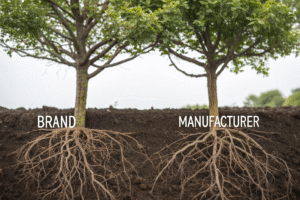
You’ve requested OEKO-TEX certificates from your potential garment supplier, and they’ve sent over a PDF. It looks official, has a logo, and lists your fabric. But in an industry where delays and misrepresentation are real risks, how can you be absolutely sure this document is genuine and valid for your order? Relying on a supplier’s word is not enough; false or outdated certificates are a common pain point that can lead to customs seizures, retailer rejections, and irreparable brand damage. The ability to independently verify an OEKO-TEX certificate is a fundamental skill for any serious apparel sourcer.
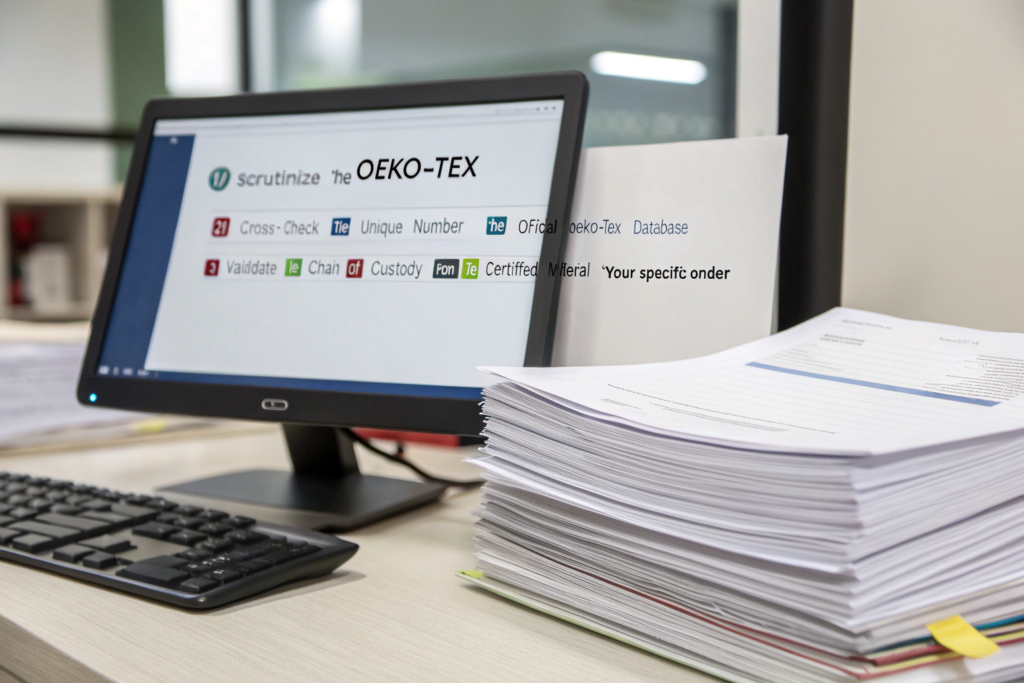
To verify authentic OEKO-TEX certificates, you must move beyond passive receipt of documents and actively conduct a three-step audit: 1) Scrutinize the certificate details, 2) Cross-check the unique number in the official OEKO-TEX database, and 3) Validate the chain of custody from the certified material to your specific order. Genuine suppliers will welcome this diligence; those who hesitate reveal a critical red flag.
Last year, a client forwarded us a certificate from a competing factory they were evaluating. At first glance, it seemed fine. However, when we entered the certificate number into the OEKO-TEX database, it returned a result for a different company and a fabric that had expired six months prior. This was a clear case of certificate reuse or falsification. By showing the client how to perform this simple 30-second check, we helped them avoid a potentially disastrous partnership. At Shanghai Fumao, we build verification into our client onboarding process, sharing live screen records of database checks to establish trust from the very first conversation.
Step 1: Decode the Certificate – Know What You’re Looking At
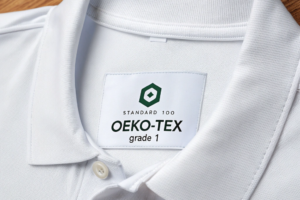
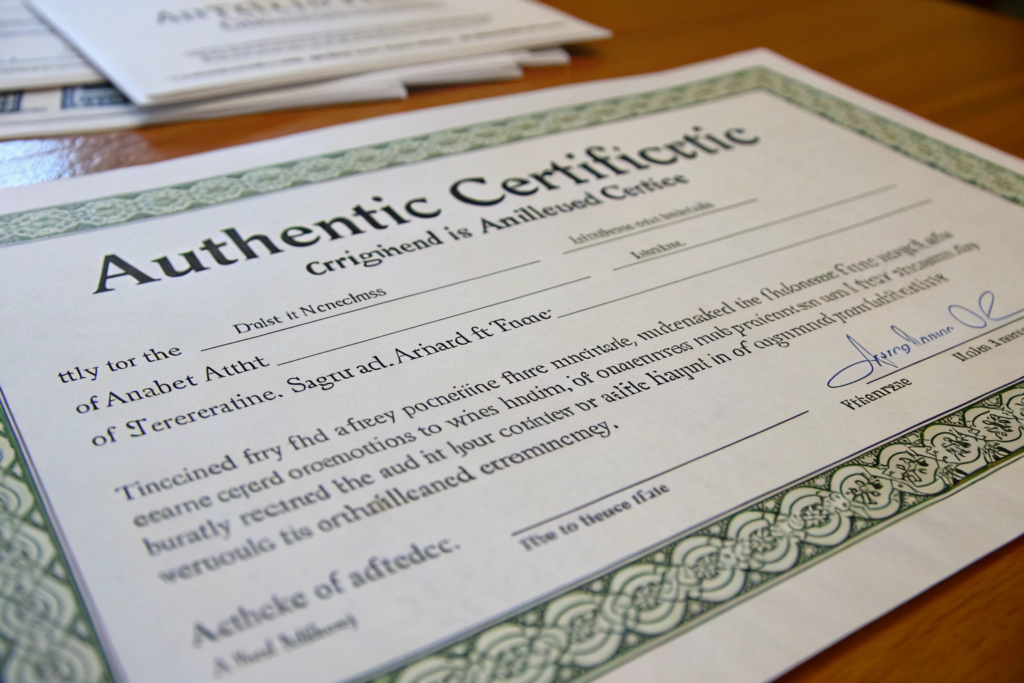
A valid OEKO-TEX Standard 100 certificate is a detailed document. Don't just check for the logo; become fluent in reading its key fields. Treat it like a passport for your fabric.
Every authentic certificate contains specific, verifiable information. Your first task is to ensure the document itself is complete and the details align with your order. Request the original scanned copy, not a photocopy or a screenshot, to ensure clarity.
The 7 Critical Fields on Every Certificate
When you receive a certificate, immediately examine these seven fields:
- Certificate Holder: This is the company to whom the certificate was issued. Does it match your supplier's legal name? If it’s a mill’s certificate, does your supplier have a formal authorization to use that fabric?
- Certificate Number: The unique ID (e.g., 123456.01.12345). This is your key for the database check.
- Product Class: This must state "Product Class I" for garments with direct skin contact, like golf polos. "Class II" or "Class IV" is not acceptable.
- Article Description: Does it accurately describe the material you are purchasing? (e.g., "Knitted Polyester Fabric, dyed" vs. a vague "Polyester Fabric").
- Applicant: The entity that applied for the test. This could be the holder or another company in the supply chain.
- Testing Institute: The logo and name of the independent institute (e.g., Hohenstein, TESTEX) that performed the test.
- Validity Period: Certificates are valid for one year from the issue date. Is the certificate current? Fabric produced after the expiry date is not covered.
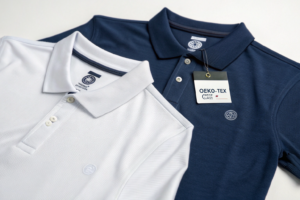
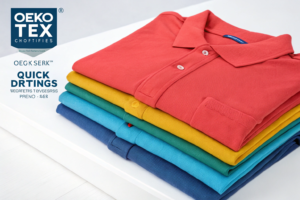
We provide our clients with an annotated guide to our certificates. For instance, on a recent order for quick-dry polo fabric, our certificate clearly showed "Product Class I" and the specific article name matched the code on our fabric roll labels. This level of detail is part of our full-package manufacturing transparency, turning complex documents into tools for client confidence.
Step 2: The Definitive Check – Using the OEKO-TEX Online Database
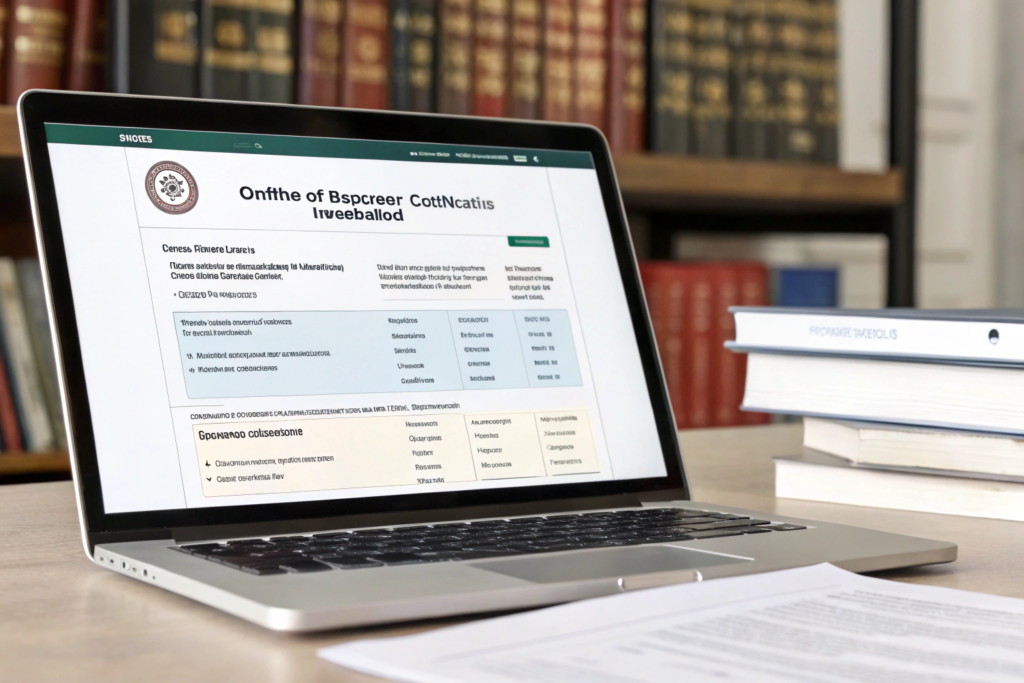
This is the non-negotiable step that separates verification from assumption. The OEKO-TEX association maintains a free, public online database where every genuine certificate is recorded.
The database check provides real-time, independent confirmation from the certification body itself. It is the single most powerful action you can take to protect your order from fraud.
How to Perform the Database Check: A Walkthrough
- Navigate to the official OEKO-TEX certificate verification page.
- Enter the unique certificate number from the document you received into the search field.
- Review the results. A valid, active certificate will display and confirm:
- The company name (holder).
- The product class.
- The article description.
- The validity dates.
Pro-Tip: Perform this check on a video call with your supplier. Ask them to share their screen and guide you through it. A reputable supplier like Shanghai Fumao will proactively suggest this. We’ve found this live audit not only verifies the certificate but also builds immense trust, directly addressing the common pain point of inefficient and opaque communication.
Interpreting Database Results: Green Flags vs. Red Flags
- Green Flag (Valid): The database entry matches exactly the details on your PDF. The status is active, and the product class is correct.
- Red Flag 1 (No Result): The certificate number is not found. The document is almost certainly fake.
- Red Flag 2 (Details Mismatch): The company name or product description is different. This could indicate certificate recycling.
- Red Flag 3 (Expired): The validity date has passed. The material is no longer certified.
A client once sent us a certificate where the database showed the correct company but for "Polyester Woven Fabric," while they were ordering a "Polyester Knit." This was a critical mismatch—the certificate was authentic but for the wrong product. We helped them confront their supplier, who then provided the correct (and valid) certificate for the knit. This catch prevented a compliance failure down the line.
Step 3: Validate Chain of Custody – From Certificate to Your Carton
A valid certificate for a fabric mill is excellent, but it only tells part of the story. You must verify that the specific material used for your order is covered by that certificate. This is the concept of "chain of custody."
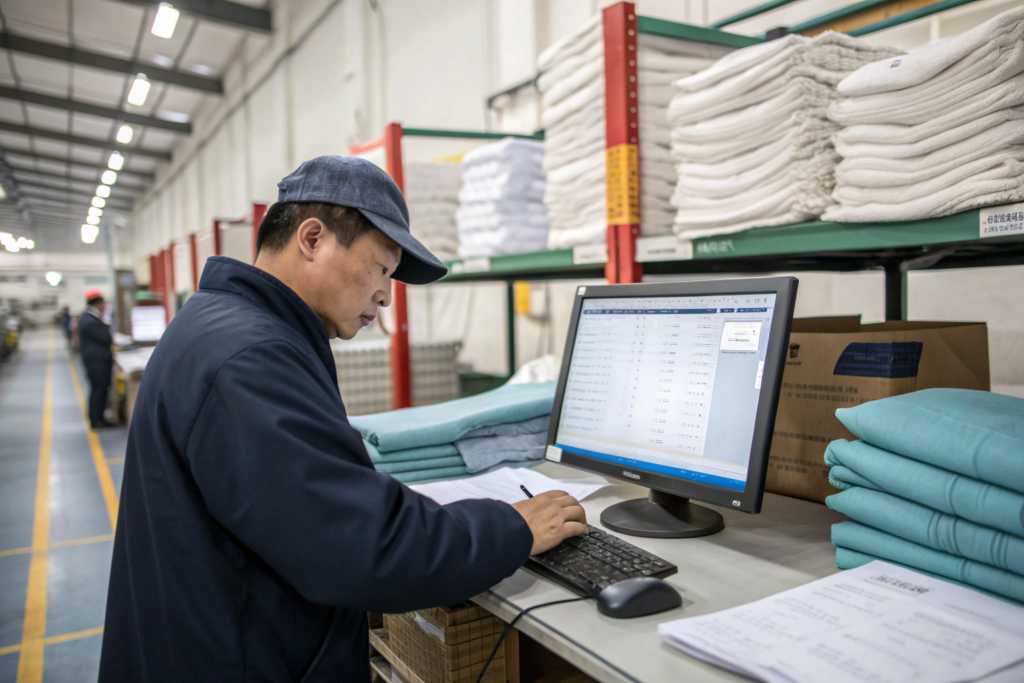
The final step in verification is linking the abstract certificate to the physical goods. This requires your supplier to have a traceability system that connects fabric lot numbers to certificate numbers.
Questions to Ask Your Supplier
To validate the chain of custody, ask these specific questions:
- "Can you show me the lot number/batch number on the fabric roll you will use for our order?"
- "How do you track and ensure that this specific lot is covered by the certificate number you provided?"
- "Will you provide the certificate number and corresponding fabric lot information on our commercial invoice or packing list?"
A professional factory will have answers. At our facility, this is a standardized part of our quality assurance protocol. When a roll of OEKO-TEX certified fabric arrives, our QC team records its unique lot number and links it digitally to the corresponding certificate in our system. This data is then included in the shipment documentation for the client. This process turns a certificate from a pre-sales document into a live production tool.
The Importance of Scope: Component vs. Finished Product Certification
Understand what is certified:
- Component Certificate: The fabric (or thread, or zipper) is certified. This is common. You must then ensure all key components are certified.
- Finished Product Certificate: The final, assembled garment is certified. This is the gold standard as it covers the entire system.
For example, we recently produced a line of wind jackets where the outer shell, membrane, and lining each had separate Component Certificates (Class I). To provide ultimate assurance, we also obtained a Finished Product Certificate for the assembled jacket, giving the brand one definitive document for the entire garment. Offering this service is a mark of a sophisticated manufacturer.
Red Flags and How to Respond
If you encounter resistance or inconsistencies during verification, treat them with utmost seriousness.
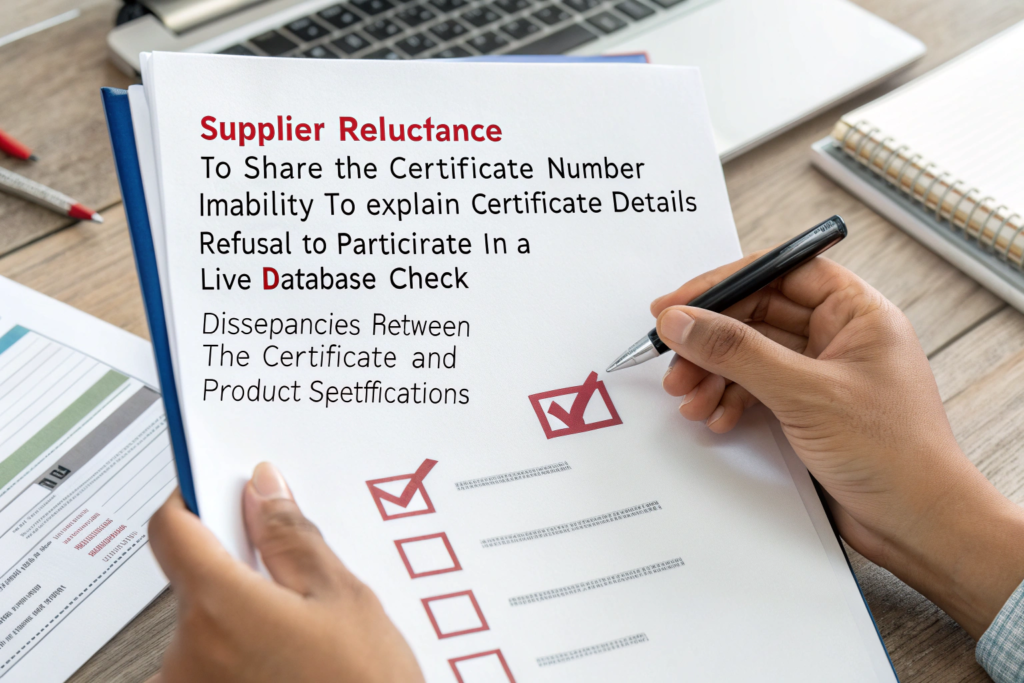
Major red flags include: supplier reluctance to share the certificate number, inability to explain the details on the certificate, refusal to participate in a live database check, or a disconnect between the certificate and the actual product specification.
Your Action Plan Upon Seeing Red Flags
- Pause the Order: Do not proceed with payment or production until the issue is resolved.
- Request Clarification in Writing: Ask for a clear, written explanation of the discrepancy.
- Escalate the Request: If the sales rep is unsure, ask to speak directly with their quality control or compliance manager.
- Consider it a Deal-Breaker: If transparency is not forthcoming, view this as a preview of future problems. It is often wiser to walk away.
Verification is not distrust; it is due diligence. The few minutes it takes to check a certificate can save you thousands of dollars and protect your brand’s reputation. In today’s market, working with a supplier who understands and facilitates this process is not a luxury—it’s a necessity.
Conclusion
In global apparel sourcing, trust is built on proof, not promises. The ability to independently verify OEKO-TEX certificates transforms you from a passive buyer into an informed, low-risk partner. It empowers you to separate credible, professional suppliers from the rest.
By mastering the three-step process of document scrutiny, database cross-checking, and chain-of-custody validation, you build an impenetrable defense against one of the most common and costly sourcing pitfalls. You ensure that the premium you pay for "certified safety" is real and that your products will pass the scrutiny of regulators, retailers, and consumers.
Ready to work with a supplier where certificate verification is a transparent, welcome part of the process? At Shanghai Fumao, we open our books and our database to your audit. We believe our certifications are your guarantees. Let us show you how our systems deliver verified safety and seamless compliance. Contact our Business Director, Elaine, to request our current certificates and schedule a live verification session: elaine@fumaoclothing.com.